Artwork
Fifth Series
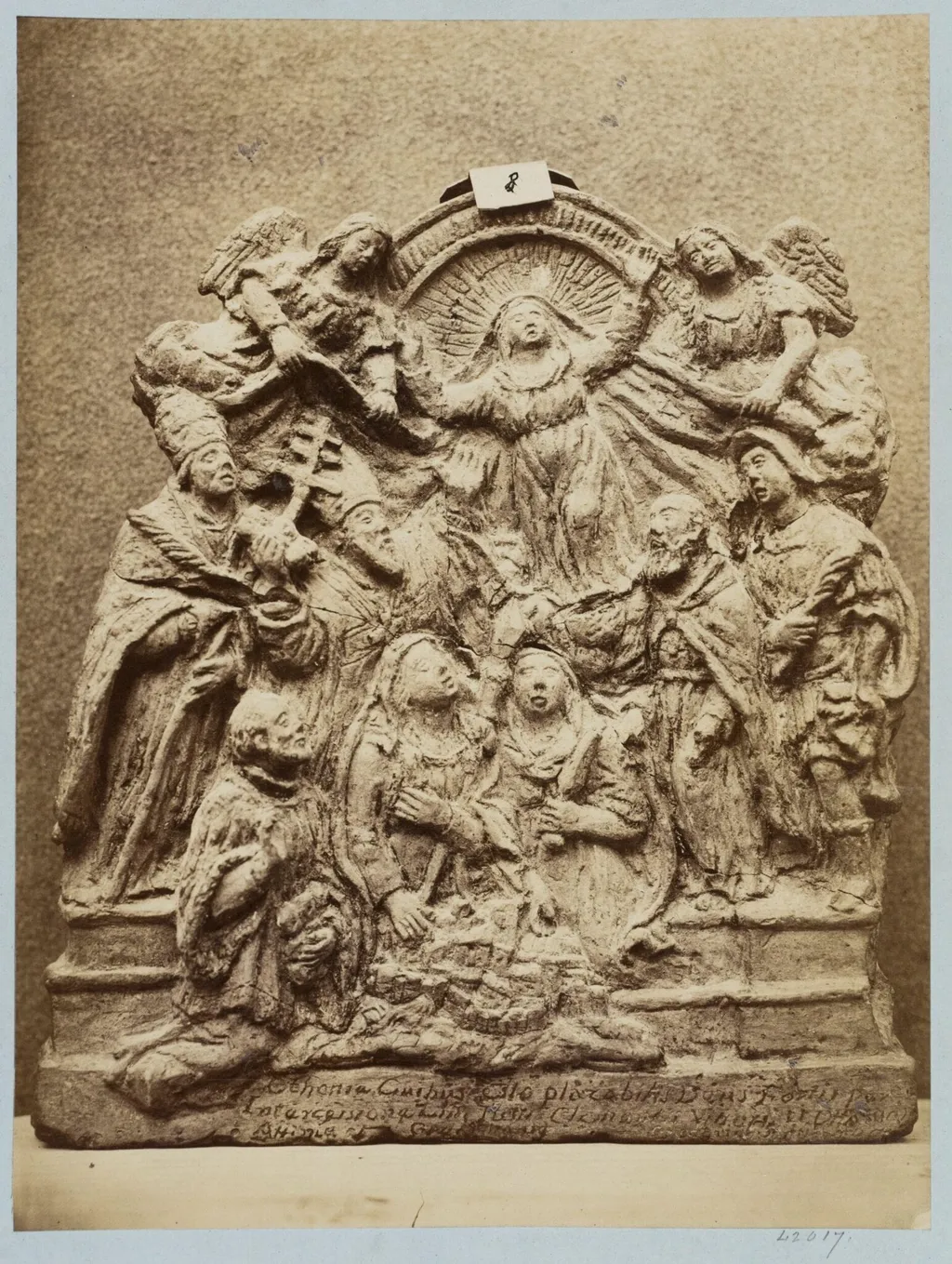
Fifth Series is a photographic photography by the Impressionist artist Louise Laffon. It dates from 1864 and is held in the collection of the Victoria and Albert Museum. The Victoria and Albert Museum began collecting photographs in 1852, becoming the first museum to do so.
About this work
The photograph is titled Fifth Series by Louise Laffon.
It was created between 1863-1864.
The Victoria and Albert Museum holds this photograph, which is part of their collection that started in 1852, and it shows the museum's early interest in photography as a resource for artists and students.
You can learn more about the movement associated with this work, Impressionism.
Overview
The museum’s early photographic holdings, initially housed with the National Art Library, supported academic study and curatorial work.
The Victoria and Albert Museum began collecting photographs in 1852, becoming the first museum to do so. Under Henry Cole’s leadership, photography was embraced not as art but as a practical tool for education and documentation. The museum’s early photographic holdings, initially housed with the National Art Library, supported academic study and curatorial work. Among the contributors were professional photographers, including women whose roles were historically underrecognized.
Subject & Meaning
The photograph titled Fifth Series by Louise Laffon documents objects from the Campana Collection, a group of ancient artifacts now in the Louvre. Created between 1863 and 1864, the images served as precise visual records for study, enabling scholars and students to examine forms and ornamentation without direct access to the originals. Laffon’s work contributed to the museum’s broader goal of expanding access to material culture through reproducible imagery.
Technique & Style
Laffon produced the series using the albumen print process, common in mid-19th-century photographic documentation. The images exhibit careful composition and even lighting, emphasizing the sculptural details of antiquities. Unlike artistic photography of the era, these works prioritized clarity and fidelity over aesthetic embellishment, aligning with the museum’s utilitarian approach to image-making.
History & Provenance
In 1864, the V&A acquired 500 photographs from Laffon’s series through the Parisian agent E. Cappe. These were integrated into the museum’s growing photographic archive, which had been established a decade earlier. Laffon, one of the first women admitted to Le Société Française de la Photographie, was among several female practitioners whose contributions to institutional collections were later overlooked in historical accounts.
Context
During the 1860s, European museums increasingly turned to photography to systematize their collections and support design education. The V&A’s initiative reflected a wider trend in which technical reproduction replaced hand-drawn copies. While Impressionism emerged as a painterly movement focused on perception, the museum’s photographic program remained grounded in documentation, serving pedagogical rather than expressive aims.
Legacy
Laffon’s photographs remain part of the V&A’s foundational collection, illustrating early institutional efforts to standardize visual reference materials. Her work, alongside that of other female photographers, helped establish photography’s role in academic and curatorial practice. Though long neglected, their contributions are now recognized as vital to the development of museum-based visual scholarship.
Artist & collection
Artist
Louise Laffon (1828–1885), was a French photographer and painter. She was one of the first female professional photographers in France. She had a studio in Paris between 1859 and 1876.

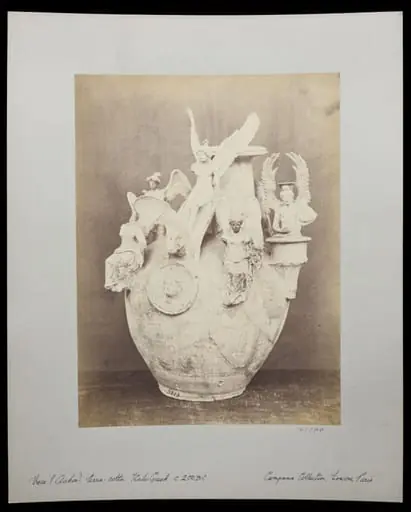 Perfume Burner in terra cotta
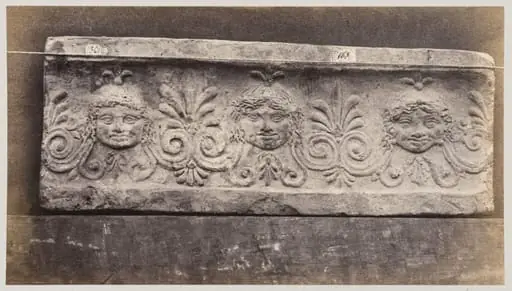 Three masques of gorgons in terra cotta
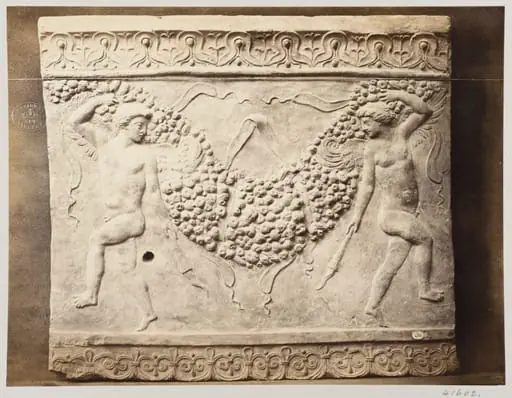 Bas-relief of portion of frieze of dancing figures with torches bearing festoon of fruit in terra cotta
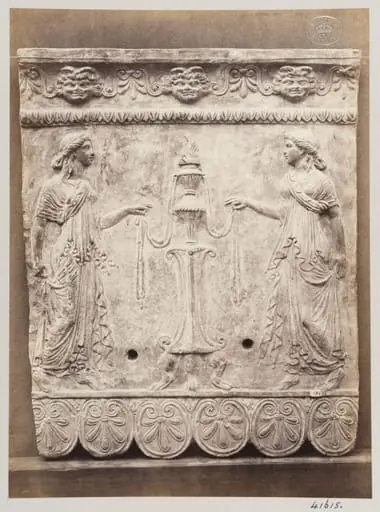 Bas-relief portion of a frieze of two draped females and an altar in terra cotta
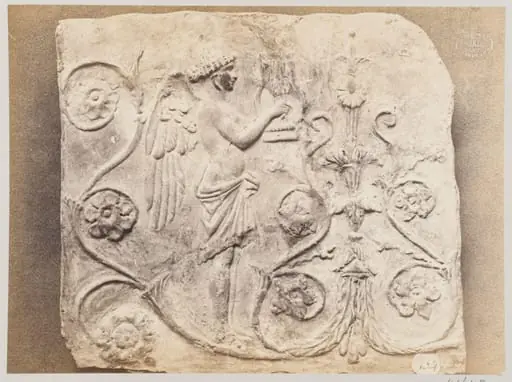 Bas-relief of a geni and a lyre in terra cotta
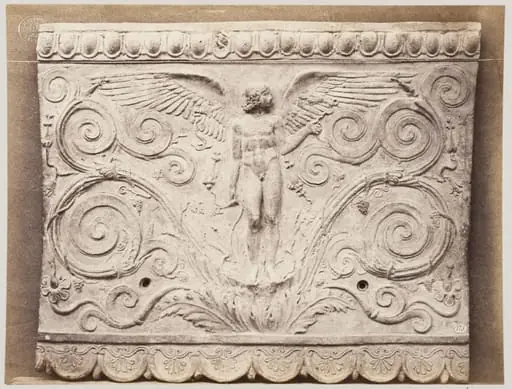 Bas-relief of a portion of frieze of Eros with scrollwork in terra cotta
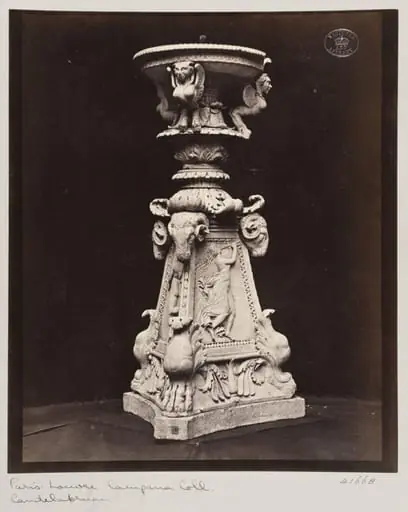 Marble sculptured fountain
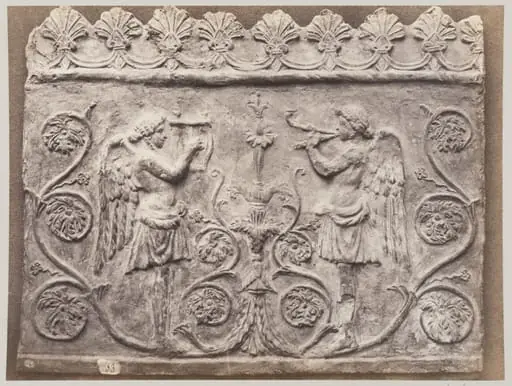 Bas-relief portion of frieze of Genii with double flutes and lyre
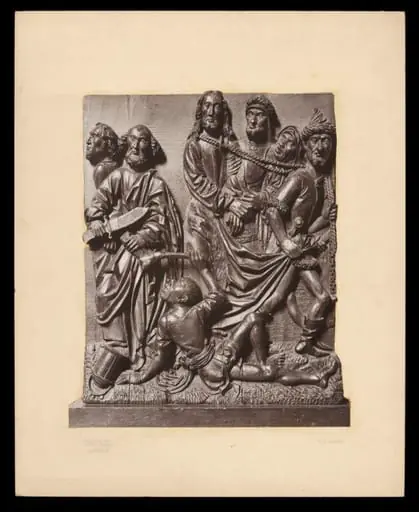 Panel Lincoln
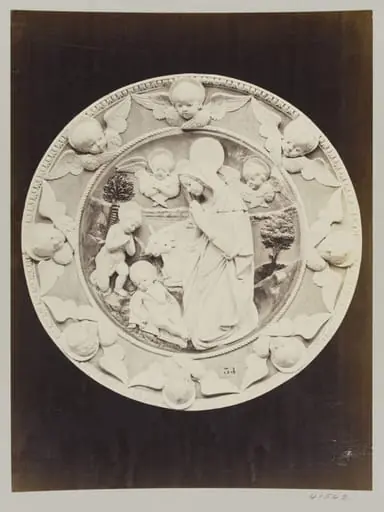 Circular bas-relief depicting the Nativity in enamelled earthenware
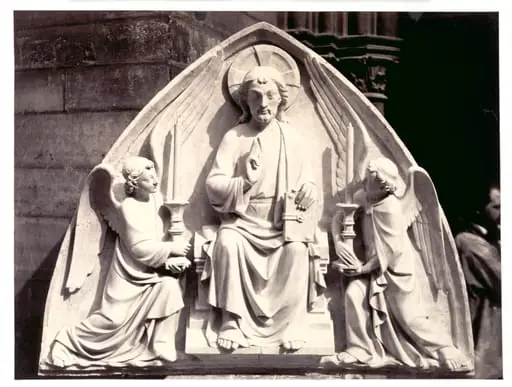 Tympanum, Strasbourg Cathedral
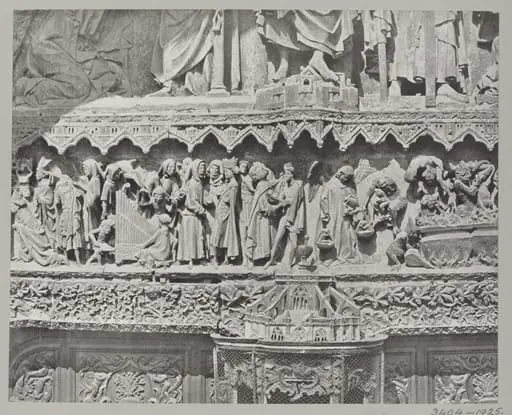 Detail of the carving of the tympanum, León Cathedral
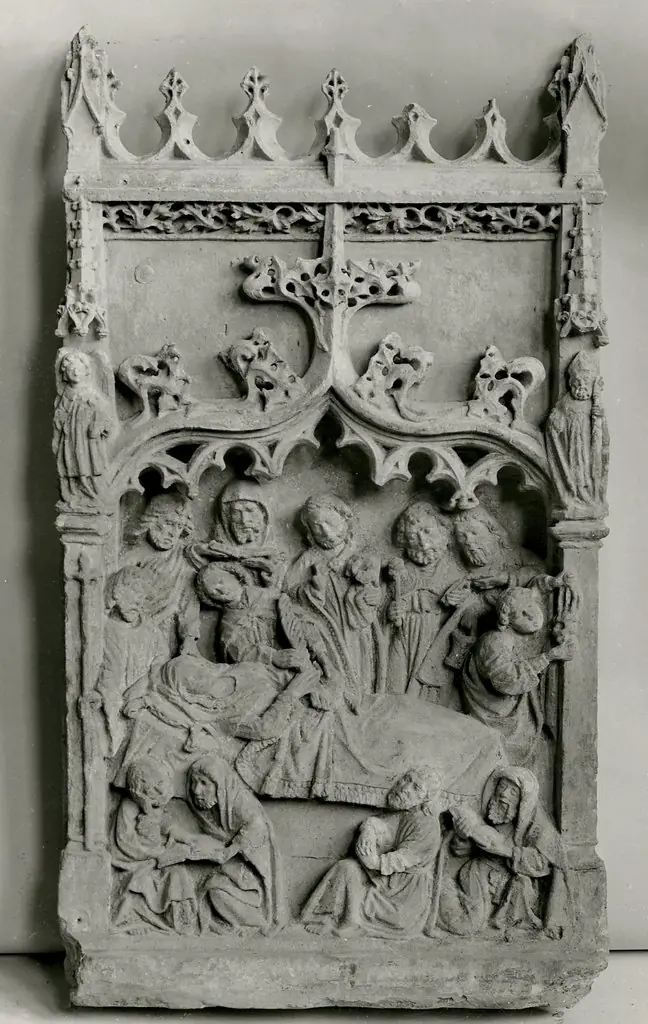 Dormition of the Virgin Relief
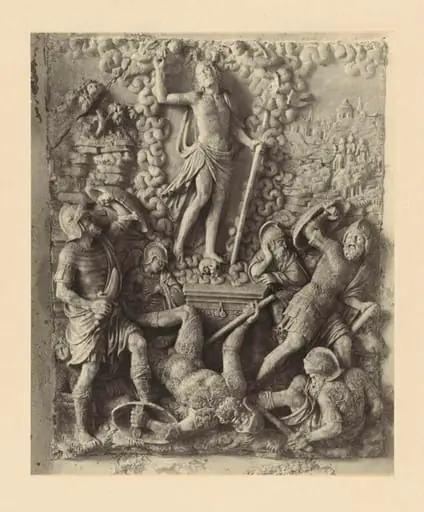 Alabaster Tablet, Plymtree
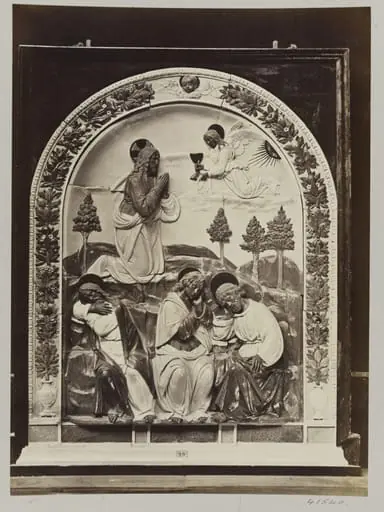 Altar piece depicting Christ in the Garden of Olives in enamelled earthenware
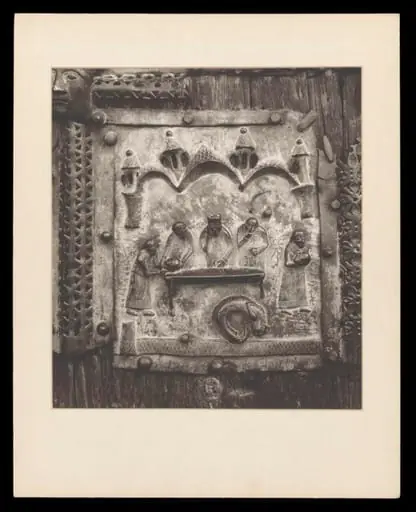 Detail, Bronze Door of San Zeno, Verona
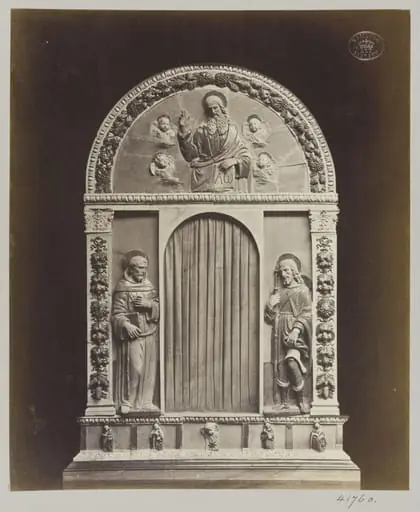 Enamelled earthenware altar piece of Christ and Saint Francis and St. Rock
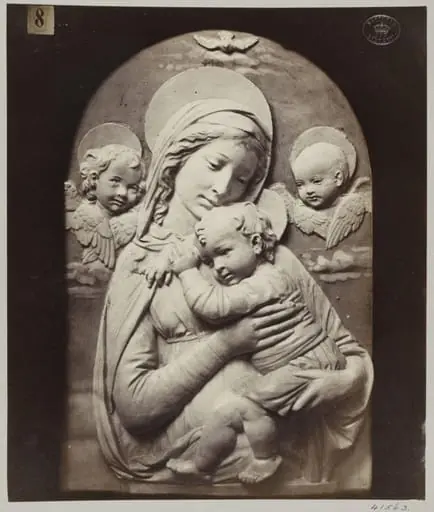 Bas-relief depicting the Virgin and Child in enamelled earthenware
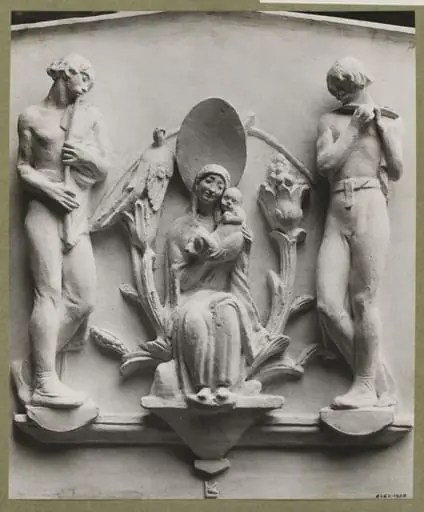 Untitled
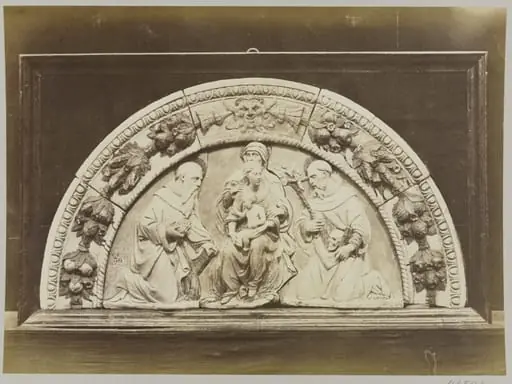 Top of an altar piece depicting the Holy Family in enamelled terra cotta