Artwork
Pako Egyptiin, kopio A. Lauréuksen mukaan
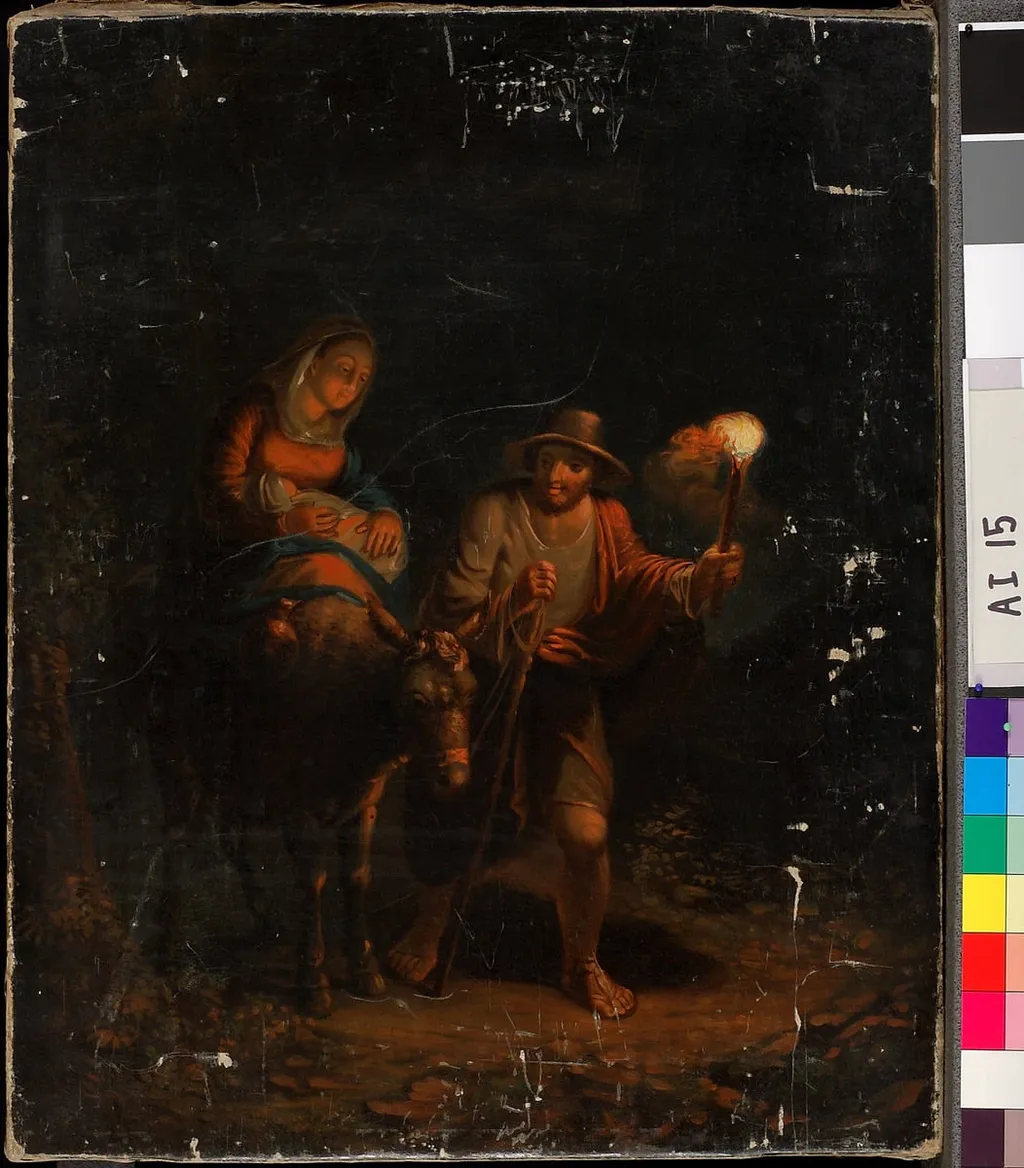
Pako Egyptiin, kopio A. Lauréuksen mukaan is an unspecified painting by Johan Erik Lindh. It is held in the collection of the Finnish National Gallery. The work titled *Pako Egyptiin*—identified as a copy according to A.
About this work
Overview
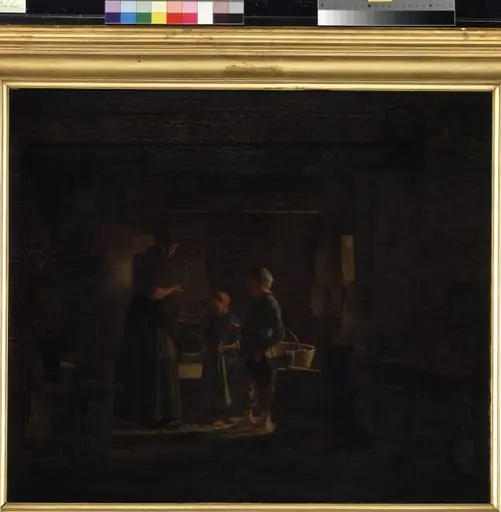
One figure kneels while cradling an infant swaddled in a blanket; the other stands, brandishing a torch that illuminates their faces and hands.
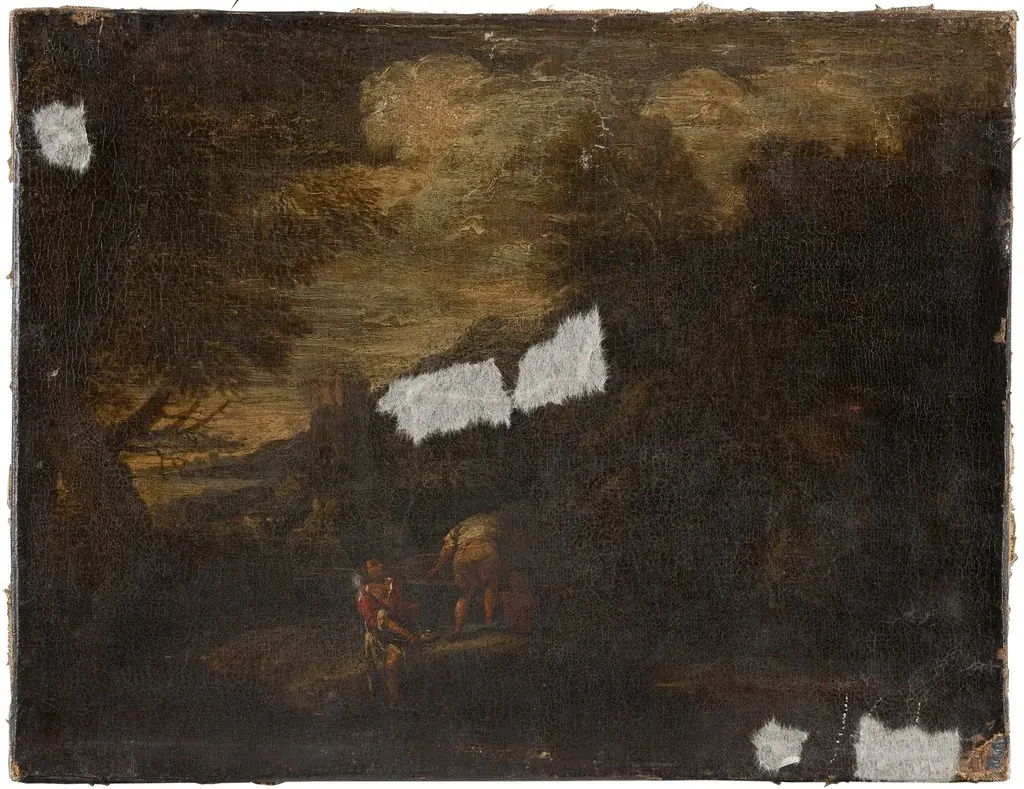
The work titled *Pako Egyptiin*—identified as a copy according to A. Lauréus—depicts a nocturnal interior where two figures dominate a nearly black background. One figure kneels while cradling an infant swaddled in a blanket; the other stands, brandishing a torch that illuminates their faces and hands. Simple garments and a wide-brimmed hat define their attire, and the overall composition is marked by visible cracks and areas of faded pigment.
Subject & Meaning
The scene suggests a moment of escape or refuge, hinted at by the title’s reference to Egypt. The kneeling caregiver and the torch‑bearing companion convey a sense of urgency and protection, while the child's presence underscores vulnerability. The stark lighting emphasizes fatigue and resolve in the figures’ expressions, inviting contemplation of hardship and survival.
Technique & Style
The painting relies on chiaroscuro, employing a single torch as a light source to create dramatic contrasts between illuminated forms and the surrounding darkness. This approach sharpens the edges of the faces and hands, while the deep black backdrop isolates the subjects. The surface shows signs of age, with cracking and faded areas that reveal the work’s material condition.
History & Provenance
The piece is catalogued as a copy, attributed to the hand of A. Lauréus, though the original artist remains unidentified. No further details about its creation date, original location, or subsequent ownership are provided in the available record.
Context
The use of chiaroscuro aligns the work with a tradition of baroque and later realist painters who exploited light to heighten emotional impact. The modest clothing and simple setting place the figures in a timeless, possibly biblical or exotic narrative, resonant with 19th‑century interests in travel and escape.
Legacy
While the painting’s provenance is limited, its preservation of chiaroscuro technique and its evocative portrayal of a protective scene continue to offer insight into the visual language of dramatic illumination and the thematic preoccupations of its era.
Artist & collection
Artist
Johan Erik Lindh filled small sheets with soft pencil portraits of Finnish families in the early 1800s.