Artwork
The New Inn, Pembridge
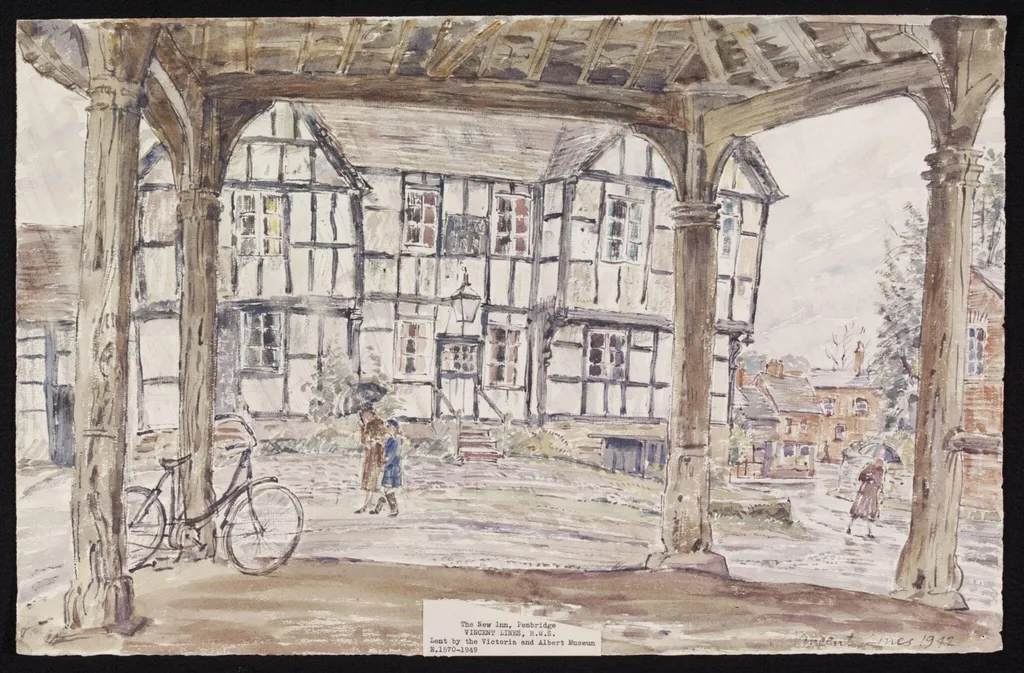
The New Inn, Pembridge is a watercolor work on paper by the Social Realist artist Lines. It dates from 1942 and is held in the collection of the Victoria and Albert Museum.
About this work
Overview
It captures a view of a historic timber-framed inn as seen from within the adjacent Market House, framed by its arched wooden structure.
Painted in 1942, *The New Inn, Pembridge* is a watercolour by an artist participating in the Recording Britain project. It captures a view of a historic timber-framed inn as seen from within the adjacent Market House, framed by its arched wooden structure. The scene is rendered in soft, fluid washes, conveying the damp atmosphere of a rainy day. The work was created to preserve visual records of English vernacular architecture during wartime.
Subject & Meaning
The painting centers on a 17th-century inn, its weathered timber and uneven walls standing as quiet symbols of enduring rural life. A bicycle propped against a post and two figures moving beneath the covered walkway suggest ordinary, unremarkable moments. These details emphasize continuity amid disruption, aligning with the project’s aim to document everyday spaces at risk from modernization and conflict.
Technique & Style
Executed in watercolour, the work employs loose, transparent layers to suggest light filtering through rain and the texture of aged wood. Brushwork is spontaneous, avoiding fine detail in favor of atmospheric suggestion. Shadows and damp patches are implied through diluted pigment, while the roughness of walls and uneven ground is conveyed through irregular washes, reinforcing the scene’s unpolished authenticity.
History & Provenance
Commissioned under the Recording Britain scheme, initiated by Sir Kenneth Clark and funded by the Pilgrim Trust, the painting was part of a broader effort to visually archive vulnerable landscapes and buildings. Created during wartime, it was collected by the Victoria and Albert Museum, where it remains as part of a significant archive of British topographical art from the early 1940s.
Context
The Recording Britain project emerged as a cultural response to the threat of wartime destruction and rapid social change. Artists were employed to record vernacular architecture, rural scenes, and local landmarks before they disappeared. This painting reflects a national effort to preserve identity through visual documentation, prioritizing modest, everyday environments over grand monuments.
Legacy
As part of the Recording Britain collection, the painting contributes to a lasting visual record of England’s architectural heritage during a period of upheaval. Its unidealized portrayal of rural life continues to inform historical and artistic studies of mid-20th-century Britain, offering insight into how ordinary spaces were valued during times of national uncertainty.
Artist & collection

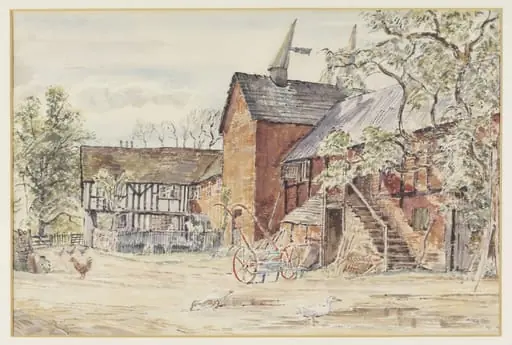
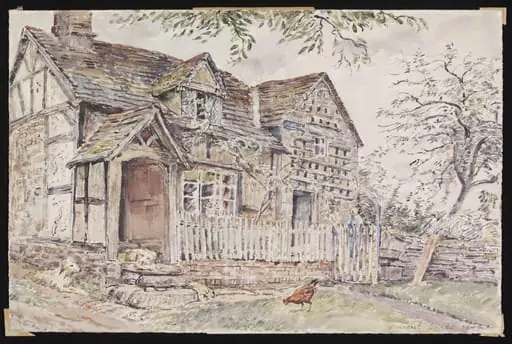 Pigeon House and Post Office, Mansel Lacy
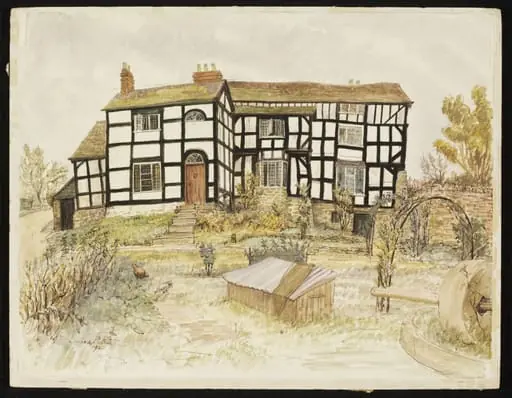 Paytoe Hall, Leintwardine
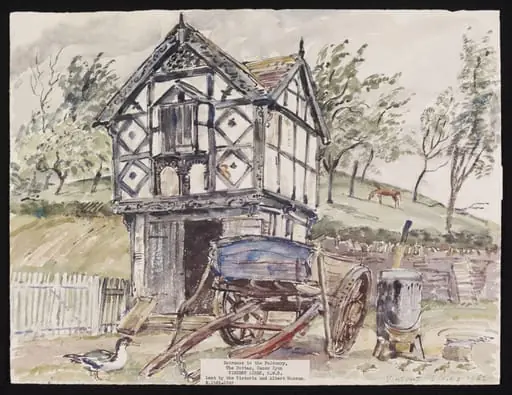 Entrance to the Falconry, The Buttas, Canon Pyon
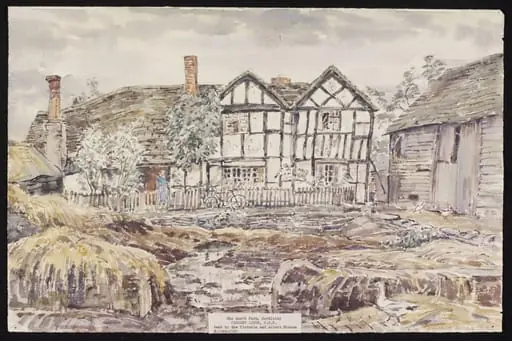 The Quebb Farm, Eardisley
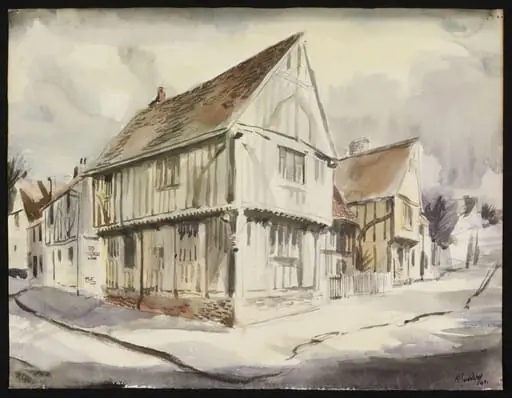 The Wool Hall, Lavenham
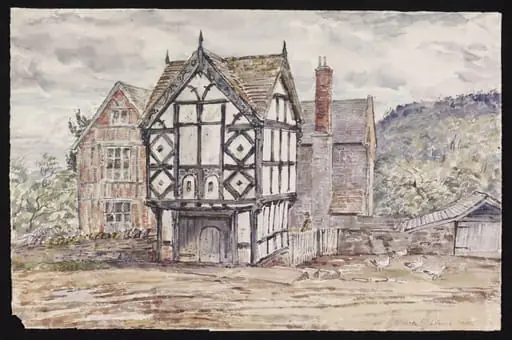 Farm and Falconry, The Buttas, Canon Pyon
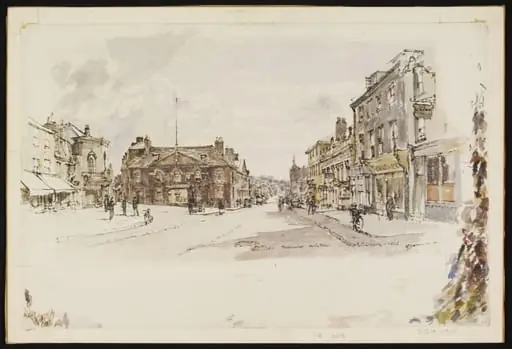 High Street and Rutland Arms, Newmarket
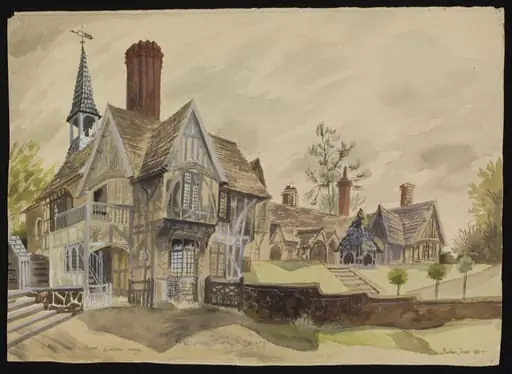 St. Mary's Homes and Chapel, Godstone
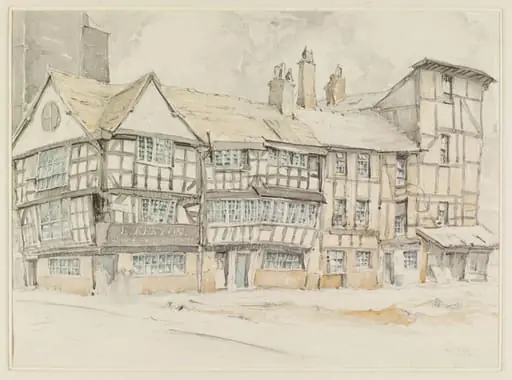 The Old Shambles, Manchester, Lancashire
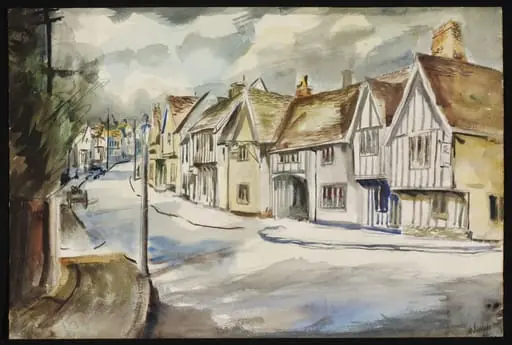 High Street, with the 'Swan', Lavenham
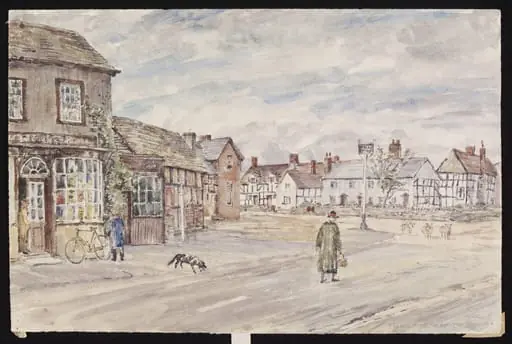 Tram Square, Eardisley