Artwork
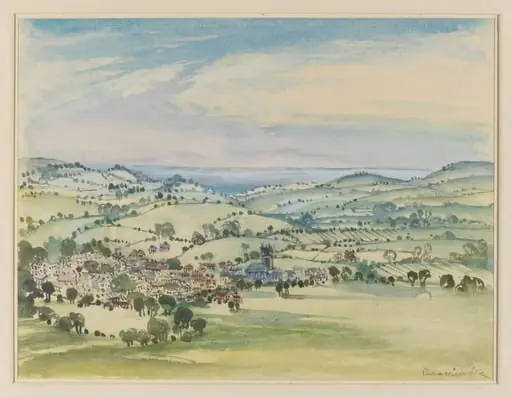
View over Pewsey Vale from Martinsell
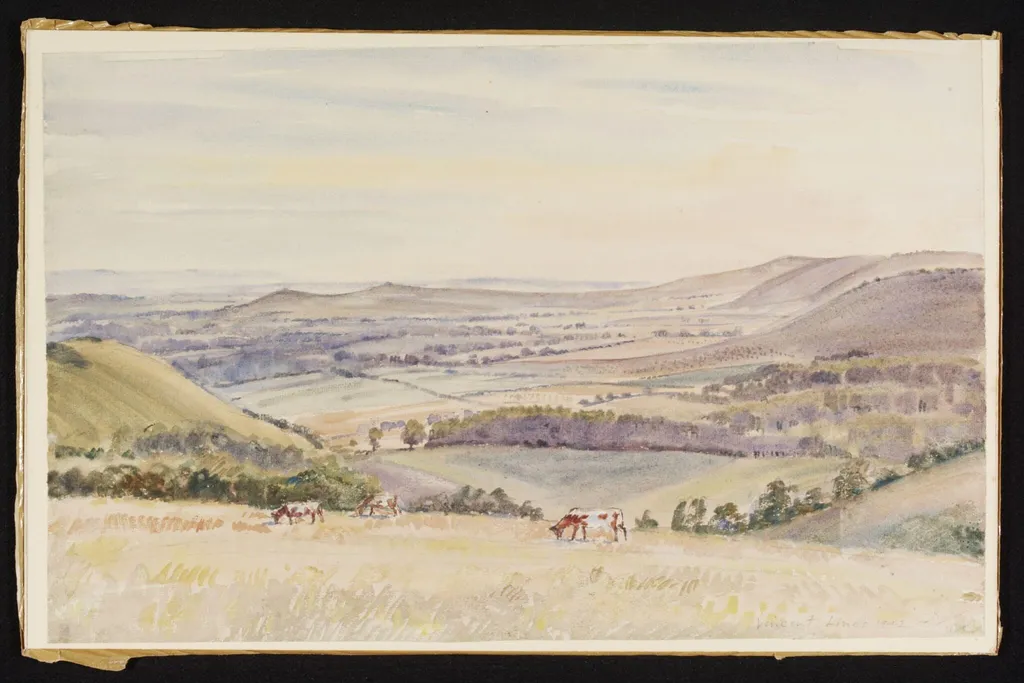
View over Pewsey Vale from Martinsell is a watercolor work on paper by Lines. It dates from 1942 and is held in the collection of the Victoria and Albert Museum. Created in 1942, this watercolour captures a quiet expanse of Pewsey Vale as seen from Martinsell Hill.
About this work
Overview
It was made as part of the Recording Britain project, a wartime initiative to preserve visual records of the English countryside.
Created in 1942, this watercolour captures a quiet expanse of Pewsey Vale as seen from Martinsell Hill. It was made as part of the Recording Britain project, a wartime initiative to preserve visual records of the English countryside. The work belongs to a larger collection of over 1,500 pieces commissioned by the Pilgrim Trust and guided by Sir Kenneth Clark, aiming to document landscapes at risk from conflict or development.
Subject & Meaning
The scene presents a tranquil rural expanse with undulating fields, a meandering road, and scattered figures and livestock. These elements suggest everyday life in the countryside, unremarkable yet significant as records of ordinary existence. The absence of industrial or military markers emphasizes a sense of stillness, reinforcing the project’s goal to preserve a sense of place before potential disruption.
Technique & Style
The artist employed loose, fluid watercolour washes to evoke form rather than define it. Delicate layers of pale blue, green, and brown suggest distance and texture without sharp outlines. The sky is softly rendered, contributing to an atmosphere of quietude. This approach prioritizes mood over precision, aligning with the project’s emphasis on emotional resonance over topographical accuracy.
History & Provenance
Commissioned during the Second World War, the work was produced under the Recording Britain scheme, which supported artists financially while documenting vulnerable landscapes. The piece entered the Victoria and Albert Museum’s collection as part of the project’s archival legacy. Its survival reflects the initiative’s success in preserving a visual record of Britain’s rural character during a time of national uncertainty.
Context
The Recording Britain project emerged in response to fears of wartime destruction and postwar modernization. Artists were sent across the country to record scenes deemed emblematic of British identity—villages, lanes, and fields—before they vanished. This watercolour is one of many that collectively formed a visual archive, offering a counter-narrative to the urgency and violence of the era.
Legacy
The work remains part of a significant cultural archive held by the Victoria and Albert Museum. It contributes to ongoing scholarly interest in wartime art and the role of landscape in national memory. As a quiet, unassuming record of rural life, it continues to offer insight into how art was used to sustain a sense of continuity during a period of profound change.
Artist & collection

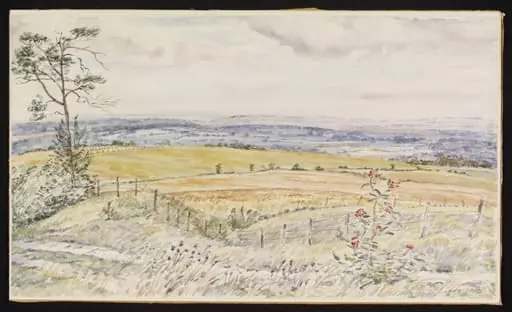 View from Calne Golf Course near Heddington
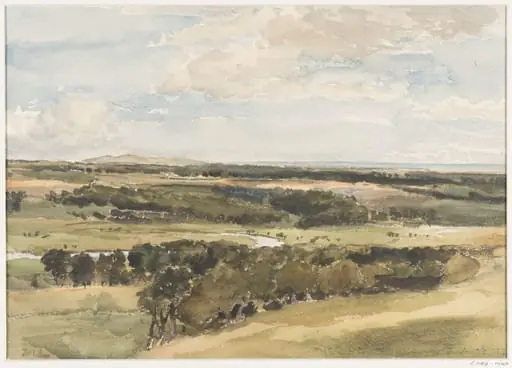 Arundel Park
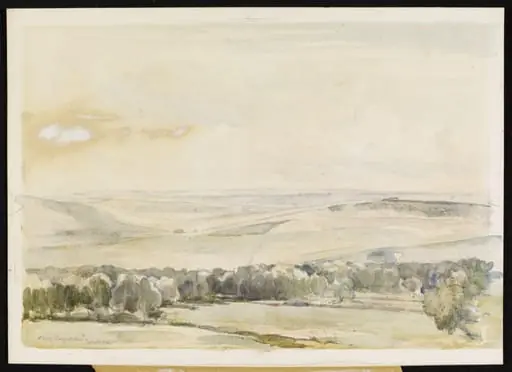 The Downs from Friston
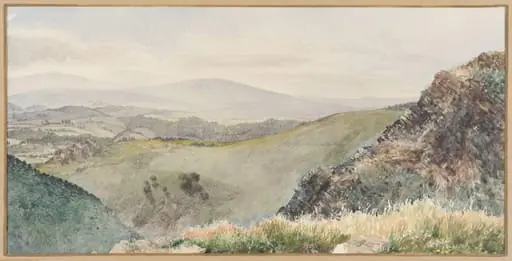 Untitled
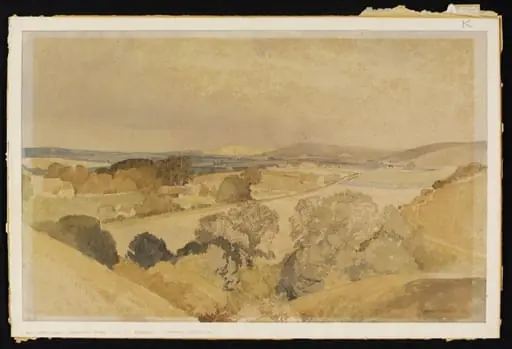 The Southdown, Underhill Road; Edburton, and the Road Eastwards
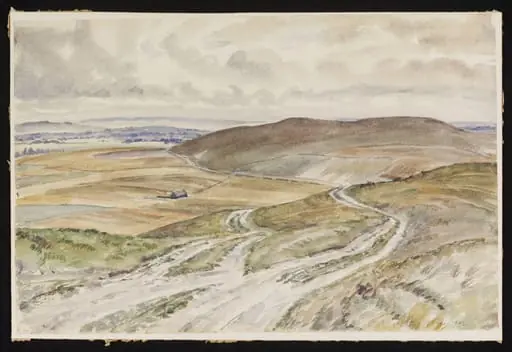 View from the Wansdyke in Stanton St. Bernard
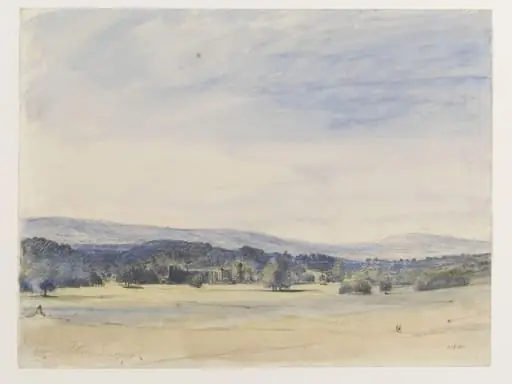 The ruins of a Cowdray House
 Beaminster
 Wishford, Wylye Valley
 The Southdown, Underhill Road: Westwards from Poynings