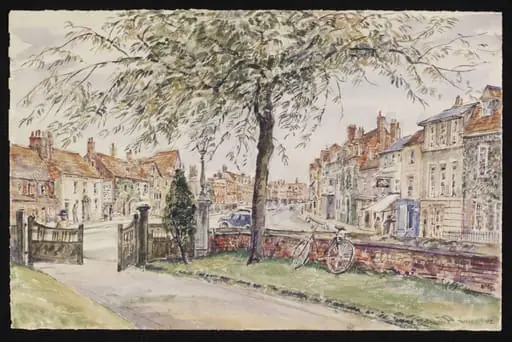
Artwork
Wisborough Green
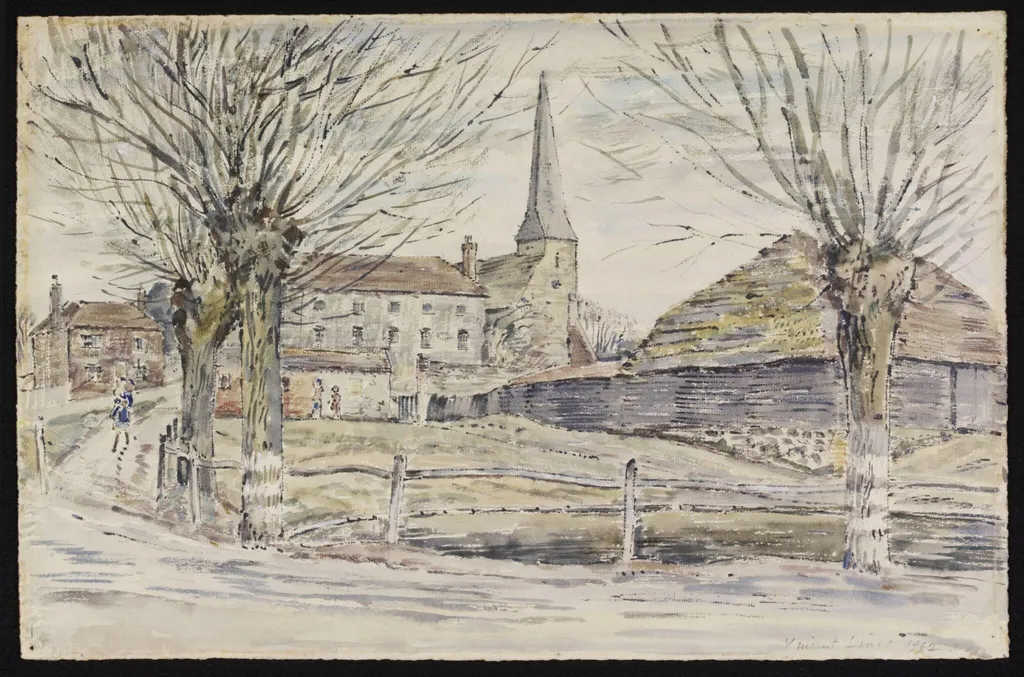
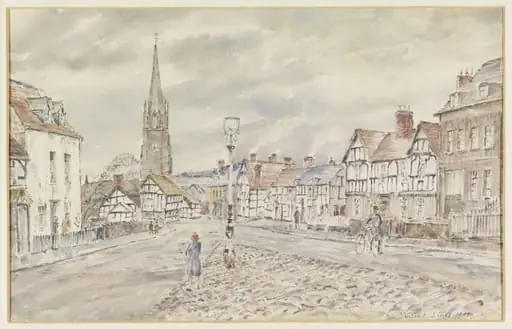
Wisborough Green is a watercolor work on paper by Lines. It dates from 1942 and is held in the collection of the Victoria and Albert Museum.
About this work
Overview
This government-backed project sought to preserve visual records of rural England during World War II, as threats of destruction and social change loomed.
Created in 1942, *Wisborough Green* is a watercolour by artist John Lines, produced under the *Recording Britain* initiative. This government-backed project sought to preserve visual records of rural England during World War II, as threats of destruction and social change loomed. The work is one of hundreds commissioned by the Pilgrim Trust and administered by the Ministry of Labour and National Service, with oversight from Sir Kenneth Clark.
Subject & Meaning
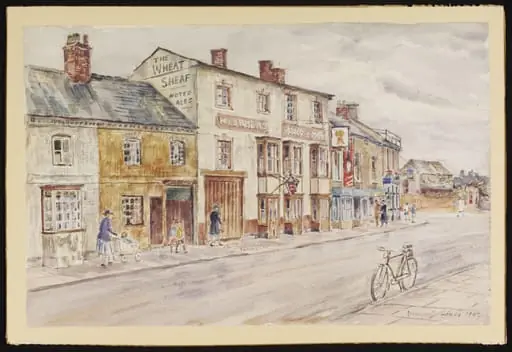
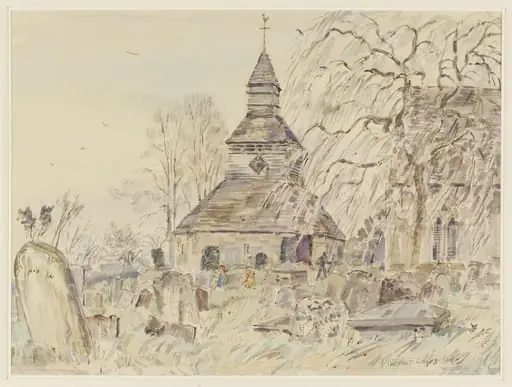
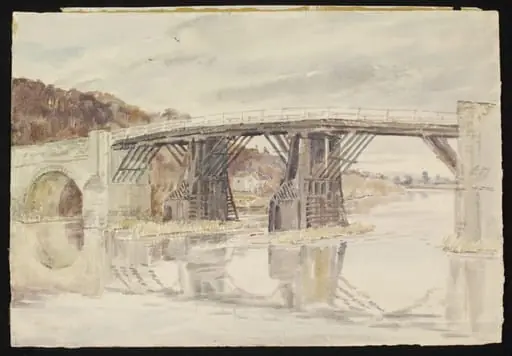
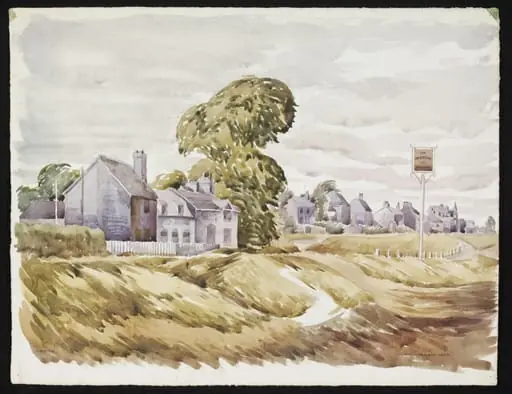
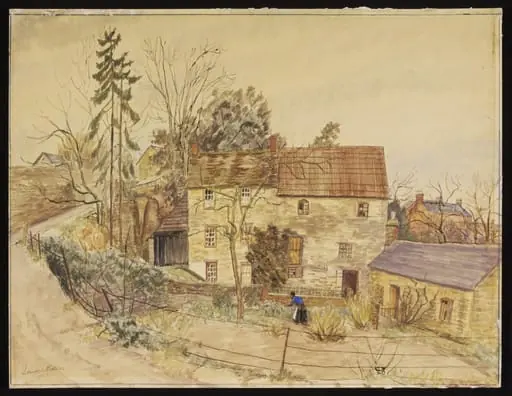
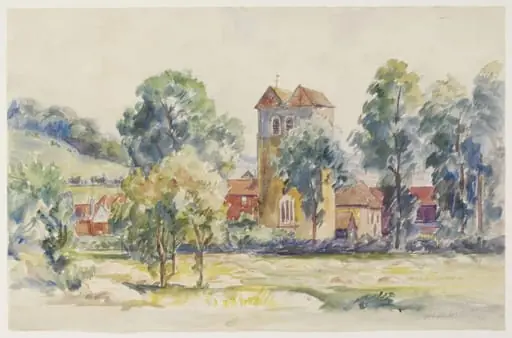
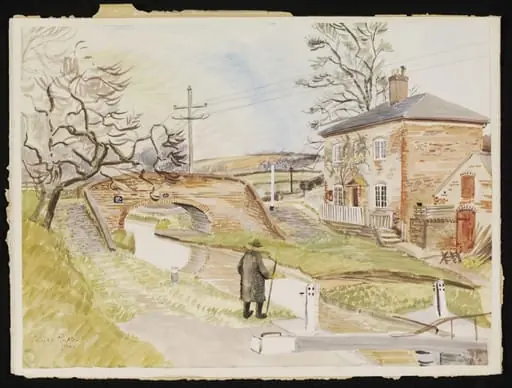
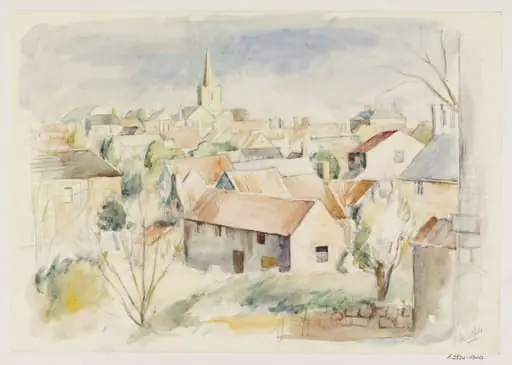
The scene depicts a quiet Sussex village at winter’s edge: a modest church steeple rises above clustered cottages, while bare trees frame a narrow lane. A shallow river winds through the composition, crossed by a wooden footbridge and lined with pedestrians. The absence of grandeur or drama suggests an emphasis on ordinary, enduring life—offering a quiet testament to place amid national uncertainty.
Technique & Style
Lines employed loose, rapid brushwork to capture the scene with immediacy. The watercolour medium allowed for subtle washes of gray, brown, and muted blue, evoking a cold, overcast atmosphere. Delicate outlines and minimal detail suggest observation rather than idealization, reinforcing the project’s documentary intent. The composition feels spontaneous, as if recorded in a single sitting.
History & Provenance
The painting was produced as part of a nationwide effort to archive Britain’s vanishing landscapes. After completion, it entered the collection of the Victoria and Albert Museum, where it remains today alongside other works from the *Recording Britain* series. The project’s holdings were preserved as both artistic records and historical documents, safeguarded against wartime loss.
Context
During the early 1940s, Britain faced widespread disruption from bombing, conscription, and industrial change. The *Recording Britain* project emerged as a cultural countermeasure, commissioning artists to document threatened vernacular architecture and rural customs. These works were not propaganda but quiet acts of preservation, reflecting a collective desire to hold onto identity through place.
Legacy
The *Recording Britain* collection, including *Wisborough Green*, continues to serve as a vital archive of mid-20th-century English life. Its unembellished style and focus on the everyday have influenced later documentary practices in art and photography. The work endures not as a celebrated image, but as a measured record of a nation observing itself in transition.
Artist & collection