Artwork
Sarratt
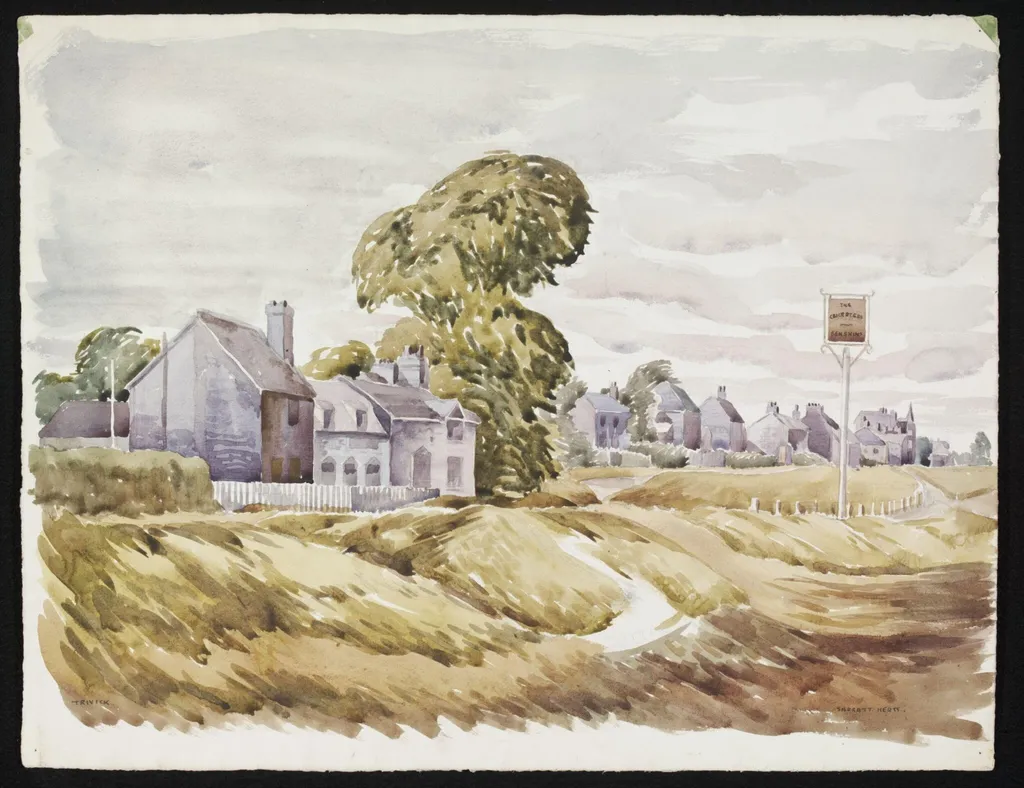
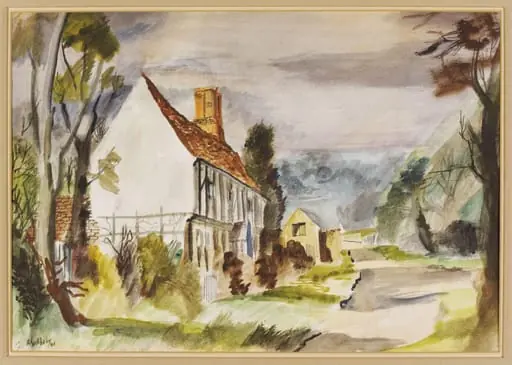
Sarratt is a watercolor work on paper by Henry Trivick. It dates from 1940 and is held in the collection of the Victoria and Albert Museum.
About this work
Overview
Executed as part of the Recording Britain initiative, the work reflects a concerted effort to visually archive the British countryside during wartime.
This 1940 watercolour by Trivick captures the rural village of Sarratt in Hertfordshire. Executed as part of the Recording Britain initiative, the work reflects a concerted effort to visually archive the British countryside during wartime. The composition emphasizes quiet domestic architecture nestled within natural surroundings, rendered with delicate washes and restrained detail. Its inclusion in the Pilgrim Trust-funded project underscores its role in preserving a vanishing visual heritage.
Subject & Meaning
The painting presents Sarratt as a linear village, its modest dwellings softened by grey washes against lush greenery. A central tree anchors the scene, while a distant signpost introduces a subtle human marker of direction and movement. The muted sky and hazy distance evoke a sense of stillness, perhaps reflecting the uncertainty of the era. The work does not idealize the landscape but records it with quiet attention, honoring its ordinary character amid national upheaval.
Technique & Style
Trivick employs watercolour with a light, transparent hand, allowing the paper’s texture to contribute to the atmospheric effect. Soft washes define forms without sharp outlines, creating a sense of permeable light and air. The absence of strong chiaroscuro suggests a preference for tonal gradation over dramatic contrast. The technique aligns with the Recording Britain project’s emphasis on observational clarity rather than expressive intensity, prioritizing documentation over stylization.
History & Provenance
Created in 1940 under the auspices of the Committee for the Employment of Artists in Wartime, this work was commissioned by the Pilgrim Trust and overseen by Sir Kenneth Clark. It belongs to the Recording Britain collection, which gathered over 1,500 watercolours between 1940 and 1943. The initiative sought to safeguard images of vulnerable landscapes before they could be lost to war or modernization. The painting entered institutional holdings as part of this national archive.
Context
The Recording Britain project emerged during a period of national anxiety, as threats of aerial bombardment and societal transformation loomed. Artists were deployed to record rural villages, historic buildings, and quiet corners of the countryside deemed at risk. Sarratt, like many such settlements, represented a fading way of life. The project’s focus on unremarkable places elevated everyday landscapes as culturally significant, countering narratives that privileged only the monumental.
Legacy
The watercolour remains part of a broader archival effort that reshaped how Britain’s rural heritage was valued. Its inclusion in institutional collections ensures continued access to a visual record of pre-war village life. While not widely known outside specialist circles, works like this contribute to historical understanding of how art served public memory during crisis. The quiet dignity of Trivick’s depiction endures as a testament to the project’s enduring purpose.
Artist & collection
Artist
Henry Houghton Trivick was a British painter, lithographer and author of art books.

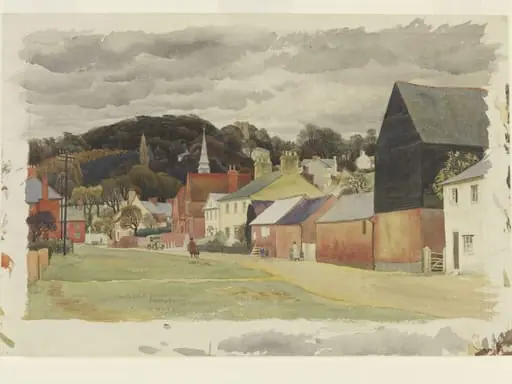 Bow Brickhill, Bletchley, Buckinghamshire
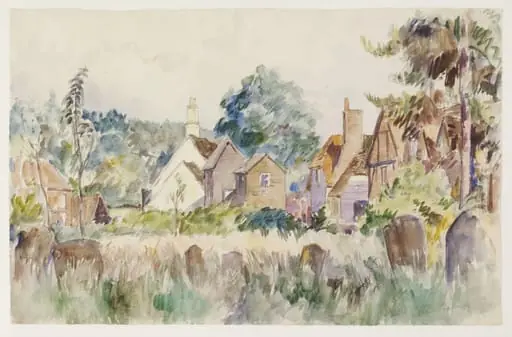 Princes Farm, Fingest
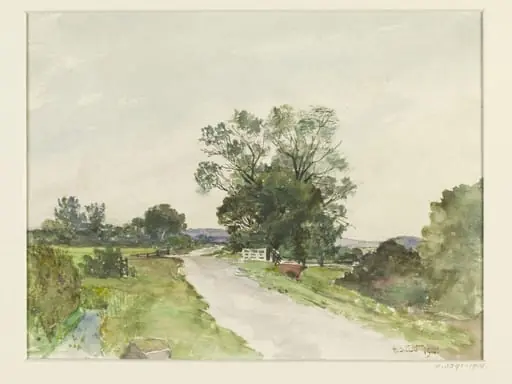 Landscape with road in flat country
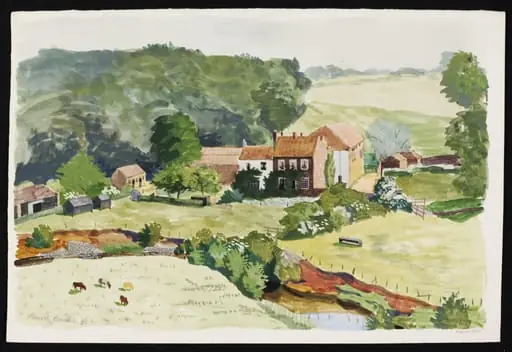 The Mill, Crathorne
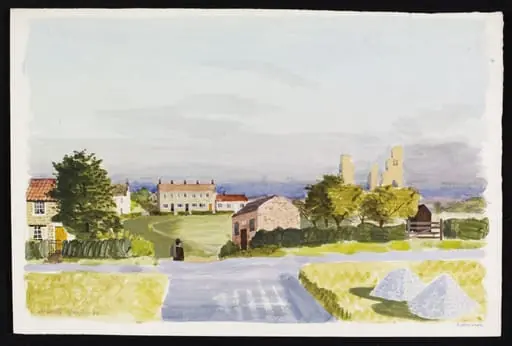 Sheriff Hutton; view over the plain of York, with York Minster in the distance
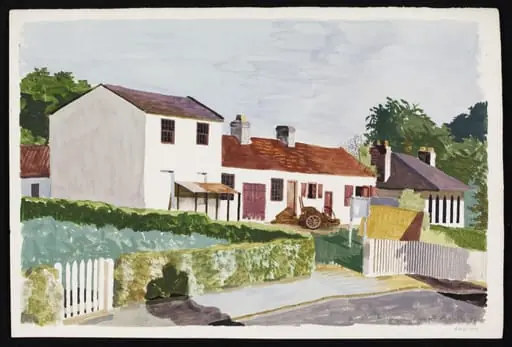 The Smithy, Crathorne
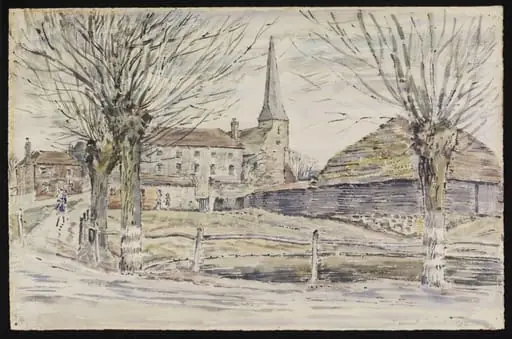 Wisborough Green
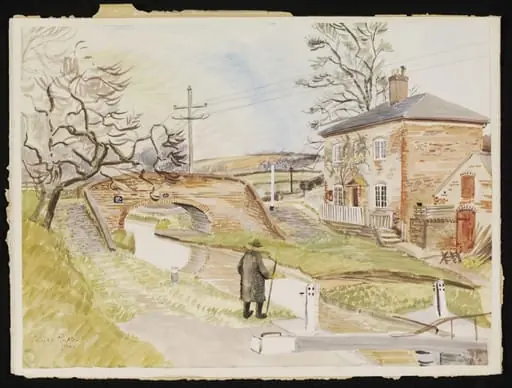 Meaford Lock, Stone
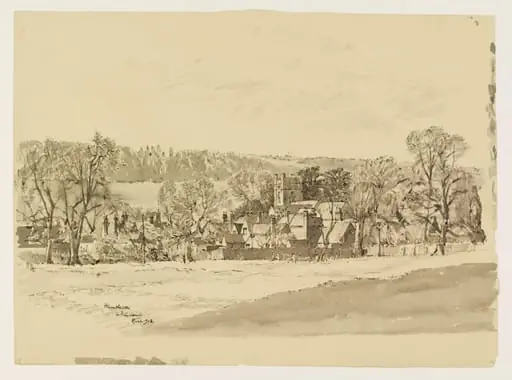 Hambledon
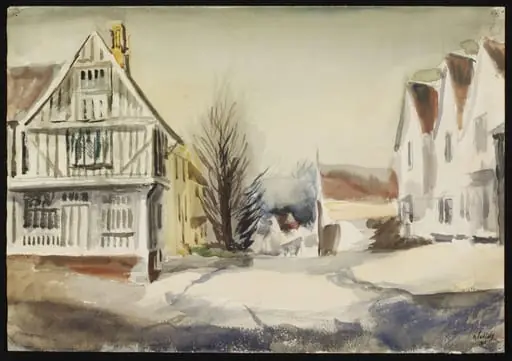 Lady Street, with the Guildhall, Lavenham
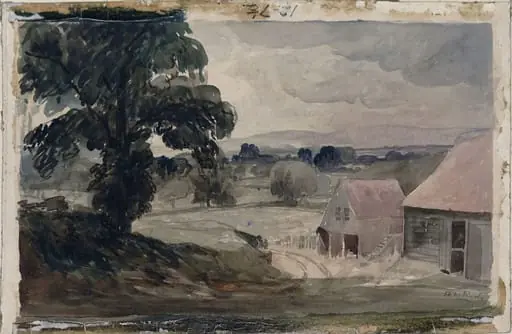 In Danny Park, near Hassocks, Sussex
 Old House at Bulmer