Artwork
The Causeway, Horsham
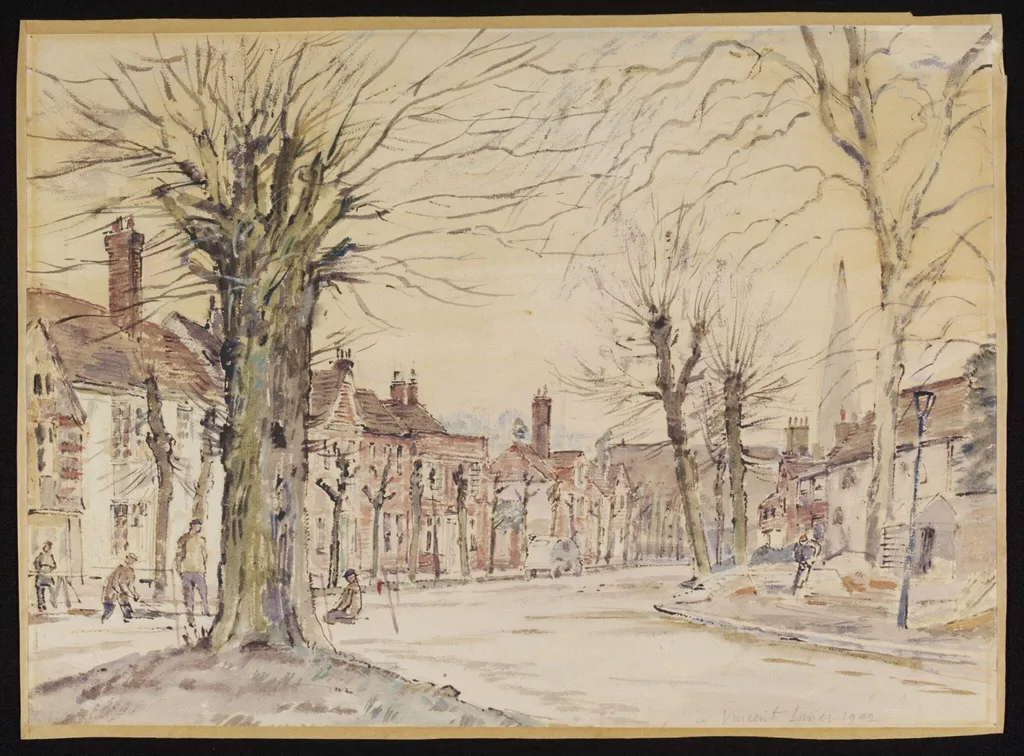
The Causeway, Horsham is a watercolor work on paper by the Social Realist artist Lines. It dates from 1942 and is held in the collection of the Victoria and Albert Museum. Created in 1942, this watercolour portrays a modest street in Horsham, known as the Causeway.
About this work
Overview
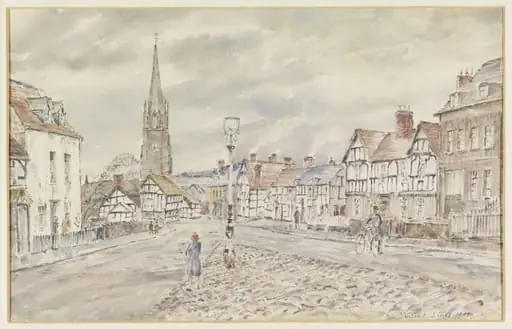
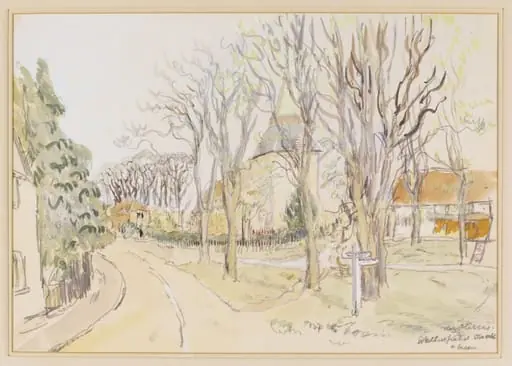
Created in 1942, this watercolour portrays a modest street in Horsham, known as the Causeway. Bare trees line the road, their skeletal branches framing a row of low‑rise buildings with chimneys and tiled roofs. Figures are engaged in everyday activity, one seated on the ground, lending the scene a quiet, observational tone.
Subject & Meaning
The composition captures a moment of ordinary rural life, emphasizing the relationship between the built environment and its surrounding landscape. The subdued palette and stillness suggest a contemplation of continuity amid the disruptions of wartime Britain, highlighting the persistence of daily routines.
Technique & Style
Executed in watercolour, the work employs loose brushwork and softened edges that blend forms rather than delineate them sharply. Earth tones dominate, with muted greens, browns, and grays creating a harmonious atmosphere. The handling of light and shadow is subtle, allowing the scene to unfold with a gentle, almost lyrical quality.
History & Provenance
The piece was produced under the Recording Britain scheme, a wartime project funded by the Pilgrim Trust and overseen by Sir Kenneth Clark.
The piece was produced under the Recording Britain scheme, a wartime project funded by the Pilgrim Trust and overseen by Sir Kenneth Clark. The initiative commissioned artists to document threatened English locales, generating over 1,500 works by 97 contributors. This watercolour forms part of that collective visual archive, reflecting both artistic practice and national morale during World War II.
Context
Recording Britain focused on English sites, excluding Northern Ireland and covering limited Welsh counties, while a separate effort documented Scotland. The project aimed to preserve visual records of landscapes, architecture, and rural customs perceived as vulnerable to bomb damage, urban growth, and changing agricultural methods.
Artist & collection

 Church and Green, Wethersfield
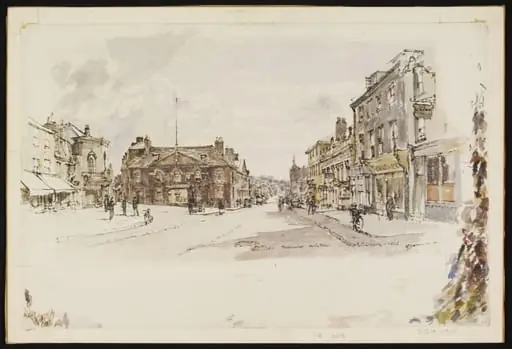 High Street and Rutland Arms, Newmarket
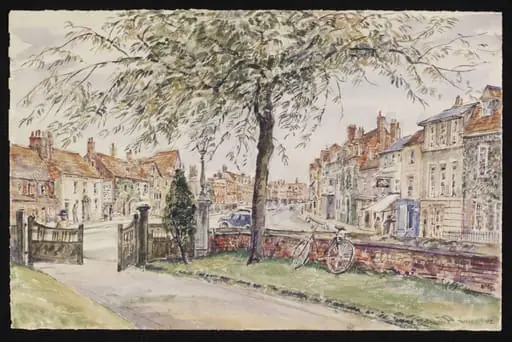 The High Street, Marlborough, from St.Peter's Churchyard
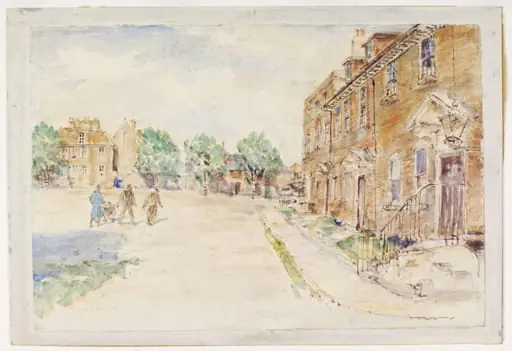 18th century houses at The Butts, Brentford
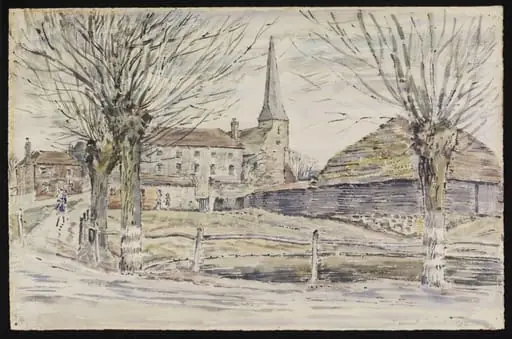 Wisborough Green
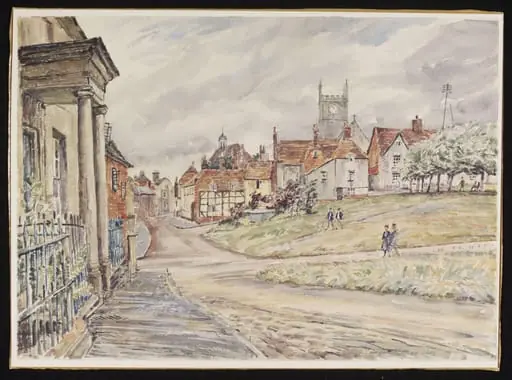 The Green and St.Mary's Church, Marlborough
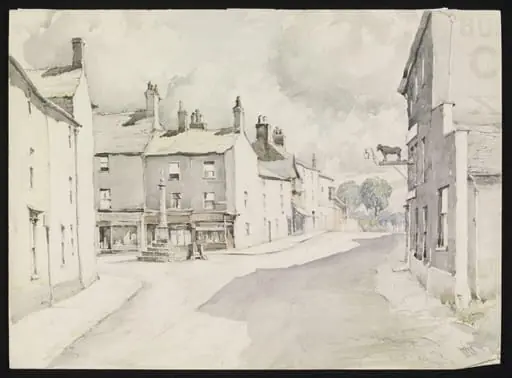 Market Place, Poulton-le-fylde, near Blackpool
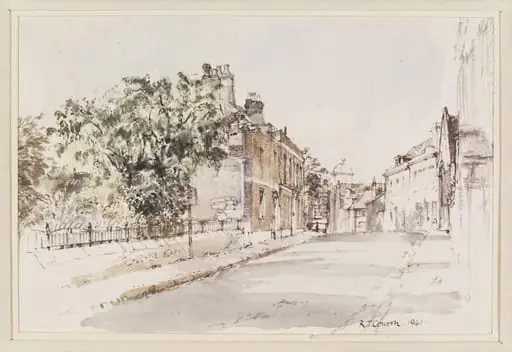 St. Thomas Street, Winchester
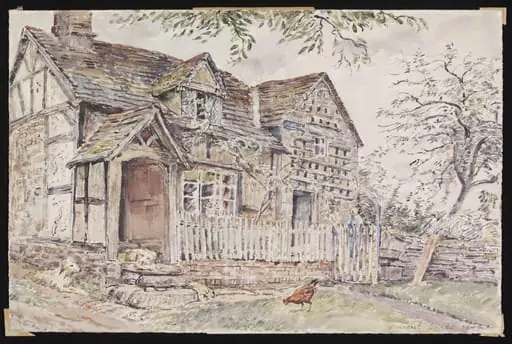 Pigeon House and Post Office, Mansel Lacy
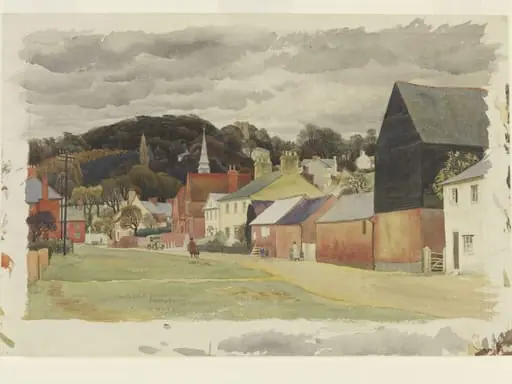 Bow Brickhill, Bletchley, Buckinghamshire
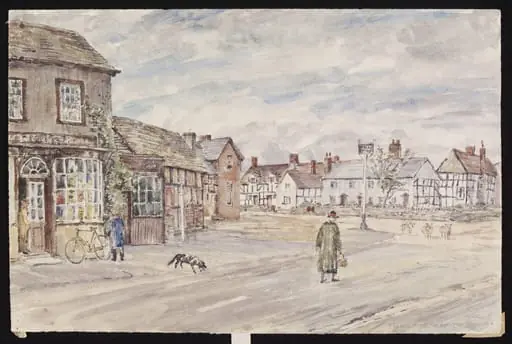 Tram Square, Eardisley