Artwork
Rhoscolyn, Anglesey
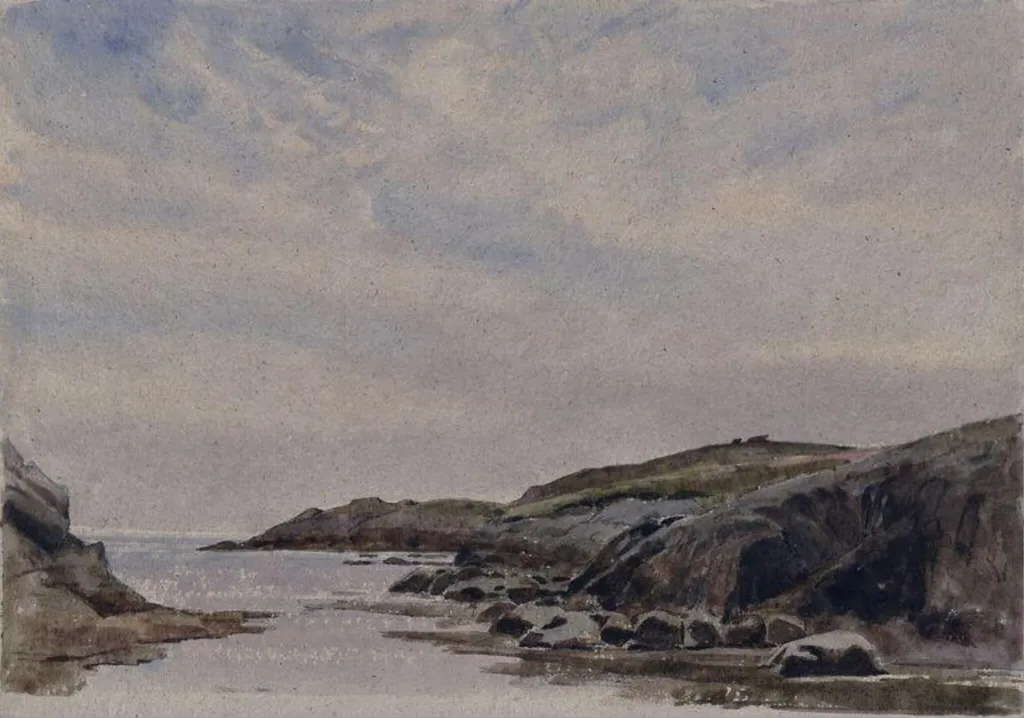
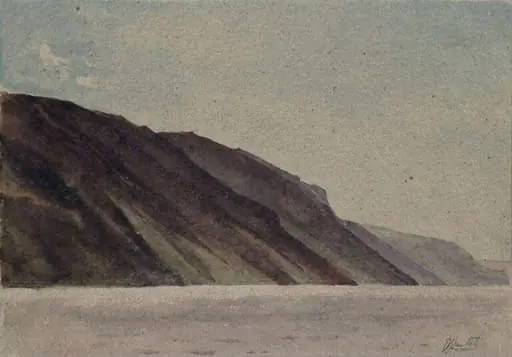
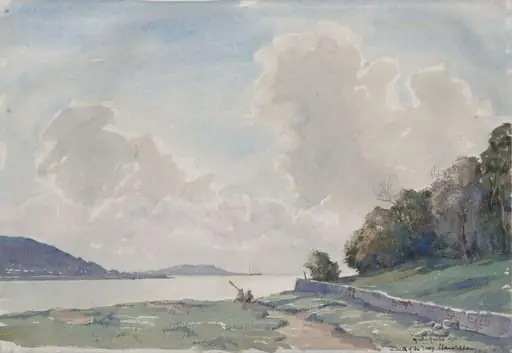
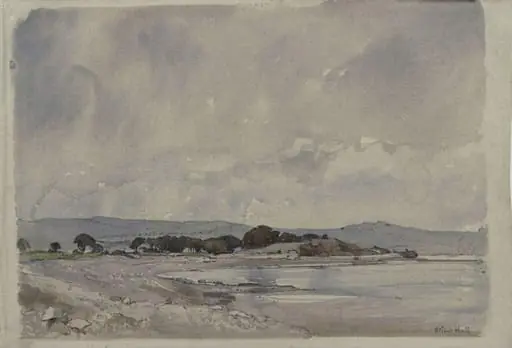
Rhoscolyn, Anglesey is a watercolor work on paper by Lintott. It dates from 1950 and is held in the collection of the Victoria and Albert Museum. Created in 1950, this watercolour captures the coastal landscape of Rhoscolyn on the island of Anglesey, Wales.
About this work
Overview
The artist’s attention to atmospheric light and subtle gradations suggests a contemplative engagement with the natural environment.
Created in 1950, this watercolour captures the coastal landscape of Rhoscolyn on the island of Anglesey, Wales. The composition centers on a quiet stretch of water, framed by a rugged shoreline and distant hills. Rendered in soft, muted tones, the work conveys a stillness characteristic of mid-20th century British landscape watercolours. The artist’s attention to atmospheric light and subtle gradations suggests a contemplative engagement with the natural environment.
Subject & Meaning
The scene portrays a quiet stretch of Welsh coastline, where land meets sea under an overcast sky. There are no human figures or built structures, emphasizing nature’s quiet persistence. The absence of narrative or dramatic elements invites quiet observation, reflecting a preference for unembellished realism. The painting’s mood is one of solitude and calm, aligning with a tradition of British landscape art that values serenity over spectacle.
Technique & Style
The artist employs transparent watercolour washes to build layered tones, allowing the paper’s white to suggest highlights in the sky and water. Brushwork is restrained, with soft edges and minimal detail, particularly in the distant hills. The palette is dominated by greys, blues, and pale greens, reinforcing the subdued atmosphere. The technique prioritizes mood over precision, relying on the medium’s fluidity to evoke texture and light without heavy definition.
History & Provenance
The painting was completed in 1950, during a period when British artists were returning to regional landscapes after the disruptions of war. Its origin is tied to the artist’s personal engagement with Anglesey’s coast, though specific details of its creation or early ownership remain undocumented. It has remained in private collections since its completion, with no record of public exhibition or major institutional acquisition.
Context
This work emerged during a time when watercolour was still widely used by British artists for plein air studies and personal expression, even as oil painting dominated the gallery scene. Rhoscolyn’s depiction aligns with regionalist tendencies in post-war Wales, where artists turned to local scenery as a source of cultural continuity. The painting reflects a broader interest in quiet, unheroic landscapes as counterpoints to industrial and wartime imagery.
Legacy
Though not widely published or exhibited, the painting contributes to a quieter strand of 20th-century British landscape art that values observation over grandeur. It exemplifies how watercolour served as a personal medium for recording place and mood, often outside the mainstream art world. Its preservation offers insight into the everyday artistic practices of artists who engaged with Wales’s coastal environments during a period of social and cultural transition.
Own this work as a print
Artist & collection