Artwork
Lohan
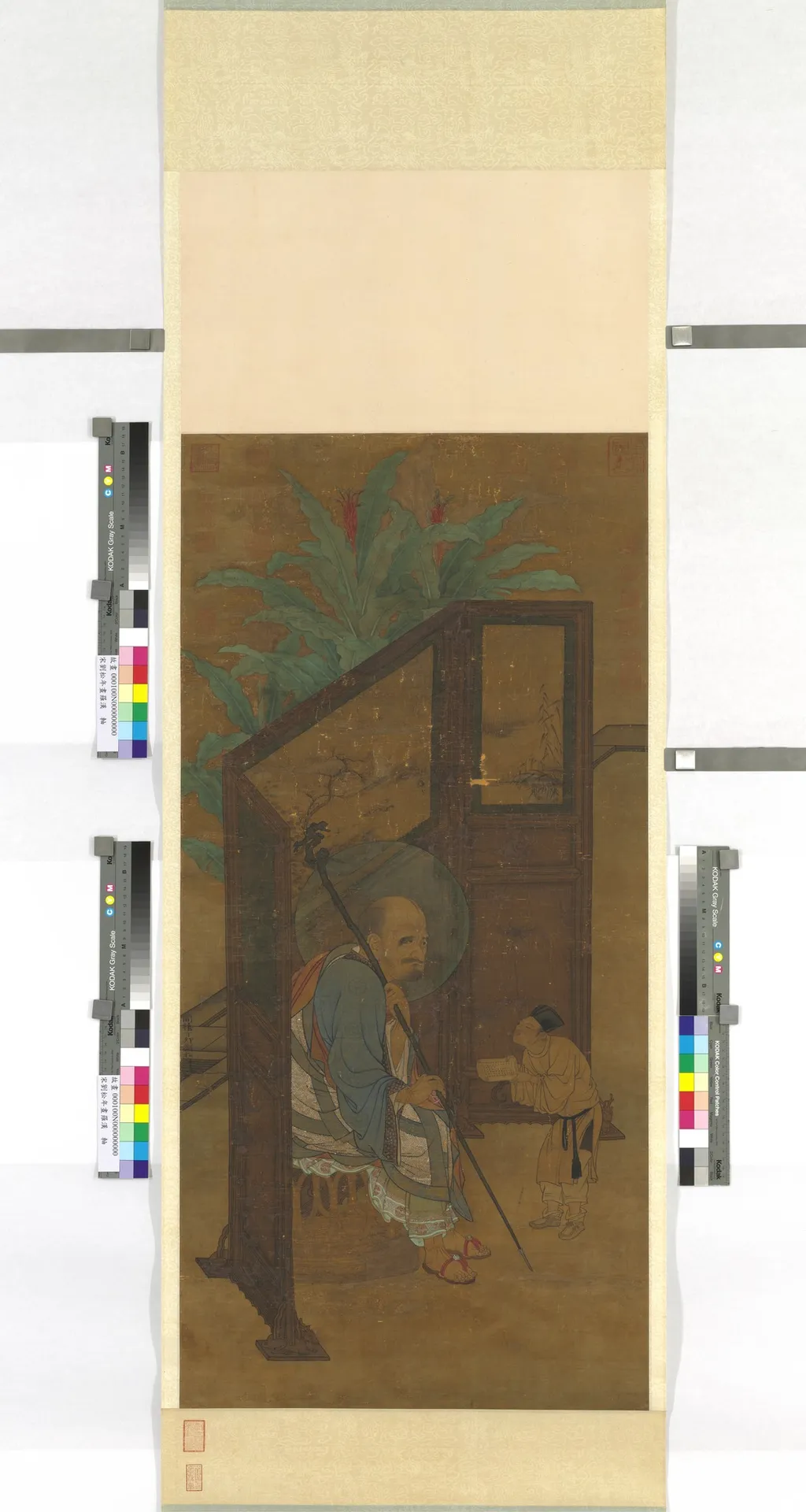
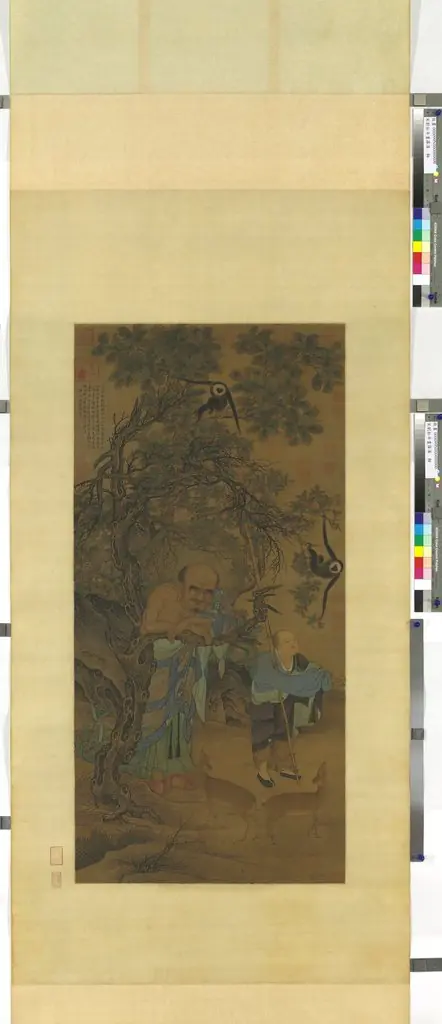
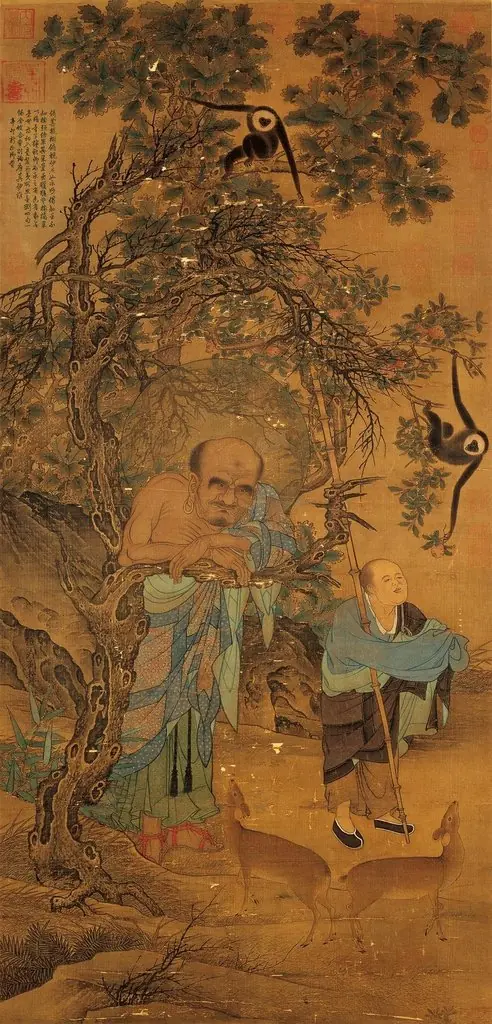
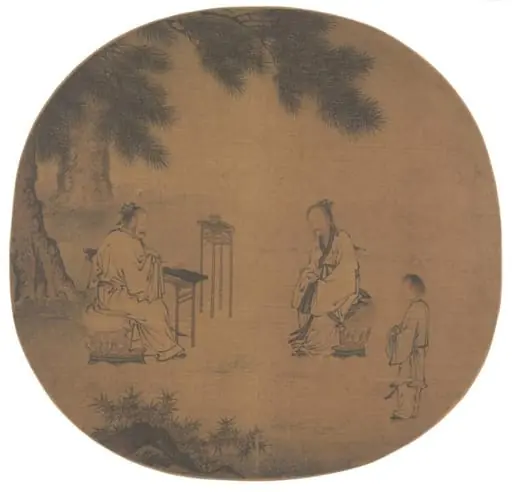
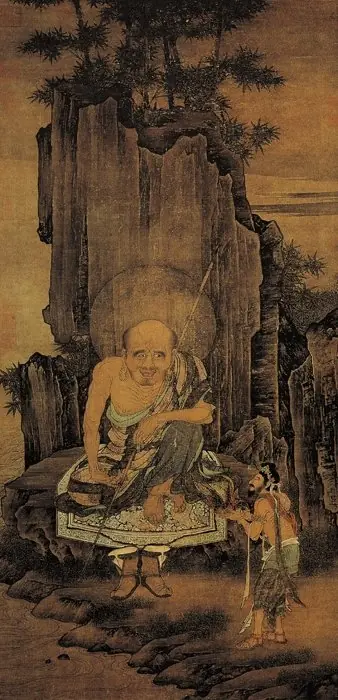
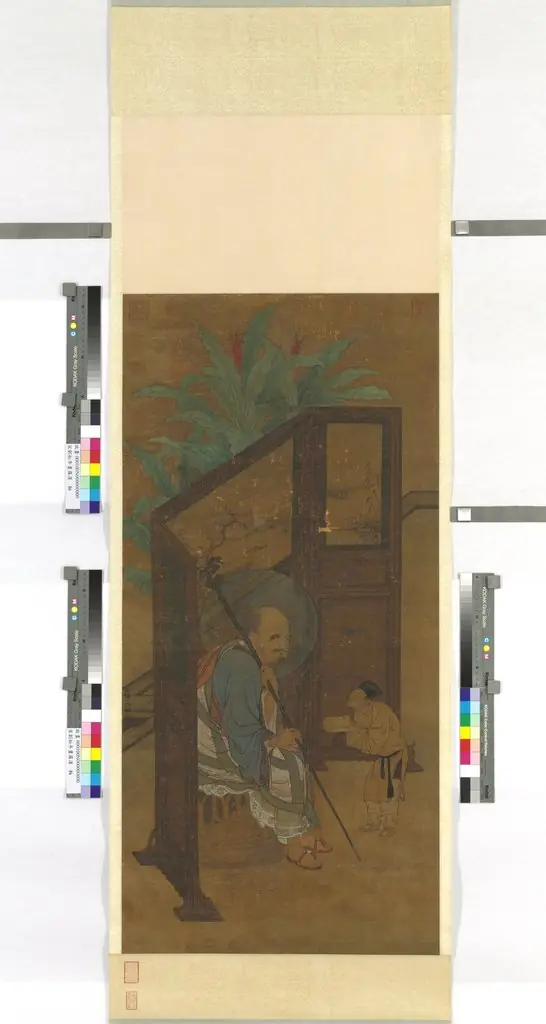
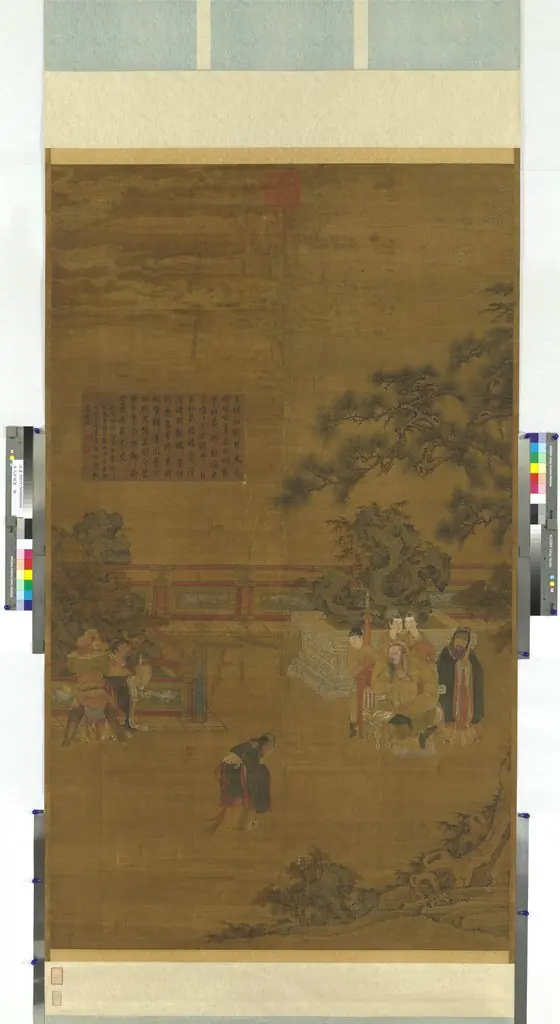
Lohan is an unspecified painting by the Song dynasty landscape artist Liu Songnian. It dates from 1207 and is held in the collection of the National Palace Museum.
About this work
Overview
Liu, a court painter affiliated with the Imperial Academy in Hangzhou, specialized in refined naturalism and spiritual themes.
Painted in 1207 by Liu Songnian, this work is one of several depictions of arhats, or enlightened disciples of the Buddha, produced during the Southern Song Dynasty. Liu, a court painter affiliated with the Imperial Academy in Hangzhou, specialized in refined naturalism and spiritual themes. The painting reflects his role as a key figure among the Four Masters of the Southern Song, blending monastic subject matter with the period’s emphasis on quiet, contemplative landscapes.
Subject & Meaning
The painting portrays an aged monk seated beside a young acolyte, their interaction suggesting transmission of wisdom. The monk’s staff and beard denote age and spiritual authority, while the child’s upward gaze implies reverence and learning. The setting—calm, enclosed by architecture and foliage—evokes a hermitage beyond worldly concerns. Together, the figures embody the Buddhist ideal of quiet enlightenment, conveyed not through dramatic gesture but through stillness and mutual presence.
Technique & Style
Liu employed fine ink lines and subtle washes to define form and texture, characteristic of Southern Song academic painting. The monk’s robe is rendered with precise folds, while the foliage and architectural elements are delicately outlined, enhancing spatial depth without overt perspective. Color is restrained: blue, white, and red accents draw attention to key figures, while the background remains muted. The composition balances verticality and stillness, reinforcing the meditative tone.
History & Provenance
Created during Liu Songnian’s tenure at the Imperial Academy, the painting likely served as a devotional or instructional image within court circles. It was produced in Hangzhou, the Southern Song capital, where Buddhist themes were integrated into scholarly painting traditions. While its early ownership is undocumented, its survival reflects the enduring value placed on court-academy works, preserved through imperial collections and later private holdings.
Context
In early 13th-century China, Buddhist imagery in painting shifted from grand narratives to intimate, psychologically nuanced scenes. Liu’s work aligns with this trend, favoring quiet contemplation over doctrinal spectacle. The integration of landscape and figure reflects Daoist and Chan Buddhist ideals of harmony between human and nature. Court painters like Liu were expected to merge technical precision with spiritual resonance, making such works both aesthetic and moral exercises.
Legacy
Liu Songnian’s *Lohan* exemplifies the Southern Song’s contribution to East Asian religious art: understated, emotionally restrained, and deeply attentive to detail. His approach influenced later generations of painters who sought to convey inner states through minimal means. Though not widely reproduced, the painting remains a touchstone for understanding how Buddhist themes were adapted into the refined visual language of Song court culture.
Artist & collection
Artist
Liu Songnian (刘松年 or traditional Liu Sung-nien, 1174–1224 CE), was a Chinese landscape painter during the early Southern Song Dynasty (1127–1279).