Artwork
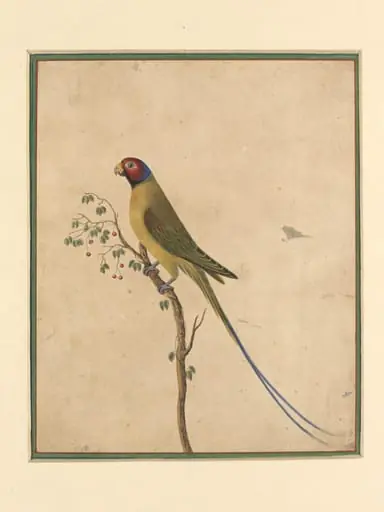
Red Ringed Parrakeet
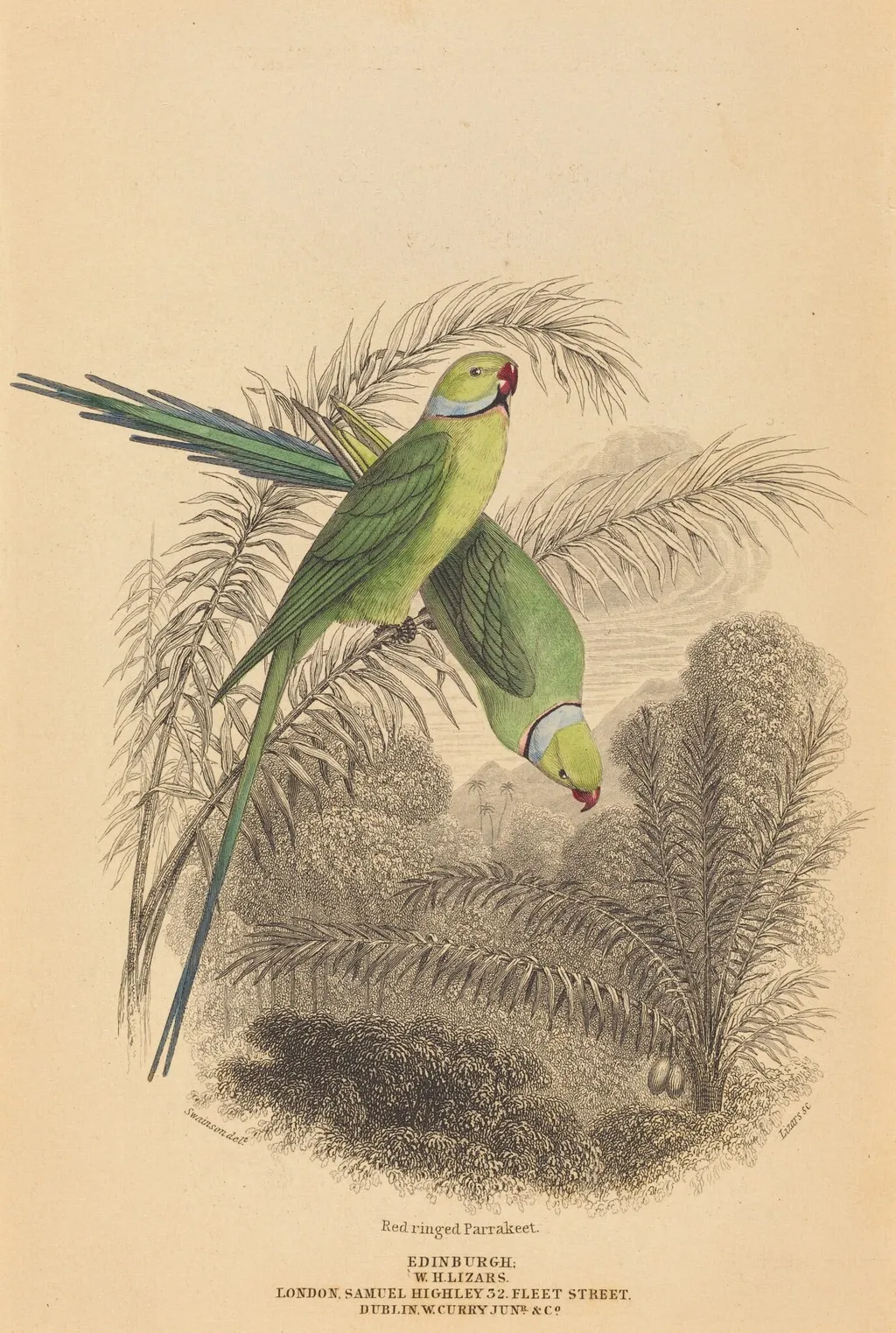
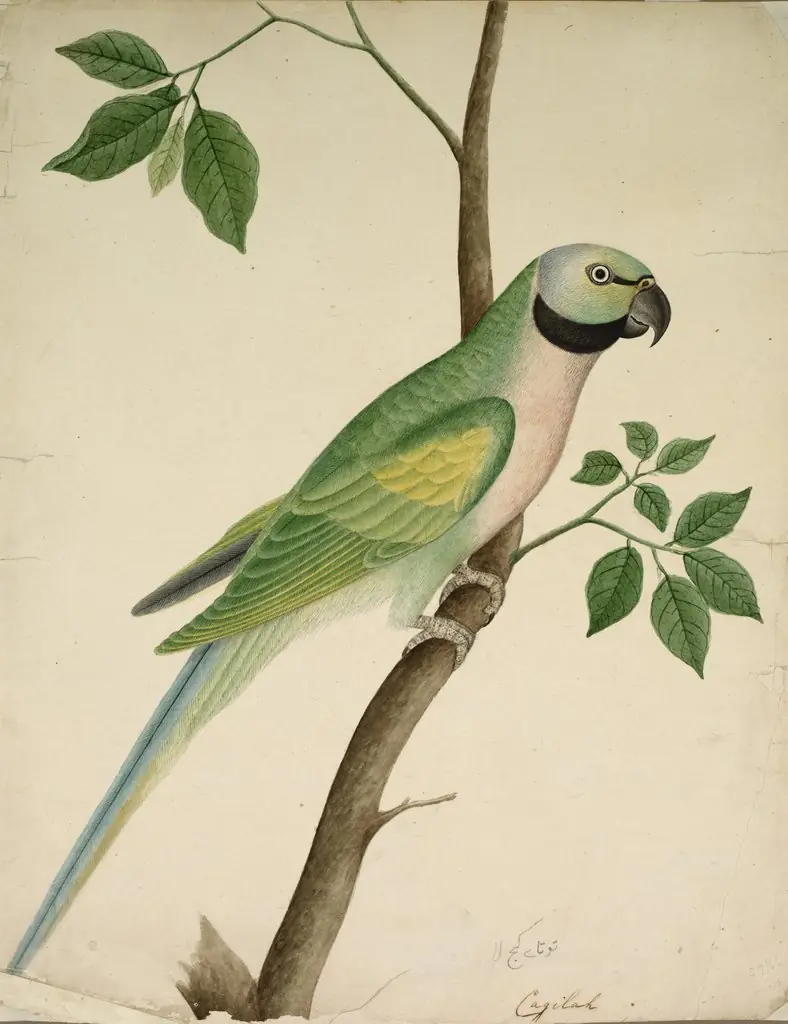
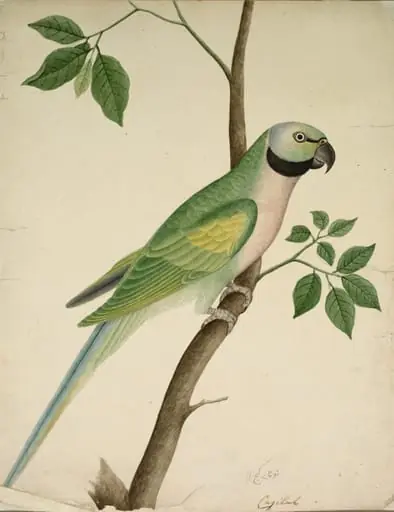
Red Ringed Parrakeet is an ink print by the Romanticist artist William Home Lizars. It dates from 1824 and is held in the collection of the National Gallery of Art.
About this work
Overview
Created in 1824 by William Home Lizars, this hand-colored lithograph depicts a parakeet with a distinctive red ring around its neck.
Created in 1824 by William Home Lizars, this hand-colored lithograph depicts a parakeet with a distinctive red ring around its neck. Printed in monochrome and then individually painted, the work belongs to a 19th-century tradition of natural history illustration. Each copy varies slightly due to manual coloring, reflecting the labor-intensive process of producing detailed ornithological images before photographic reproduction.
Subject & Meaning
The bird portrayed is a parakeet marked by vivid red plumage encircling its head and a bright green body. Rendered in isolation against a blank background, the focus is purely on anatomical accuracy. The image serves a scientific purpose, documenting avian species for study and classification, rather than conveying symbolic or narrative content.
Technique & Style
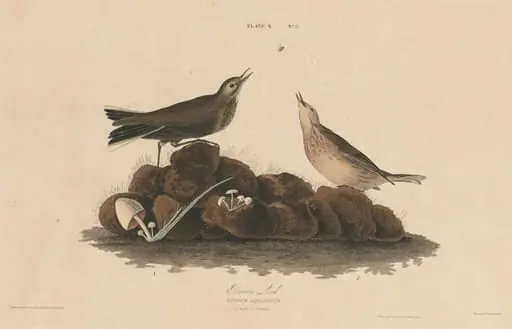
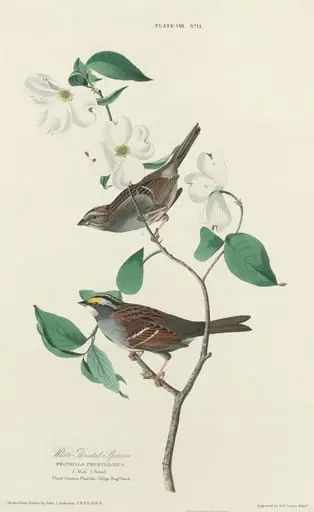
The image was produced using lithography, a print method that transfers ink from a stone surface. After the initial black-and-white impression, artists applied watercolor by hand to each sheet, allowing subtle variations in tone and hue. Fine brushwork captures individual feathers, emphasizing texture and form with precision typical of early 19th-century naturalist illustration.
History & Provenance
This print was made during a period when illustrated natural history publications were gaining popularity in Europe and North America. Lizars, a Scottish artist and engraver, contributed to such works for scientific audiences. The piece is held in the collection of the National Gallery of Art in Washington, D.C., where it remains part of a broader archive of historical ornithological prints.
Context
In the 1820s, detailed bird illustrations were essential for naturalists documenting global biodiversity. With no photography, hand-colored prints were the primary means of disseminating visual knowledge of exotic species. These works often accompanied scholarly texts, bridging art and science as exploration expanded and public interest in natural history grew.
Legacy
Though largely replaced by photographic methods by the late 19th century, hand-colored lithographs like this one remain valuable for their technical craftsmanship and historical insight. They represent a transitional phase in scientific illustration, preserving the meticulous observation and manual skill that defined natural history documentation before modern technology.
Artist & collection