Artwork
Louis-Philippe, duc d'Orléans, lieutenant général du royaume, arrive à l'Hôtel de ville de Paris, 31 juillet 1830
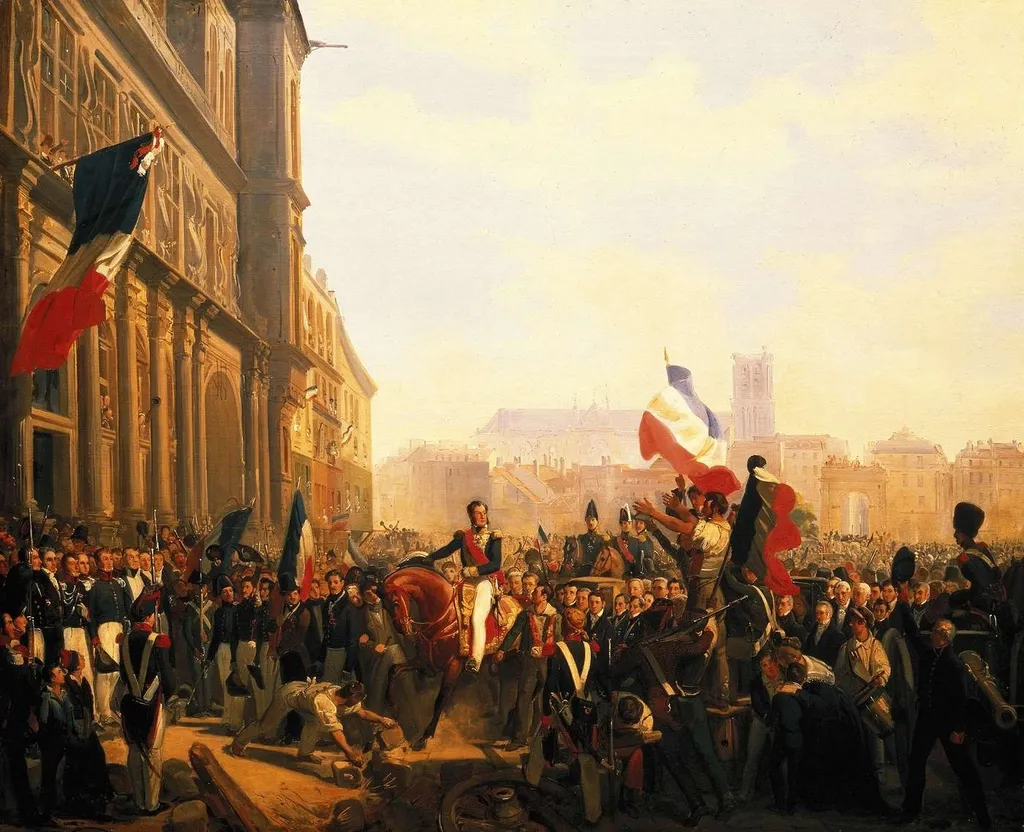
Louis-Philippe, duc d'Orléans, lieutenant général du royaume, arrive à l'Hôtel de ville de Paris, 31 juillet 1830 is an oil painting by Éloi Firmin Féron. It dates from 1837 and is held in the collection of the Museum of the History of France.
About this work
Overview
It now resides in the Palace of Versailles, part of a broader effort to visually legitimize the new July Monarchy.
Painted in 1837 by Éloi Firmin Féron, this oil-on-canvas work captures a pivotal moment in French political history: the arrival of Louis-Philippe, duc d'Orléans, at the Hôtel de Ville in Paris on July 31, 1830. Commissioned to document the transition of power following the July Revolution, the painting reflects the formal visual language of historical narrative favored in early 19th-century France. It now resides in the Palace of Versailles, part of a broader effort to visually legitimize the new July Monarchy.
Subject & Meaning
The scene portrays Louis-Philippe on horseback, dressed in military uniform and holding a tricolor flag, as he is welcomed by a diverse crowd gathered before the Hôtel de Ville. The gathering includes citizens from various social strata, some on foot, others on horseback or perched atop carriages, all expressing visible enthusiasm. The image conveys a carefully constructed narrative of popular endorsement, positioning Louis-Philippe as a unifying figure emerging from revolutionary turmoil rather than as a monarch by divine right.
Technique & Style
Féron employs a neoclassical approach with clear spatial organization and controlled movement, influenced by his training under Antoine-Jean Gros. The composition directs attention to the central figure through diagonal lines of flags and architectural symmetry. Figures are rendered with attention to individual detail yet subordinated to the overall ceremonial rhythm. Light falls evenly across the scene, minimizing dramatic contrast in favor of clarity and civic solemnity.
History & Provenance
Completed six years after the events it depicts, the painting was commissioned as part of a state-sponsored initiative to document the July Monarchy’s origins. Féron, who won the Prix de Rome in 1826, became a favored court painter under Louis-Philippe and contributed multiple works to the Versailles galleries. The painting entered the royal collection shortly after its completion and has remained in state custody, displayed as a historical record rather than a personal tribute.
Context
The painting responds to the political instability of 1830, when Charles X was overthrown and Louis-Philippe was offered the role of lieutenant général du royaume before becoming king. The Hôtel de Ville, a historic seat of municipal power, was chosen as the symbolic location for his public assumption of authority. Féron’s depiction aligns with state efforts to frame the revolution as orderly and broadly supported, contrasting with more radical interpretations circulating in pamphlets and caricatures.
Legacy
Though not widely exhibited today, the painting remains a key example of official historiography under the July Monarchy. It exemplifies how art was mobilized to construct political legitimacy through visual narrative. Féron’s role as a court painter underscores the close relationship between state power and artistic production in post-revolutionary France, where historical painting served as both documentation and propaganda.
Artist & collection
Artist
Éloi Firmin Féron (French pronunciation: ; 1802–1876) was a French neoclassicist painter.

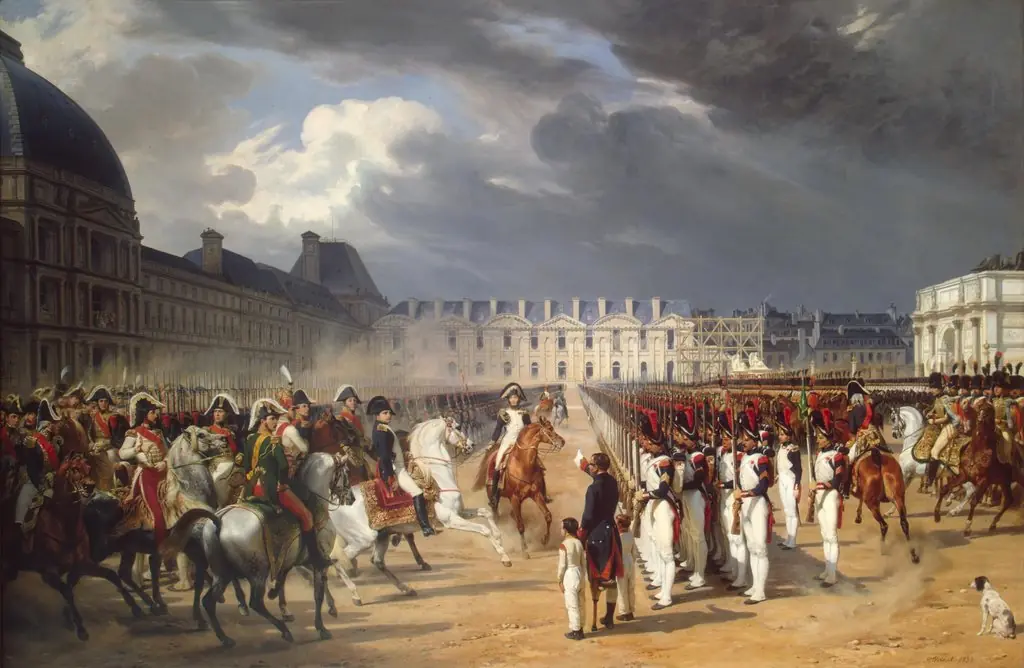 Invalid handing a petition to Napoleon at the parade in the court of the Tuileries Palace
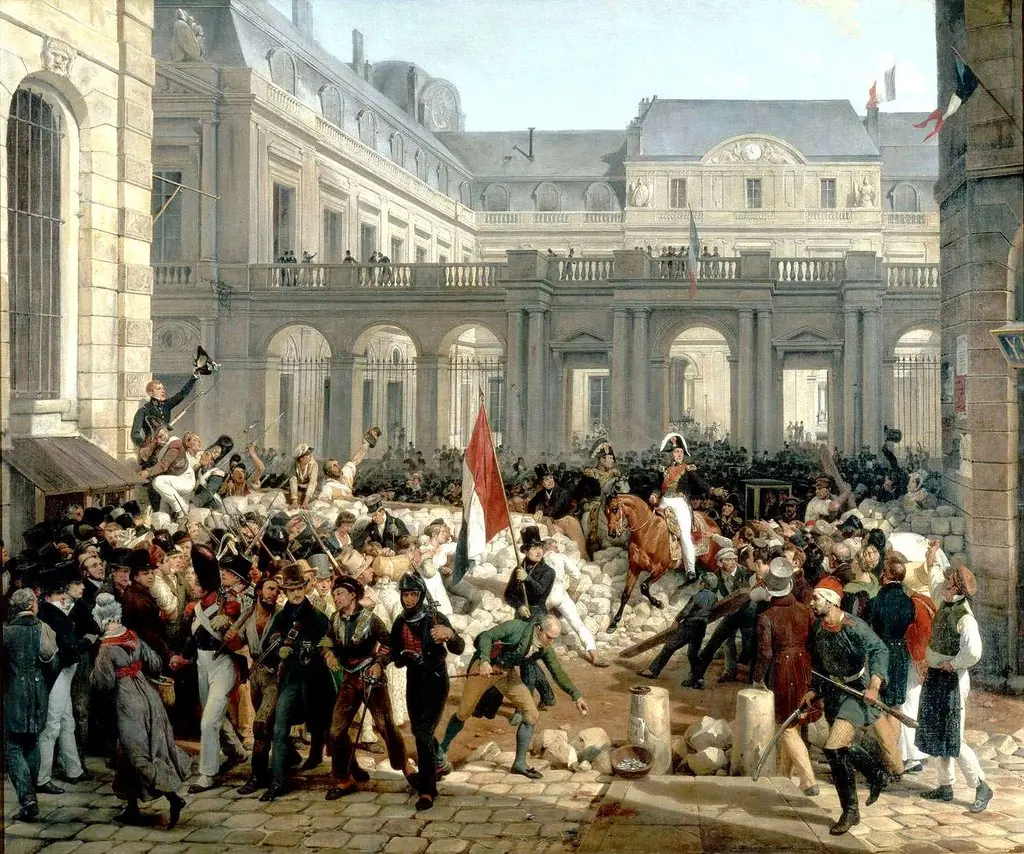 The Duke of Orleans Leaving the Palais-Royal
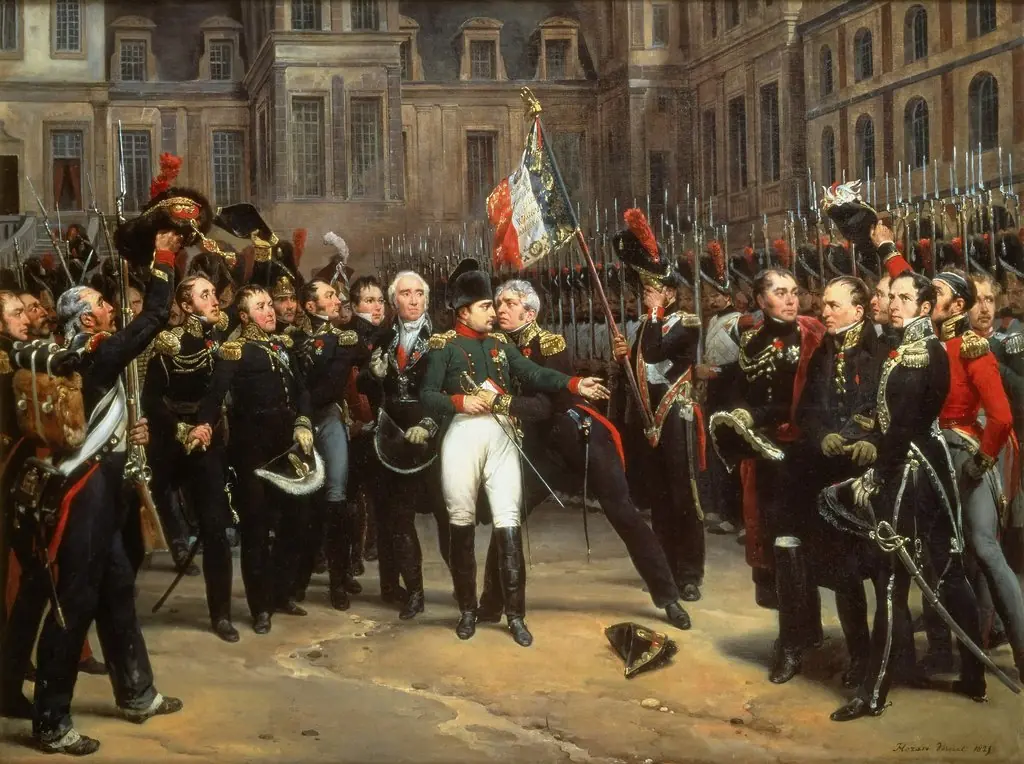 Napoleon bids farewell to his Guard at Fontainebleau on 20 April 1814
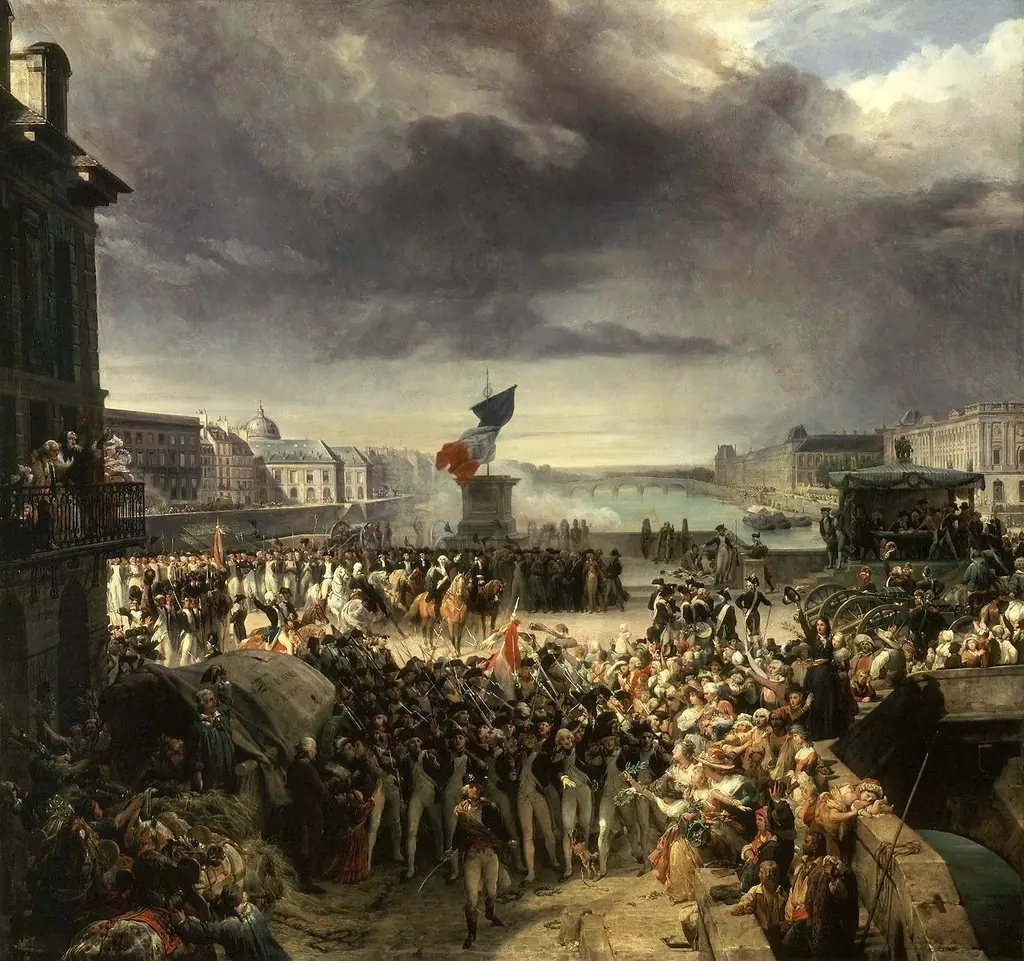 The National Guard of Paris Departs for the Army
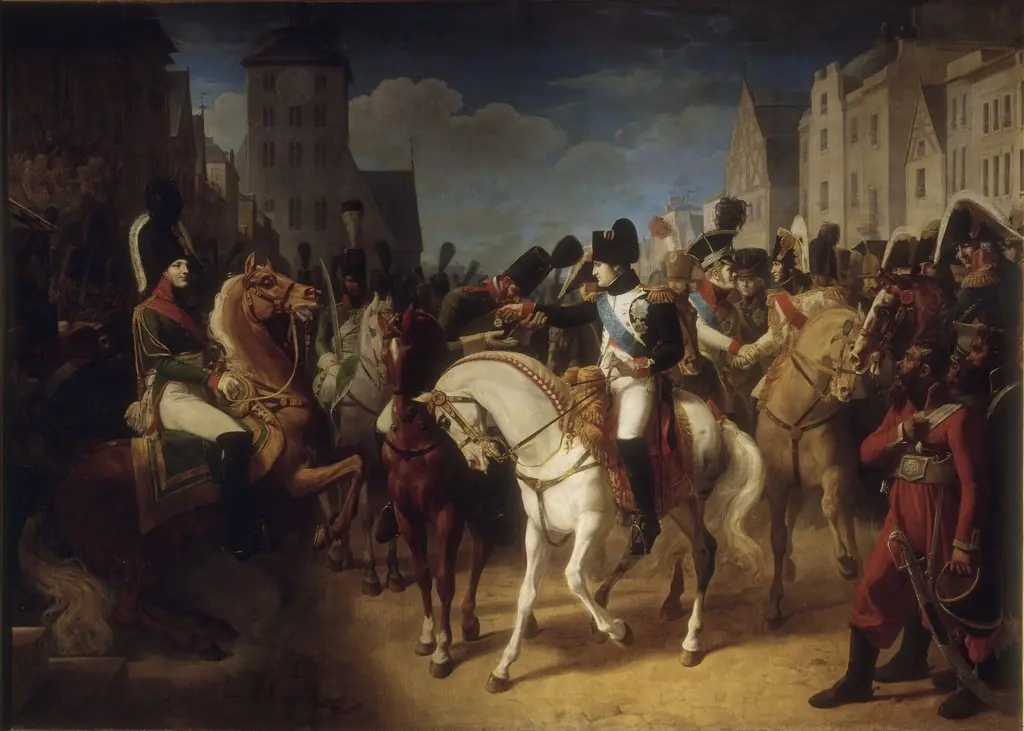 Napoleon I decorated a soldier of the Russian army in Tilsitt with the cross of the Legion of Honor
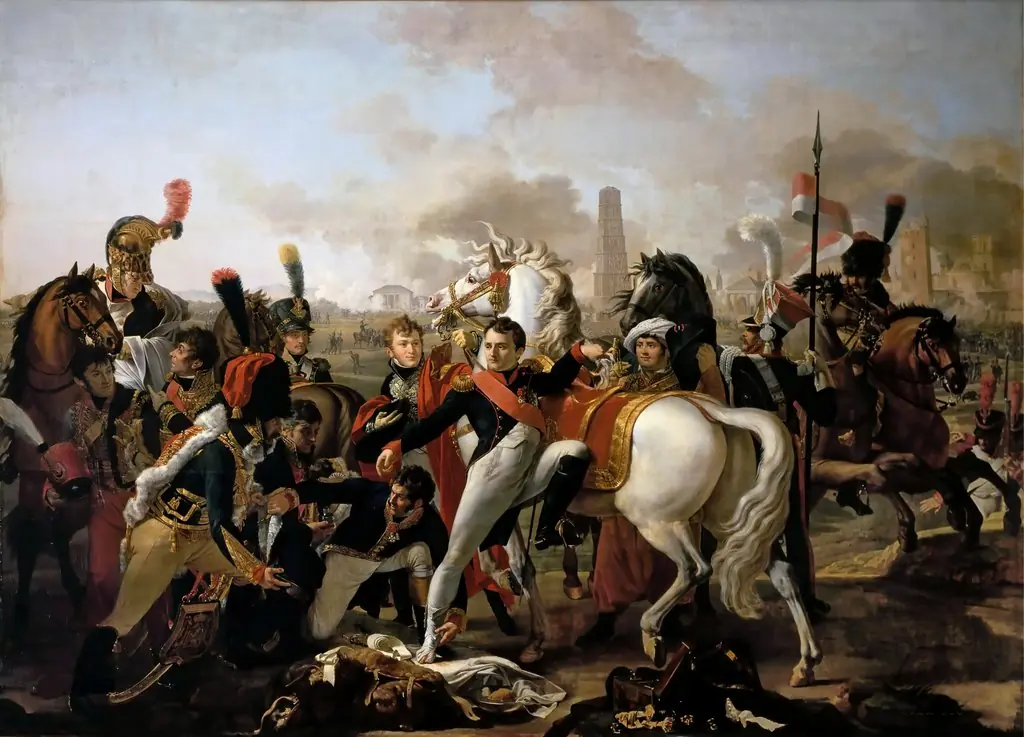 Napoleon dismounting with an injured foot at Regensburg, aided by the Surgeon, Yvan, April 23, 1809
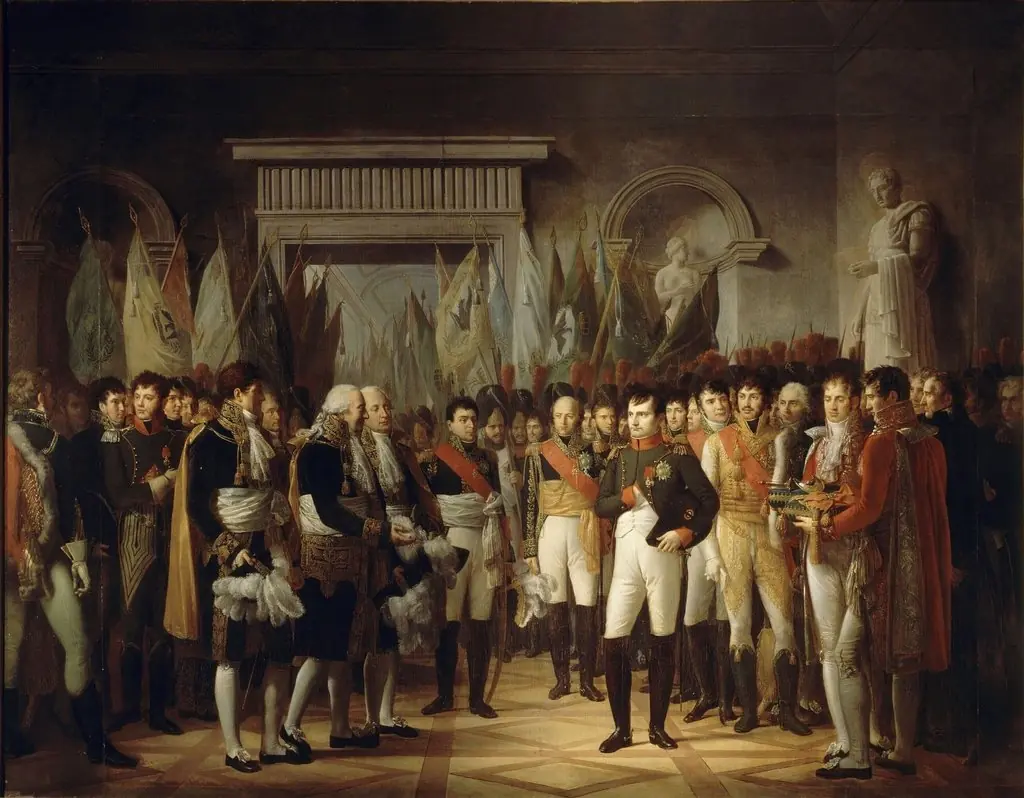 The Emperor receiving the deputies of the Conservative Senate in Berlin at the royal palace, 19 November 1806
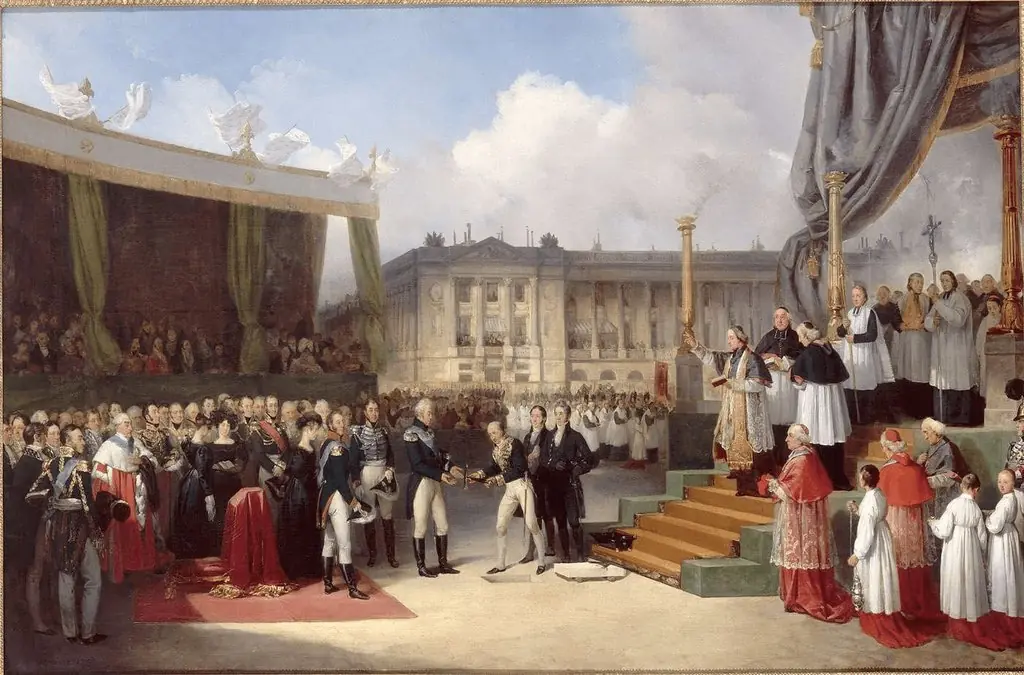 Inauguration du monument à la mémoire de Louis XVI par Charles X, place de la Concorde, 3 mai 1826
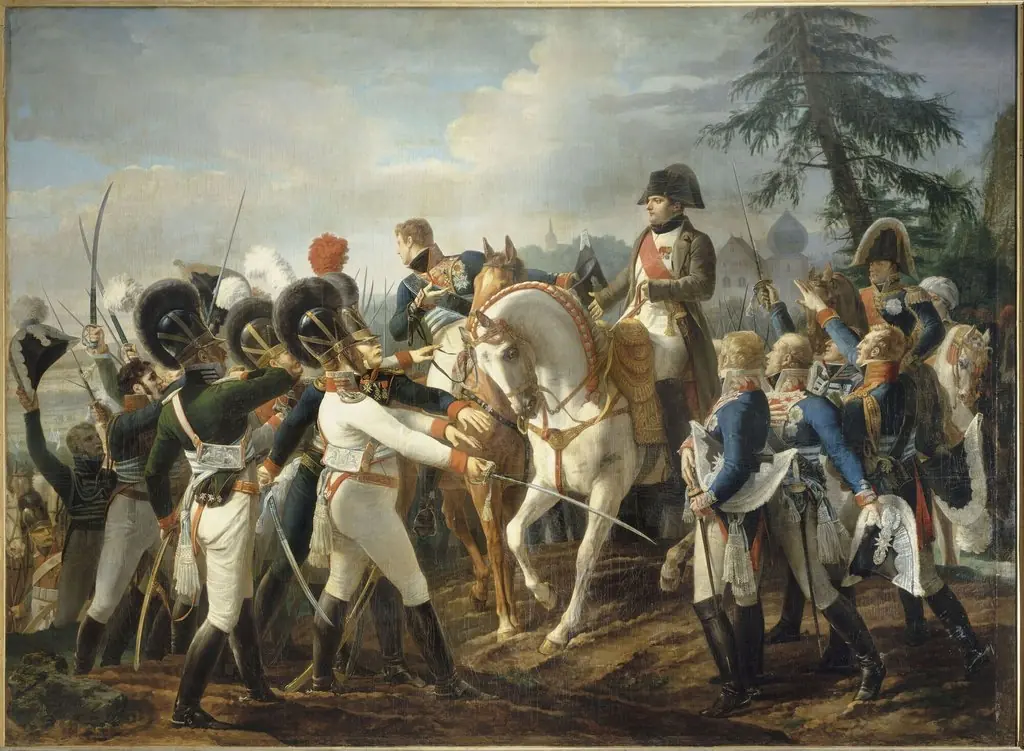 Napoléon harangue les troupes bavaroises et wurtembourgeoises à Abensberg, 20 avril 1809
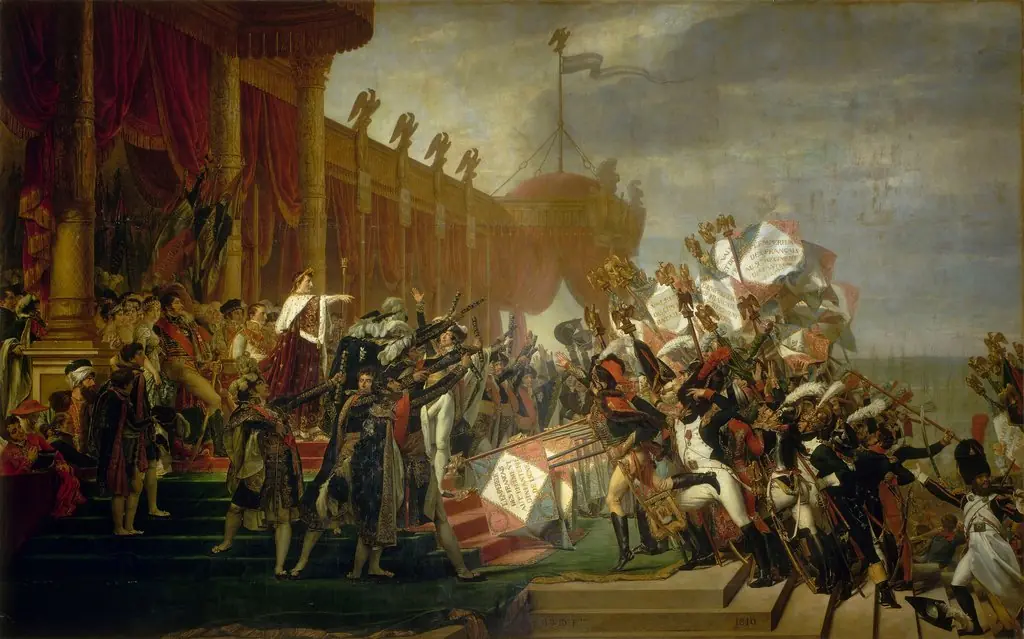 The Distribution of the Eagle Standards
 Attentat de Fieschi. Revue de la Garde nationale, 28 juillet 1835
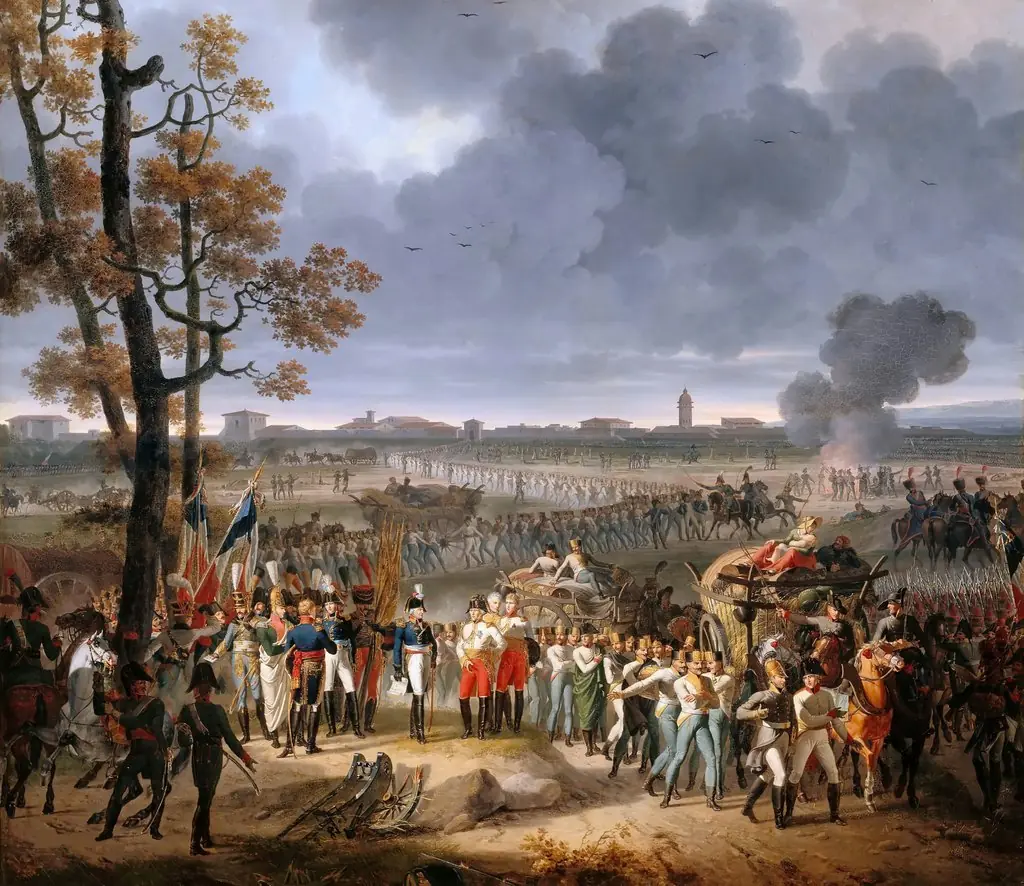 Surrender of Mantua, February 2, 1797