Artwork
A portrait of 'General Von Falkenstein'
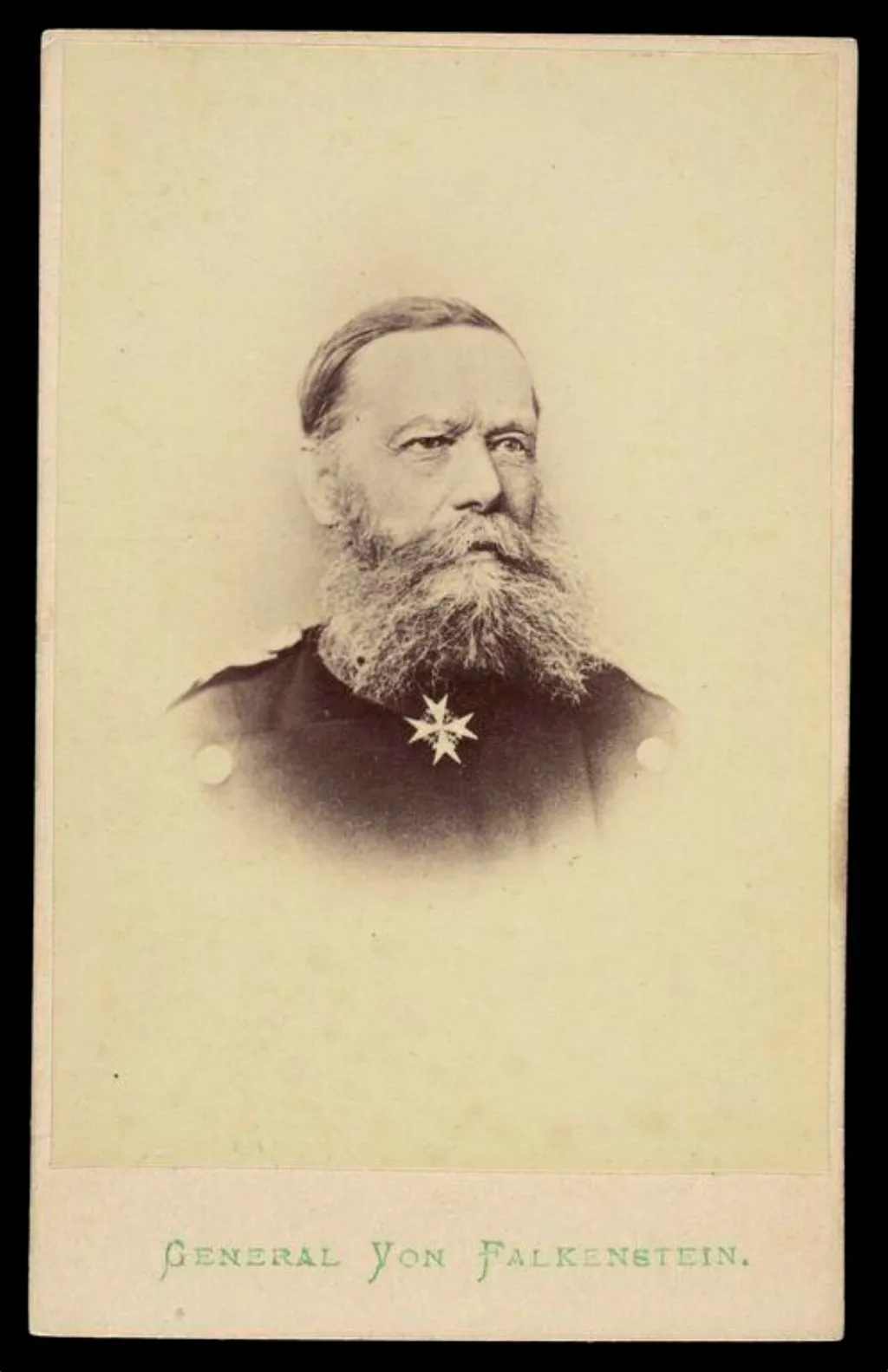
A portrait of 'General Von Falkenstein' is a photographic photography by the Impressionist artist London Stereoscopic and Photographic Company. It dates from 1870 and is held in the collection of the Victoria and Albert Museum.
About this work
Check out the London Stereoscopic and Photographic Company to see how they worked.
This is a black-and-white photo of a man with a thick beard and mustache. He’s wearing a dark uniform with a star pin on his chest. The background is plain, and the lighting is soft, mostly on his face.
The photo was taken in 1870 by a company that made detailed portraits. The star pin suggests he was a high-ranking officer.
Check out the London Stereoscopic and Photographic Company to see how they worked.
Overview
This black-and-white carte-de-visite portrait, dated 1870, depicts General Eduard Vogel von Falkenstein in a formal head-and-shoulders composition. Produced by the London Stereoscopic and Photographic Company, it reflects the era’s commercial portrait practices. The image is part of the Windsor Collection, transferred from Windsor Castle during Owen Morshead’s tenure as Royal Librarian. Its modest scale and plain background align with the popular format for distributing military and aristocratic likenesses in the late 19th century.
Subject & Meaning
General Falkenstein is shown in full military uniform, the star pin on his chest indicating high rank, likely an order of merit from a German state. His thick beard and mustache conform to 19th-century military masculinity, reinforcing authority and experience. The portrait’s restrained composition avoids ornamentation, focusing attention on his presence rather than personal narrative. It functions as an official representation, intended for circulation among peers and institutions rather than private display.
Technique & Style
The photograph employs soft, even lighting that gently models the subject’s face without harsh shadows, typical of studio portraiture of the period. The plain background isolates the figure, emphasizing clarity and detail. The London Stereoscopic and Photographic Company used albumen paper prints, known for fine tonal gradations and sharpness. The image’s small size—standard for carte-de-visite—suggests mass production and accessibility, allowing the subject’s likeness to be collected and exchanged widely.
History & Provenance
The portrait entered the Royal Collection through transfer from Windsor Castle during Owen Morshead’s directorship (1926–1958). Its presence there indicates official interest in preserving military figures of European significance. The London Stereoscopic and Photographic Company, active in the 1860s–1880s, specialized in commercial portraiture and stereoscopic views, suggesting the image was likely commissioned or acquired for institutional or diplomatic purposes rather than personal use.
Context
In 1870, Europe was on the brink of the Franco-Prussian War, and military figures like Falkenstein held heightened public visibility. Carte-de-visite portraits were a dominant medium for disseminating images of leaders, blending diplomacy with popular culture. The photograph’s production in London—rather than Germany—hints at international networks of military recognition and the role of British studios in documenting foreign dignitaries during a period of shifting alliances and national identity formation.
Legacy
As part of the Windsor Collection, the portrait remains a documented artifact of 19th-century military portraiture and institutional archiving practices. It contributes to the historical record of how European officers were visually represented and preserved for posterity. Its survival reflects the Royal Collection’s broader effort to curate international military figures, offering insight into the intersection of photography, rank, and state memory in the Victorian era.
Artist & collection
Artist
London Stereoscopic and Photographic Company
They snapped portraits for London’s theater crowd in the 1800s, turning actors and dancers into instant celebrities.

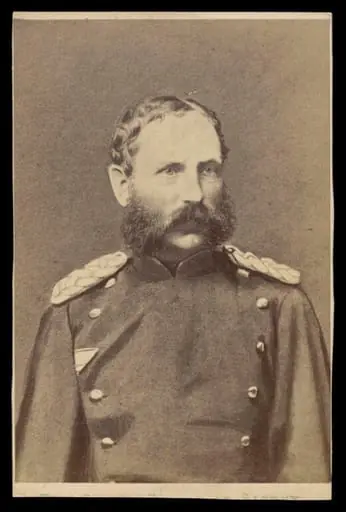 A portrait of 'Crown Prince of Saxony'
 Portrait of the Manufacturer N.M. Brusnitsyn
 Portrait of Senator Ivan Aprelev
 Portret van Willem III, koning der Nederlanden
 A portrait of 'General Uhrich'
 Untitled
 Colonelul Grossmann
 Portretul doctorului Carol Davila
 José Curtoys de Anduaga hermano del pintor
 A portrait of 'M. Theirs'