Artwork
Goatherd Piping to Four Goats
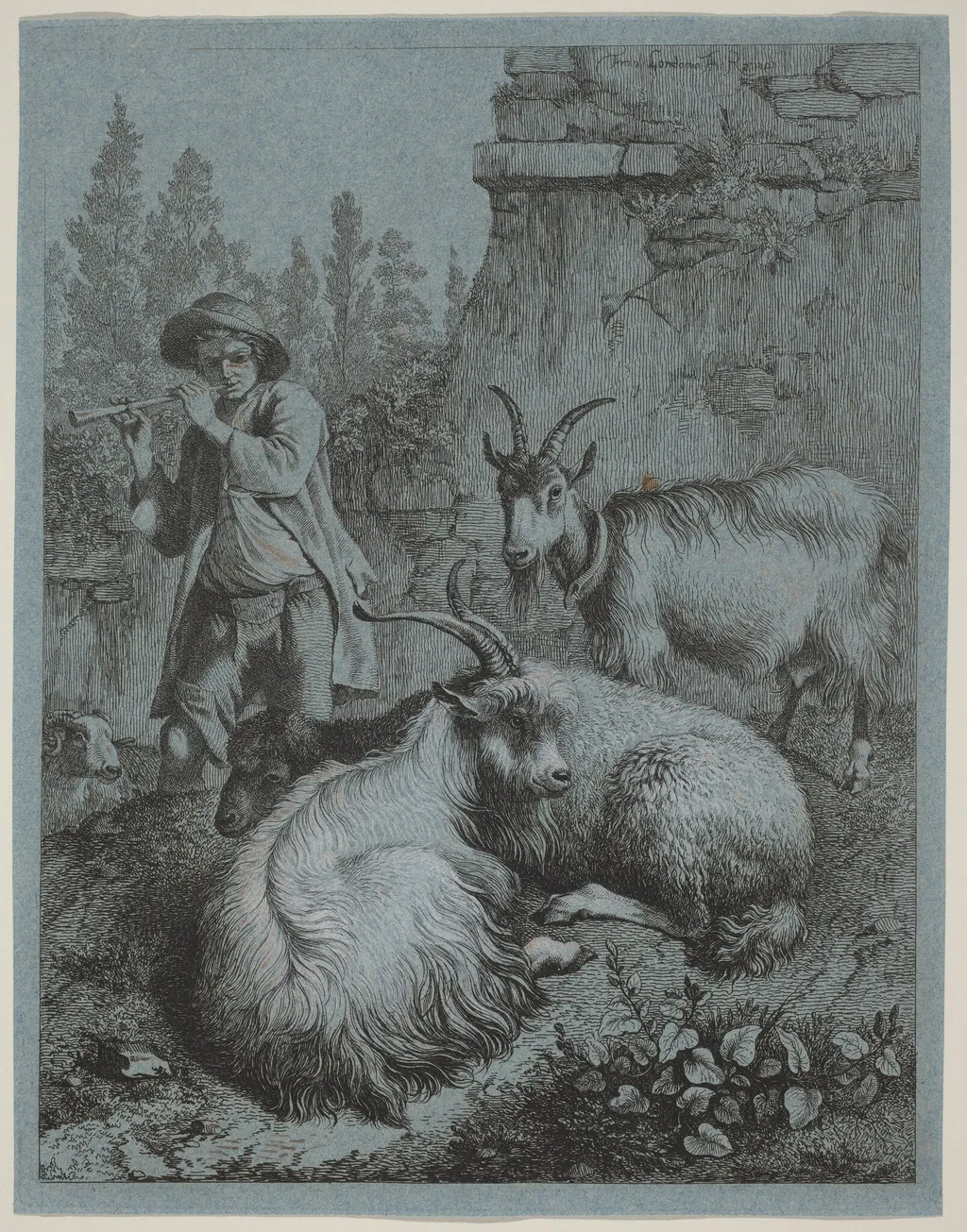
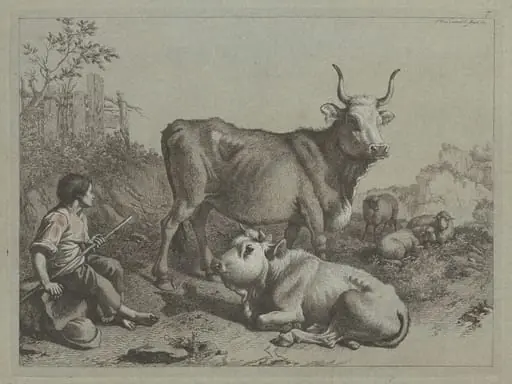
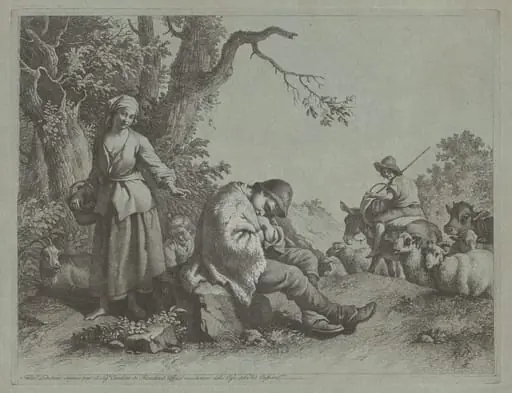
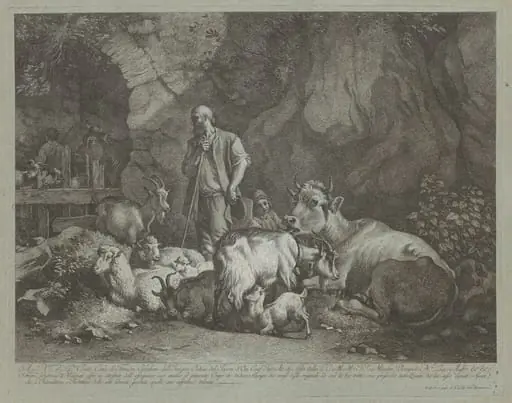
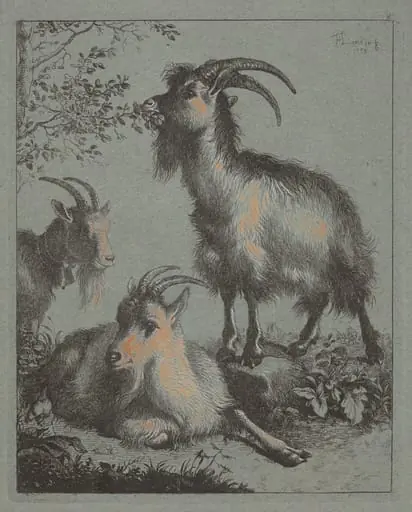
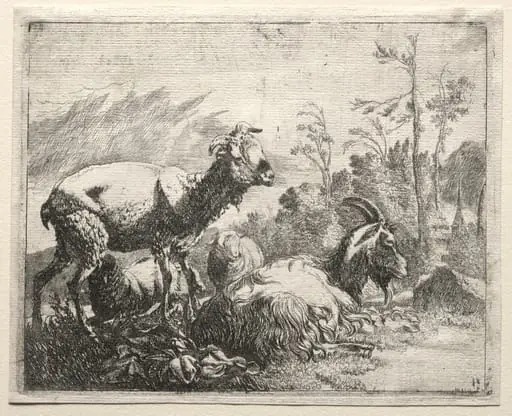
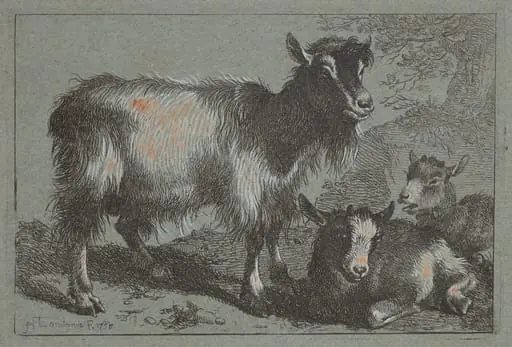
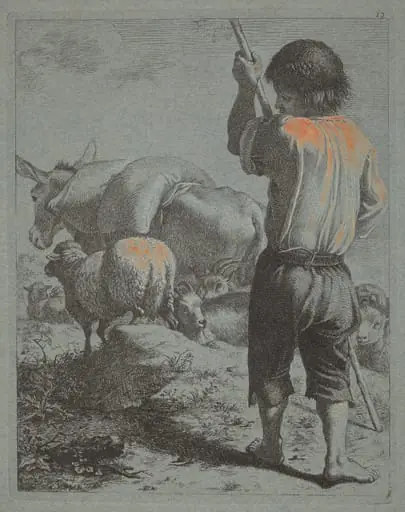
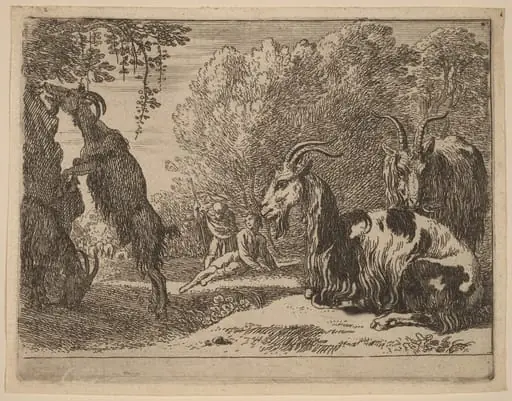
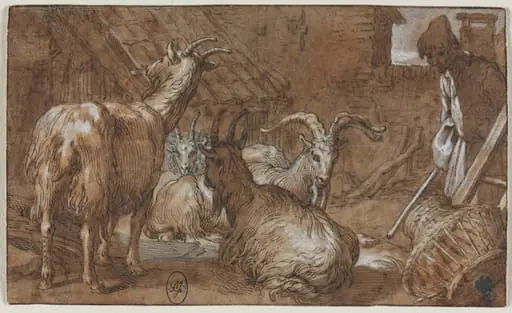
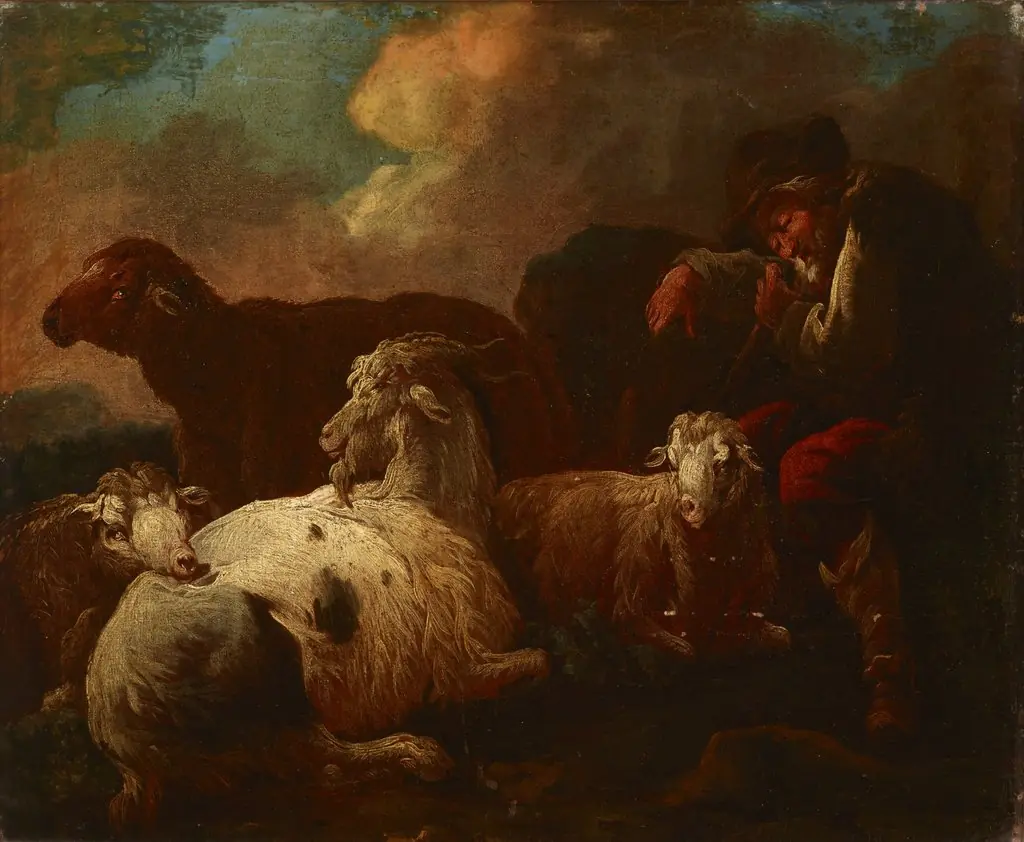
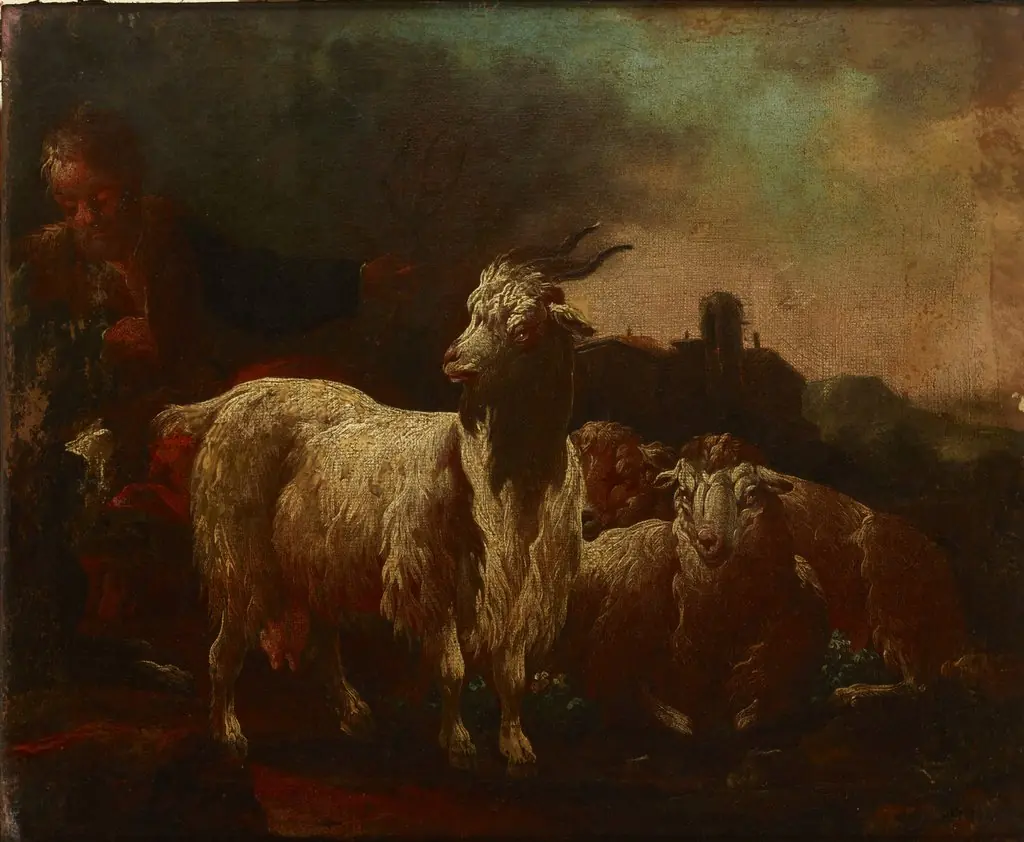
Goatherd Piping to Four Goats is an ink print by the Baroque artist Francesco Londonio. It dates from 1753 and is held in the collection of the National Gallery of Art. Created in 1753, the work is an etching executed on blue paper and enhanced with white heightening.
About this work
Overview
Created in 1753, the work is an etching executed on blue paper and enhanced with white heightening. It portrays a pastoral scene in which a goatherd, attired in a hat and coat, plays a flute while four goats gather around him. The composition is set against a backdrop of trees and a stone structure, lending depth to the tranquil tableau.
Subject & Meaning
The image captures a moment of rustic harmony, suggesting the soothing influence of music on nature. The goatherd’s pipe and the attentive goats convey a simple, bucolic narrative that aligns with the genre scenes favored by Northern Italian patrons in the mid‑18th century.
Technique & Style
Londonio employed etching to delineate forms, then applied white heightening on the blue ground to accentuate textures such as the goat’s fur and the goatherd’s clothing. The contrast between the white highlights and the blue paper creates a luminous effect, while careful modeling of light and shadow adds dimensionality.
History & Provenance
The artist, Francesco Londonio, was active in Milan during the late Baroque and Rococo periods. Trained under Ferdinando Porta and Giovanni Battista Sassi, he also studied engraving with Benigno Bossi and spent time in Rome and Naples. His oeuvre, largely composed of pastoral and rustic subjects, reflects the tastes of his contemporary clientele.
Context
In mid‑18th‑century Northern Italy, genre scenes depicting everyday rural life were popular among patrons seeking images that combined charm with moral simplicity. Londonio’s focus on peasants and animals fits within this broader cultural preference for idyllic, countryside motifs.
Artist & collection

Artist
Francesco Londonio (1723–1783) was an Italian painter, engraver, and scenographer, active mainly in his native Milan in a late-Baroque or Rococo style.