Artwork
Shepherd with Donkey, Sheep and Goat
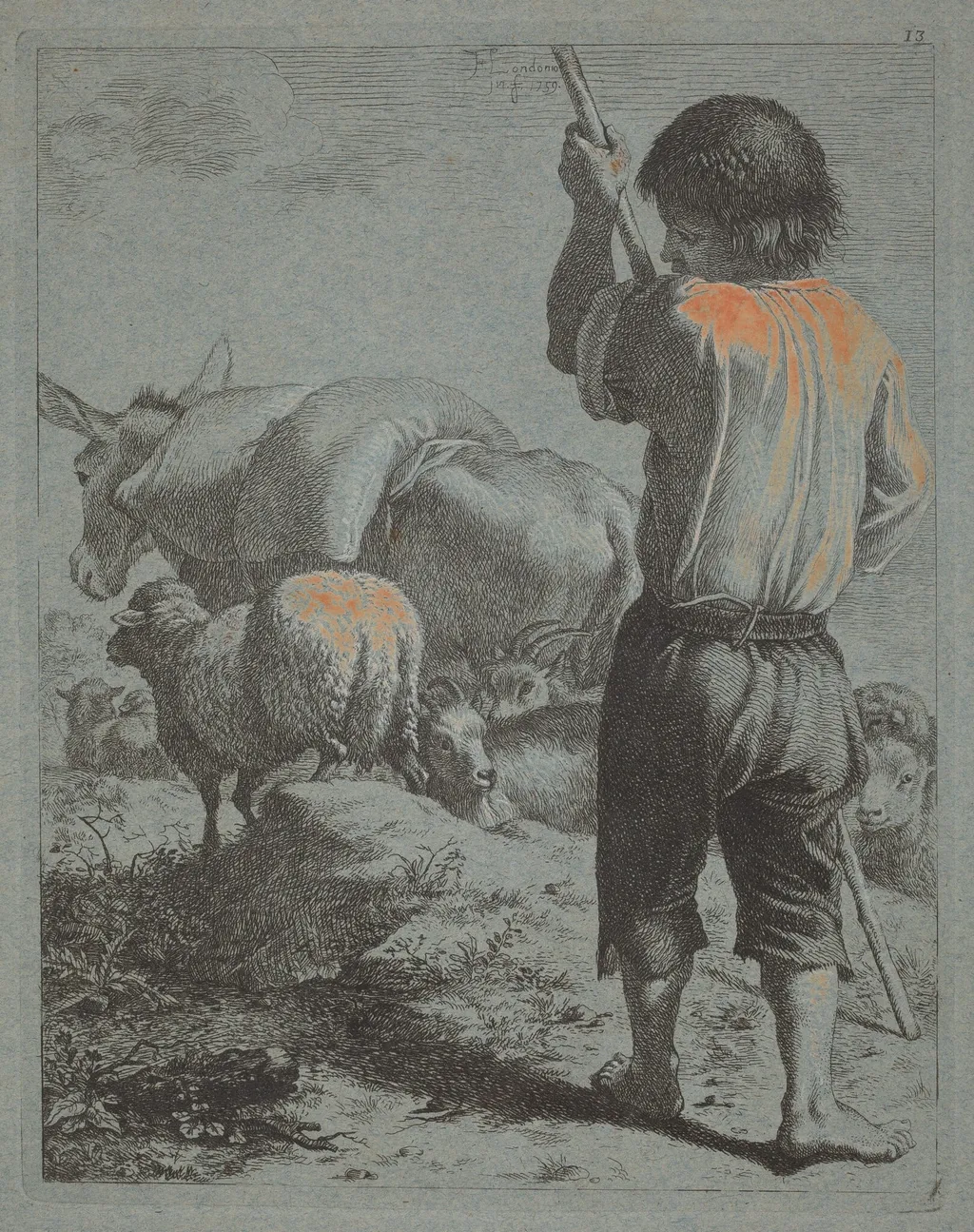
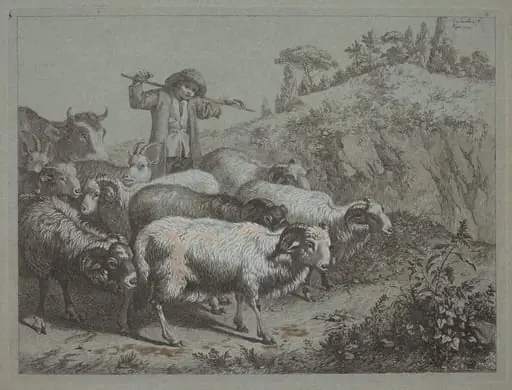
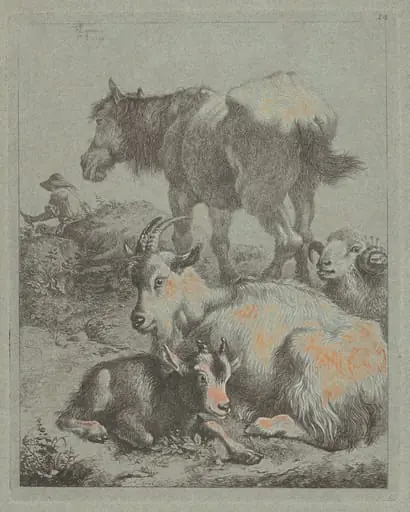
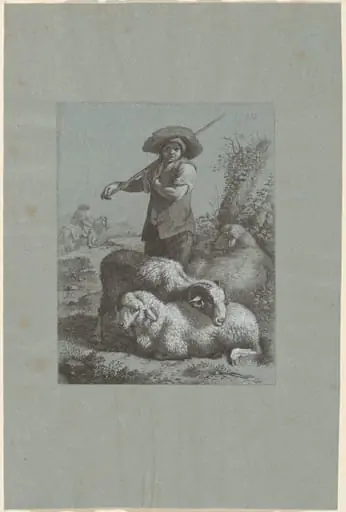
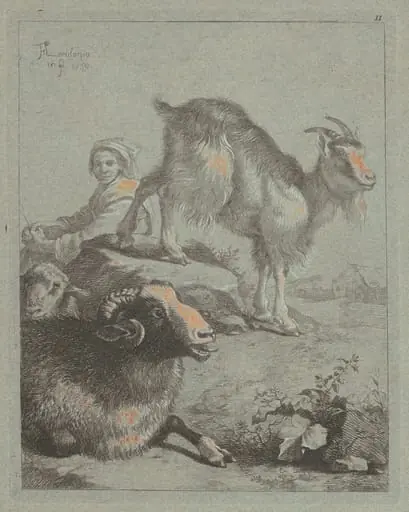
Shepherd with Donkey, Sheep and Goat is a gouache print by the Baroque artist Francesco Londonio. It dates from 1759 and is held in the collection of the National Gallery of Art.
About this work
Overview
Shepherd with Donkey, Sheep and Goat is an etching heightened with white gouache on blue paper, created by Francesco Londonio in 1759. This work exemplifies Londonio's focus on rural genre scenes, popular among Northern Italy's wealthy patrons.
Subject & Meaning
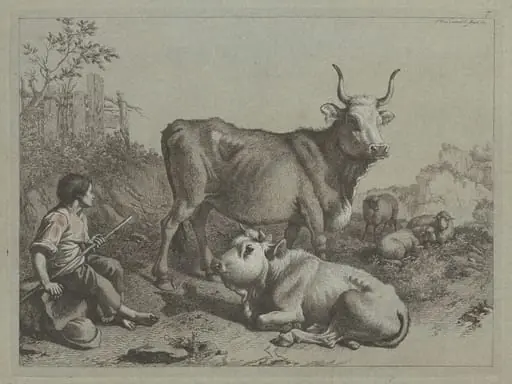
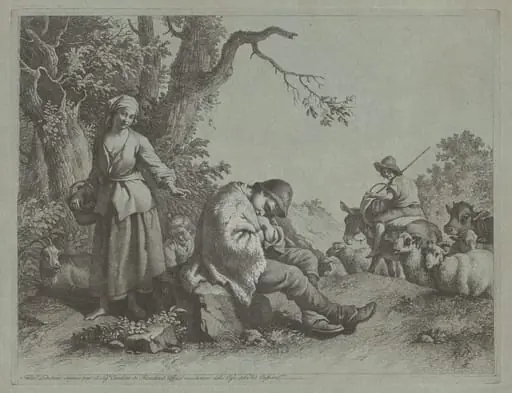
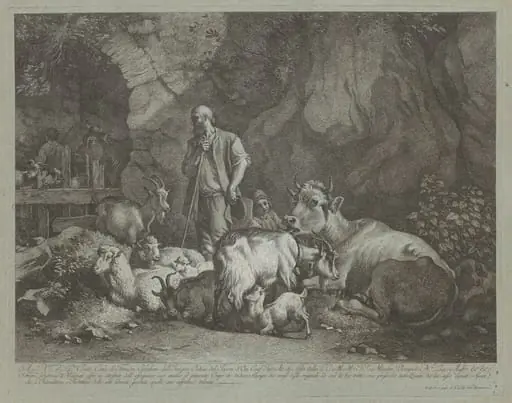
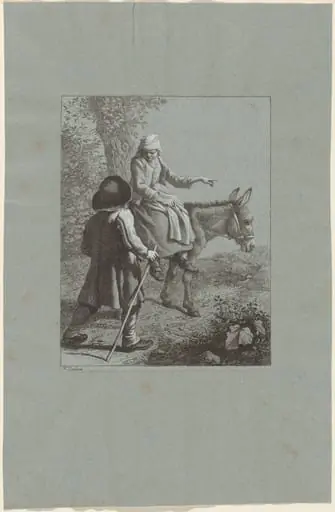
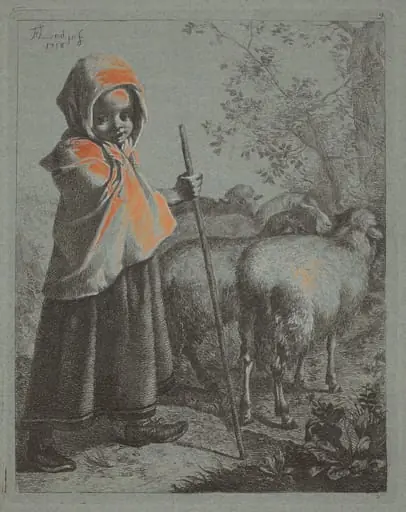
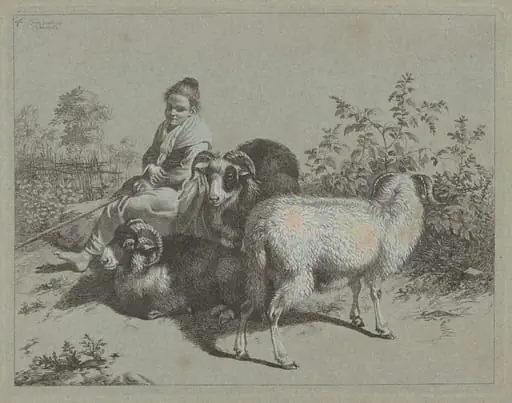
The etching depicts a serene pastoral scene: a barefoot young shepherd, dressed in tunic and pants, stands facing away from the viewer, staff in hand, surrounded by a donkey to his left and a group of sheep and a goat. The composition emphasizes the everyday life of a rural figure.
Technique & Style
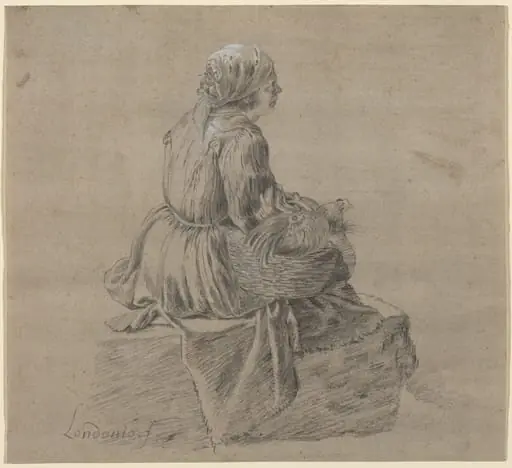
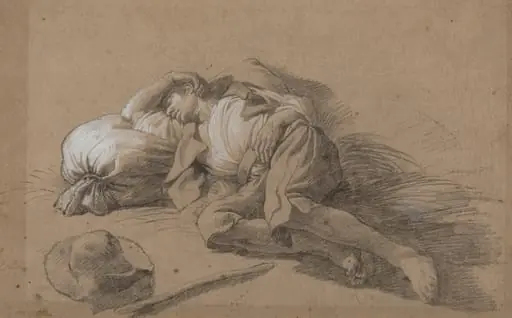
Londonio employed etching techniques combined with white gouache accents on blue paper, introducing warmth to the predominantly blue tone. The simple background ensures the shepherd and animals are the central focus, characteristic of Londonio's straightforward yet engaging style.
History & Provenance
Created in 1759 by Francesco Londonio, a Milan-based artist trained by Ferdinando Porta, Giovanni Battista Sassi, and later Benigno Bossi in Rome and Naples. The work reflects his training in both painting and engraving.
Context
This piece is part of a broader trend of 18th-century Italian art, particularly in Northern Italy, where scenes of rural life were highly valued by the wealthy for their idyllic portrayal of everyday country existence.
Legacy
Shepherd with Donkey, Sheep and Goat contributes to Londonio's recognized body of work in genre painting and etching, highlighting his contribution to the depiction of rural themes in late-Baroque/Rococo Italy.
Artist & collection

Artist
Francesco Londonio (1723–1783) was an Italian painter, engraver, and scenographer, active mainly in his native Milan in a late-Baroque or Rococo style.