Artwork
Peasant Woman with Baby and Little Girl
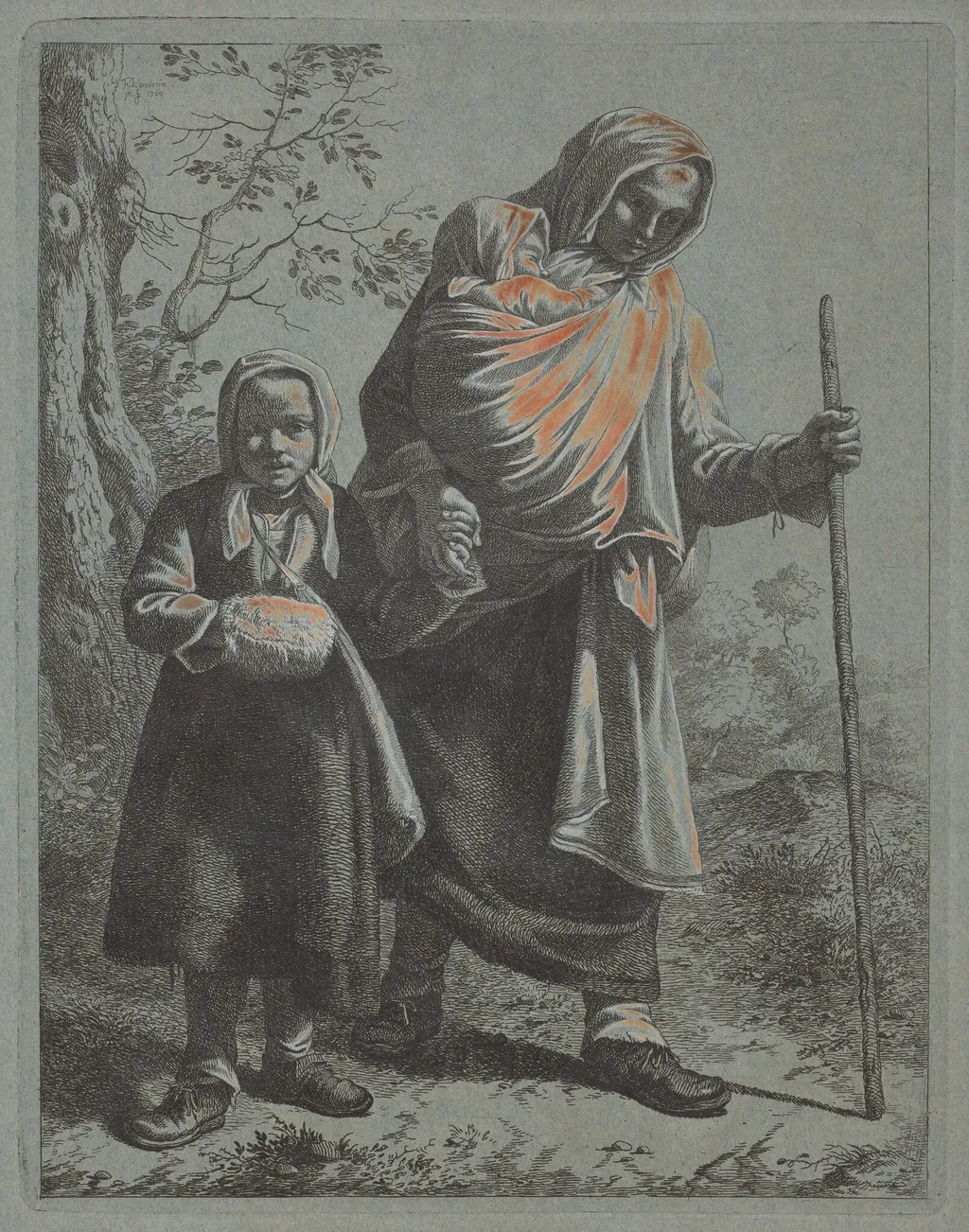
Peasant Woman with Baby and Little Girl is a gouache print by the Baroque artist Francesco Londonio. It dates from 1762 and is held in the collection of the National Gallery of Art. Created in 1762, this print shows a peasant woman walking with a swaddled infant and a young girl.
About this work
The woman holds a staff in her right hand and has her left arm around the baby, while the girl stands beside her, looking down.
In this etching, a peasant woman is depicted walking with a baby wrapped in a cloth and a young girl by her side. The woman holds a staff in her right hand and has her left arm around the baby, while the girl stands beside her, looking down. The scene is set against a backdrop of trees and bushes, with a blue sky visible in the distance.
The woman's clothing and the style of the etching suggest a rural setting, possibly in the 18th century. The use of white gouache on blue laid paper adds a sense of depth and texture to the image.
This etching is a fine example of the Baroque movement, characterized by its use of dramatic lighting and intense emotions.
Overview
Created in 1762, this print shows a peasant woman walking with a swaddled infant and a young girl. The figures are set against a simple landscape of trees and distant sky, rendered on blue laid paper. The composition emphasizes the everyday movement of a rural family, captured in a modest yet carefully observed scene.
Subject & Meaning
The central figure is a mother, her right hand gripping a staff while her left arm cradles the baby. A small girl stands nearby, eyes lowered, suggesting a protective, familial bond. The work reflects an interest in the dignity of ordinary labor and the intimate connections within a peasant household.
Technique & Style
Londonio employed an etching process enhanced with white gouache, which he applied to blue paper to achieve contrast and subtle tonal variation. The white highlights delineate clothing folds and foliage, while the blue ground provides a cool atmospheric base, characteristic of late‑Baroque printmaking that balances line work with painterly touches.
History & Provenance
Francesco Londonio, a Milanese artist trained under Ferdinando Porta, Giovanni Battista Sassi, and engraver Benigno Bossi, produced the piece during his mature period after travels to Rome and Naples. The print was likely commissioned by affluent Northern Italian collectors who favored genre scenes of rustic life.
Context
Londonio’s oeuvre frequently depicted pastoral subjects, aligning with the Rococo’s taste for charming, everyday moments. This work situates the peasant figure within a broader cultural fascination with the countryside, offering a counterpoint to the grand historical narratives dominant in earlier Baroque art.
Artist & collection

Artist
Francesco Londonio (1723–1783) was an Italian painter, engraver, and scenographer, active mainly in his native Milan in a late-Baroque or Rococo style.

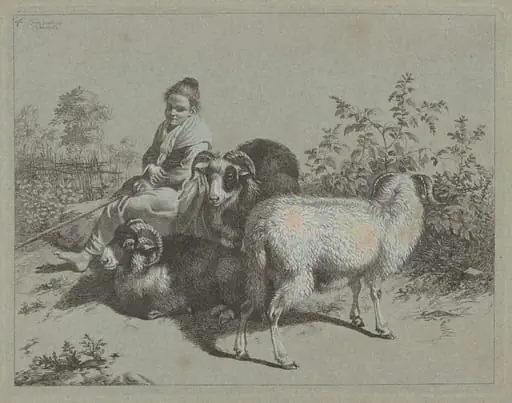
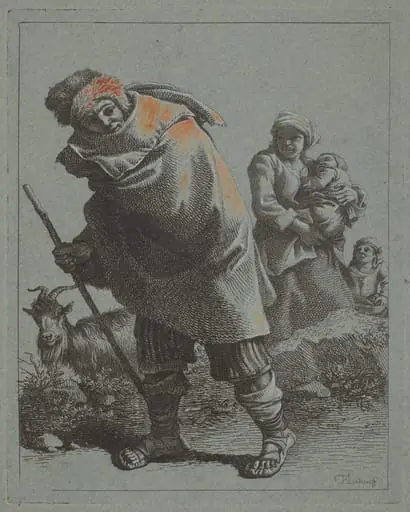 Shepherd with Walking Stick and a Peasant Woman with Child
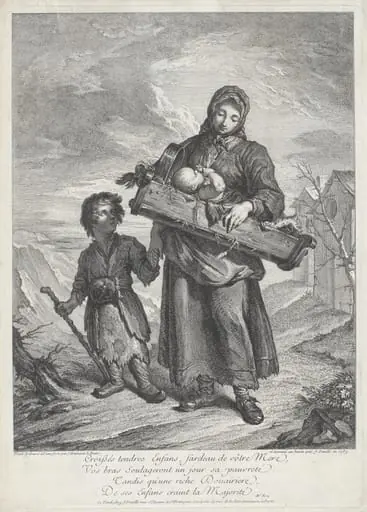 A Young Mother Carrying a Crib
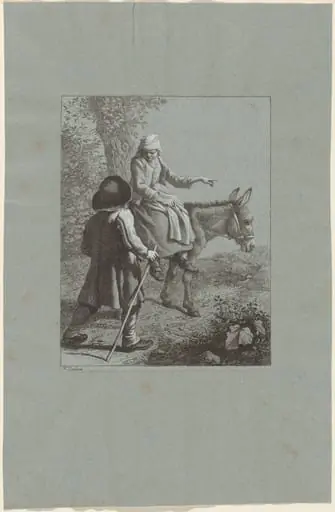
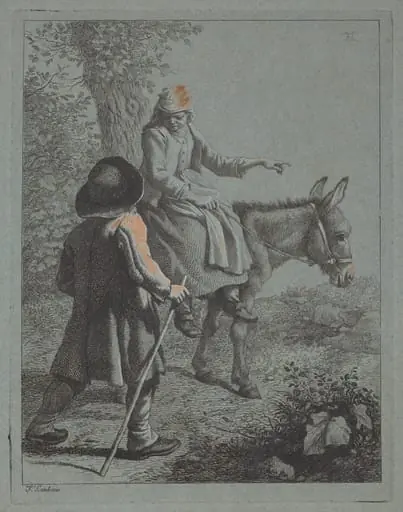 Peasant Woman Seated on a Donkey and a Peasant Man
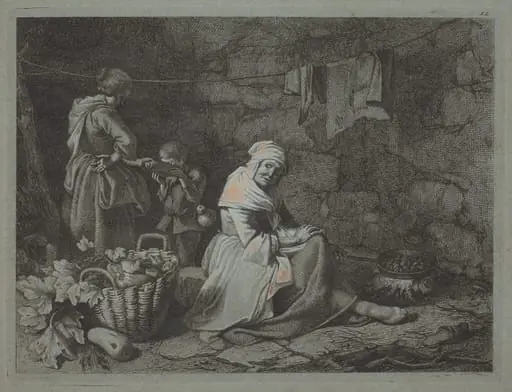 Interior of a House
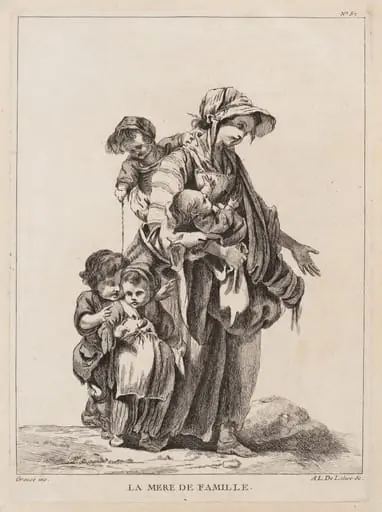 La Mère de famille (The Mother of the Family)
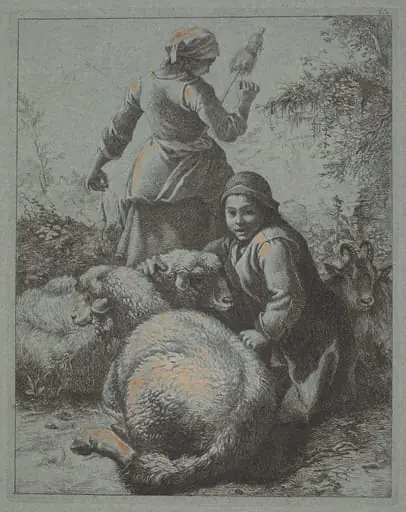 Woman Spinner and a Shepherd with Flock
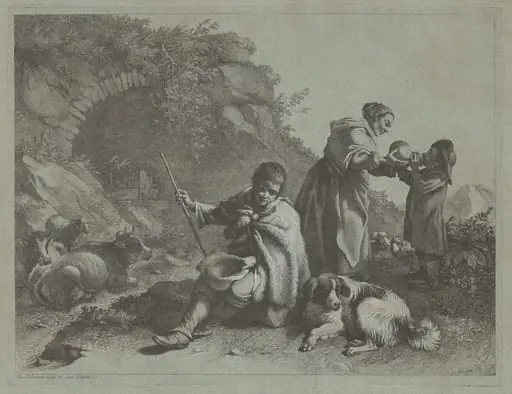 Seated Shepherd Boy and Woman Giving a Drink to a Child
 Soldier's Family Encamped