Artwork
Study of Heads: Three Goats, an Ox, and a Ram
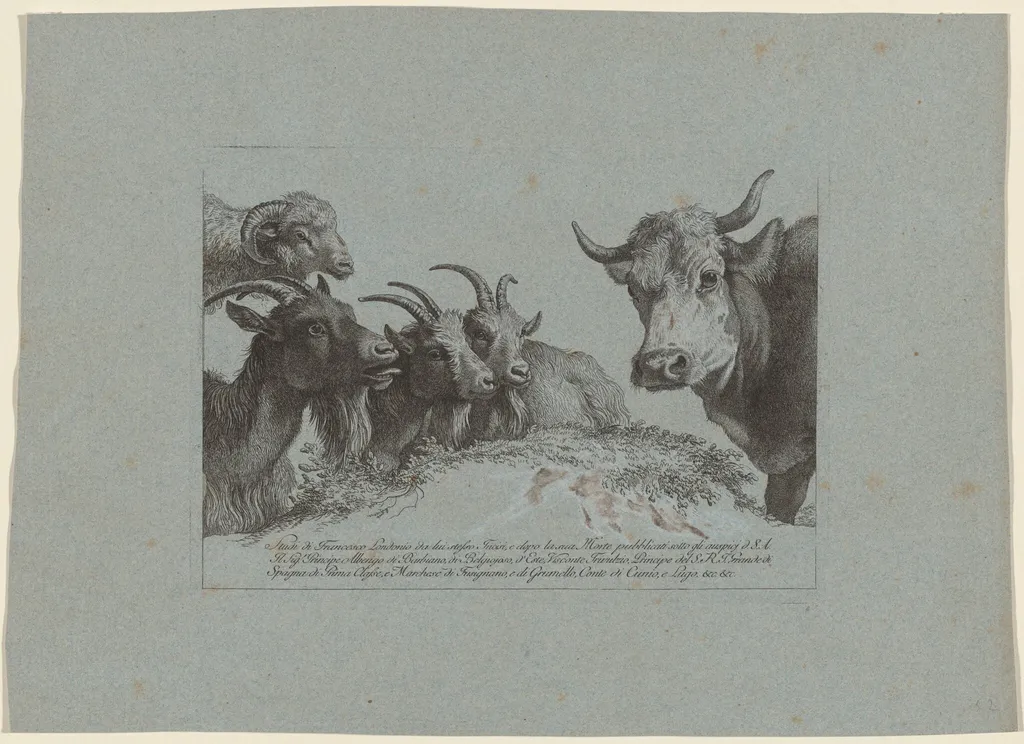
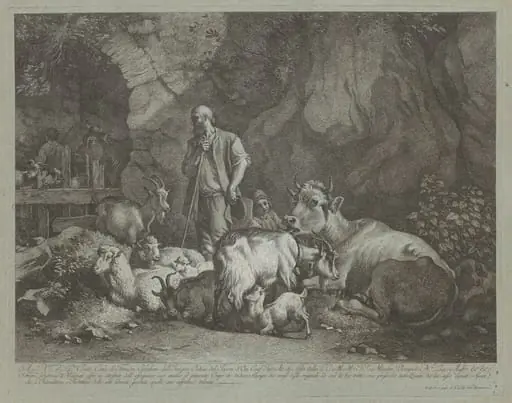
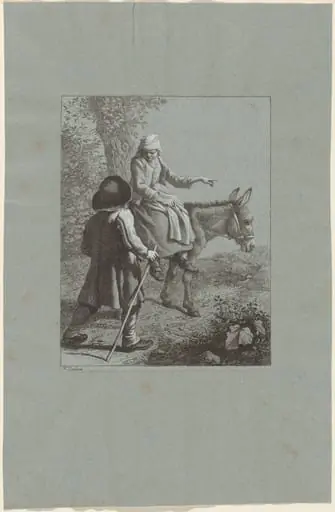
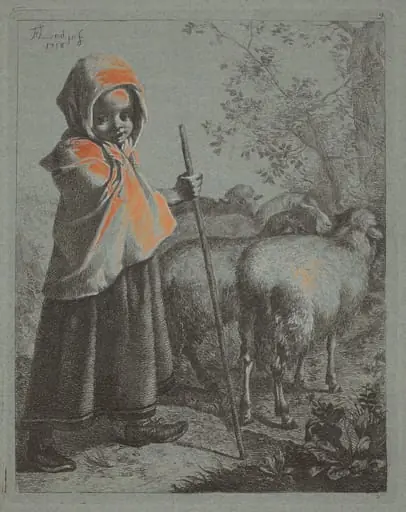
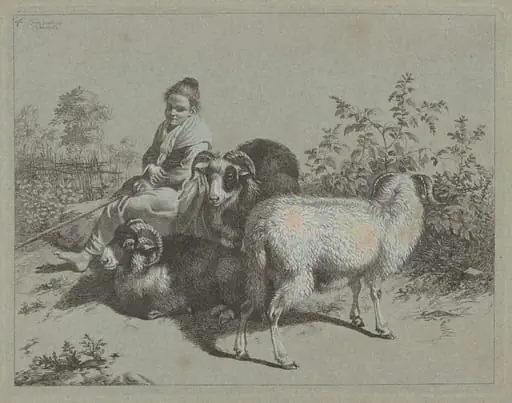
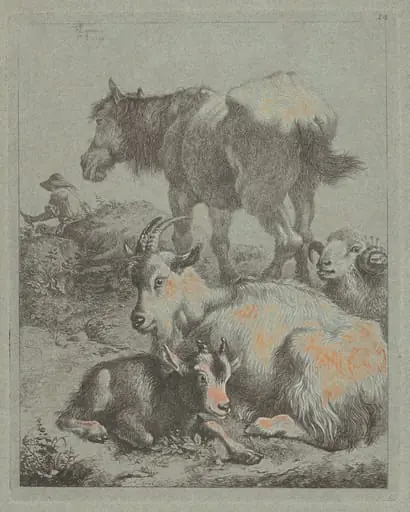
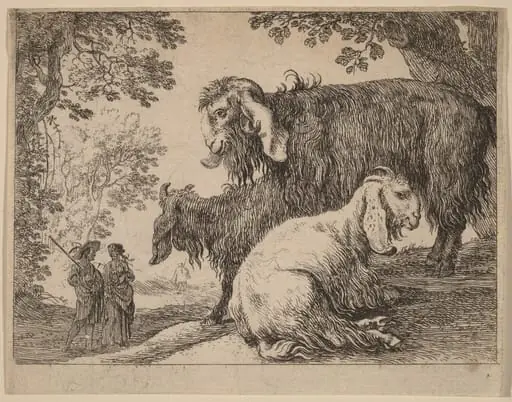
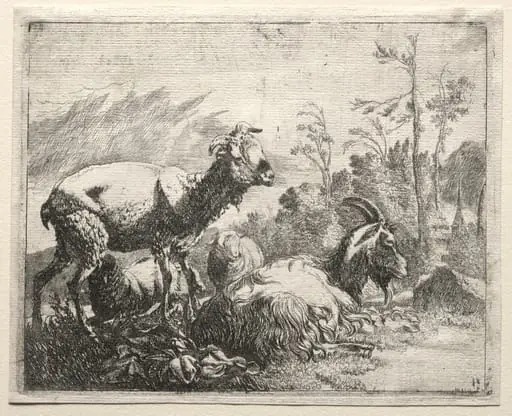
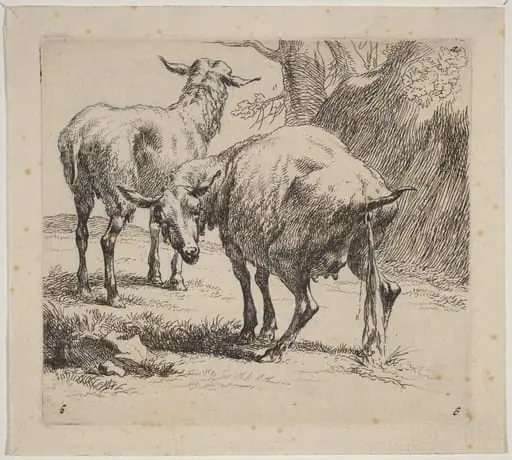
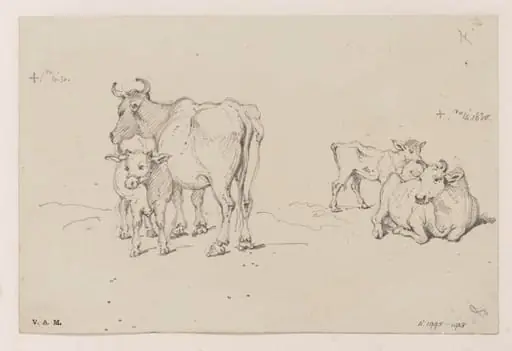
Study of Heads: Three Goats, an Ox, and a Ram is an ink print by the Romanticist artist Francesco Londonio. It dates from 1783 and is held in the collection of the National Gallery of Art.
About this work
Overview
The composition is compact, the ox positioned to the right and facing forward, while the goats and ram turn inward, forming a modest pastoral grouping.
Created circa 1783, this print presents a study of four farm animals—a trio of goats, a ram and an ox—arranged closely on a blue‑toned sheet. The figures are rendered in fine black line work, with selective white highlights that give the fur and wool a textured, airy quality. The composition is compact, the ox positioned to the right and facing forward, while the goats and ram turn inward, forming a modest pastoral grouping.
Subject & Meaning
The work concentrates on the physical characteristics of the animals, emphasizing the shaggy coats of the goats, the spiraled horns of the ram, and the calm demeanor of the ox. By isolating the heads and omitting narrative elements, the artist invites close observation of texture, form, and the natural variety within a rural setting, reflecting a genre interest in everyday agrarian life.
Technique & Style
Executed as an etching, the image was incised on a metal plate and printed onto blue laid paper, a substrate that imparts a cool, slightly muted background. White heightening—applied after printing—accentuates the volume of the animal coats, creating a subtle relief effect. The linear precision and delicate tonal contrasts are characteristic of late‑Baroque and early Rococo printmaking, where detailed studies were common.
History & Provenance
The print is attributed to Francesco Londonio, an Italian painter, engraver and scenographer active in Milan. Londonio trained under Ferdinando Porta and Giovanni Battista Sassi, later refining his engraving skills with Benigno Bossi and traveling to artistic centers such as Rome and Naples. The piece reflects his broader output, which frequently featured genre scenes populated by animals and peasants.
Context
During the late 18th century, Italian artists often produced animal studies both as instructional material and as decorative prints for collectors interested in rustic motifs. Londonio’s focus on agrarian subjects aligns with contemporary tastes for naturalistic observation and the decorative appeal of pastoral life, bridging the decorative excess of the Rococo with the emerging interest in empirical study.
Artist & collection

Artist
Francesco Londonio (1723–1783) was an Italian painter, engraver, and scenographer, active mainly in his native Milan in a late-Baroque or Rococo style.