Artwork
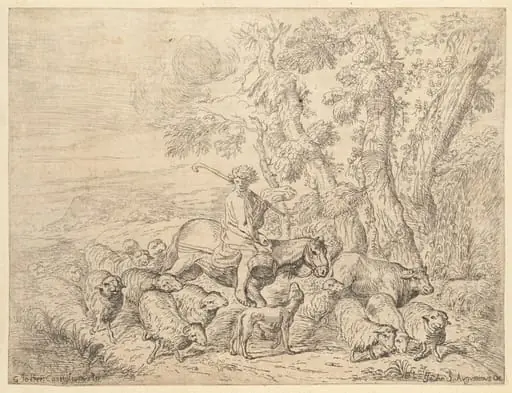
Boy on a Donkey Watching over a Group of Animals
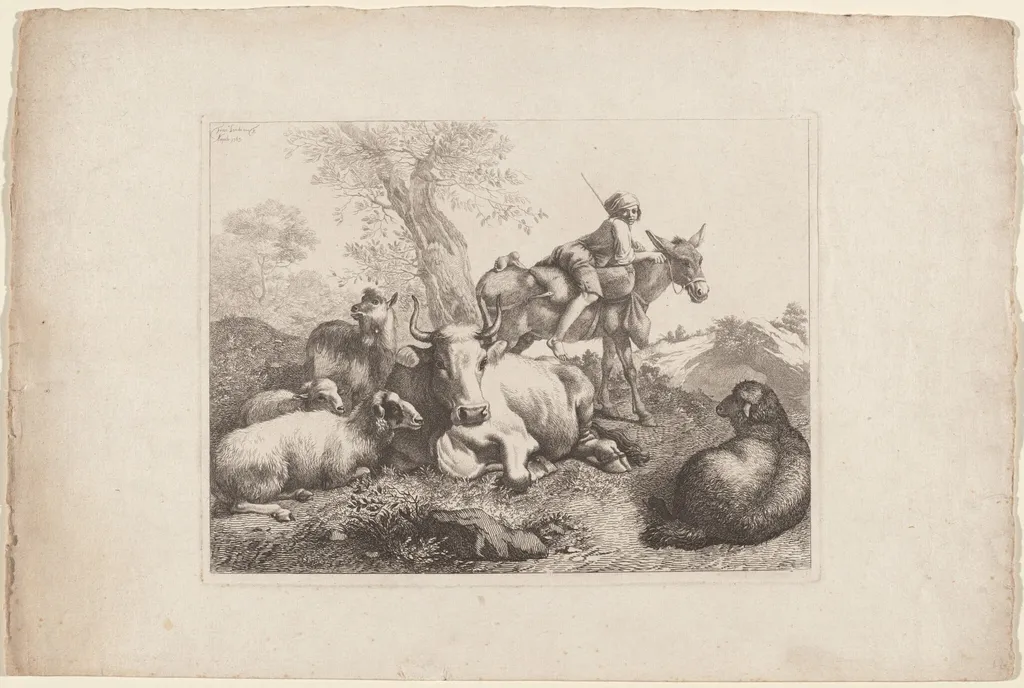
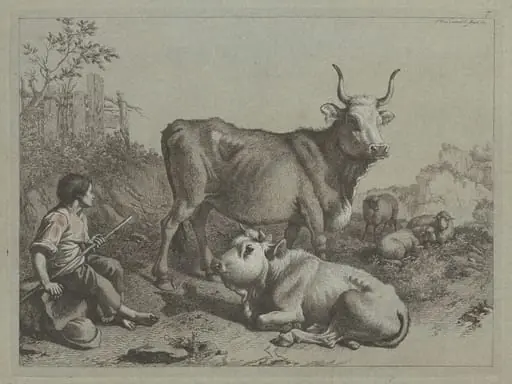
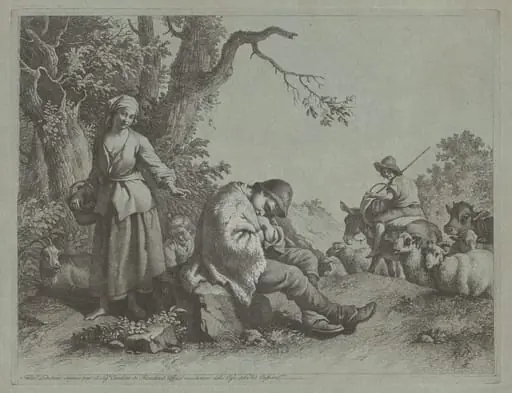
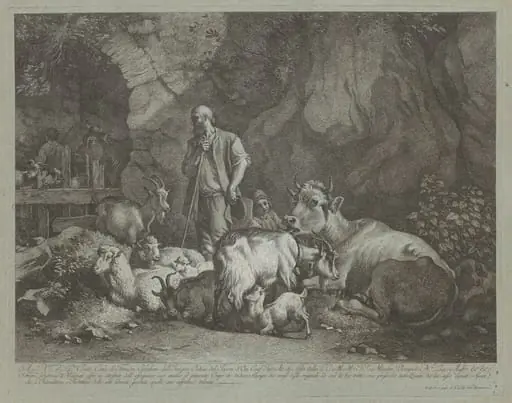
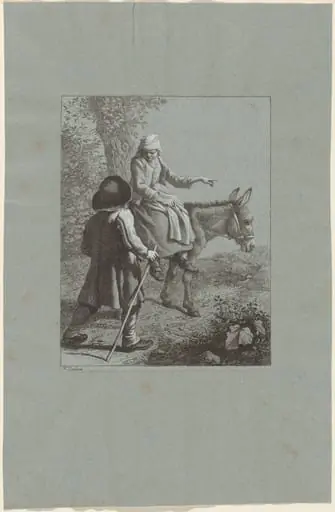
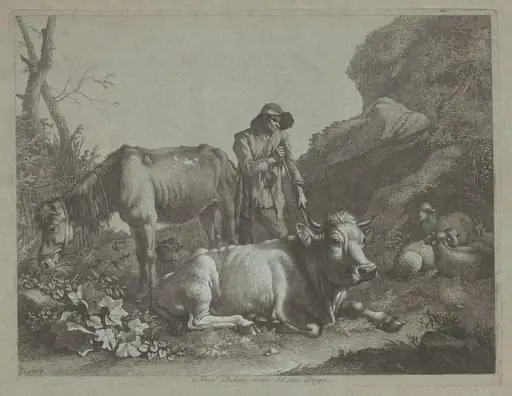
Boy on a Donkey Watching over a Group of Animals is an ink print by the Romanticist artist Francesco Londonio. It dates from 1763 and is held in the collection of the National Gallery of Art. Created in 1763, this print presents a young boy astride a donkey as he watches a small herd of livestock settled in a meadow.
About this work
Overview
Created in 1763, this print presents a young boy astride a donkey as he watches a small herd of livestock settled in a meadow. The composition balances the figure with a cow, sheep and goats, set against a backdrop of trees and distant hills. Executed on laid paper, the work exemplifies the delicate line work characteristic of eighteenth‑century etching.
Subject & Meaning
The scene captures a pastoral moment in which the boy, holding a staff, appears to supervise the animals, suggesting themes of guardianship and rural labor. The inclusion of multiple species together reflects an idealized vision of agrarian harmony, a common motif in genre images intended for affluent Northern Italian patrons who favored bucolic narratives.
Technique & Style
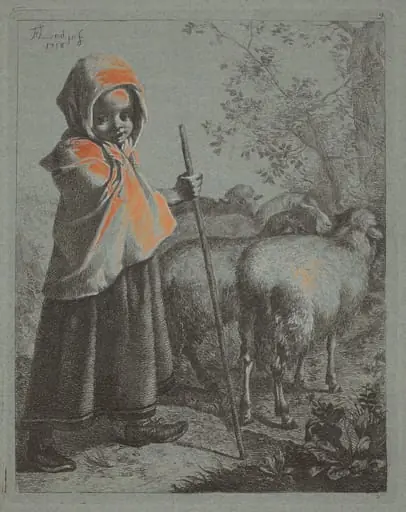
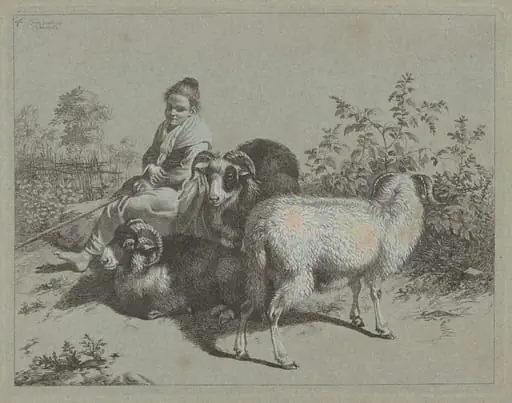
Londonio employed traditional etching, incising the image onto a copper plate with acid to produce fine, controlled lines. The resulting marks on the laid paper convey texture in the foliage and the softness of the animal fur, while the precise hatching delineates the figures’ forms. The style merges Baroque dynamism with Rococo’s lighter, decorative touch.
History & Provenance
This work belongs to his series of rustic genre prints that catered to the tastes of wealthy collectors in the Lombard region.
The artist, Francesco Londonio, trained in Milan under Ferdinando Porta and Giovanni Battista Sassi, later studying engraving with Benigno Bossi and traveling to Rome and Naples. This work belongs to his series of rustic genre prints that catered to the tastes of wealthy collectors in the Lombard region. Its early ownership records are limited, but it has remained within European print collections.
Context
During the late Baroque and early Rococo periods, Northern Italy saw a rise in demand for genre scenes that celebrated everyday rural life. Londonio’s etchings responded to this market, offering detailed depictions of peasants and animals that combined documentary observation with an idealized aesthetic, aligning with contemporary tastes for both realism and decorative elegance.
Artist & collection

Artist
Francesco Londonio (1723–1783) was an Italian painter, engraver, and scenographer, active mainly in his native Milan in a late-Baroque or Rococo style.