Artwork
Sewing Women
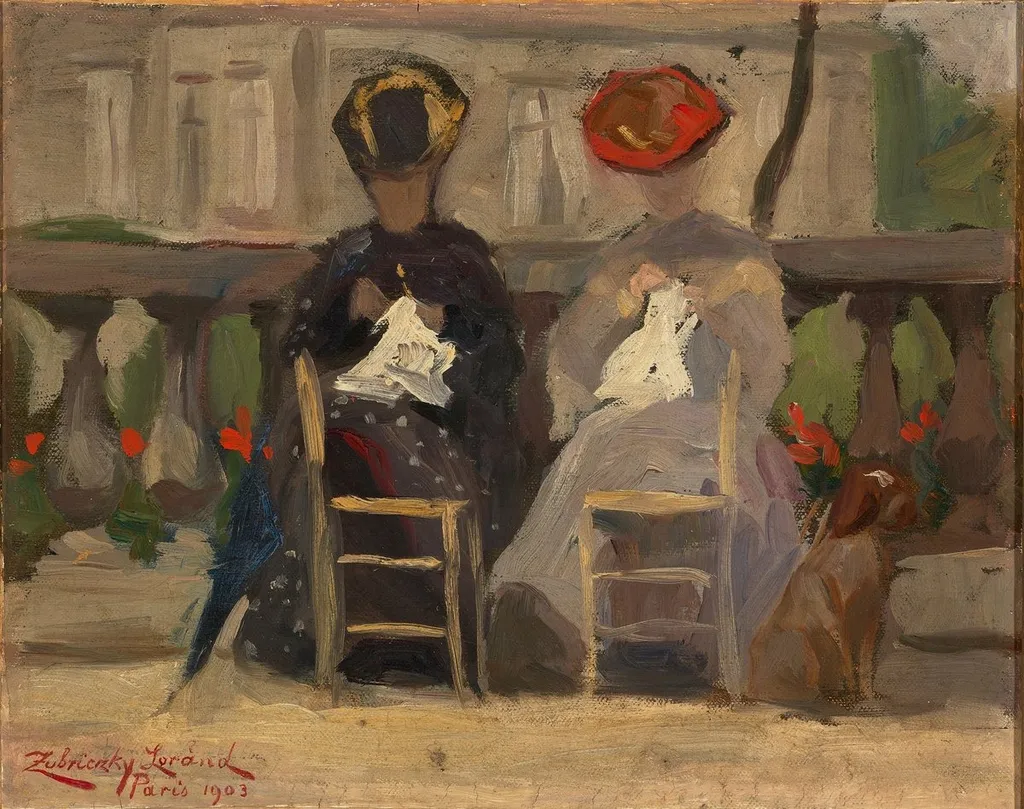
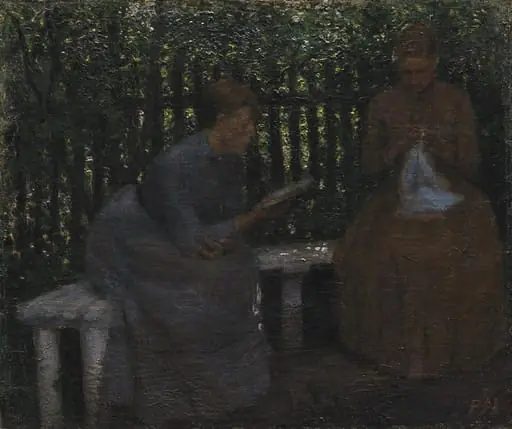
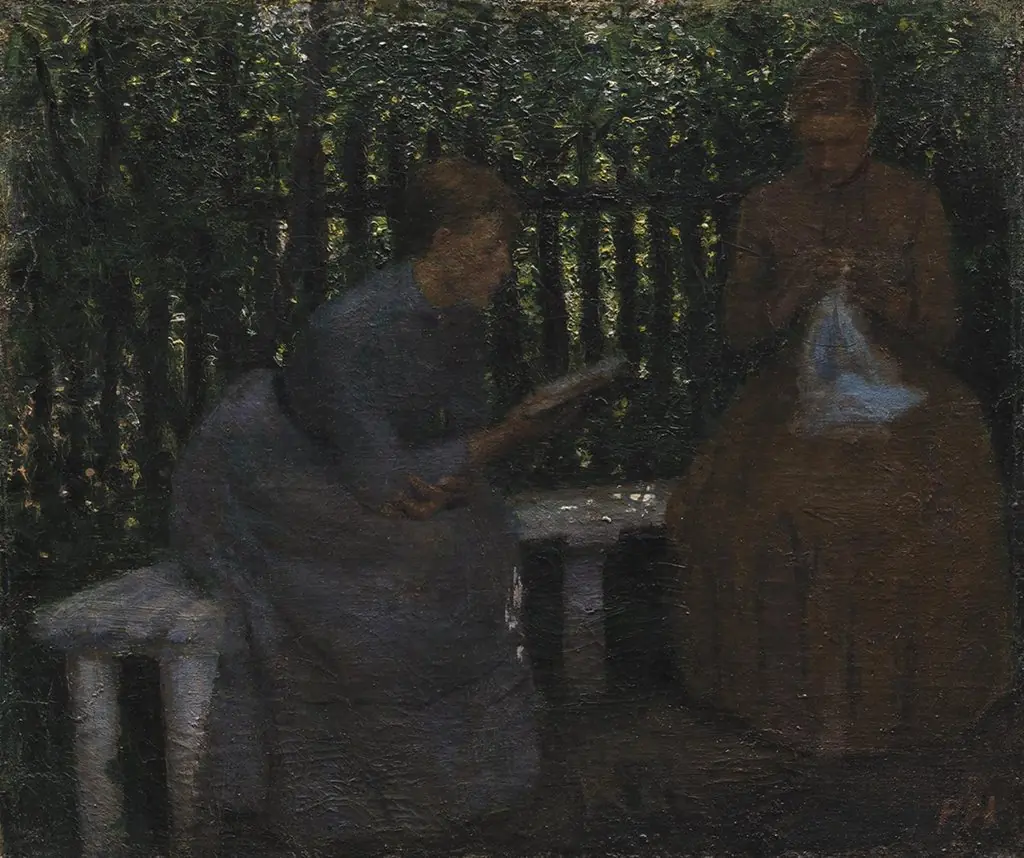
Sewing Women is an oil painting by the Post-Impressionist artist Loránd Zubriczky. It dates from 1903 and is held in the collection of the Hungarian National Gallery.
About this work
Overview
The painting resides in the Hungarian National Gallery, where it stands as a modest yet evocative example of early 20th-century Hungarian genre painting.
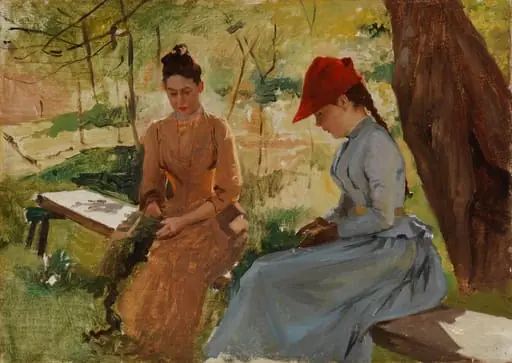
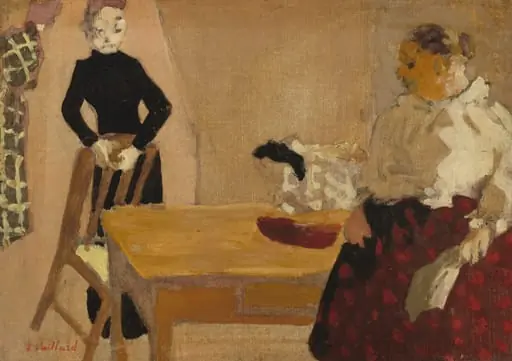
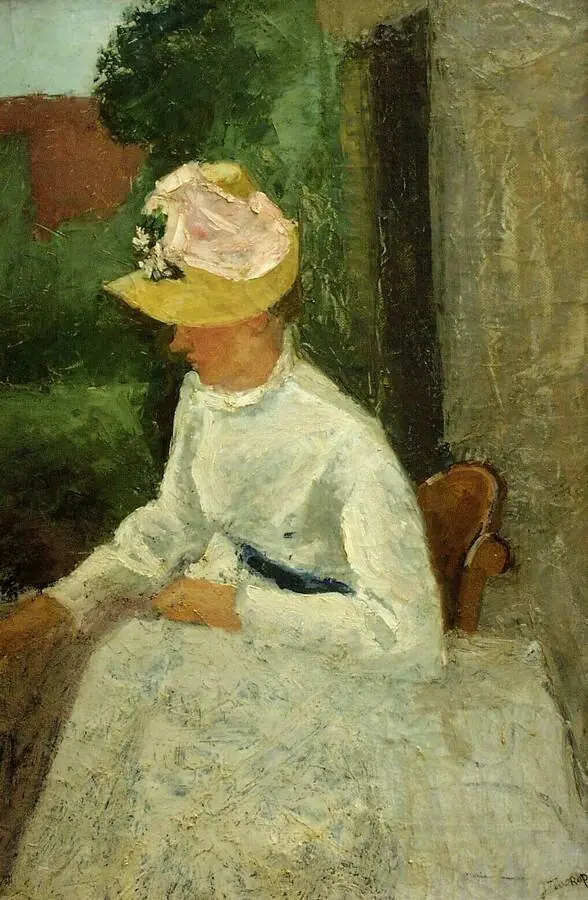
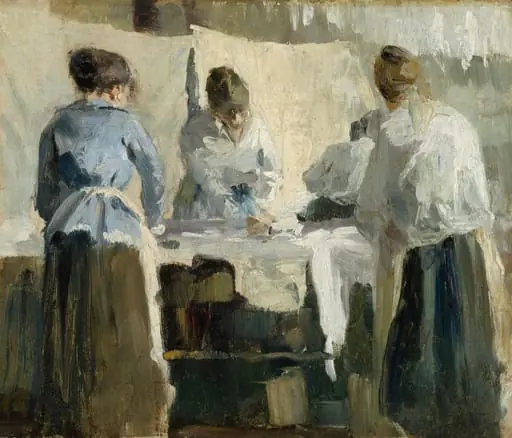
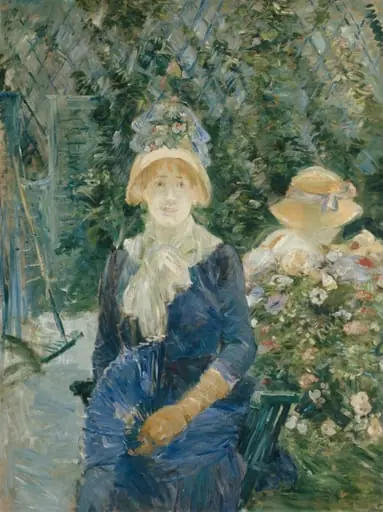
Sewing Women, painted in 1903 by Loránd Zubriczky, is an oil-on-canvas work depicting two women engaged in the quiet task of sewing. The scene is set outdoors near a building with a balcony adorned with potted plants. A dog rests at their feet, reinforcing the domestic tranquility of the moment. The painting resides in the Hungarian National Gallery, where it stands as a modest yet evocative example of early 20th-century Hungarian genre painting.
Subject & Meaning
The painting captures two women absorbed in needlework, their focus undisturbed by the surrounding environment. Their contrasting attire—dark versus light garments, a red hat against a muted palette—suggests subtle distinctions in age, status, or role. The presence of the dog and the balcony’s greenery implies a private, lived-in space. No narrative drama is present; instead, the work honors the dignity of routine labor, offering a contemplative glimpse into everyday female life.
Technique & Style
Zubriczky employs visible, deliberate brushwork to convey texture in fabric, wood, and foliage. The color palette is restrained yet warm, with soft contrasts between the women’s clothing and the sunlit background. Light falls naturally across the figures, enhancing their three-dimensionality without theatricality. The composition is balanced but informal, with the dog and balcony elements framing the scene without overpowering it, reinforcing the painting’s intimate, unposed character.
History & Provenance
Created in 1903, the painting entered the collection of the Hungarian National Gallery shortly after its completion, likely through acquisition or donation typical of the period. It has remained in public custody since, with no record of significant exhibition outside Hungary. Its consistent presence in the national collection suggests early recognition of its representational value, though it never achieved widespread fame beyond domestic art circles.
Context
In early 1900s Hungary, genre scenes depicting domestic labor were gaining attention as part of a broader cultural interest in everyday life. Zubriczky’s work aligns with this trend, reflecting a shift away from grand historical or mythological subjects toward intimate, realist portrayals. The painting’s setting and subject matter resonate with similar works by Central European artists who sought to elevate ordinary moments through careful observation and restrained technique.
Legacy
Sewing Women remains a quiet testament to Zubriczky’s commitment to observing the unremarkable. While not widely reproduced or studied internationally, it holds a place in Hungarian art history as an example of early modern genre painting that prioritizes atmosphere over drama. Its endurance in the national collection underscores its value as a document of social and visual culture at the turn of the century.
Artist & collection