Artwork
Untitled
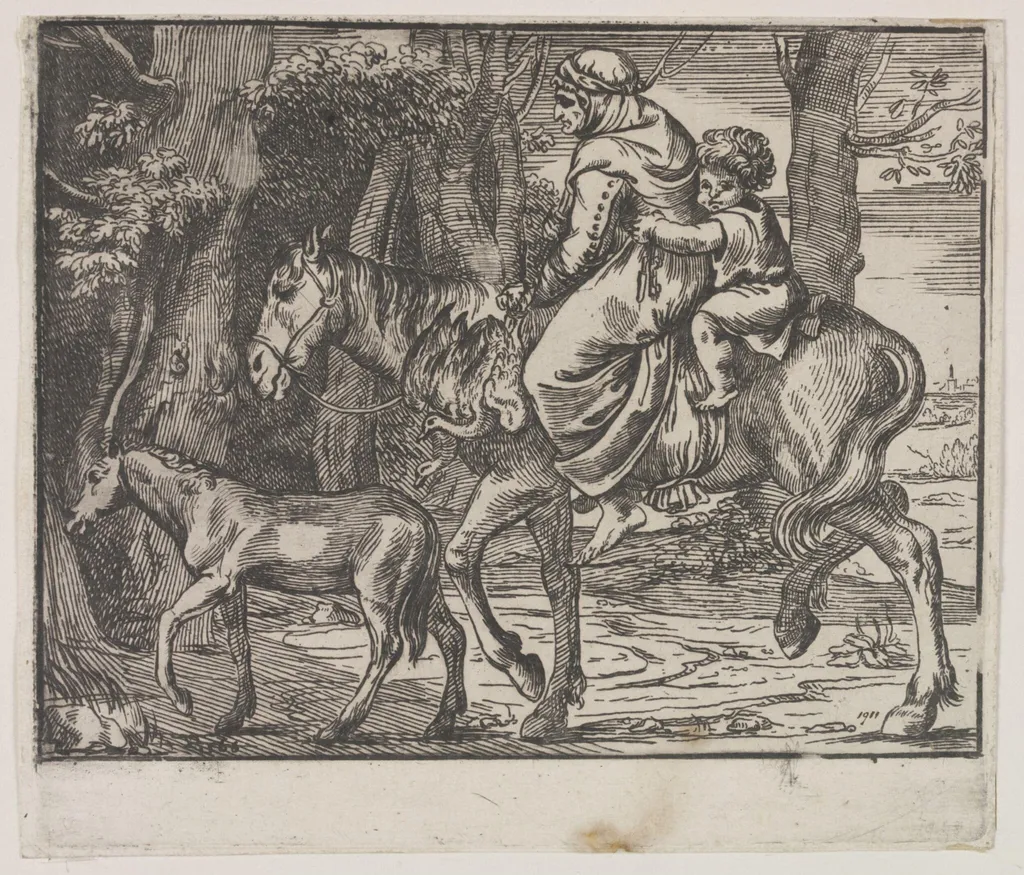
Untitled is a print by the Renaissance artist Melchior Lorck. It dates from 1566 and is held in the collection of the Victoria and Albert Museum.
About this work
Overview
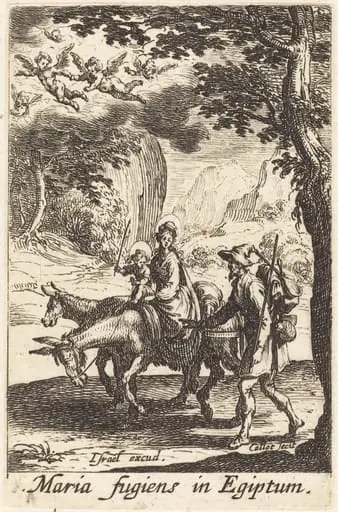
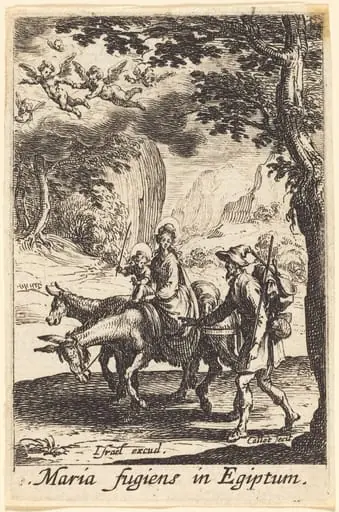
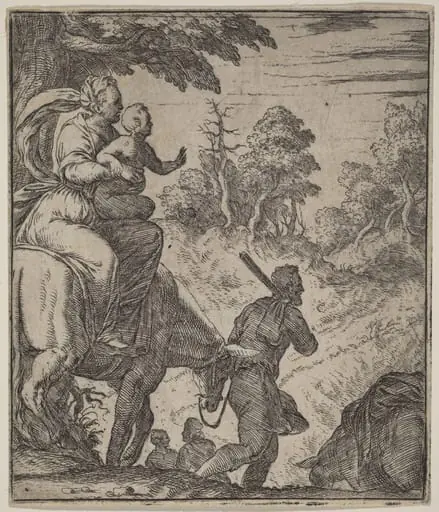
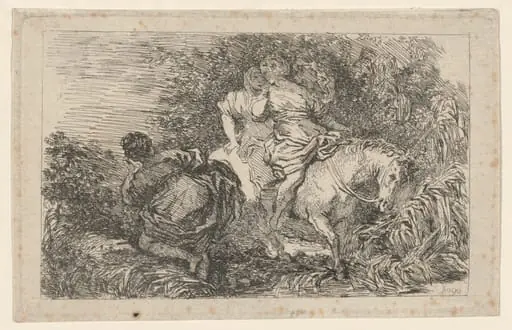
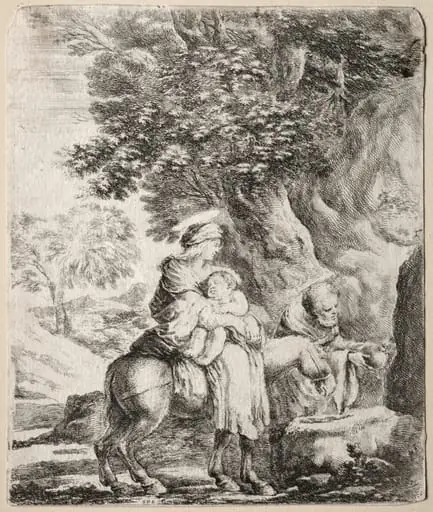
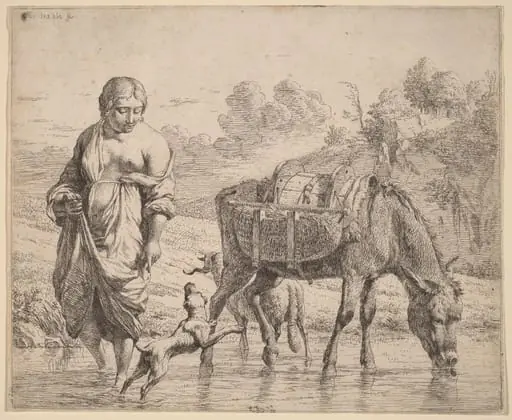
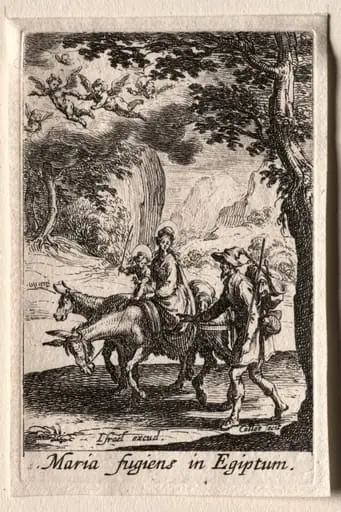
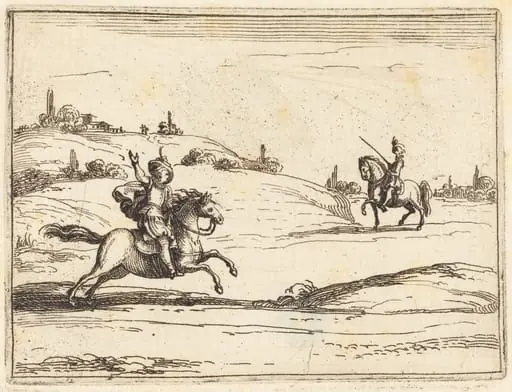
This 1566 print by Melchior Lorck depicts an older woman and a child seated on a mare, with a foal walking beside them.
This 1566 print by Melchior Lorck depicts an older woman and a child seated on a mare, with a foal walking beside them. Rendered in ink on paper, the work belongs to the tradition of Northern Renaissance graphic art. The scene unfolds in a wooded setting, with careful attention paid to the natural environment and the animals' anatomy. Unlike painted works of the period, this piece relies on line and tonal variation to suggest form and depth.
Subject & Meaning
The figures—a woman and child accompanied by a foal—suggest a quiet, domestic moment, possibly referencing rural life or maternal care. The presence of the young horse may imply themes of nurture, continuity, or the passage of time. No overt religious or mythological symbolism is evident; instead, the image conveys a grounded, observational tone common in Lorck’s studies of everyday people and animals.
Technique & Style
Lorck employed fine linear engraving to define the figures and landscape, using cross-hatching to model volume and texture. The horses are rendered with anatomical precision, their musculature and posture carefully observed. The background trees are suggested with minimal yet effective strokes, creating depth without clutter. The absence of color emphasizes the artist’s mastery of monochrome draftsmanship, typical of printed works of the era.
History & Provenance
Created in 1566, the print is part of Lorck’s broader series documenting people and scenes from his travels in the Ottoman Empire and Northern Europe. It likely circulated among collectors and scholars interested in ethnographic detail. The work survives in several institutional collections, with no known record of private ownership prior to the 19th century, suggesting its early reception was academic rather than commercial.
Context
During the mid-16th century, Northern European artists increasingly turned to detailed depictions of ordinary life, influenced by humanist interests in observation and naturalism. Lorck’s work aligns with this trend, reflecting a shift from idealized religious imagery toward documentary realism. His prints were valued for their accuracy and served as references for other artists and travelers seeking visual records of diverse subjects.
Legacy
Lorck’s prints, including this one, contributed to the development of observational art in Northern Europe. Though less celebrated than his larger commissions, this small work exemplifies his skill in capturing movement and character with economy. Modern scholars cite it as evidence of early ethnographic documentation in print form, influencing later generations interested in the visual record of daily life.
Artist & collection
Artist