Artwork
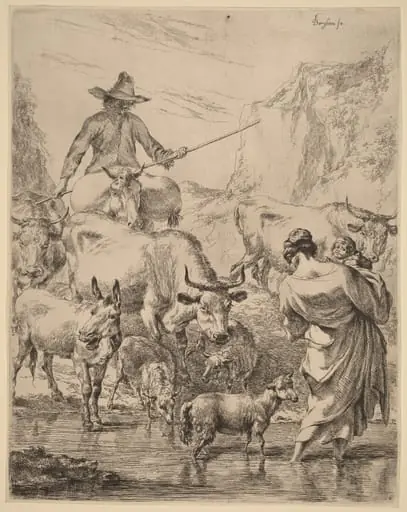
Woman Crossing a Stream
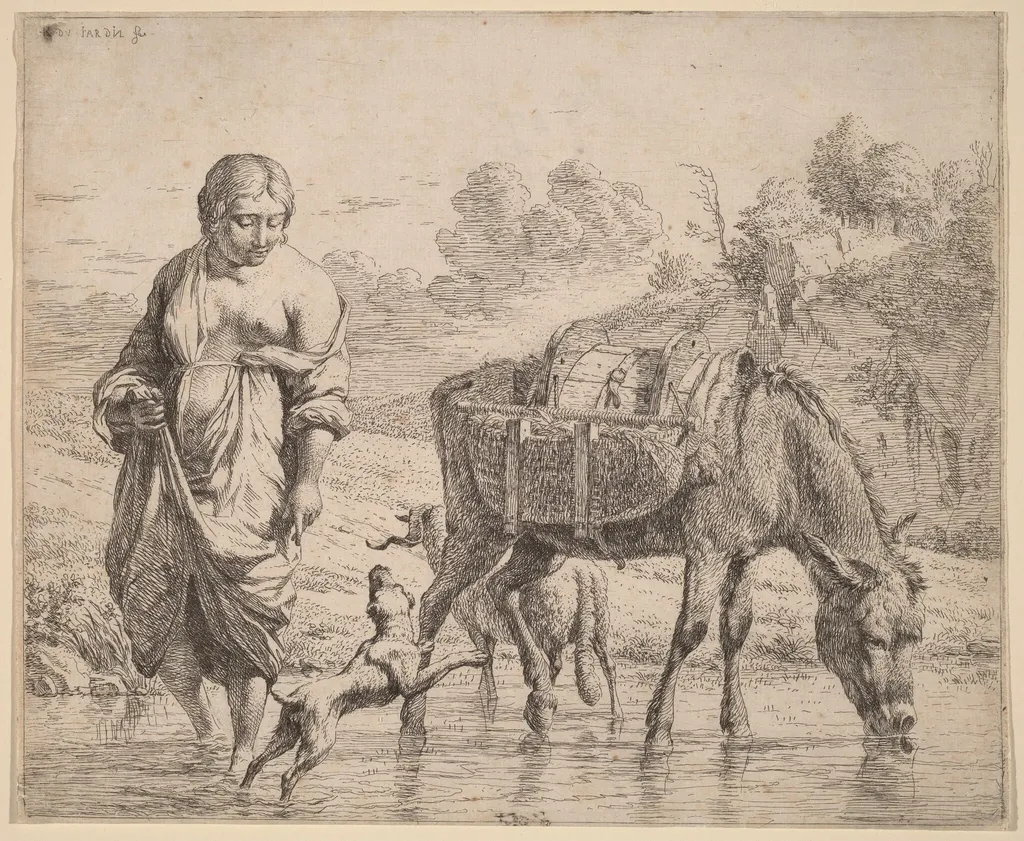
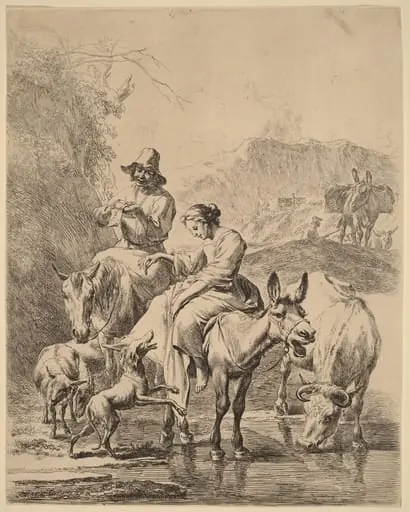
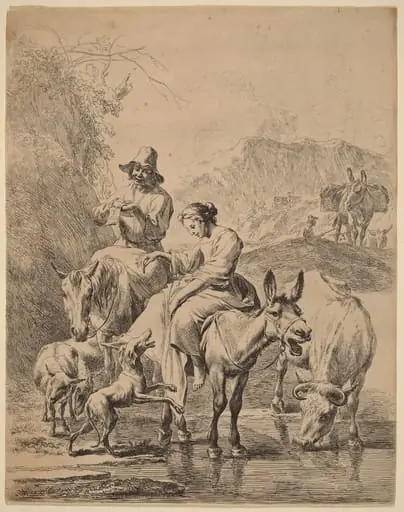
Woman Crossing a Stream is an ink print by the Baroque artist Karel Dujardin. It dates from 1662 and is held in the collection of the National Gallery of Art.
About this work
Overview
Woman Crossing a Stream is a 1662 etching by Karel Dujardin, depicting a serene rural scene. A woman in a flowing robe navigates a shallow stream, while two donkeys pull a laden cart in the background, set against trees and rolling hills.
Subject & Meaning
The etching captures a moment of everyday life, emphasizing quiet diligence. The woman's bare, cautious steps and the donkeys' strained expressions convey a sense of careful, laborious movement. The contrast between her solitary focus and the loaded cart suggests themes of perseverance and daily responsibility.
Technique & Style
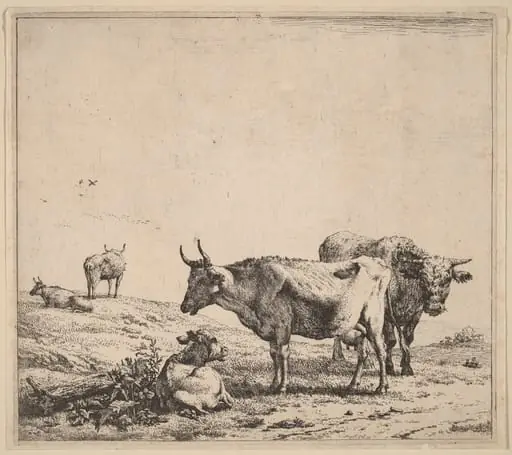
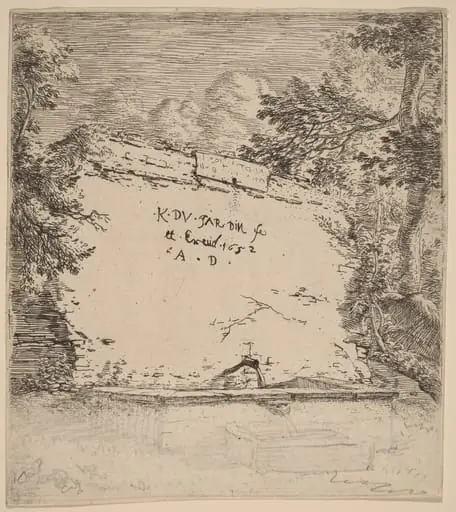
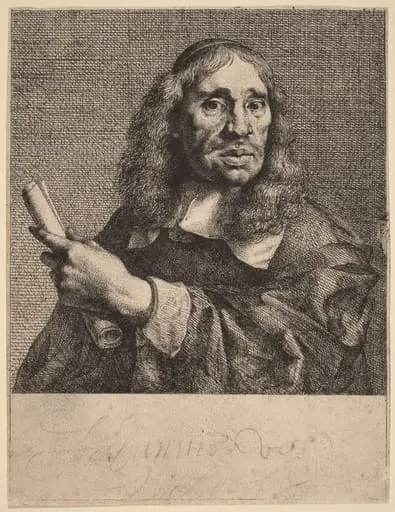
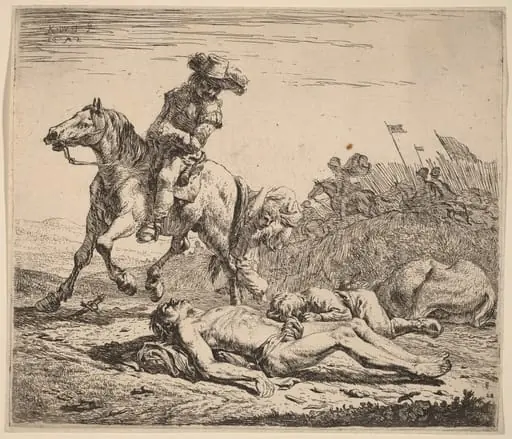
Executed in etching, the work showcases Dujardin's mastery of the medium. Fine, detailed lines define the composition, from the folds of the woman's robe to the textures of the natural surroundings, demonstrating a high level of technical skill and attention to detail.
History & Provenance
Created in 1662, the etching's provenance is not detailed here, but its creation date situates it within Dujardin's active period as a printmaker.
Context
Woman Crossing a Stream reflects 17th-century Dutch interest in rural scenes and everyday life. Dujardin's work aligns with the period's emphasis on detailed, realistic depictions of nature and common activities.
Legacy
As a characteristic example of Dujardin's etchings, Woman Crossing a Stream contributes to the artist's reputation for capturing serene, detailed moments of rural life, influencing subsequent generations of printmakers with its technical and thematic qualities.
Artist & collection