Artwork
La Madonna della Seggiola
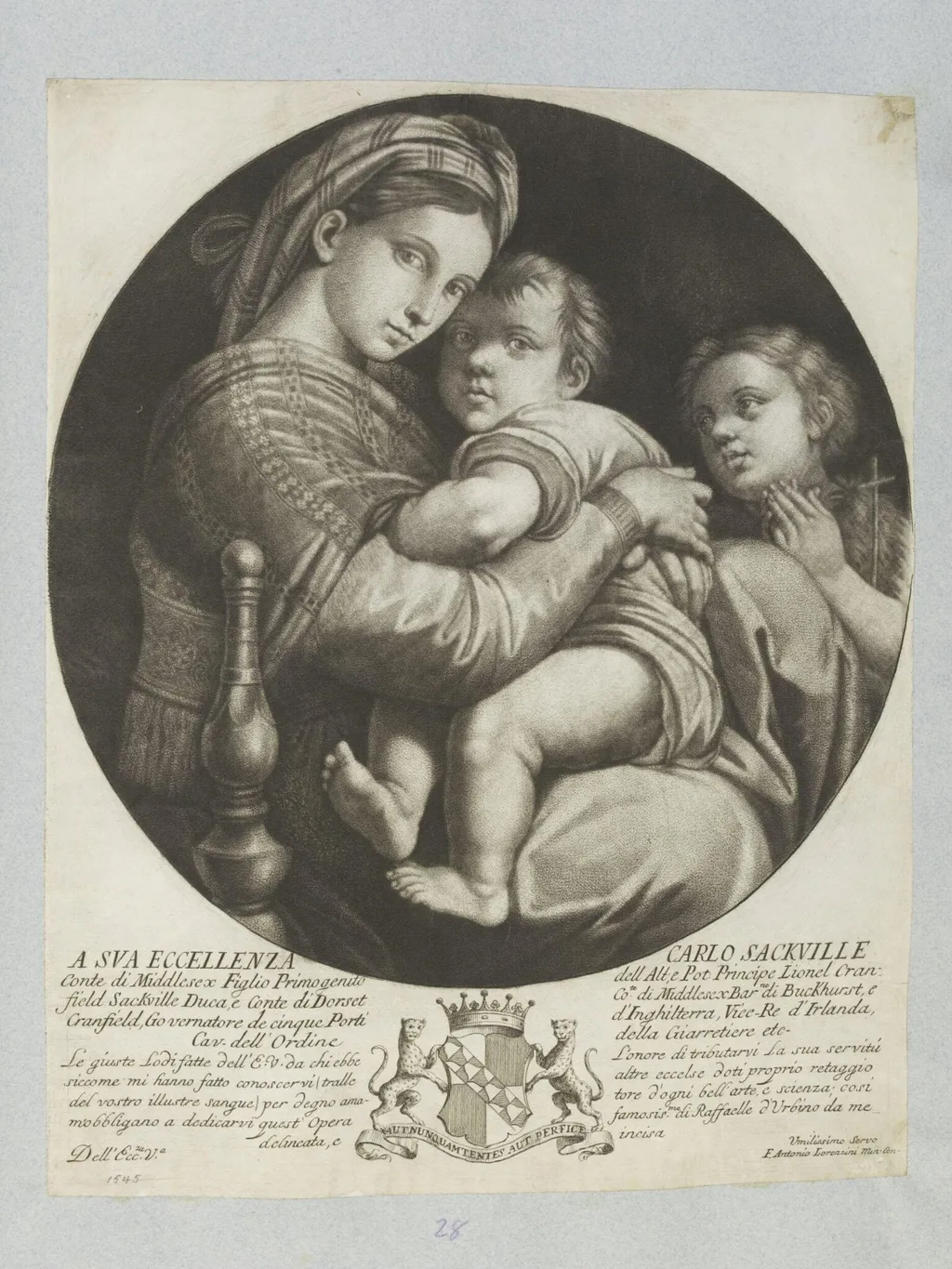
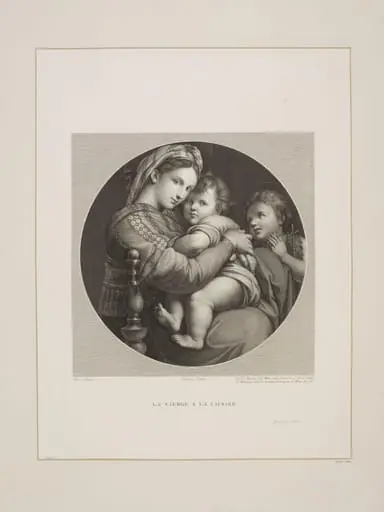
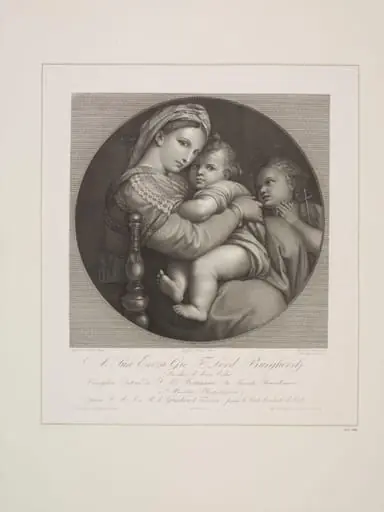
La Madonna della Seggiola is a print by Giovanni Antonio Lorenzini. It dates from 1750 and is held in the collection of the Victoria and Albert Museum.
About this work
Overview
The print captures the intimate grouping of three figures against a dark, unmodeled background, emphasizing form through contrast rather than detailed setting.
This print is a reproductive engraving of Raphael’s painted composition known as *La Madonna della Seggiola*. Executed on paper, it belongs to the Dyce Collection and serves as a faithful transcription of the original, which was long held in the Uffizi Gallery under the patronage of the Grand Dukes of Tuscany. The print captures the intimate grouping of three figures against a dark, unmodeled background, emphasizing form through contrast rather than detailed setting.
Subject & Meaning
The image depicts the Virgin Mary seated, holding the Christ Child, while the young John the Baptist leans against her knee, clutching a staff. The composition conveys familial tenderness rather than formal solemnity, with the children’s relaxed postures suggesting natural interaction. The Virgin’s calm expression and modest attire reinforce her role as both maternal figure and sacred subject, grounding the divine in domestic warmth.
Technique & Style
The engraving employs fine linear marks to suggest volume and texture, relying on chiaroscuro to define the figures against the deep background. Light falls selectively on skin and fabric, creating subtle gradations that mimic the original painting’s modeling. The absence of landscape or architectural detail focuses attention on the interplay of bodies and gestures, a hallmark of Raphael’s compositional clarity.
History & Provenance
The original painting entered the Medici collection in the 16th century and remained in the Uffizi. This print, likely made in the 18th or early 19th century, was produced to disseminate Raphael’s image beyond Florence’s elite circles. It was later acquired by William Dyce, a Scottish artist and collector, whose collection was donated to the Victoria and Albert Museum, ensuring its preservation in a public institution.
Context
Reproductive prints like this were common in the early modern period, serving as educational tools and status objects for collectors outside Italy. They allowed artists and patrons to study Renaissance compositions without travel. The inclusion of a noble patron’s name and artist’s dedication reflects the era’s practice of linking art to lineage and cultural authority, reinforcing the painting’s prestige through reproduction.
Legacy
Though a copy, this engraving preserves the visual language of Raphael’s original at a time when access to Italian art was limited. It contributed to the enduring influence of his Madonna compositions in Northern Europe, shaping perceptions of sacred imagery through accessible formats. Its presence in the Dyce Collection underscores the role of print culture in transmitting artistic ideals across generations.
Artist & collection
Artist
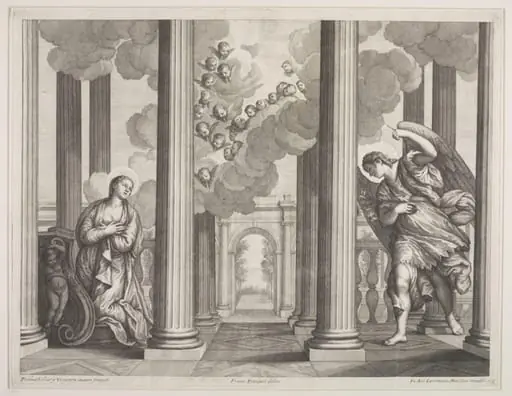
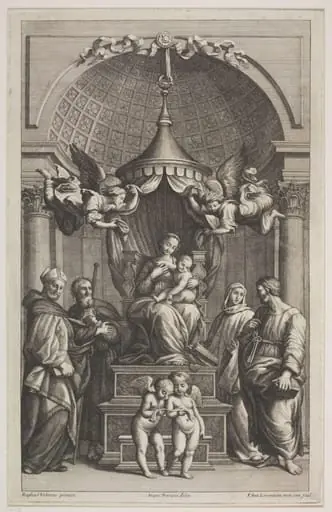
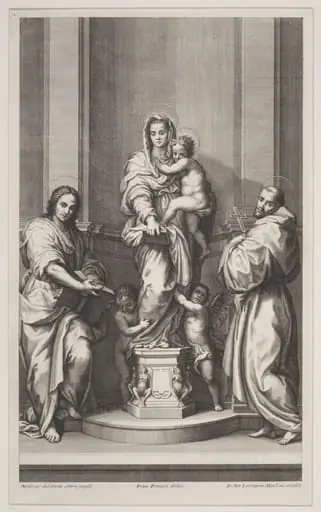
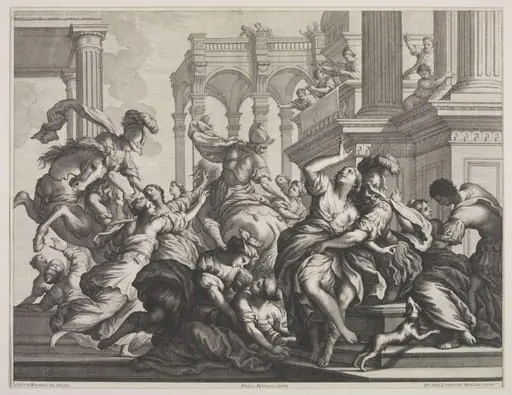
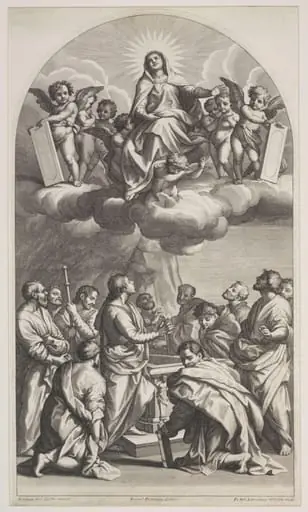
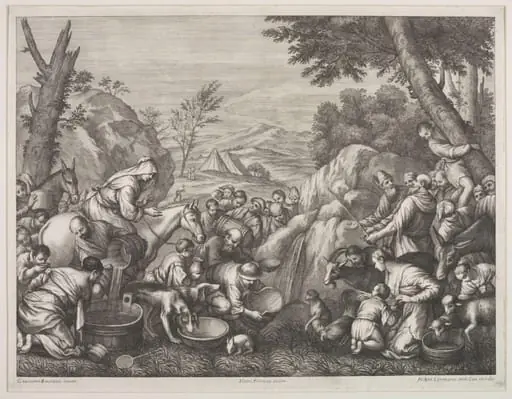
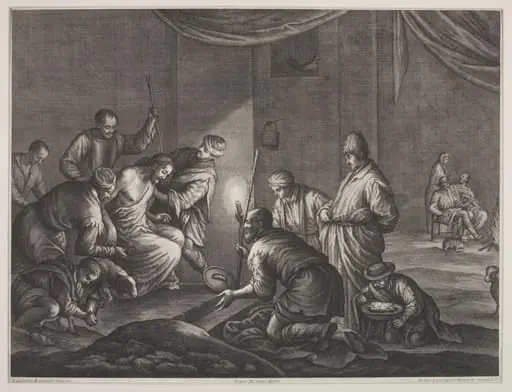
These prints show religious scenes and classical stories from the late 1600s to mid-1700s.