Artwork
Untitled
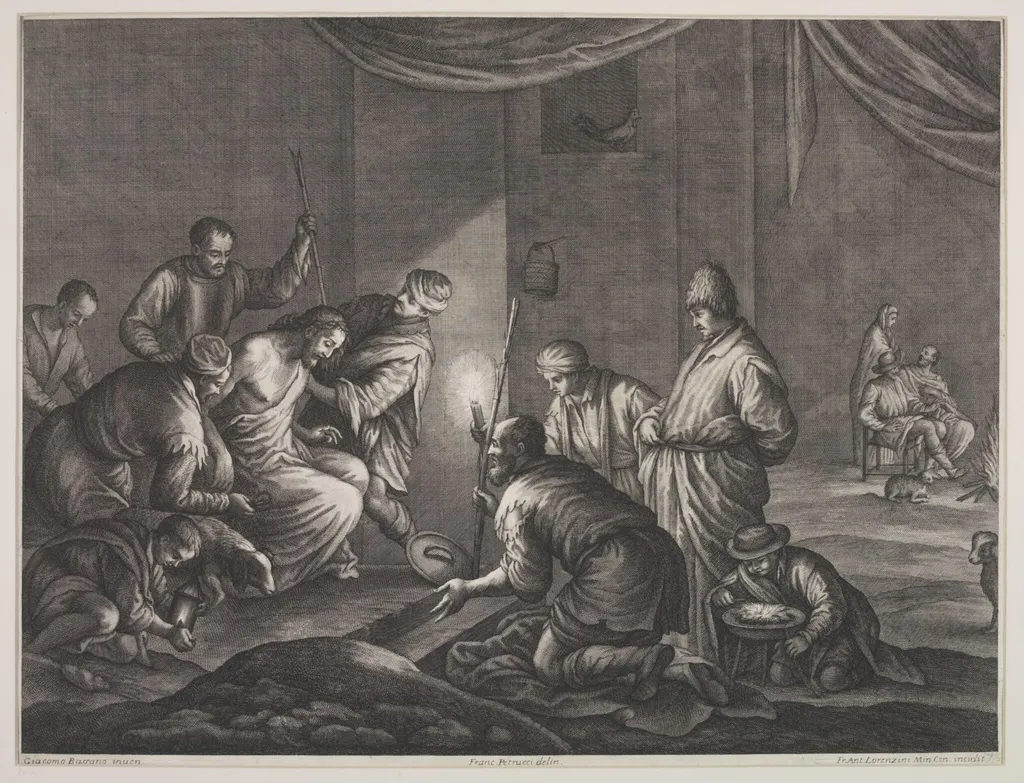
Untitled is a print by Giovanni Antonio Lorenzini. It dates from 1750 and is held in the collection of the Victoria and Albert Museum.
About this work
Overview
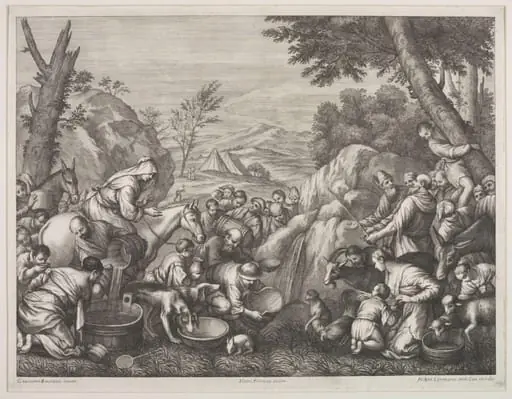
Executed on paper, it translates a compositional model originally developed by Jacopo Bassano il Vecchio.
This 1750 print by Giovanni Antonio Lorenzini is a reproductive engraving depicting a moment from the Passion of Christ, specifically his humiliation before the High Priest. Executed on paper, it translates a compositional model originally developed by Jacopo Bassano il Vecchio. The work was produced during a period when Italian printmakers frequently adapted earlier painted compositions for wider dissemination, often drawing from prominent collections such as the Uffizi.
Subject & Meaning
The scene captures Christ standing silently as figures surround him in a confined interior, some kneeling, others watching in stillness. The High Priest, though not centrally identified, is implied as the instigator of the insult. The quietude of the moment emphasizes spiritual tension rather than overt violence, aligning with Counter-Reformation ideals that favored introspective devotion. The composition invites contemplation of Christ’s endurance and the moral weight of the witnesses.
Technique & Style
Lorenzini employs chiaroscuro through precise hatching and tonal gradations to model forms and define spatial depth. The dim interior, lit by a high window and partially veiled by a draped curtain, enhances the sense of intimacy and psychological gravity. Figures are rendered with restrained detail, their robes suggesting volume without ornamentation. The technique mirrors Bassano’s painterly approach, translating light and shadow into the linear language of engraving with disciplined subtlety.
History & Provenance
The print derives from a composition once owned by the Medici family and recorded in the Uffizi Gallery’s collection during the 16th and 17th centuries. Lorenzini’s version likely circulated among collectors and religious institutions in central Italy, serving as both devotional aid and artistic reference. Its production reflects the broader practice of engravers reproducing celebrated works from princely collections to extend their influence beyond the original medium.
Context
In mid-18th-century Italy, printmaking remained a vital conduit for disseminating religious imagery, especially in regions where access to original paintings was limited. Lorenzini’s work aligns with a tradition of engravers who adapted Mannerist and early Baroque compositions, preserving their emotional intensity while adapting them to the demands of a print audience. The choice of Bassano’s model underscores enduring respect for his dramatic, emotionally charged religious scenes.
Legacy
Lorenzini’s print contributes to the ongoing transmission of Bassano’s visual language into the 18th century, demonstrating how earlier Renaissance compositions continued to inform devotional art long after their creation. While not widely attributed to Lorenzini today, the work exemplifies the quiet, persistent role of reproductive prints in sustaining artistic and spiritual traditions across generations.
Artist & collection
Artist
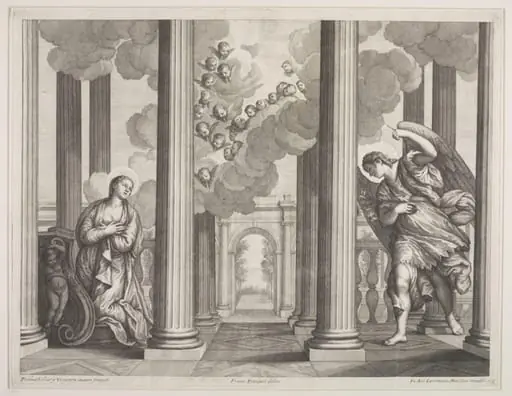
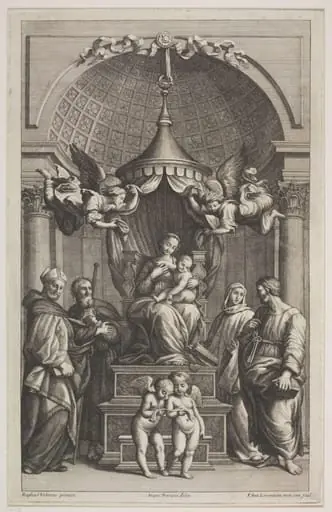
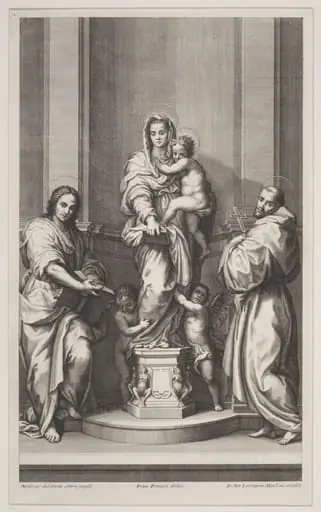
These prints show religious scenes and classical stories from the late 1600s to mid-1700s.

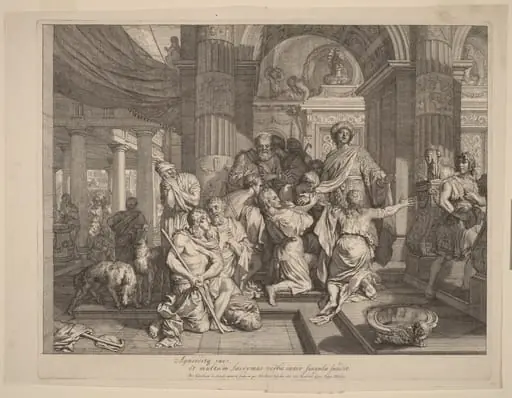 Joseph Reveals Himself to His Brothers
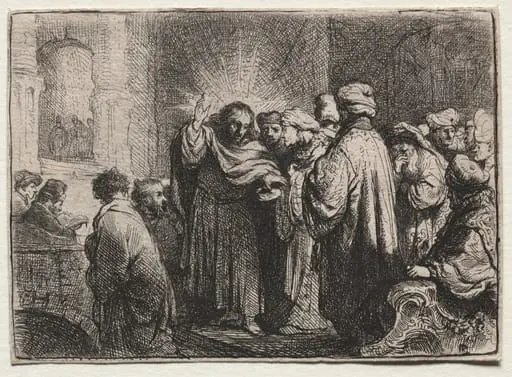 The Tribute Money
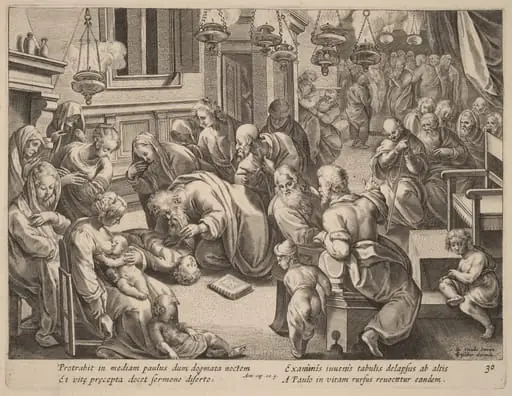 The Fall of Euthychus
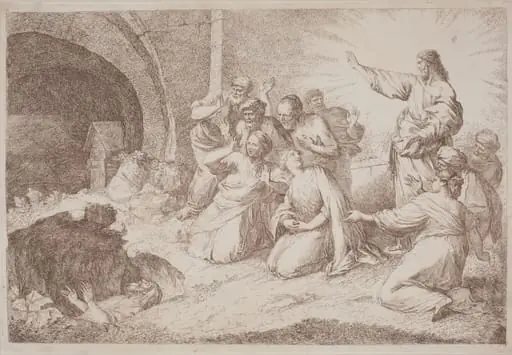 The Raising of Lazarus
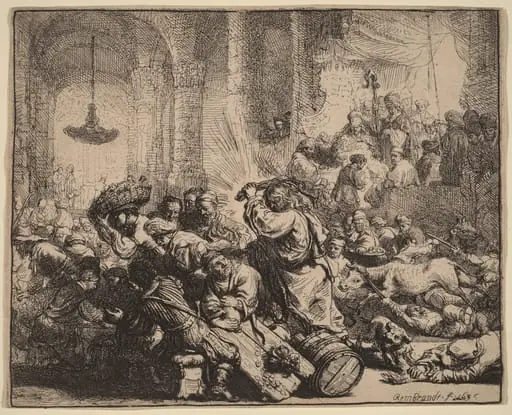 Christ Driving the Money Changers from the Temple
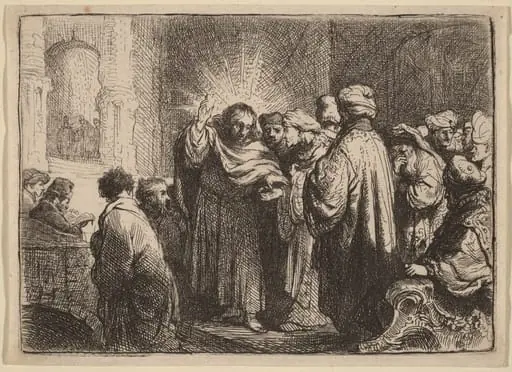 The Tribute Money
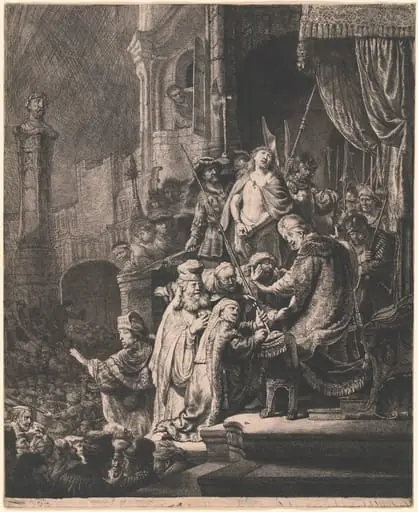 Christ before Pilate: Large Plate
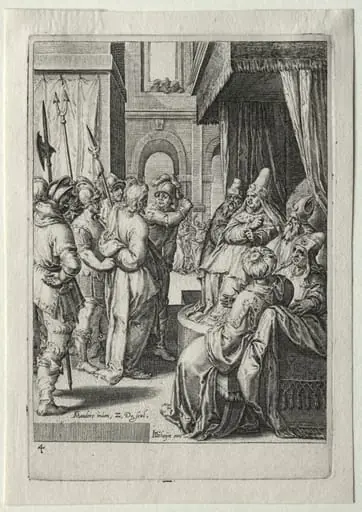 Passion Set: Christ before Herod
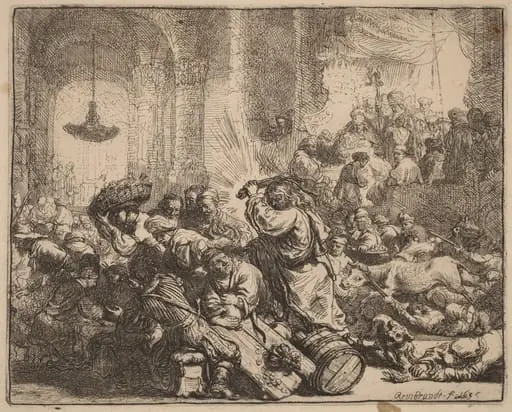 Christ Driving the Money Changers from the Temple
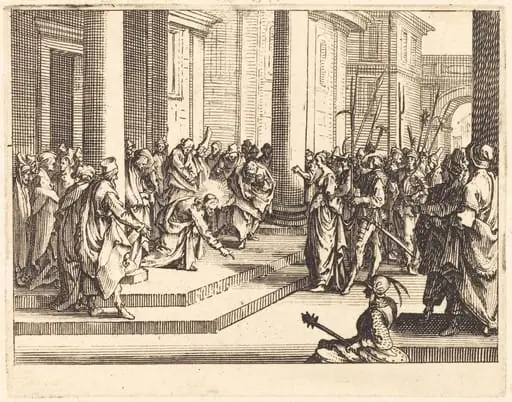 Christ and the Woman Taken in Adultery
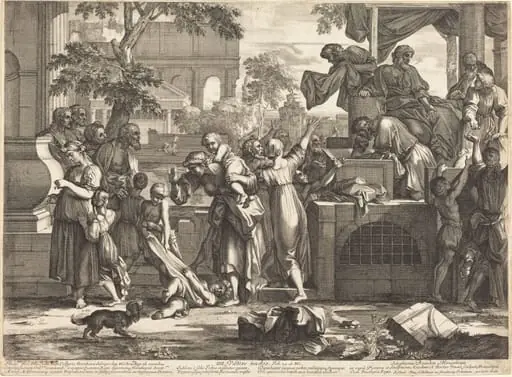 Vestine nudos
![The Slave Market [recto], by Alexandre Gabriel Decamps](https://artifactworldgallery.com/img/alexandre-gabriel-decamps--the-slave-market-recto--874eb665e814d110-w320.webp) The Slave Market [recto]
The Slave Market [recto]