Artwork
Virgin and Child
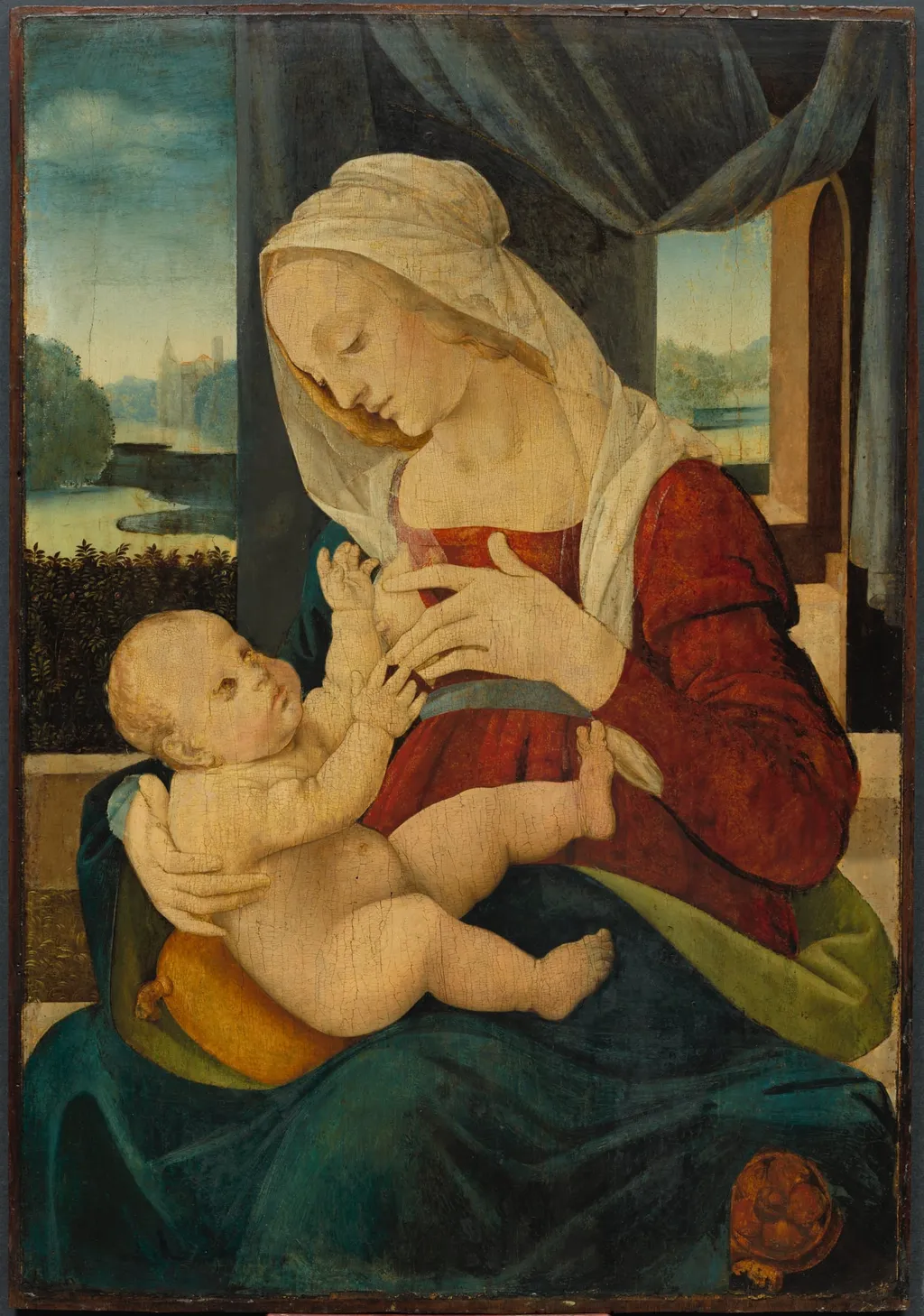
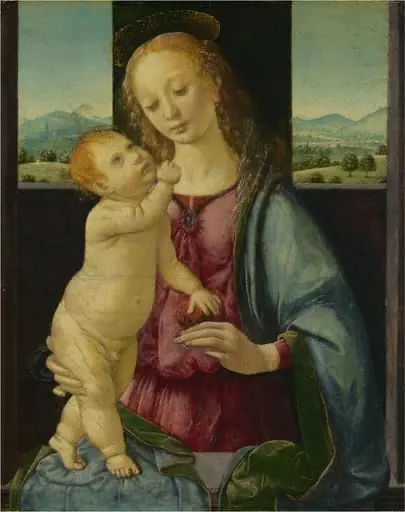
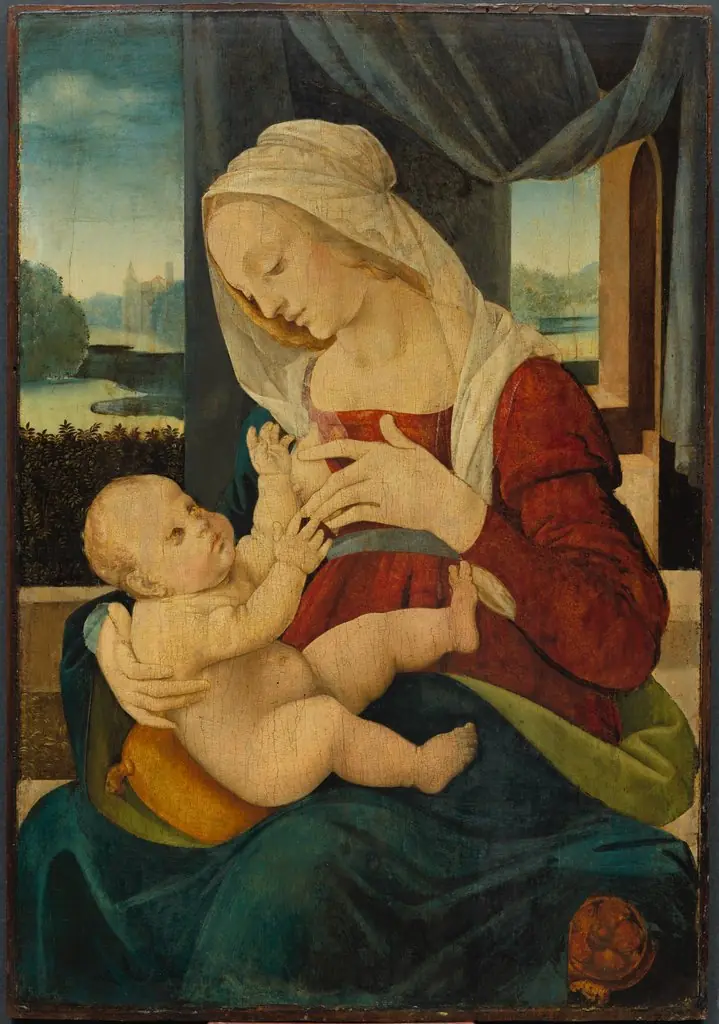
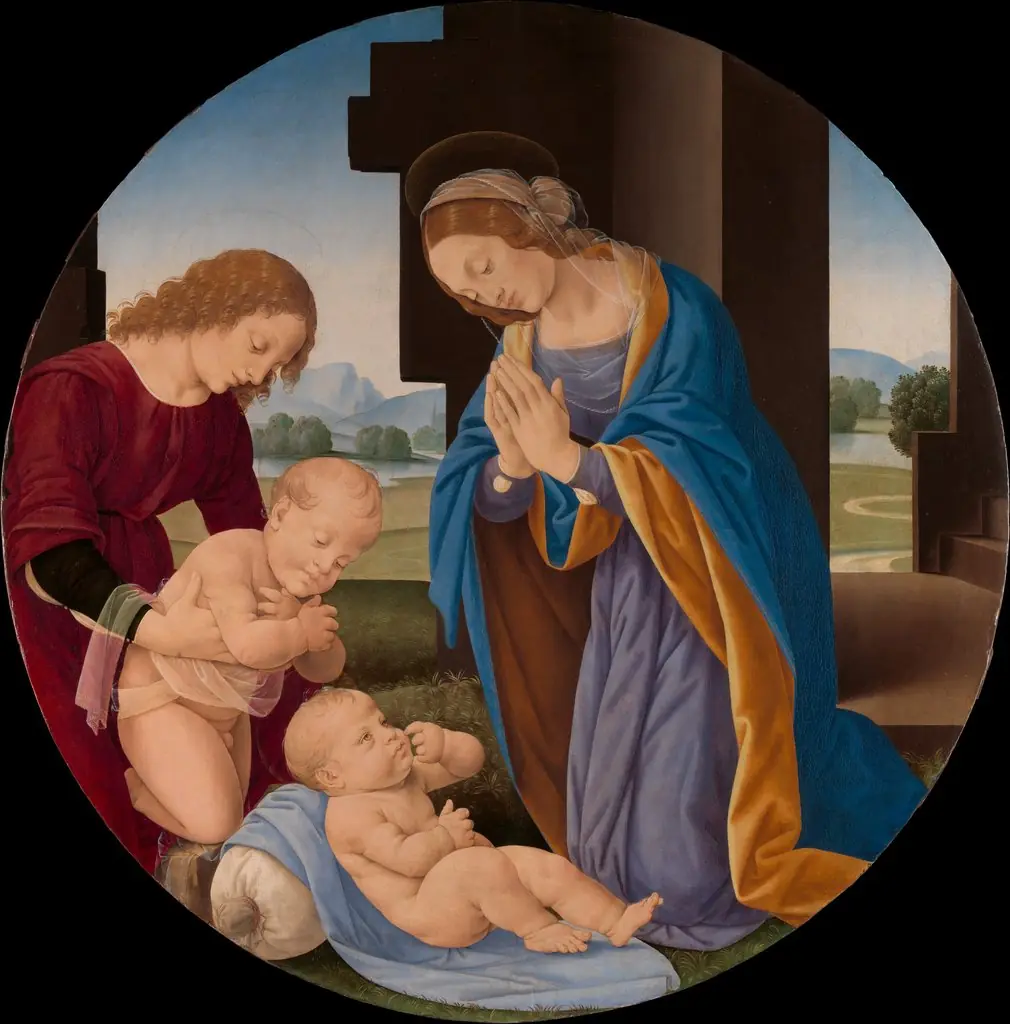
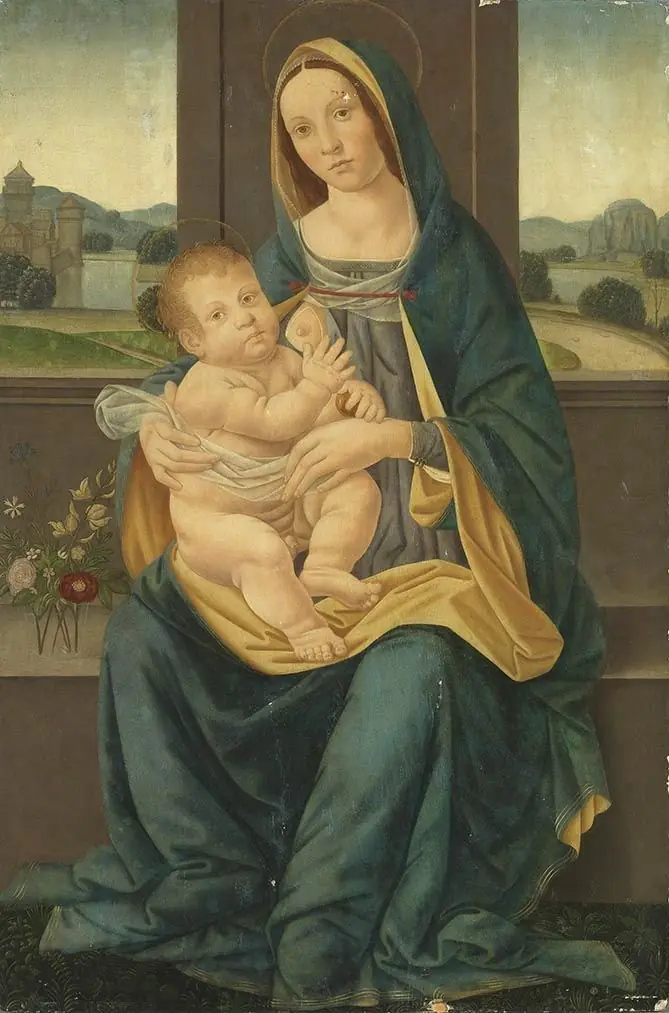
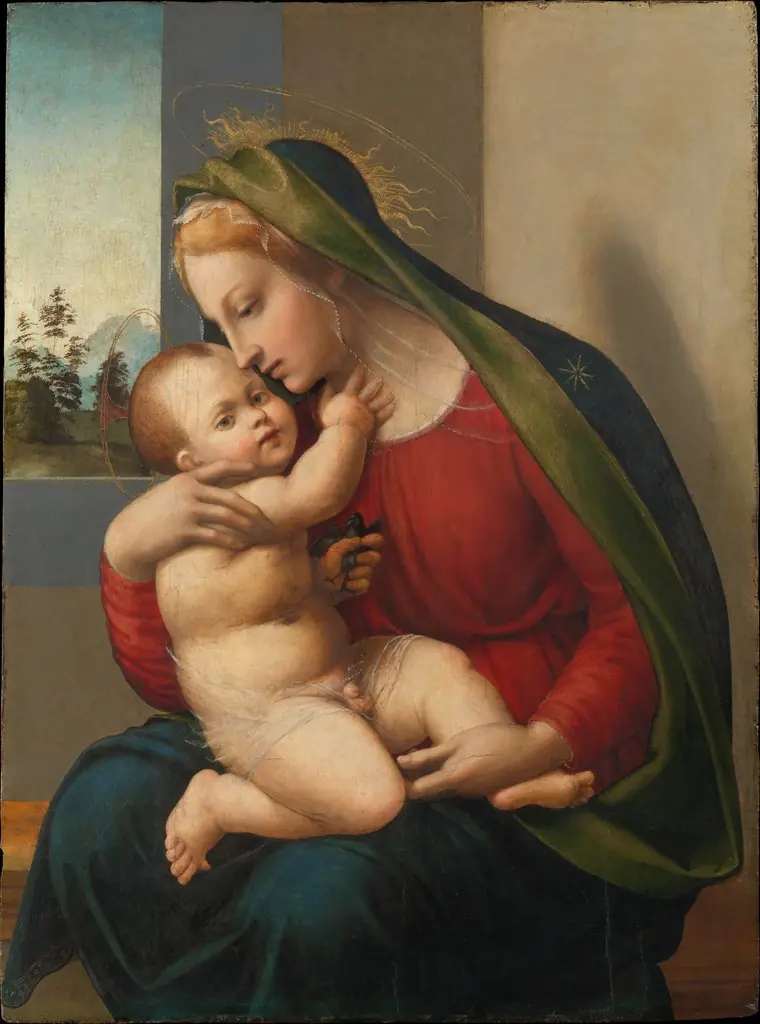
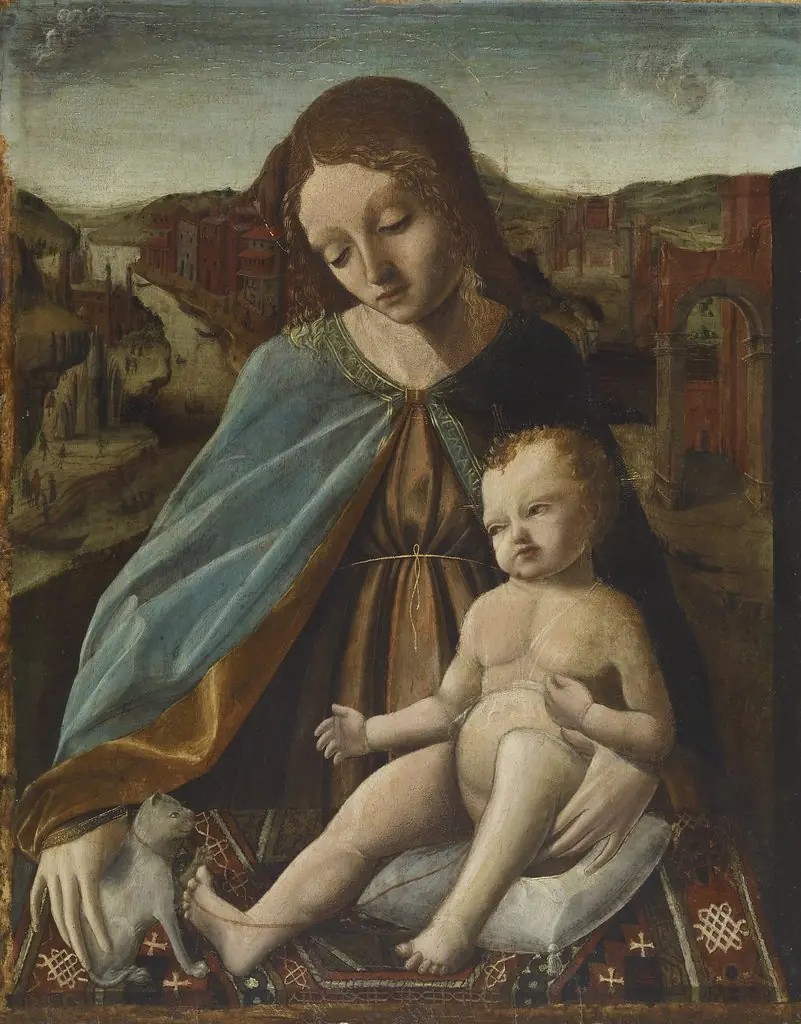
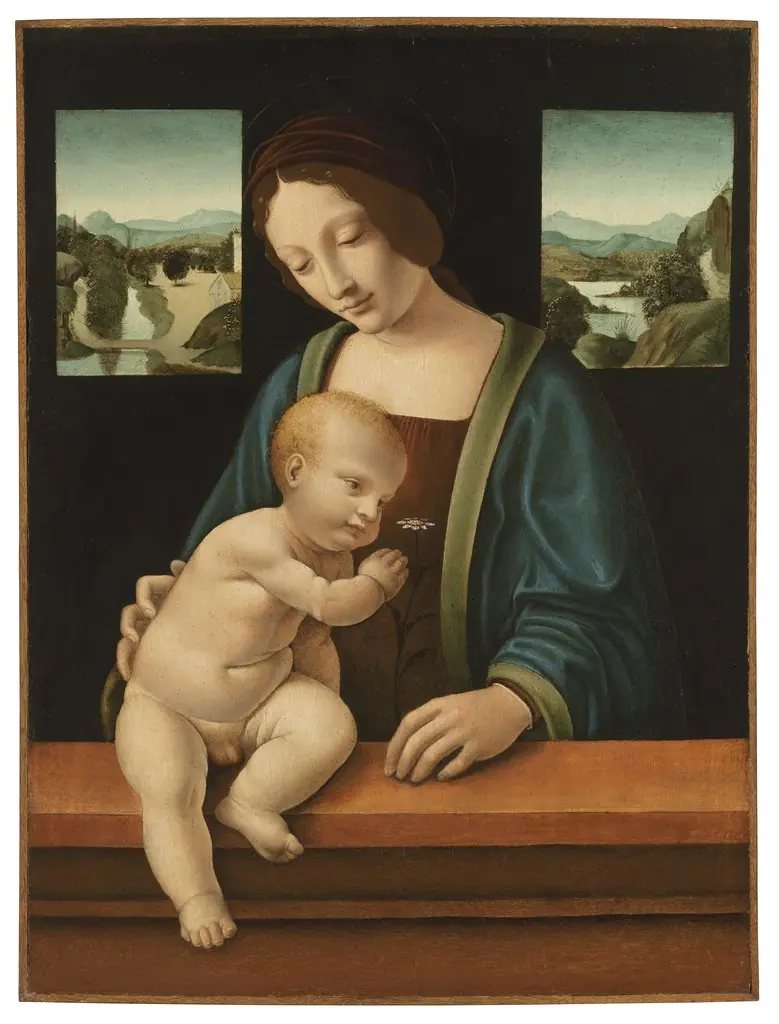
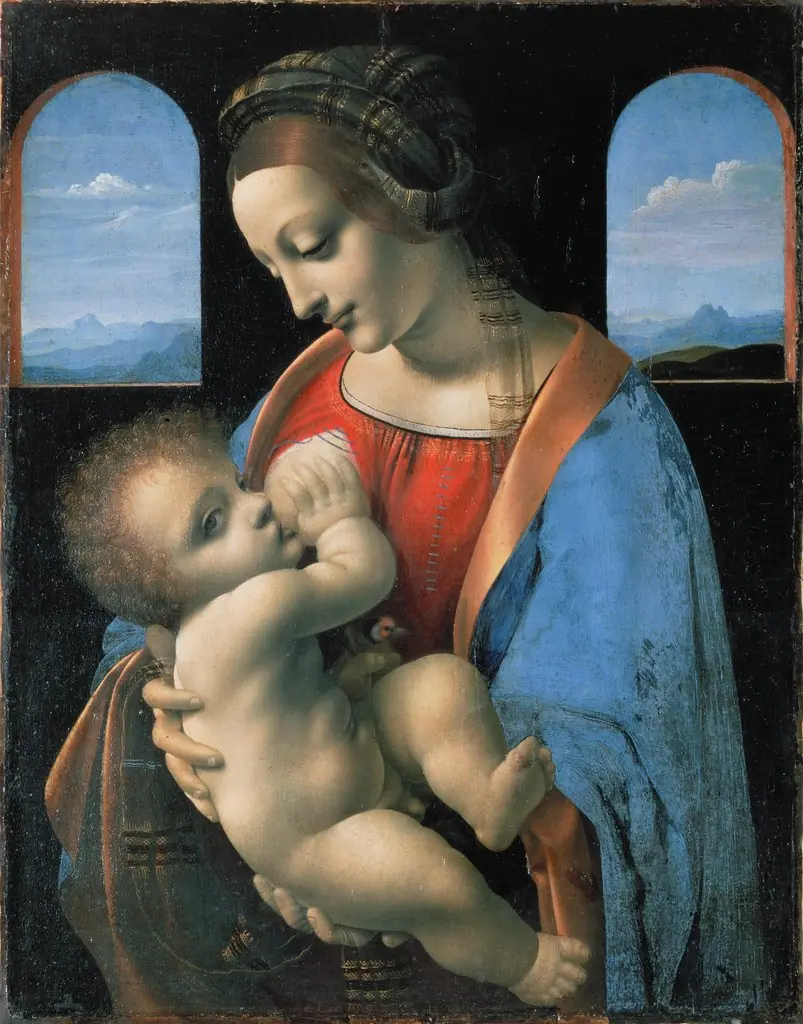
Virgin and Child is an unspecified painting by the Early Renaissance artist Lorenzo di Credi. It dates from 1404 and is held in the collection of the Cleveland Museum of Art.
About this work
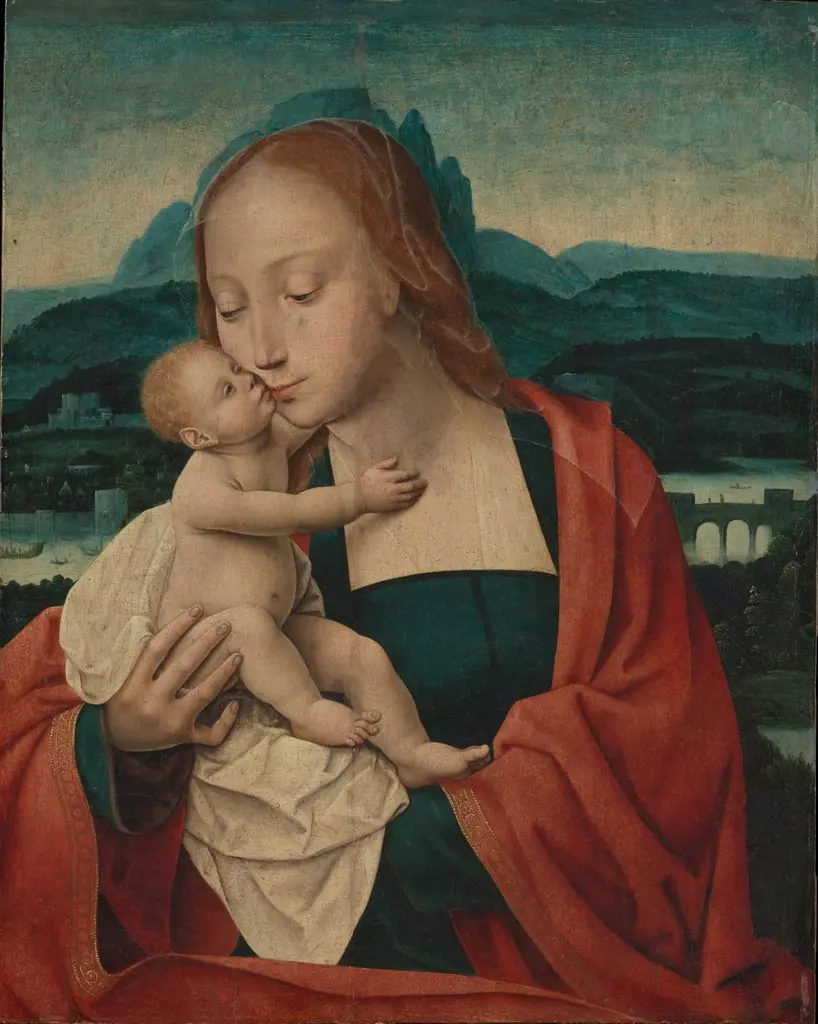
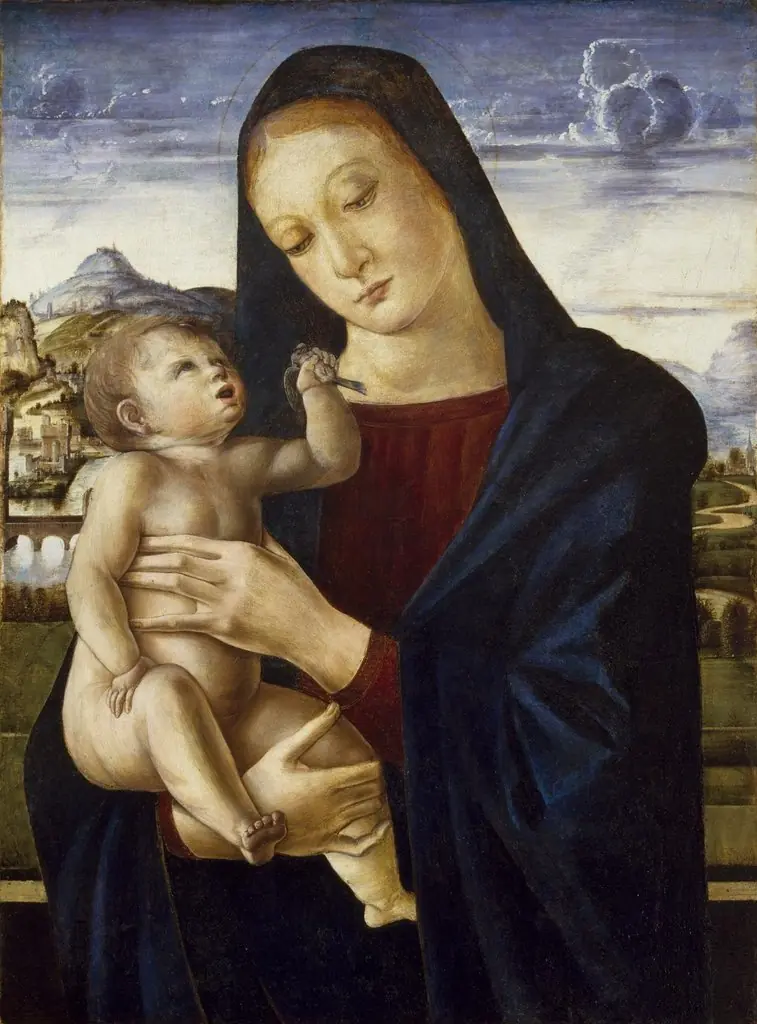
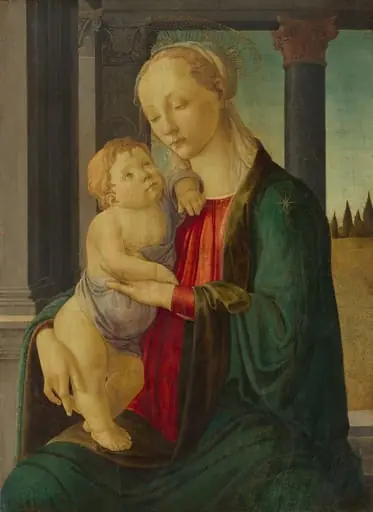
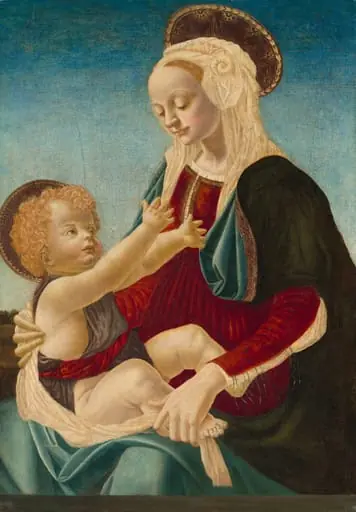
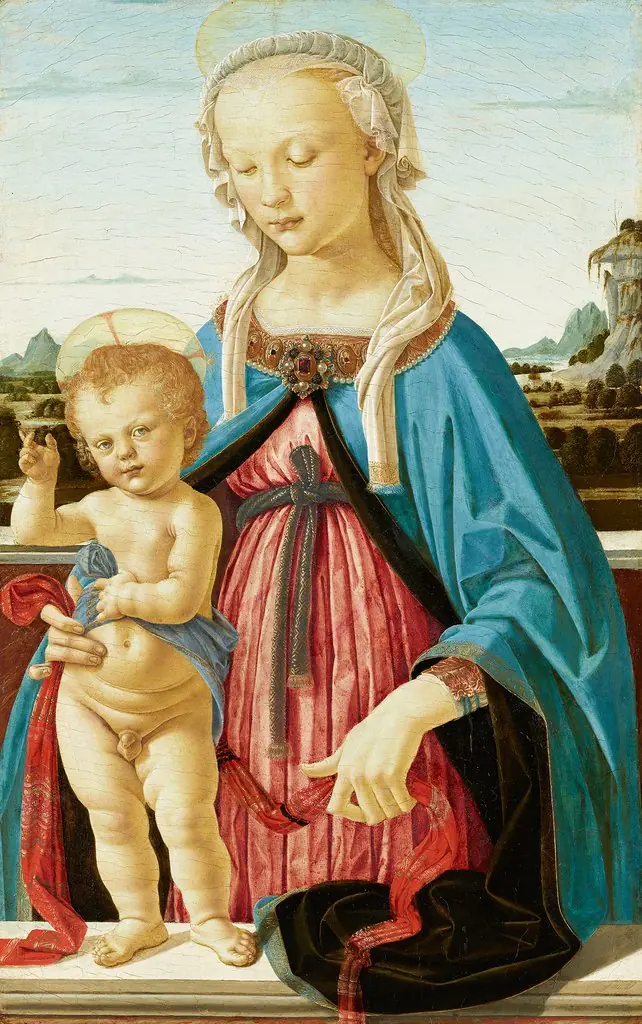
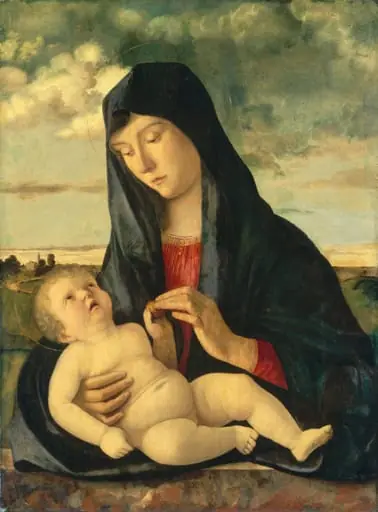
A woman holds a baby. The baby wears a red tunic. The woman has a blue cloak. They sit on a bench. The background is plain gold.
This looks like an old religious picture. Artists often painted Mary and baby Jesus this way. The faces have soft edges. The colors are quiet.
Look up Lorenzo di Credi (Italian, 1459–1537) next.
Overview
Lorenzo di Credi’s *Virgin and Child* is a small panel painting dating from the early 15th century, attributed to the Florentine workshop that shaped the first wave of Renaissance art. The work presents the Virgin Mary seated with the infant Jesus, set against a flat gold background, and is now part of the Cleveland Museum of Art’s collection.
Subject & Meaning
The composition follows a long‑standing devotional motif, showing Mary cradling the Christ Child, who is dressed in a vivid red tunic. The tender interaction emphasizes the human bond between mother and son while also symbolising theological concepts of incarnation and divine love, a common focus of devotional imagery in the period.
Technique & Style
Executed in tempera on panel, the painting displays the soft modelling of faces and delicate handling of drapery associated with early Florentine practice. The Virgin’s blue cloak and the child’s red garment are rendered with subtle gradations, while the gold ground creates a timeless, non‑spatial setting that highlights the figures rather than a narrative landscape.
History & Provenance
Created while di Credi was active in Florence, the panel later entered private collections before being acquired by the Cleveland Museum of Art, where it remains on view. Documentation links the work to the artist’s early output, reflecting his training in Andrea del Verrocchio’s workshop and his subsequent inheritance of that studio.
Context
The painting belongs to a broader tradition of Marian imagery that flourished in the early Renaissance, when artists began to explore naturalistic representation within sacred subjects. Di Credi’s approach combines the lingering medieval gold background with emerging interest in realistic anatomy and spatial coherence, marking a transitional moment in Florentine visual culture.
Artist & collection

Artist
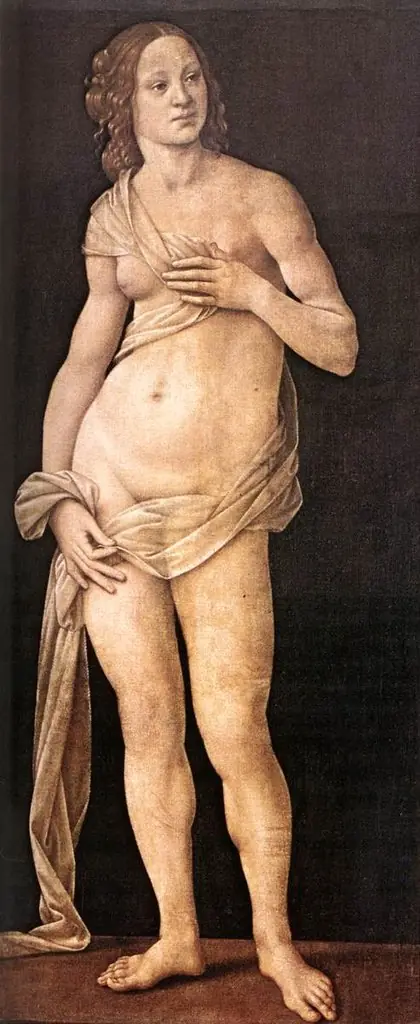
Lorenzo di Credi (1456/59 – January 12, 1537) was an Italian Renaissance painter and sculptor best known for his paintings of religious subjects, and portraits.