Artwork
The Holy Family and Infant St. John
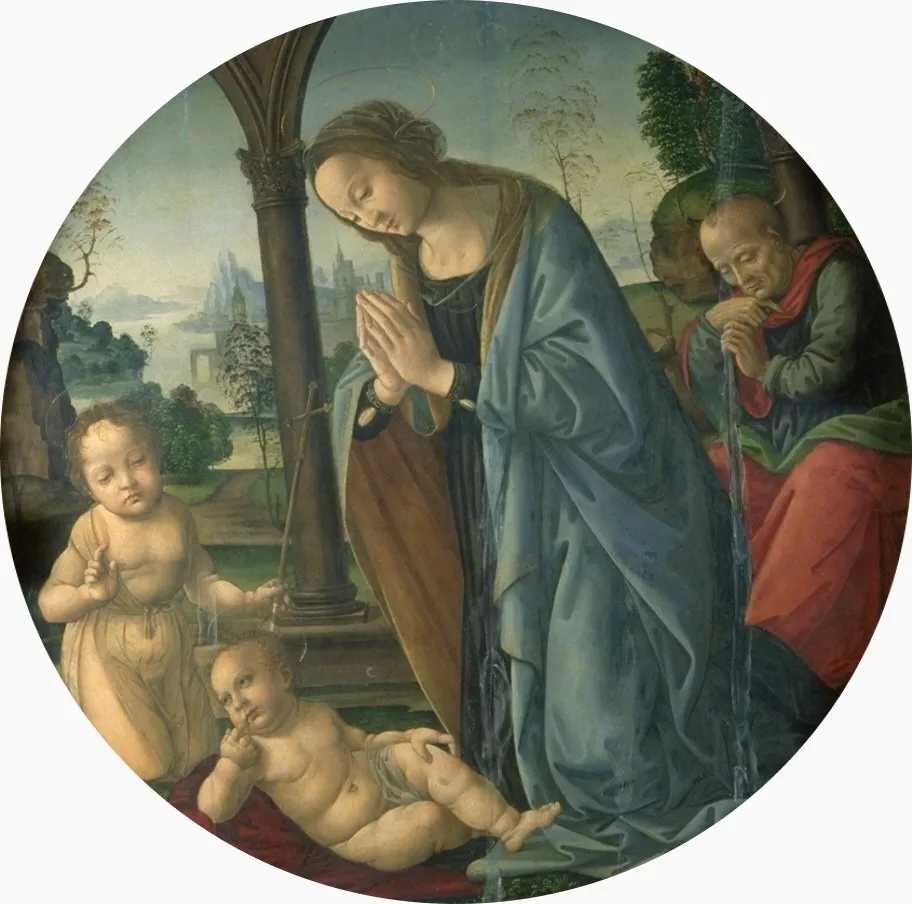
The Holy Family and Infant St. John is a paint painting by the High Renaissance artist Lorenzo di Credi. It dates from 1508 and is held in the collection of the Gemäldegalerie Berlin.
About this work
Overview
Lorenzo di Credi, a Florentine painter active in the early 1500s, produced the oil painting known as *The Holy Family and Infant St John* around 1508.
Lorenzo di Credi, a Florentine painter active in the early 1500s, produced the oil painting known as *The Holy Family and Infant St John* around 1508. The work presents a domestic religious scene in which a kneeling woman, identified as the Virgin Mary, holds the infant Christ while the young John the Baptist reaches toward them, observed by an older male figure, traditionally Joseph. The composition is set before a modest landscape featuring a stone fountain, a distant castle, and a tranquil sky.
Subject & Meaning
The image combines three central figures of Christian devotion: the Virgin, the Christ Child, and the infant John the Baptist, whose future role as the forerunner of Christ is emphasized by his curious gesture toward the infant. The presence of a fountain may allude to baptismal symbolism, while the gentle interaction among the figures conveys a sense of familial intimacy and spiritual preparation.
Technique & Style
Di Credi employs a balanced High Renaissance palette, with muted blues and earth tones that model forms through soft chiaroscuro. The figures are rendered with delicate modeling, and the landscape background is treated with atmospheric perspective, creating depth without distracting from the central group. The composition reflects the compositional harmony taught in Andrea del Verrocchio’s workshop, where di Credi trained alongside contemporaries such as Leonardo da Vinci.
History & Provenance
Created circa 1508, the painting entered the collection of the Gemäldegalerie in Berlin, where it remains on display. Its documented provenance traces back to the artist’s Florentine workshop, though earlier ownership records are scarce. The work has been catalogued as a representative example of di Credi’s religious output during his mature period.
Context
In early 16th‑century Florence, devotional images of the Holy Family were popular for private contemplation and church commissions. Di Credi’s rendition aligns with this trend, offering a serene, intimate portrayal that contrasts with more dramatic narratives of the period. The inclusion of a landscape and architectural elements reflects the growing interest in integrating figures within believable settings, a hallmark of the Florentine High Renaissance.
Artist & collection

Artist
Lorenzo di Credi (1456/59 – January 12, 1537) was an Italian Renaissance painter and sculptor best known for his paintings of religious subjects, and portraits.

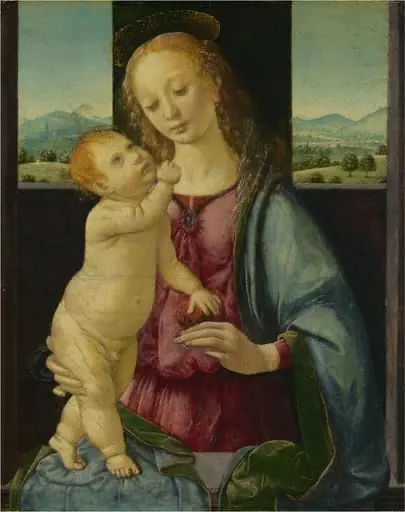
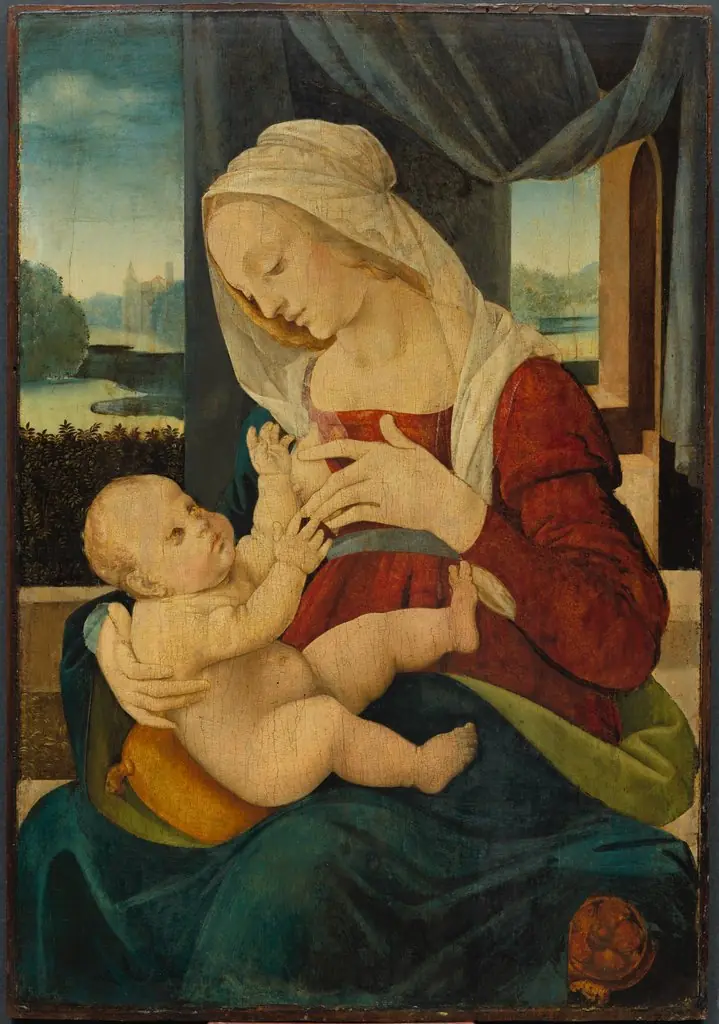
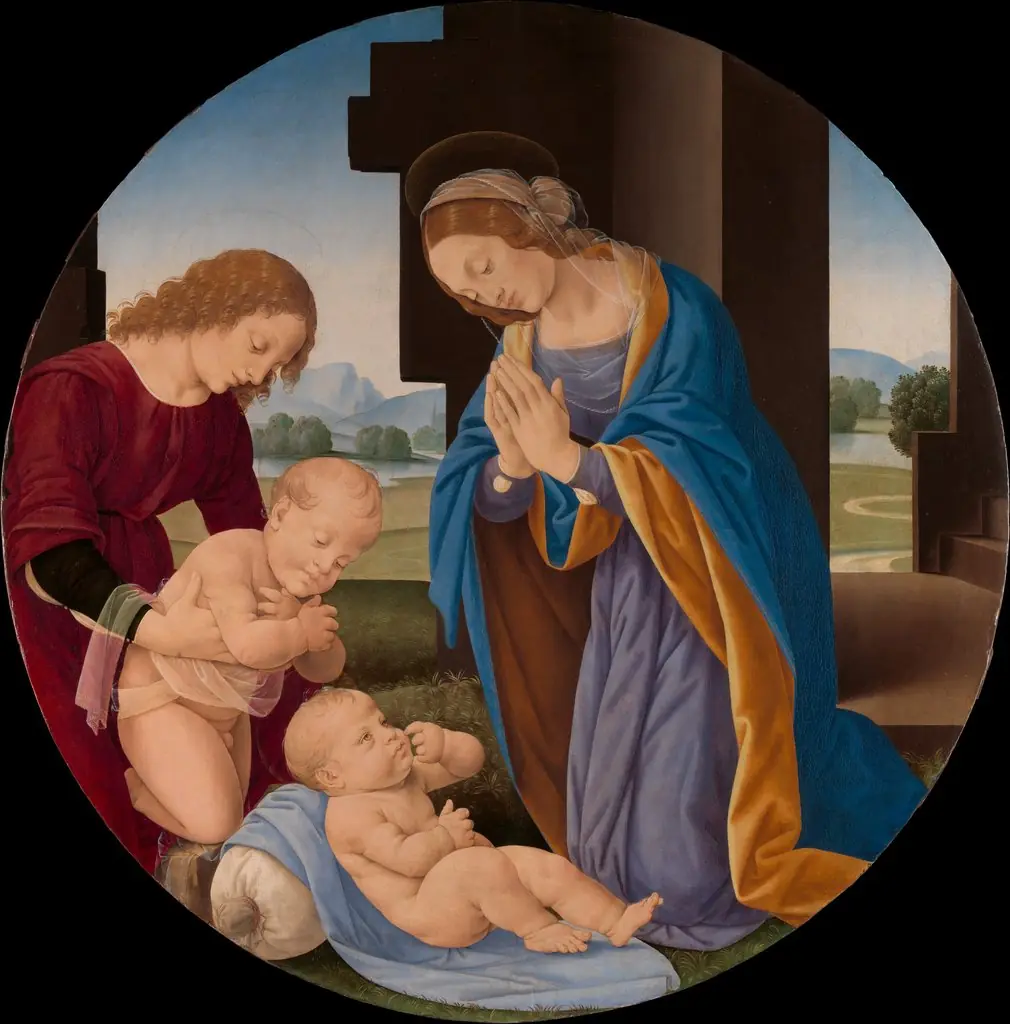
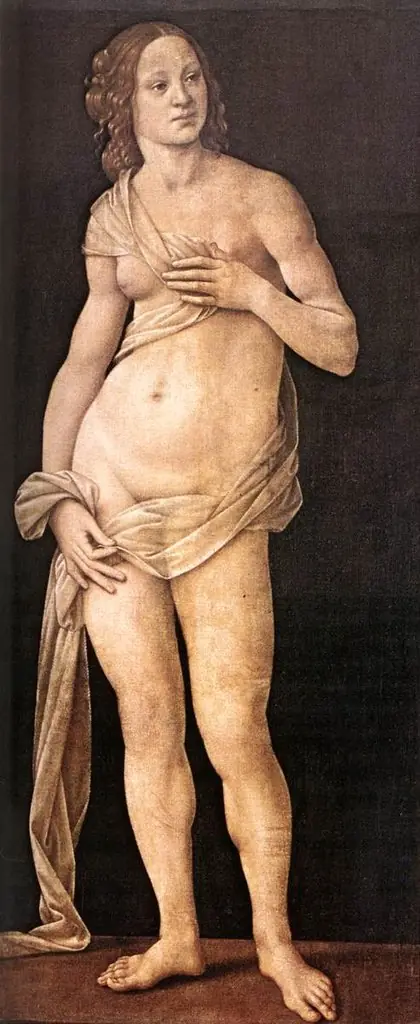
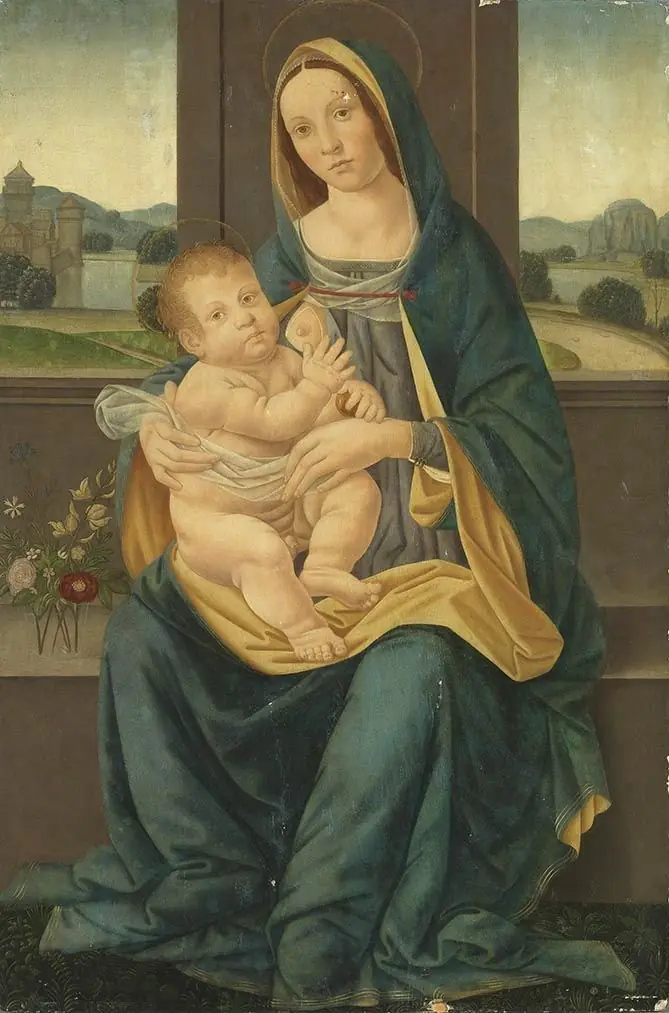
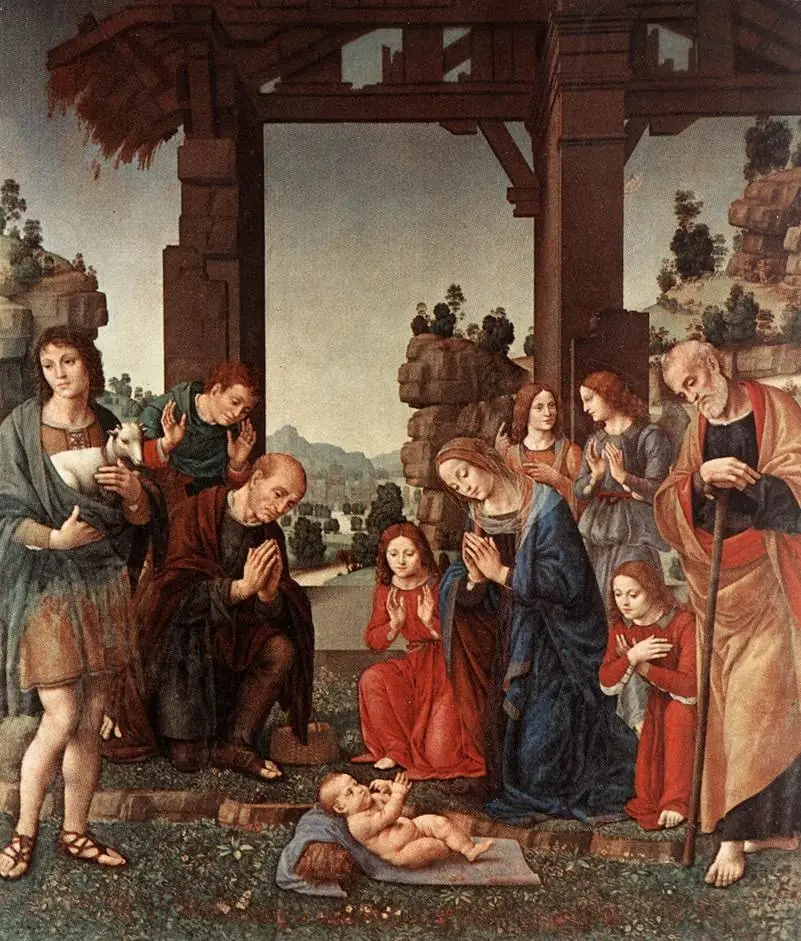
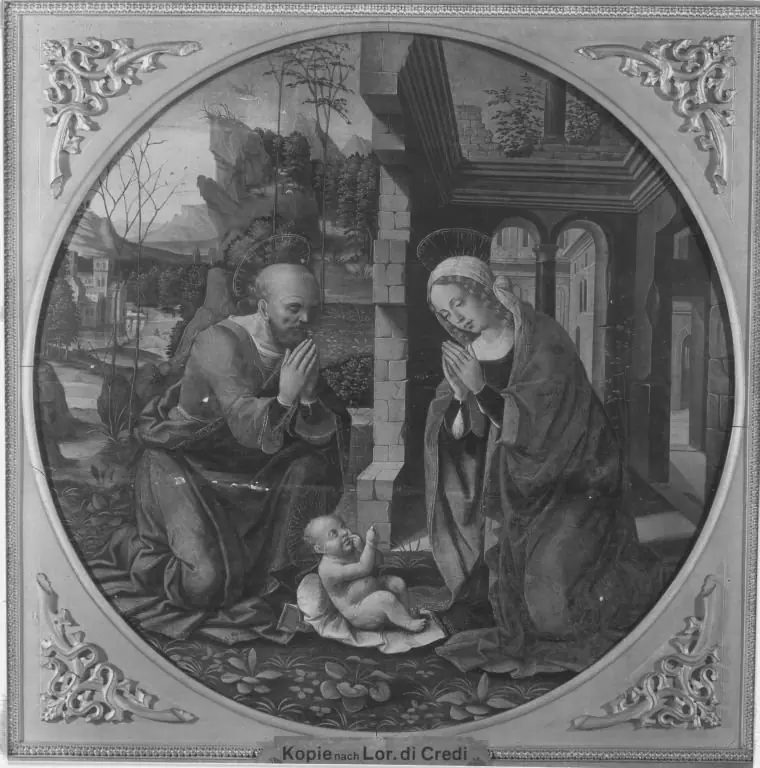
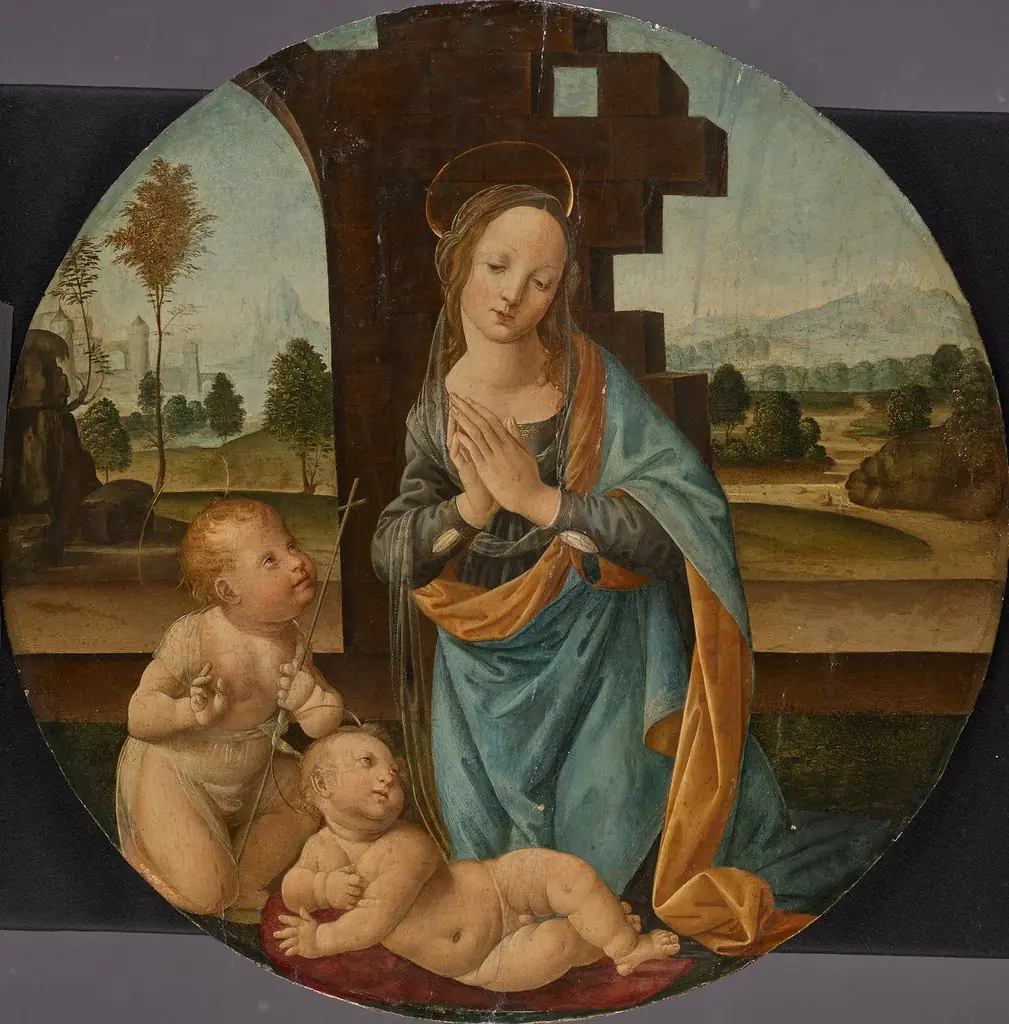 The Virgin and Child with the Young St. John
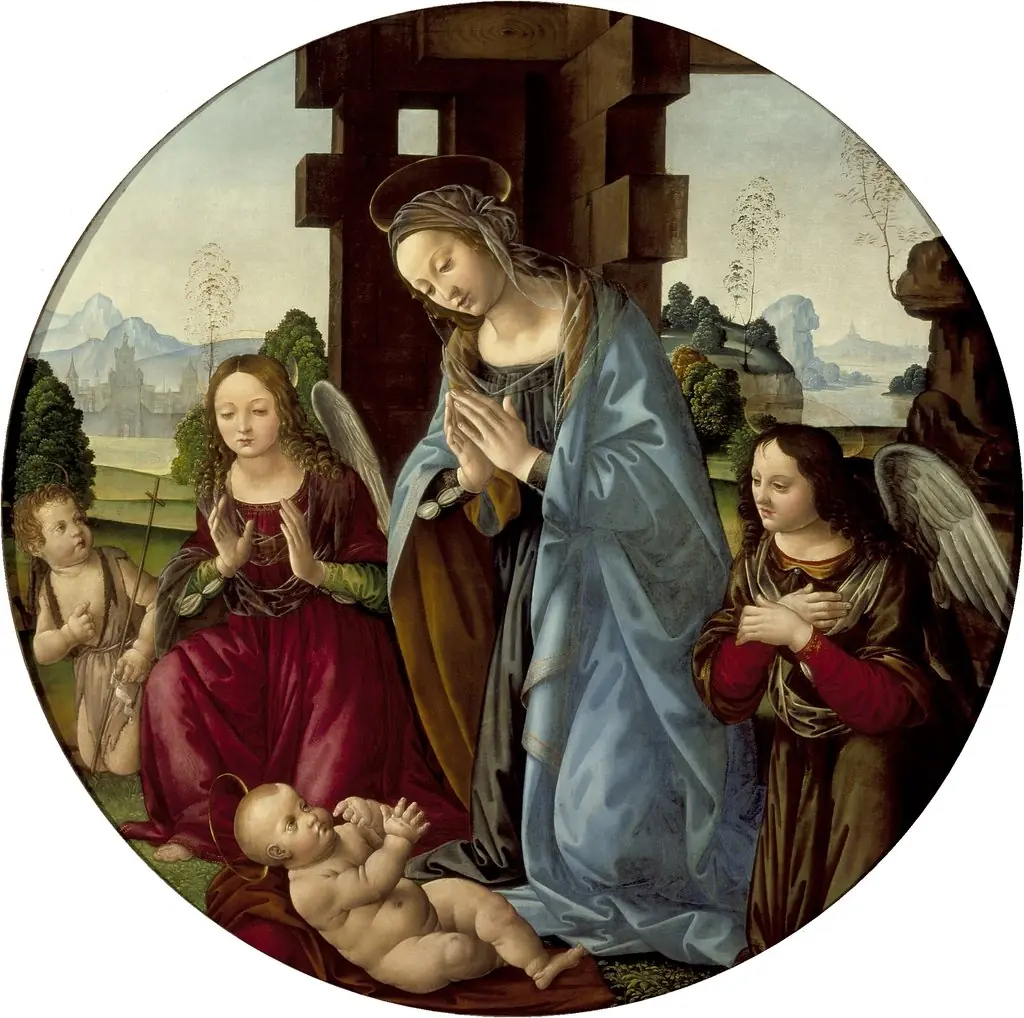 Virgin Adoring the Christ Child with St. John the Baptist and Two Angels
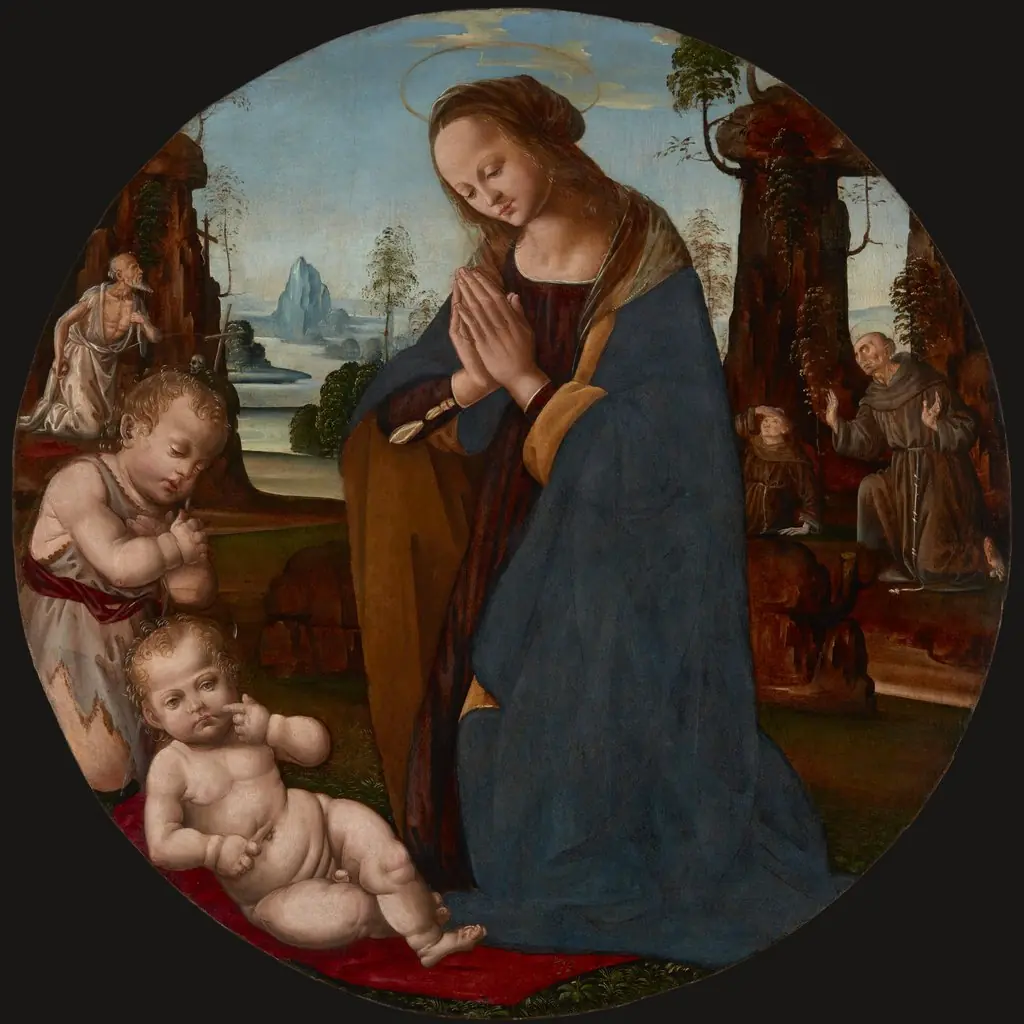 Adoration of the Child with Young St John the Baptist – Tondo
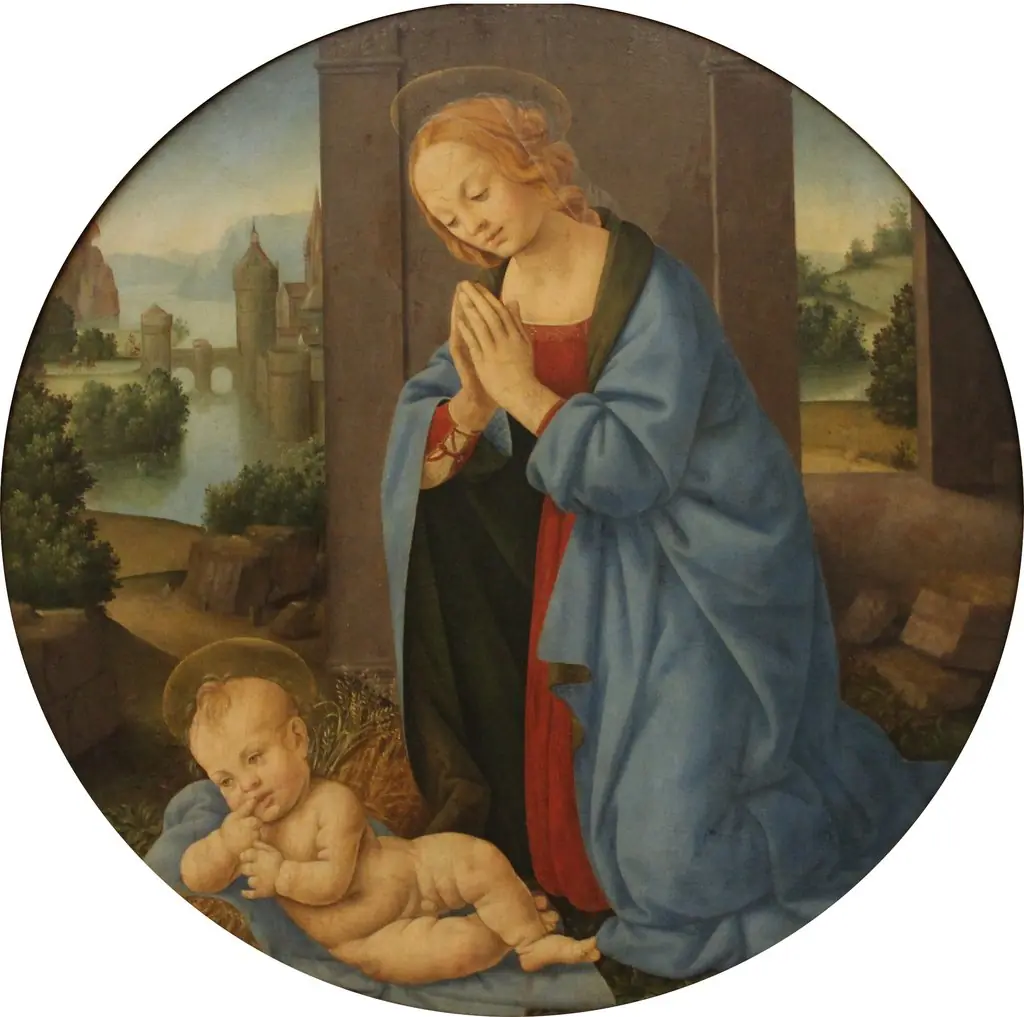 The Virgin adoring the Child
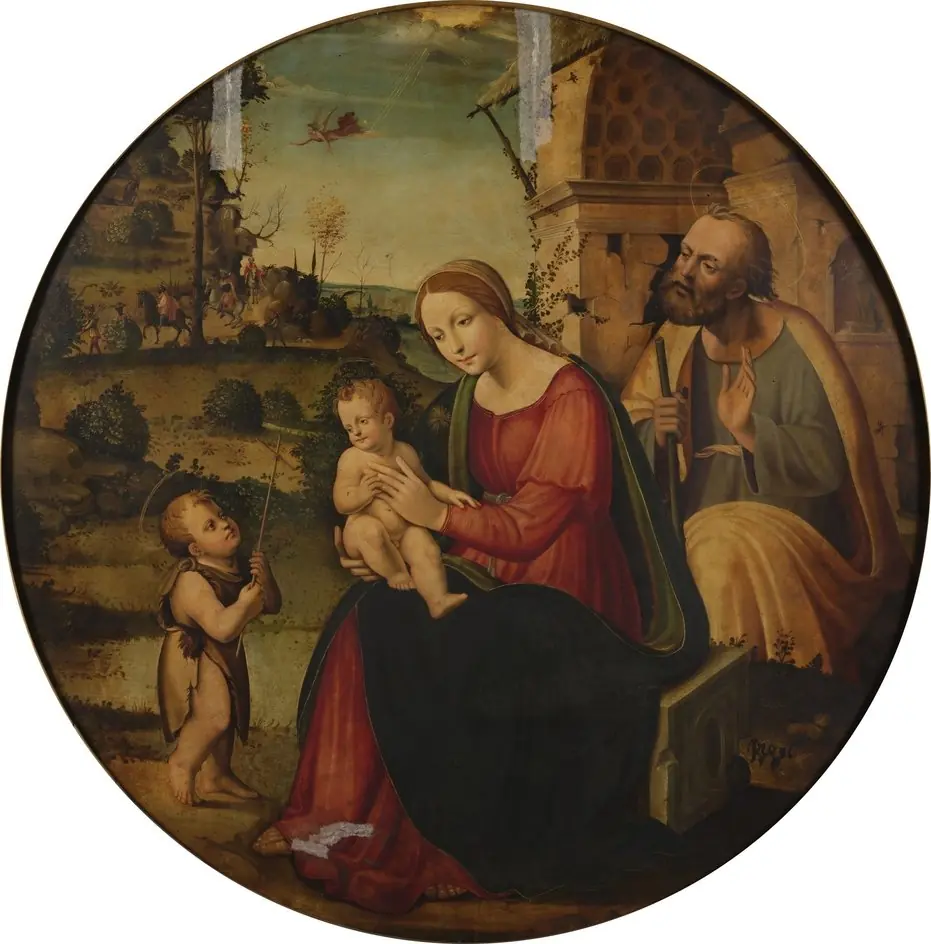 The Holy Family with the young St John the Baptist
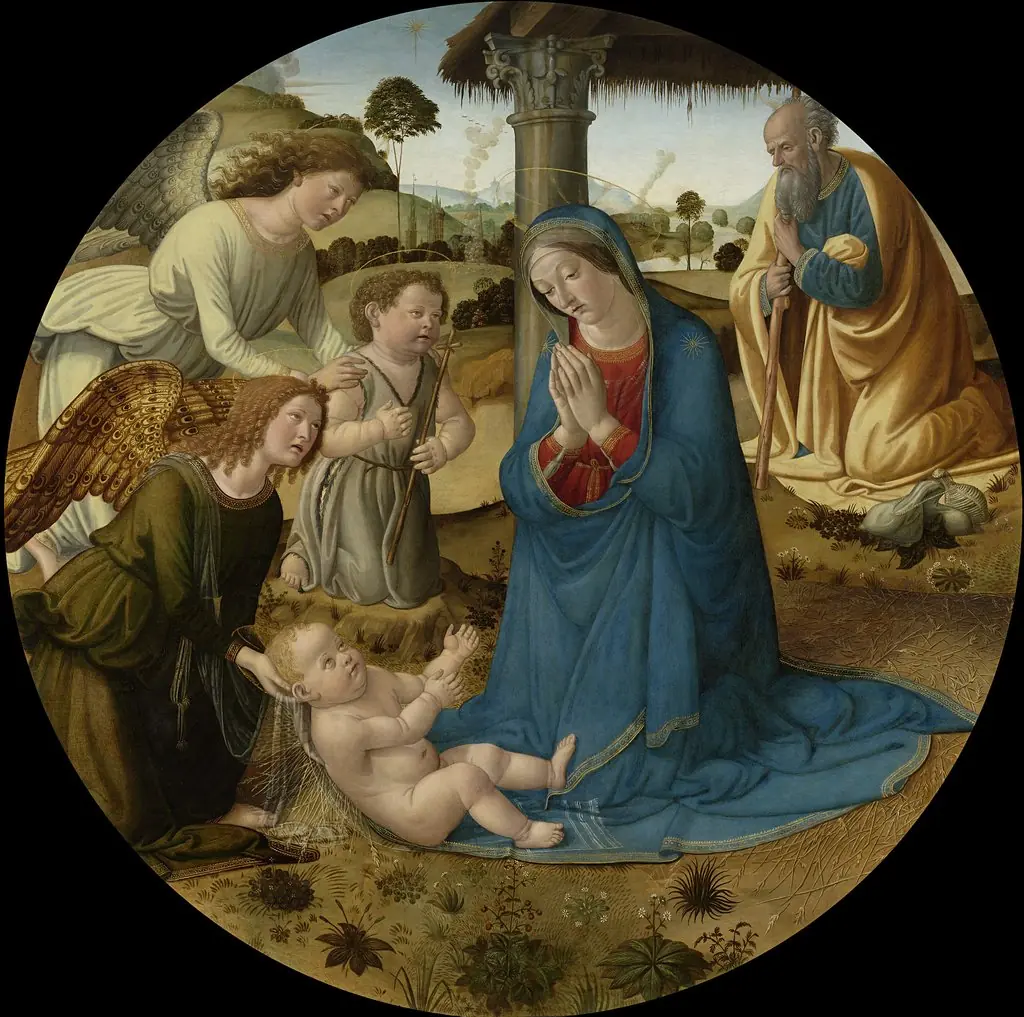 The Adoration of the Christ Child
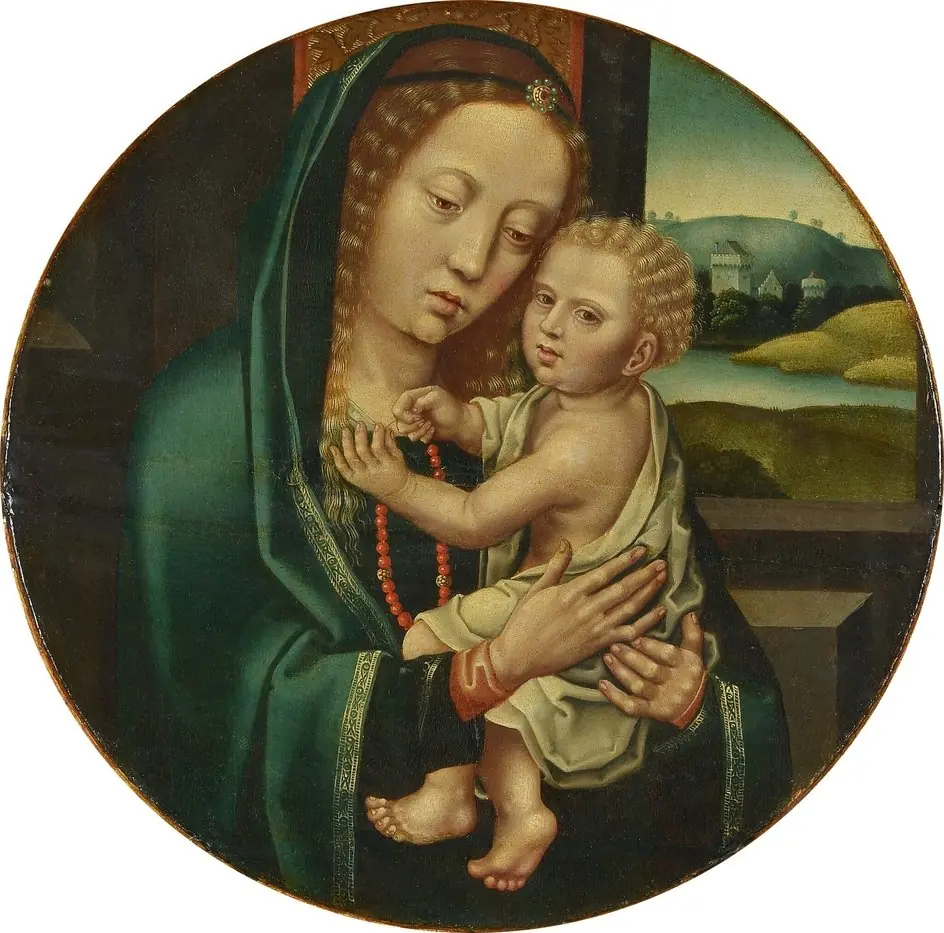 The Virgin and Child
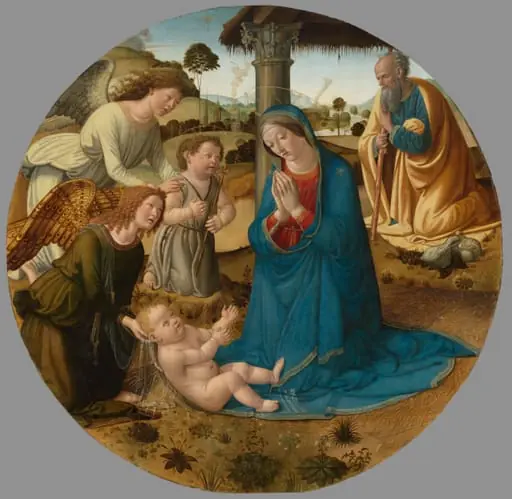 De aanbidding van het Christuskind
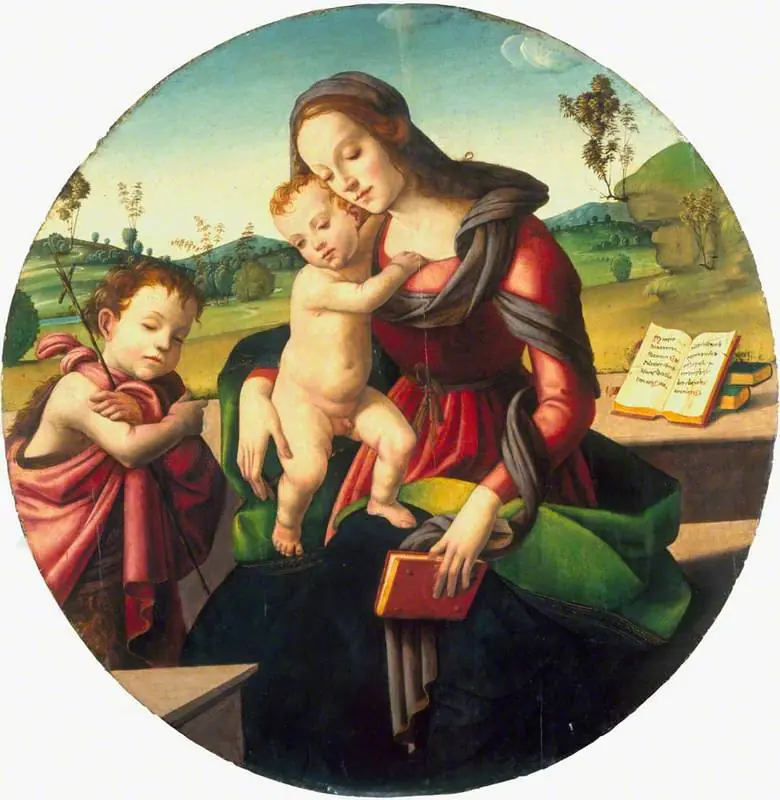 The Virgin and Child with the Infant Saint John the Baptist
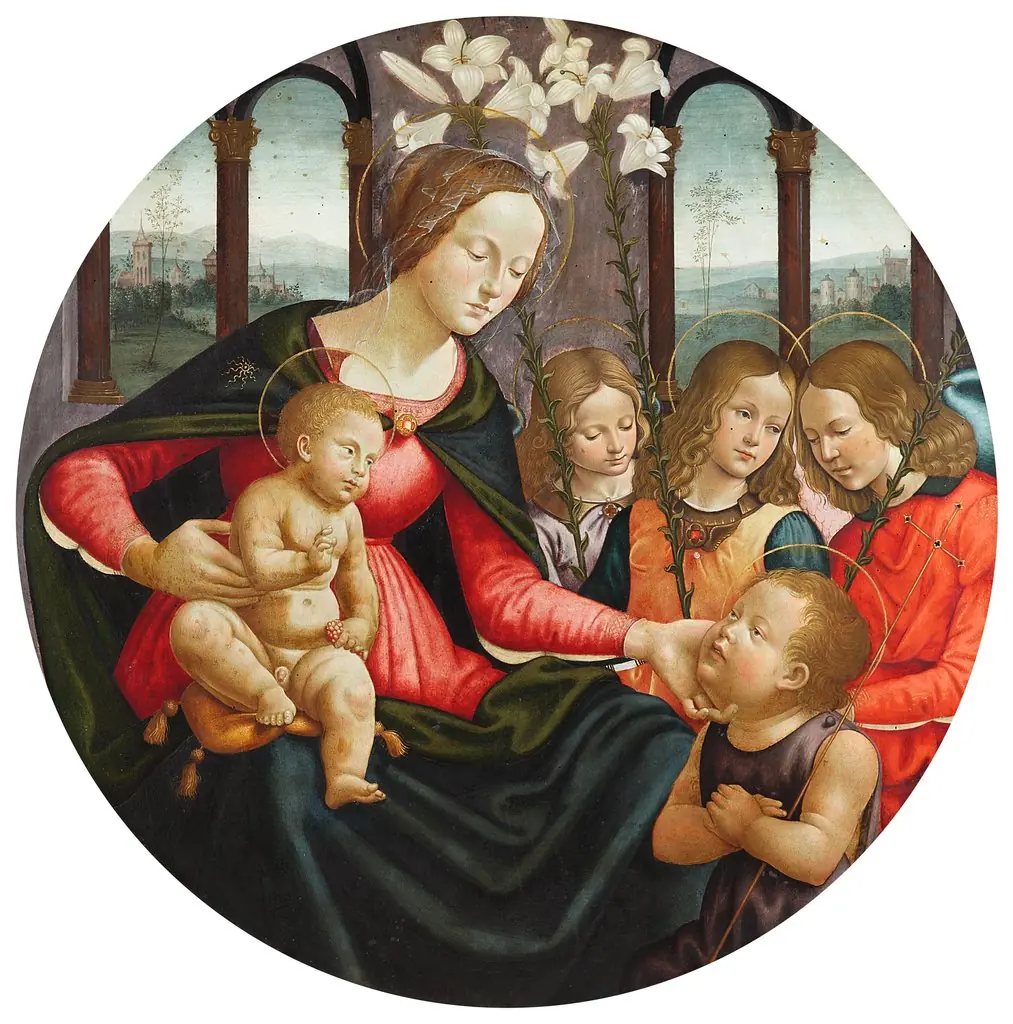 The Virgin and Blessing Child, Young St. John and three Angels
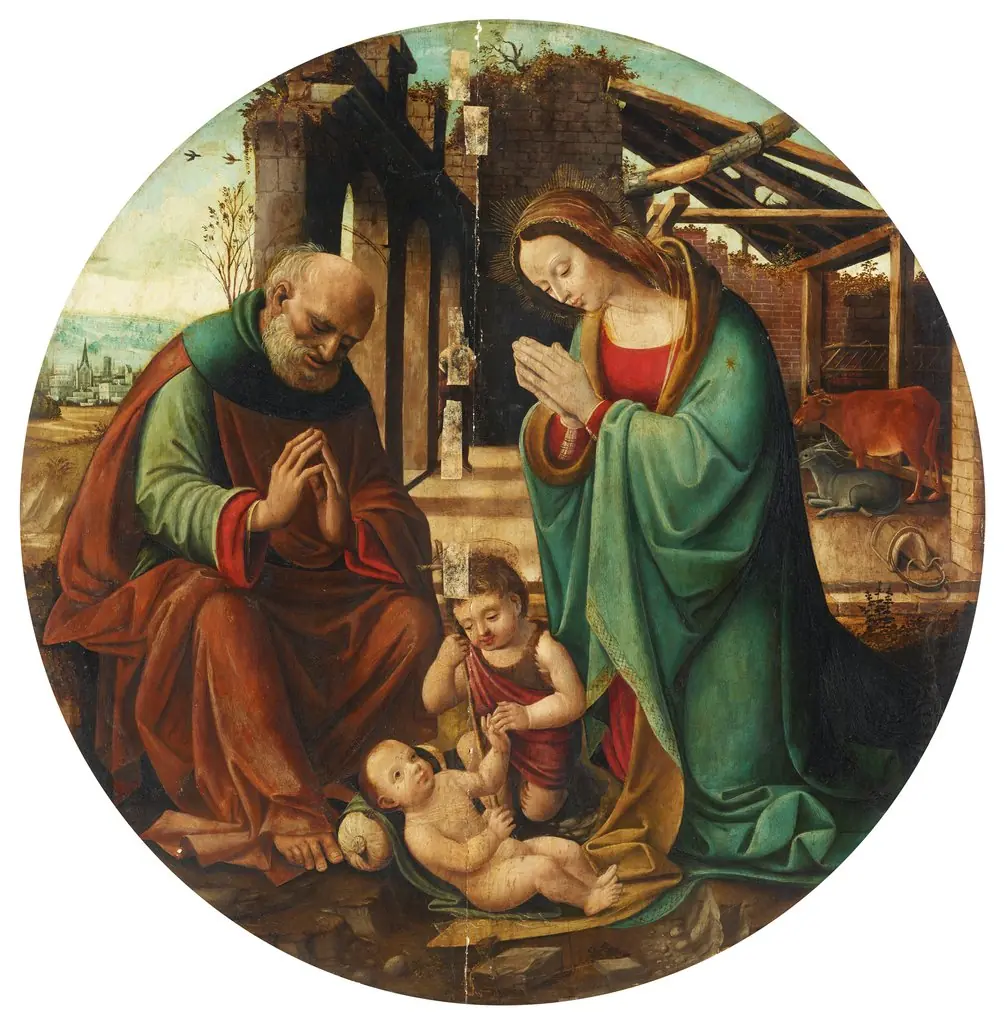 The Holy Family with Young St. John, Adoring the Child