Artwork
Aloys Senefelder
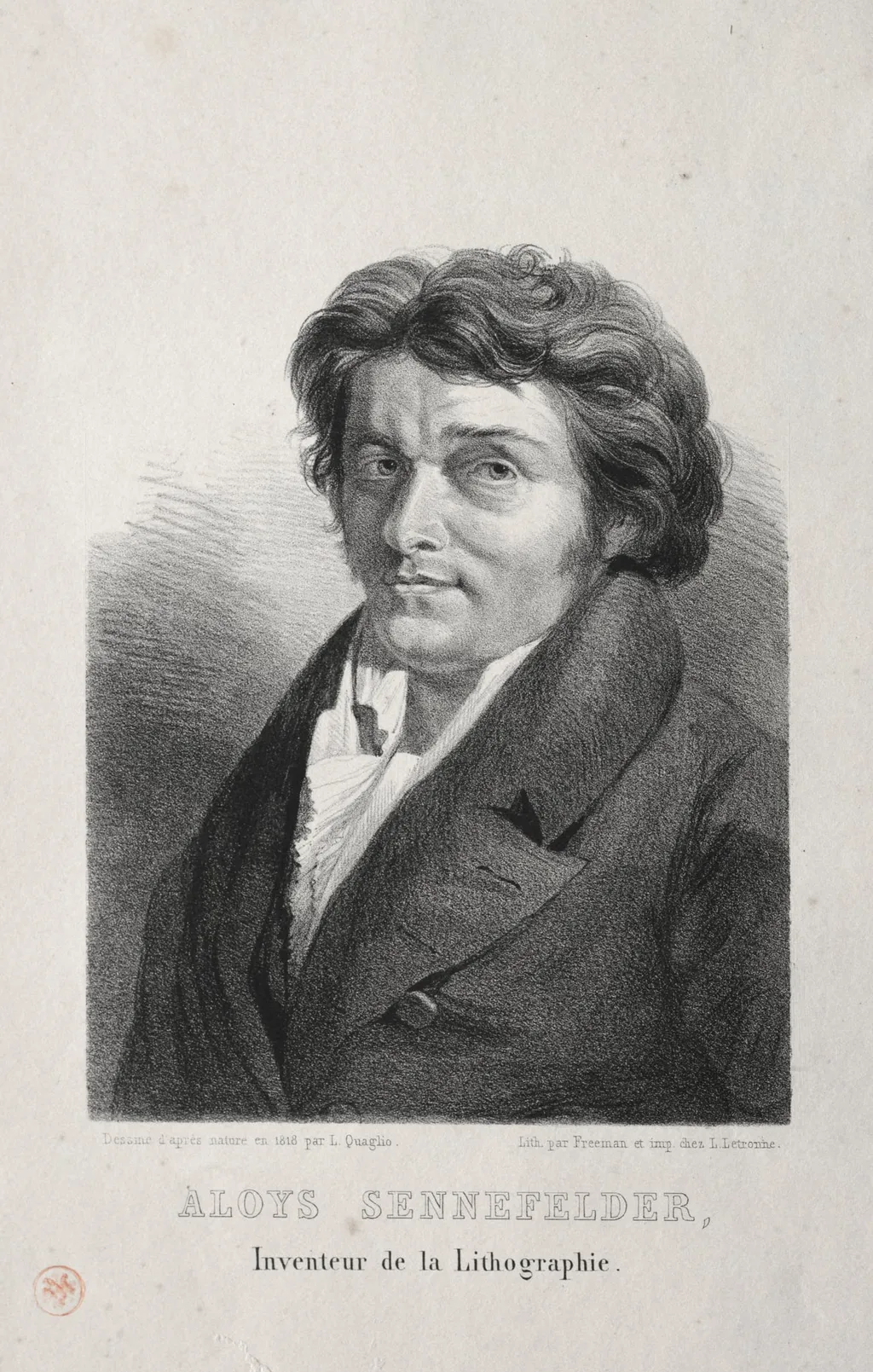
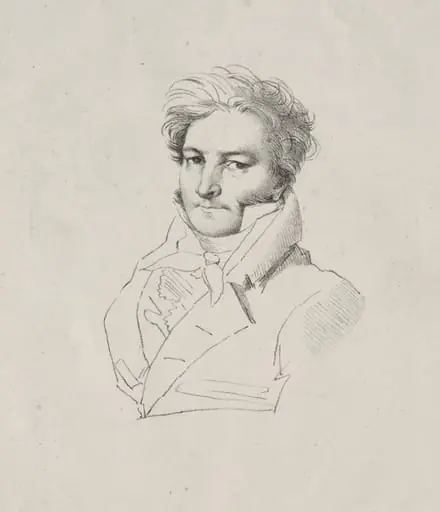
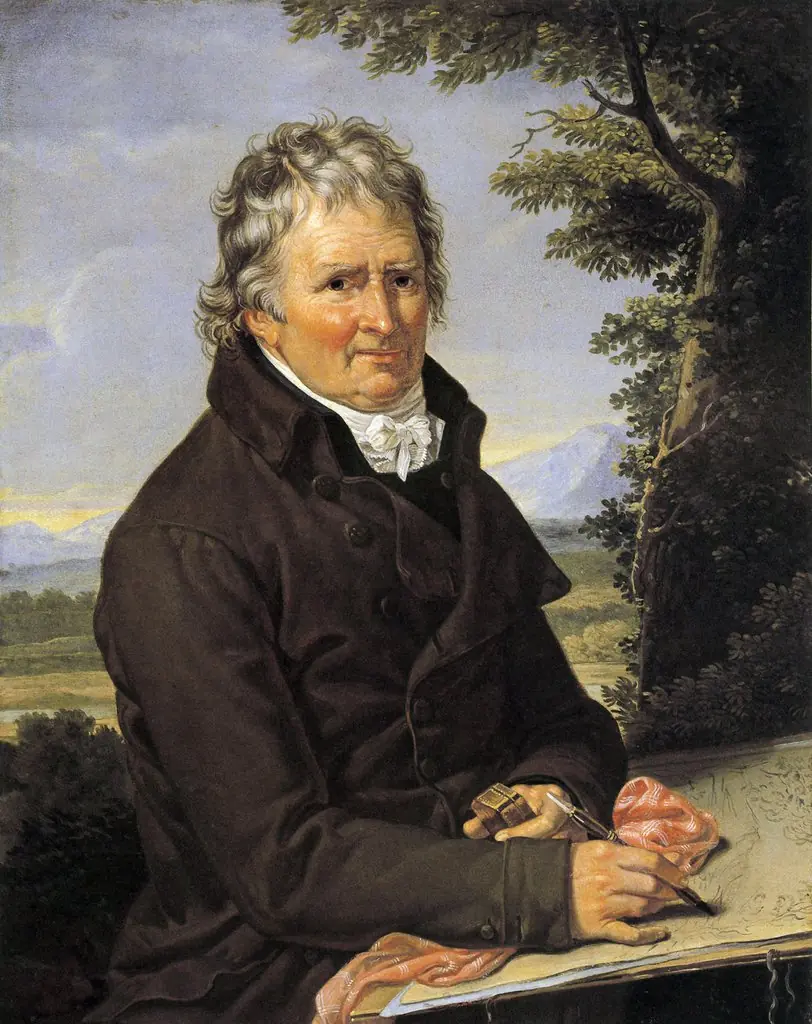
Aloys Senefelder is a print by the Romanticist artist Lorenzo II Quaglio. It dates from 1818 and is held in the collection of the Cleveland Museum of Art.
About this work
Overview
The work belongs to a period when lithography was gaining recognition as a distinct artistic technique, and this portrait serves as a tribute to its originator.
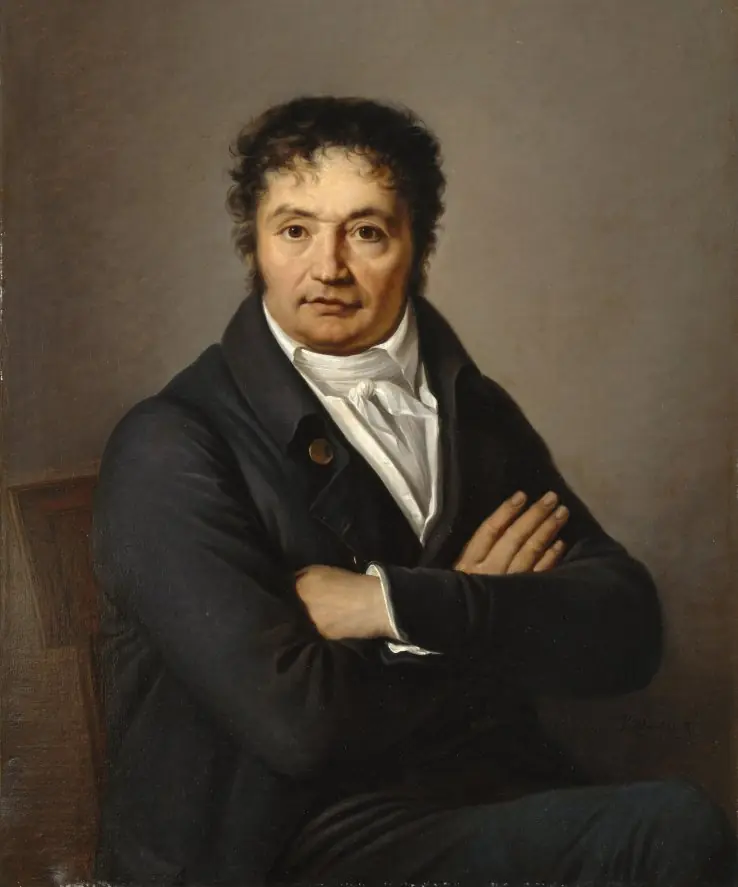
Aloys Senefelder, painted in 1818 by Lorenzo Quaglio the Younger, is a portrait of the German inventor of lithography. Quaglio, himself a practitioner of the medium, rendered Senefelder with careful attention to detail, reflecting both personal admiration and professional kinship. The work belongs to a period when lithography was gaining recognition as a distinct artistic technique, and this portrait serves as a tribute to its originator.
Subject & Meaning
The portrait captures Aloys Senefelder as a thoughtful, composed figure, his dark wavy hair and modest attire suggesting a man of quiet intellect rather than flamboyant genius. The focus on his face, illuminated against a softly shaded background, conveys dignity and introspection. Rather than celebrating technological triumph, the image emphasizes the human presence behind the invention, aligning with Romantic ideals of individual character and inner life.
Technique & Style
Quaglio employed oil paint to achieve subtle gradations of light and texture, particularly in the rendering of Senefelder’s jacket and hair. The brushwork is precise yet fluid, creating a sense of realism without excessive detail. The background’s muted tones draw attention to the figure, while the restrained palette and soft modeling reflect the influence of early 19th-century portraiture, bridging Neoclassical restraint with Romantic sensitivity.
History & Provenance
Commissioned during the early years of lithography’s commercial rise, the portrait was likely created to honor Senefelder’s contribution to print culture. Quaglio, a member of a family of artists known for theatrical and architectural painting, turned to lithography as both a skill and a subject. The work remained within artistic circles in Munich, where Senefelder’s invention was actively promoted and studied.
Context
In the early 1800s, lithography was transforming printmaking by allowing artists to draw directly on stone, bypassing traditional engraving. Senefelder’s invention was still relatively new, and portraits like Quaglio’s helped legitimize it culturally. The Romantic era’s emphasis on individual creativity made Senefelder a fitting subject — not merely a technician, but a visionary whose method empowered artistic expression.
Legacy
The portrait endures as one of the few contemporary images of Senefelder, offering a tangible link to the origins of lithographic art. While not widely exhibited, it has been referenced in historical accounts of printmaking and remains a key visual document for understanding how early practitioners viewed their craft. Its quiet realism contrasts with later, more celebratory depictions, preserving a moment of quiet recognition.
Artist & collection
Artist
Lorenzo Quaglio the Younger (19 December 1793 – 15 March 1869) was a genre painter and lithographer, born in Munich in the Electorate of Bavaria to the long Italian pedigree of Quaglios.