Artwork
Departure for the Fields
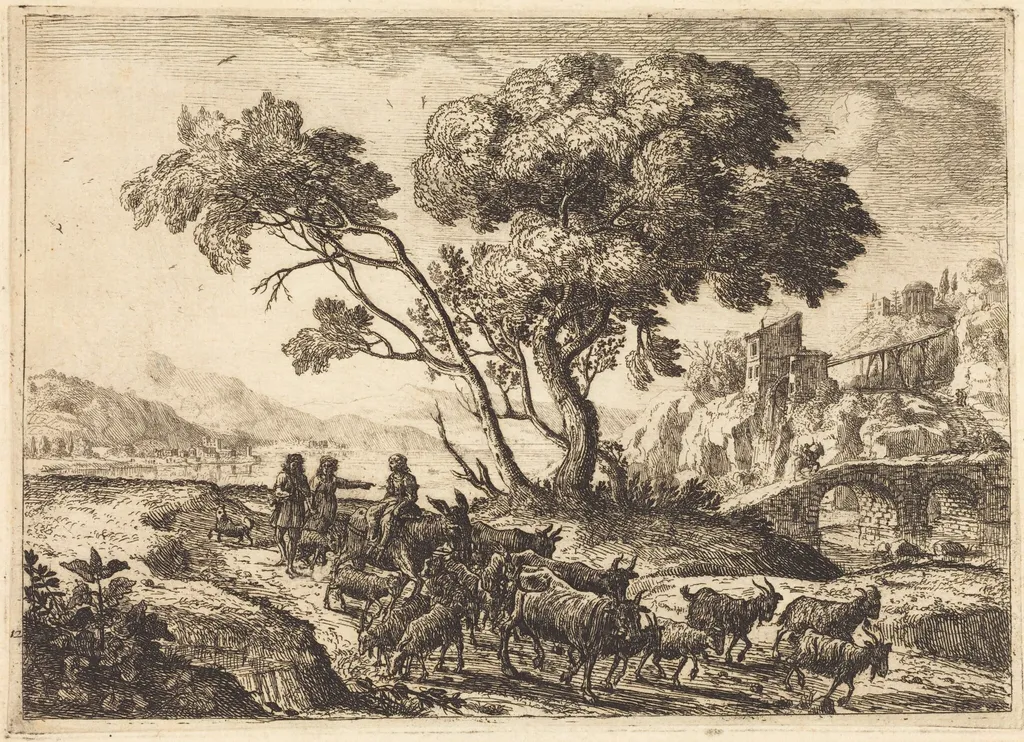
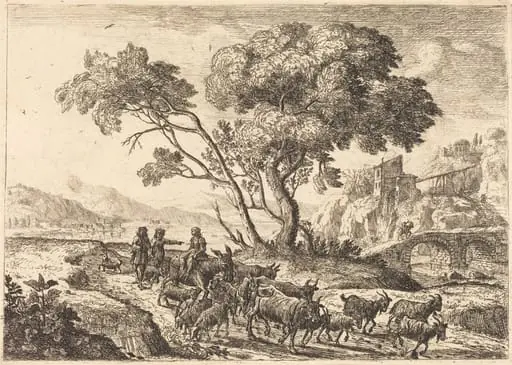
Departure for the Fields is an ink print by the Baroque artist Claude Lorrain. It dates from 1640 and is held in the collection of the National Gallery of Art. Created in 1640, this black‑ink etching on laid paper presents a tranquil rural landscape.
About this work
Overview
Created in 1640, this black‑ink etching on laid paper presents a tranquil rural landscape. The composition centers on a shepherd with his staff, a grazing flock, and a mature tree, while a modest settlement rests on a distant rise. Light sky and gentle shading convey a sense of calm, characteristic of the artist’s treatment of nature.
Subject & Meaning
The scene combines everyday agrarian life with a hint of narrative, a hallmark of the creator’s approach to landscape. The solitary shepherd and his sheep suggest pastoral simplicity, while the distant village and wandering figures evoke a broader human presence, linking the natural setting to communal activity without explicit mythological or biblical reference.
Technique & Style
Executed with fine, incised lines, the print achieves depth through varying line density and cross‑hatching, rendering the foreground figures more sharply than the receding village. Textural detail in foliage and grass emerges from subtle shading, while the laid‑paper surface adds a faint tonal quality, enhancing the atmospheric lightness of the sky.
History & Provenance
The French Baroque artist, originally from Lorraine but active mainly in Italy, produced this work as part of his printmaking practice. Though primarily known for oil landscapes, his etchings extend his visual language to the graphic medium, offering a portable version of his compositional ideals that circulated among collectors of the mid‑17th century.
Own this work as a print
Artist & collection
Artist
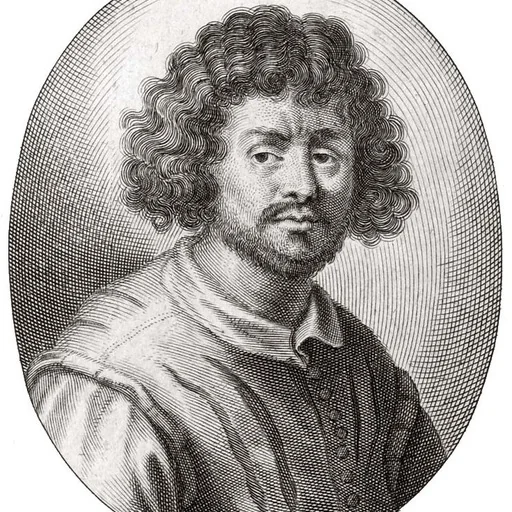
Claude Lorrain (French: ; born Claude Gellée , called le Lorrain in French; traditionally just Claude in English; c.

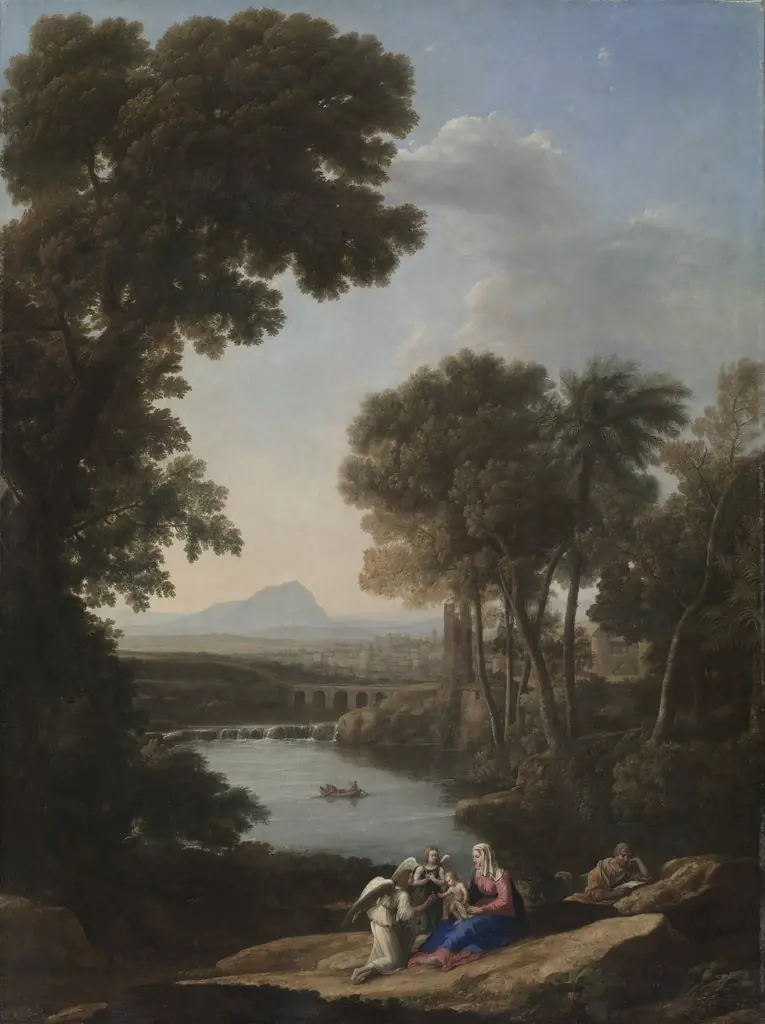
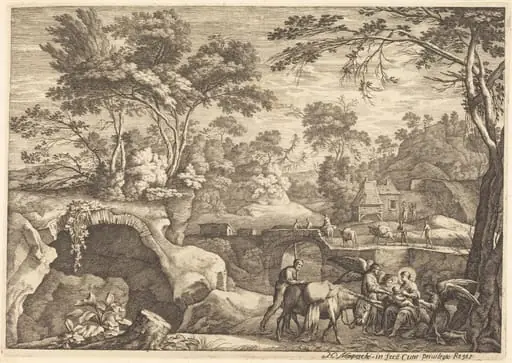 The Flight into Egypt
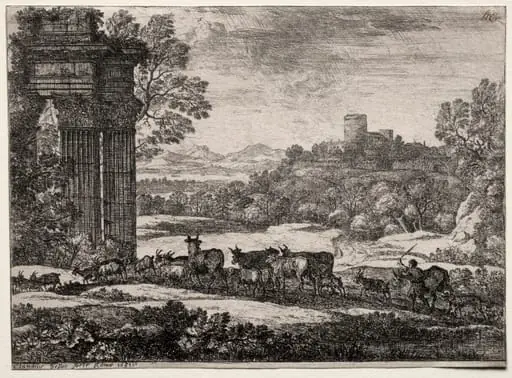 The Herd Returning in Stormy Weather
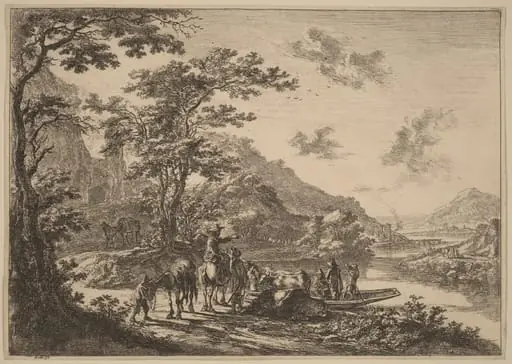 View of the Tiber in the Campagna
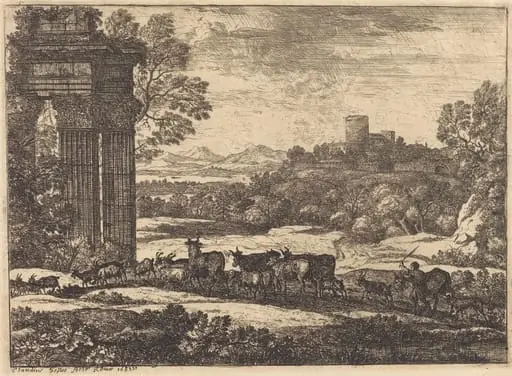 The Herd Returning in Stormy Weather (Le troupeau en marche par un temps orageux)
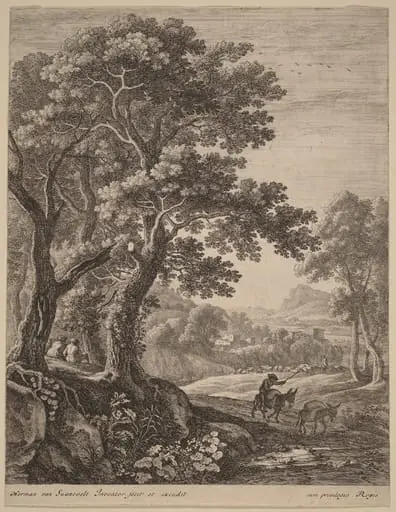 The Mule Driver
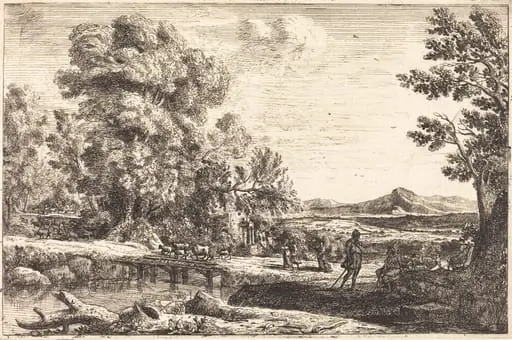 Rebecca and Eliezer (Le pont de bois)
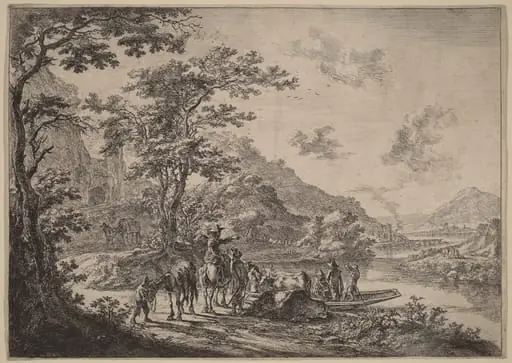 View of the Tiber in the Campagna
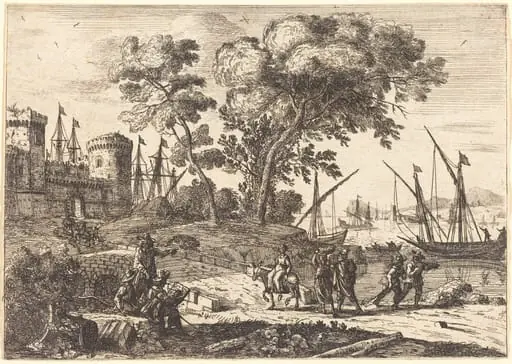 Coast Scene with an Artist (Le dessinateur)
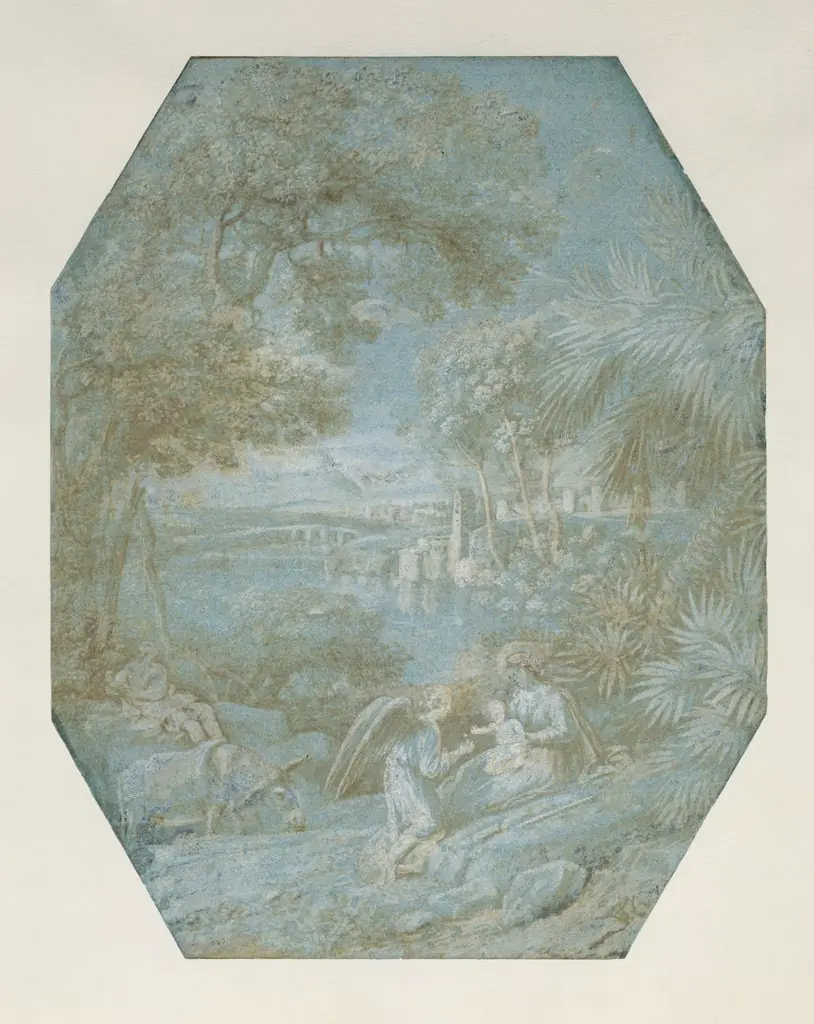
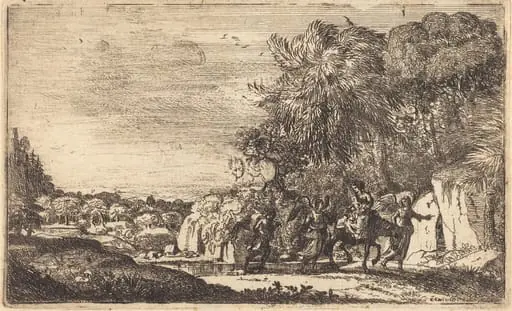 The Flight into Egypt (La fuite en Egypte)
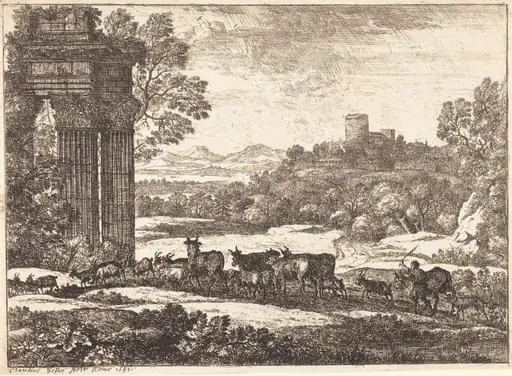 The Herd Returning in Stormy Weather (Le troupeau en marche par un temps orageux)
 Departure for the Fields (Le départ pour les champs)
 Sleeping Shepherd