Artwork
Spring
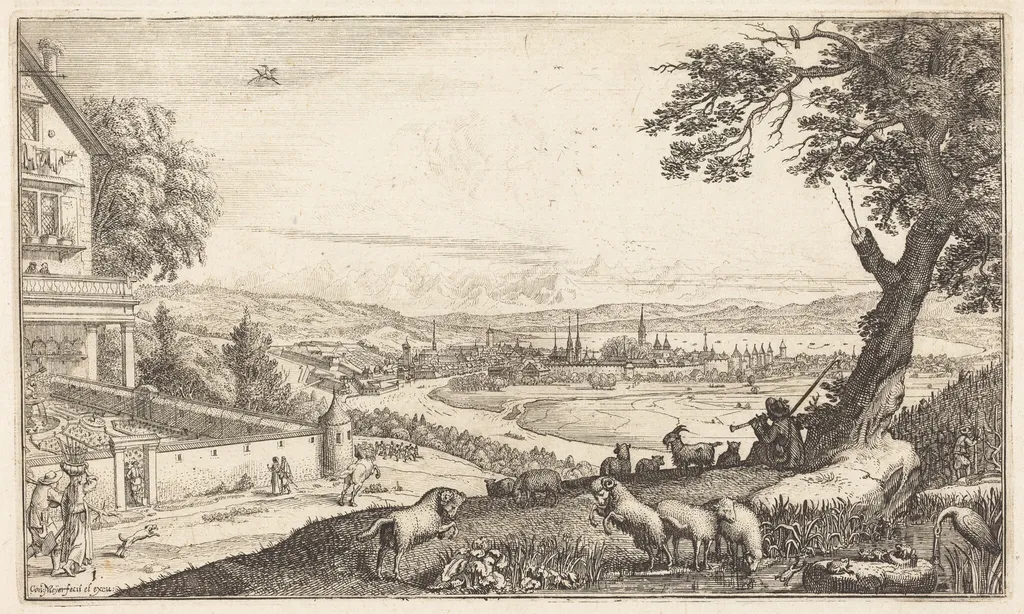
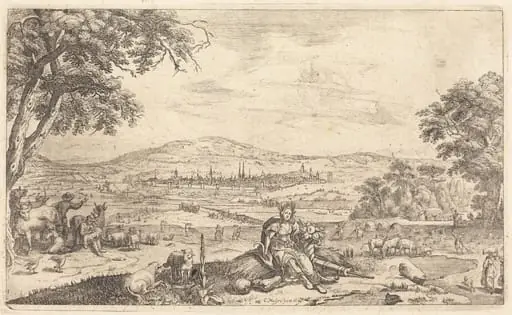
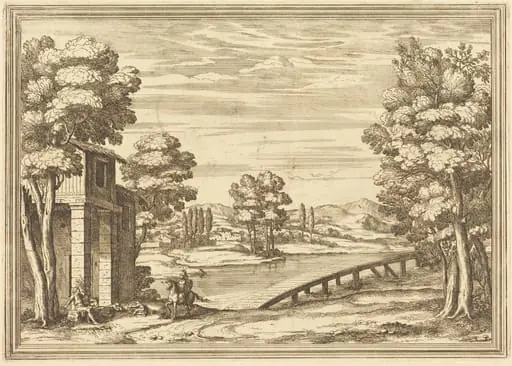
Spring is an ink print by the Baroque artist Conrad Meyer. It dates from 1646 and is held in the collection of the National Gallery of Art.
About this work
Overview
Conrad Meyer's *Spring* (1646) is an etching and engraving on laid paper, showcasing the artist's technical proficiency in the medium. Created during the Baroque period, the print exemplifies Meyer's transition from painting to copper engraving, a field in which he would produce over a thousand works.
Subject & Meaning
The serene landscape of *Spring* features a dominant tree, a shepherd with his flock, freely roaming animals (including a lion), and a distant cityscape. This harmonious coexistence of nature, human activity, and wildlife may symbolize the season's themes of renewal and balance.
Technique & Style
Meyer's use of etching and engraving techniques achieves depth and texture, with meticulous attention to the tree's branches and animal fur. The interplay of light and shadow guides the viewer's eye through the composition, reflecting the Baroque emphasis on visual storytelling.
History & Provenance
A student of Matthäus Merian, Meyer's work in *Spring* aligns with the Swiss artistic traditions of the 17th century. Originally a painter of portraits and landscapes, Meyer shifted focus to copper engraving, with *Spring* being an early example of his mastery in this medium.
Context
*Spring* can be contextualized within the broader Baroque movement, alongside works by contemporaries like Rembrandt and Vermeer, who also explored light, shadow, and detailed realism in their pieces.
Legacy
While *Spring* specifically may not have spawned a direct lineage of works, it contributes to Meyer's overall legacy as a prolific copper engraver, influencing the development of Swiss printmaking in the Baroque era.
Artist & collection
Artist
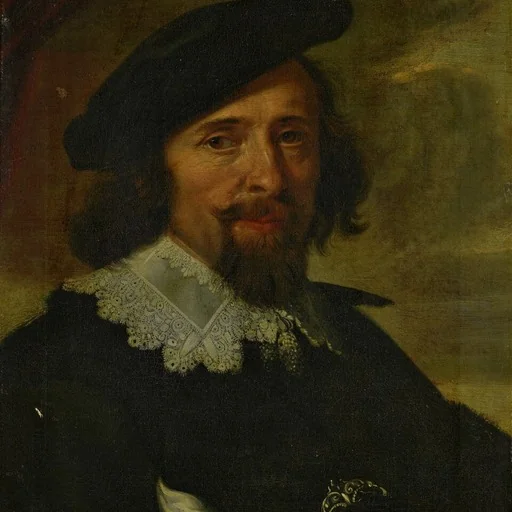
Conrad Meyer (1618 Zürich – 1689 Zürich) was a painter, engraver, and medallist of Zürich.

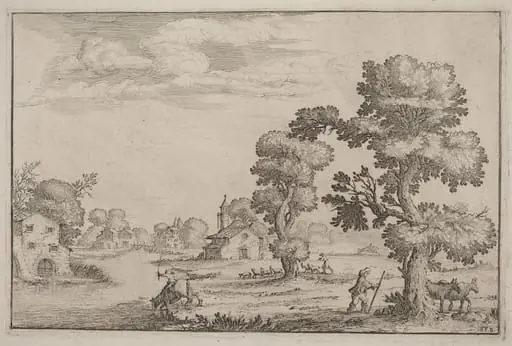 Lakeside Village with Herdsmen
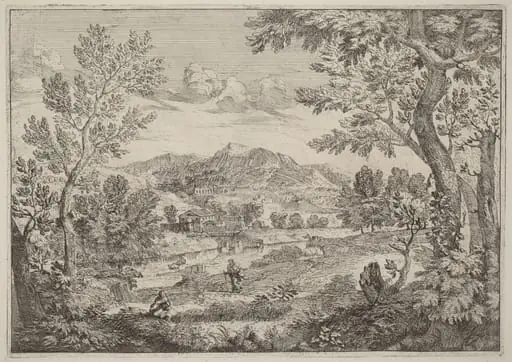 Houses Beside a Mountain
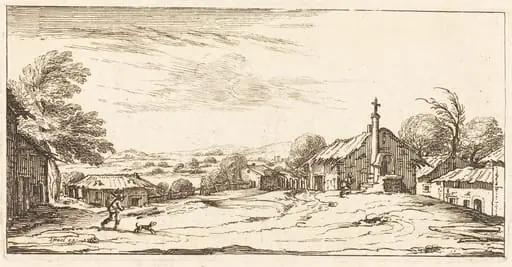 Landscape
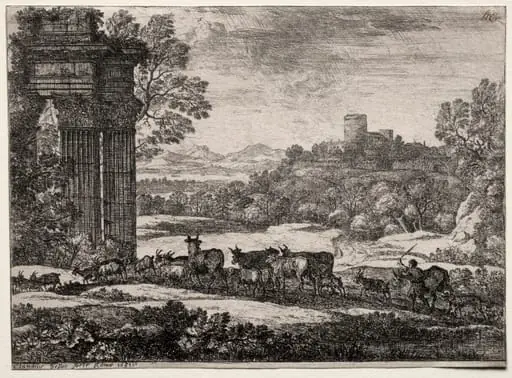 The Herd Returning in Stormy Weather
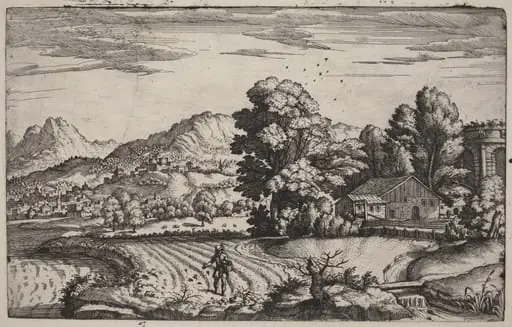 Mountainous Landscape with the Parable of the Sower
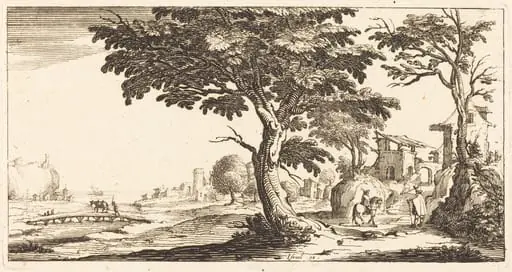 Landscape
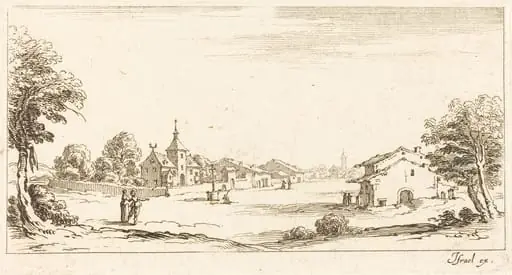 Landscape
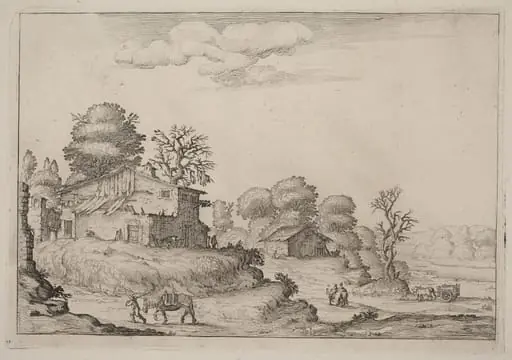 Rustic Landscape with Peasants and Horses
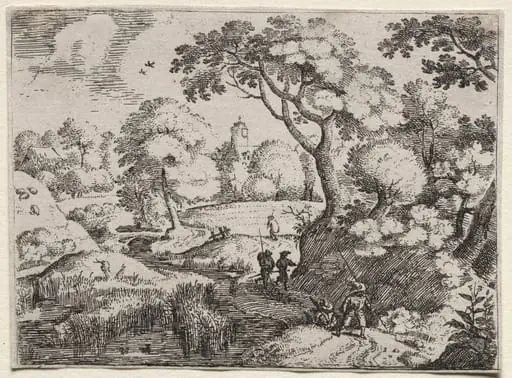 Six Landscapes: Path Between Swamp and Wooded Bank
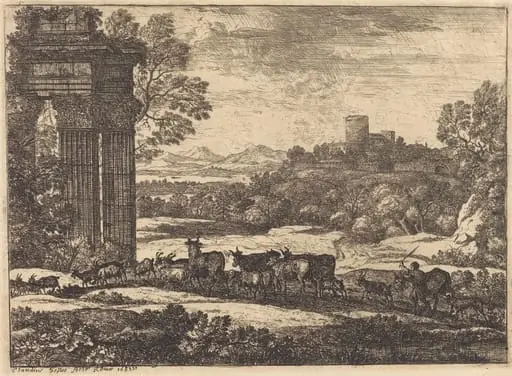 The Herd Returning in Stormy Weather (Le troupeau en marche par un temps orageux)
 Il Greco in Troia: Plate 7