Artwork
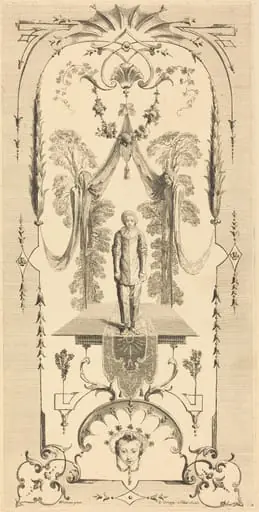
Pierrot, Arabesque
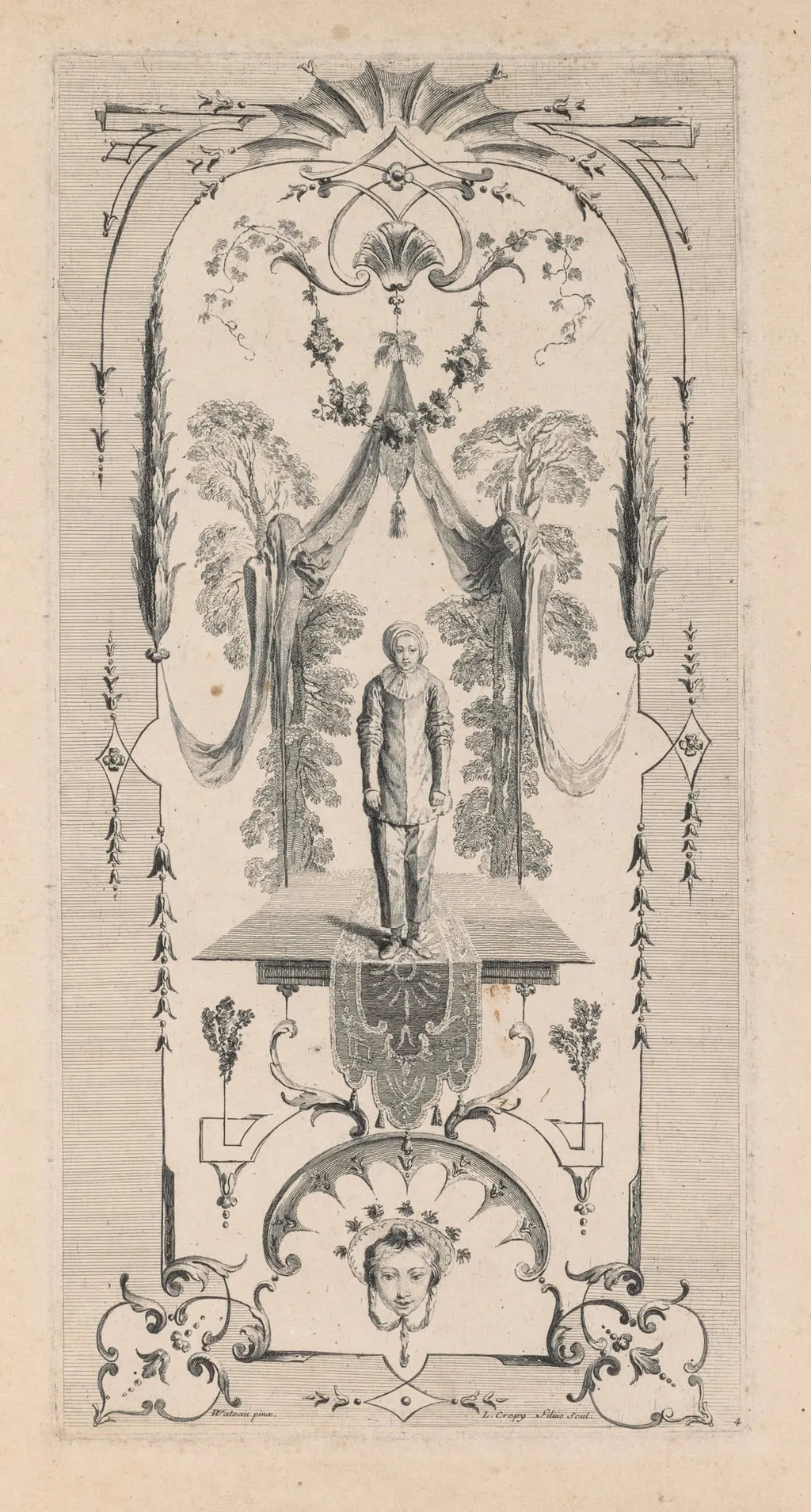
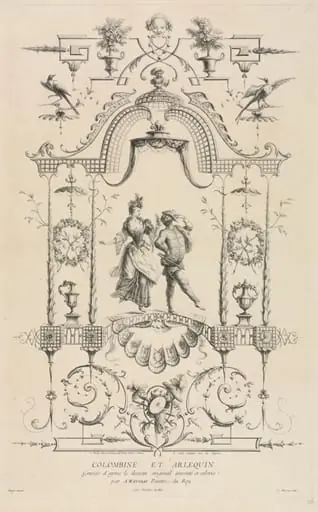
Pierrot, Arabesque is a print by the Baroque artist Louis Crépy. It dates from 1704 and is held in the collection of the Cleveland Museum of Art.
About this work
Overview
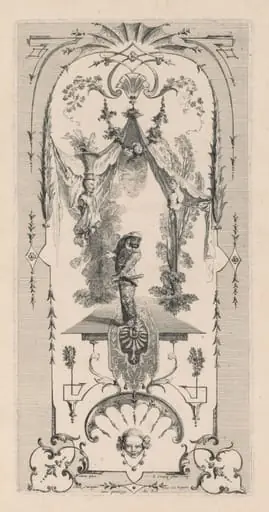
The composition presents a solitary figure on a raised stage, framed by ornate natural forms and decorative elements.
Pierrot, Arabesque is a delicate print attributed to Louis Crépy, dated around 1704. It resides in The Cleveland Museum of Art’s collection. The composition presents a solitary figure on a raised stage, framed by ornate natural forms and decorative elements. The work blends theatrical imagery with intricate linear patterns, emphasizing lightness and spatial openness through extensive use of white space and fine, flowing lines.
Subject & Meaning
The central figure, identified as Pierrot, is depicted in a loose robe holding a scroll, evoking the stock character of the melancholic clown from Italian theater. A smaller face emerges from a cartouche below, possibly symbolizing an observer or hidden narrative. The integration of nature—twisting trees and floral motifs—suggests a fusion of performance and the organic world, hinting at themes of illusion, transience, and hidden emotion.
Technique & Style
Crépy employed fine, sinuous lines to construct the image, favoring elegance over solidity. The composition relies on negative space to suggest depth and airiness, a hallmark of late Baroque decorative arts. Swirling branches, curvilinear borders, and intricate cartouches reflect the arabesque tradition, where ornamentation becomes a structural and expressive device rather than mere embellishment.
History & Provenance
Created circa 1704, the print is one of few known works by Louis Crépy, a French artist active in the early 18th century. It entered The Cleveland Museum of Art’s collection through documented acquisition, though its earlier ownership remains unclear. Its survival as a single impression suggests it may have been part of a larger, now-lost series of theatrical or decorative prints.
Context
Produced during the height of the French Baroque, the print reflects the era’s fascination with theatricality and ornamental design. Stage scenery and decorative arts often merged, with artists like Crépy translating performance aesthetics into print. The arabesque style, popular in courtly interiors and book illustration, served as a visual language of refinement, linking theater, nature, and intellectual allegory.
Legacy
Pierrot, Arabesque stands as a rare example of early 18th-century French printmaking that prioritizes lyrical line over narrative clarity. While Crépy’s broader influence is limited by the scarcity of his output, this work exemplifies how theatrical motifs were absorbed into decorative print culture, influencing later Rococo sensibilities in their emphasis on movement, delicacy, and symbolic ambiguity.
Artist & collection