Artwork
The Happy Shepherd, Arabesque
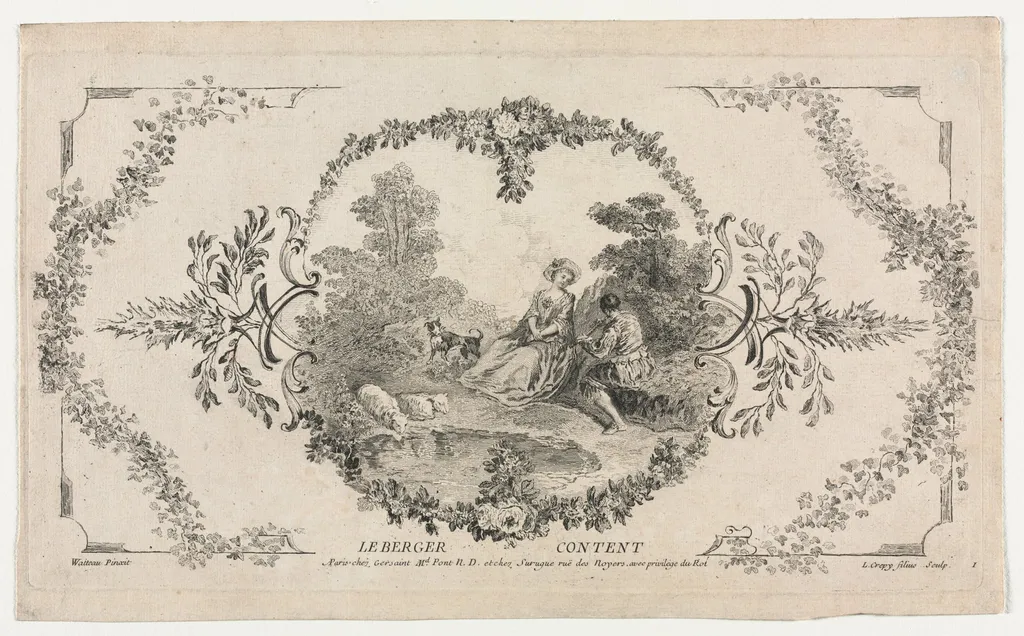
The Happy Shepherd, Arabesque is a print by the Baroque artist Louis Crépy. It dates from 1729 and is held in the collection of the Cleveland Museum of Art.
About this work
Overview
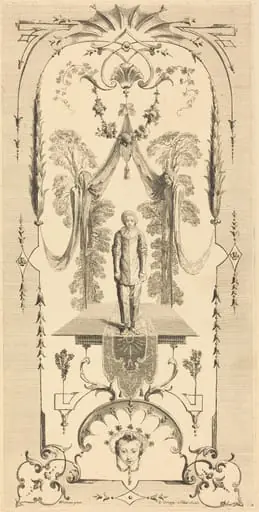
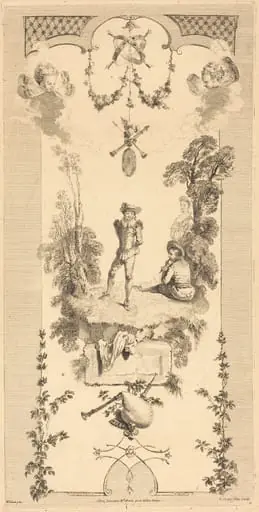
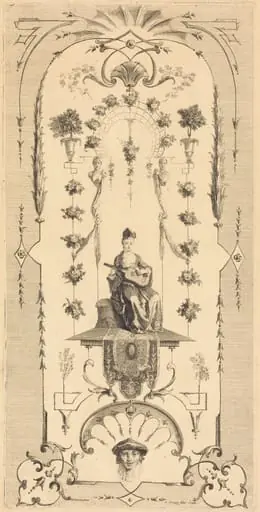
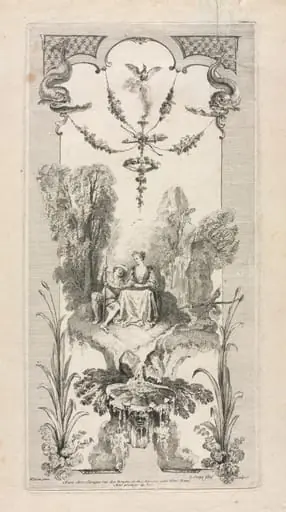
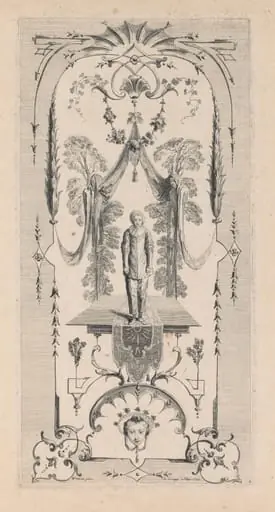
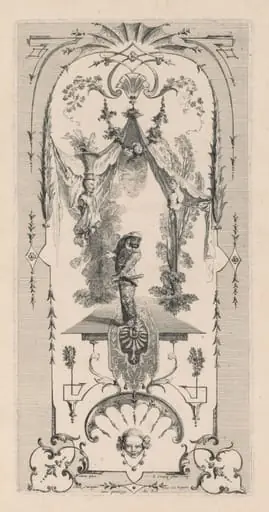
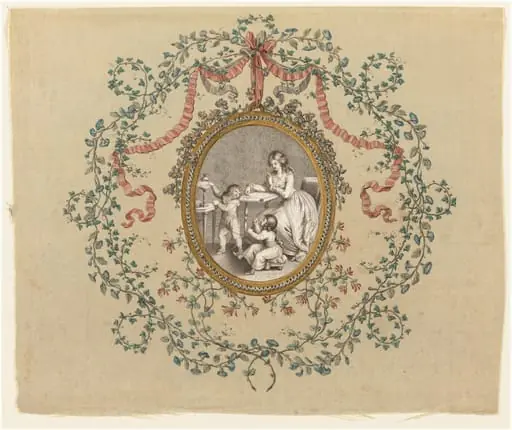
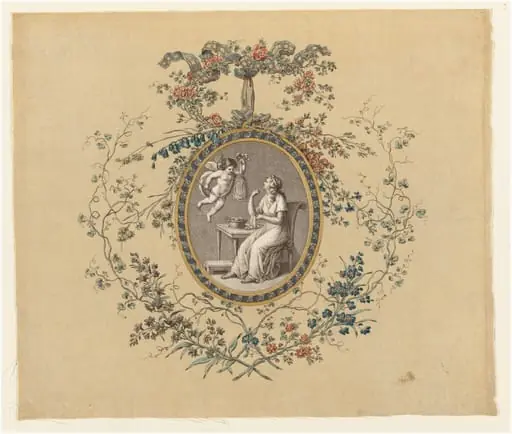
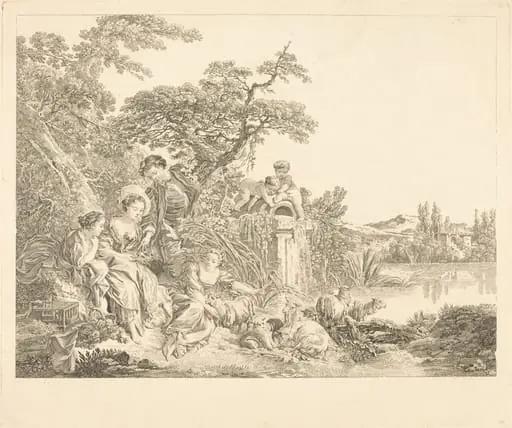
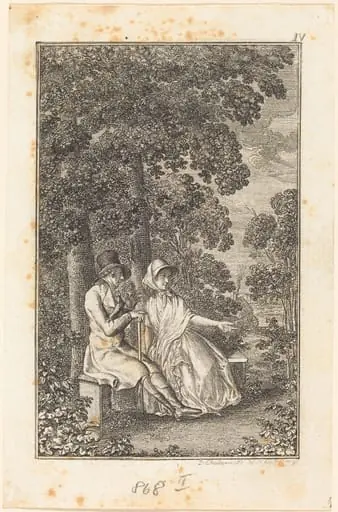
Louis Crépy’s print, titled The Happy Shepherd, Arabesque, dates from around 1729 and is part of the Cleveland Museum of Art’s collection. The composition presents a genteel woman seated beneath a tree, absorbed in a book, while a kneeling man stands nearby. A dog rests at their feet and a grazing sheep appears in the distance, all enclosed by an elaborate border of twisting vines and blossoms.
Subject & Meaning
The scene juxtaposes leisure and pastoral labor: the woman’s tranquil reading suggests cultivated refinement, whereas the man’s kneeling stance implies service or anticipation. The presence of the dog and sheep introduces a bucolic element, hinting at an idealized rural setting that blends domestic comfort with the simplicity of shepherd life.
Technique & Style
Executed as an engraving, the work showcases the intricate line work typical of early‑18th‑century French printmaking. Crépy fills the surrounding space with densely rendered foliage, each leaf and flower rendered in fine hatching, creating a lively, ornamental frame that reflects the decorative exuberance of the late Baroque aesthetic.
History & Provenance
Created circa 1729, The Happy Shepherd, Arabesque entered the Cleveland Museum of Art’s holdings through acquisition in the 20th century. The print has remained in the museum’s print and drawing department, where it is displayed as an example of French decorative print culture of the early modern period.
Artist & collection