Artwork
Venus, Bacchus and Ceres with Mortals in a Garden of Love
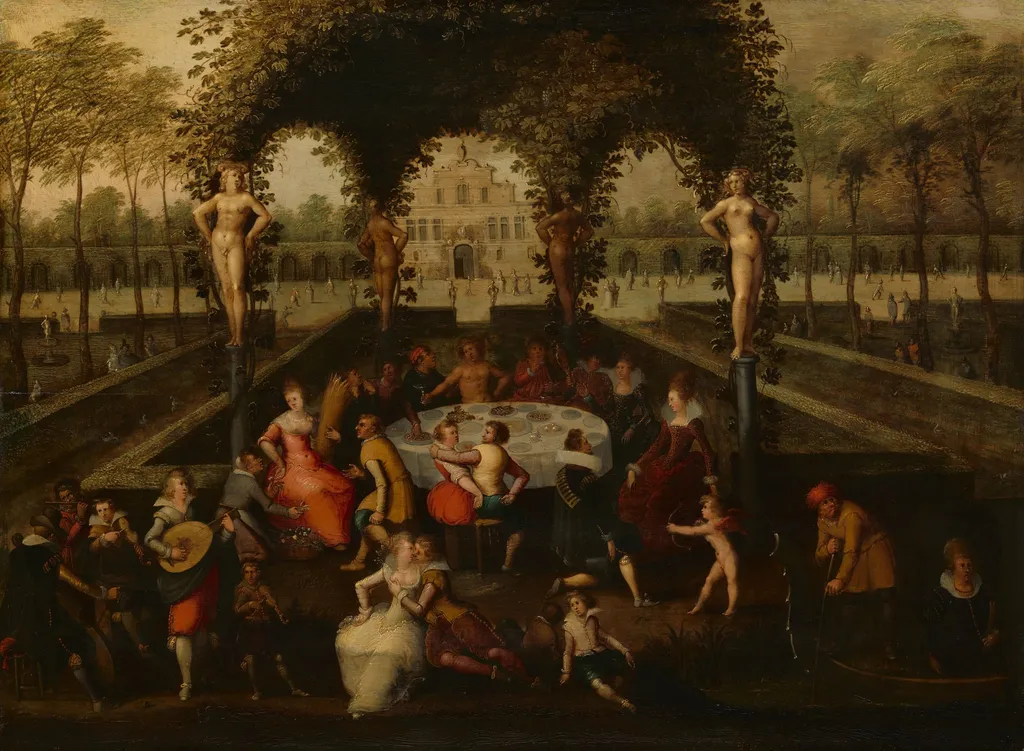
Venus, Bacchus and Ceres with Mortals in a Garden of Love is an unspecified painting by Louis de Caullery. It dates from 1606 and is held in the collection of the Rijksmuseum.
About this work
Overview
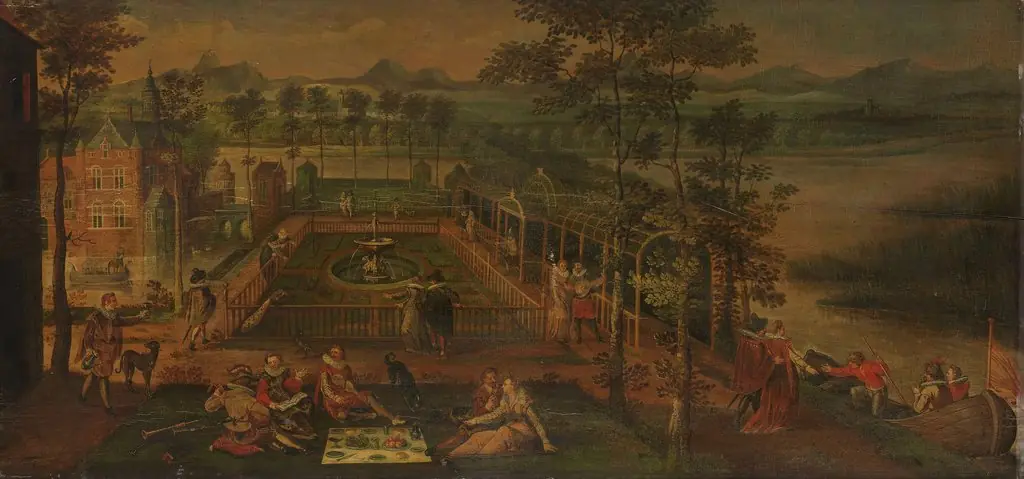
The canvas presents a lush garden setting where the classical deities Venus, Bacchus and Ceres are seated beneath a pergola, surrounded by several mortal couples. A pair embraces in the foreground, while musicians to the left provide accompaniment with lute, violin, viola da gamba and flute. On the right a woman arrives in a small boat, completing the scene’s festive tableau.
Subject & Meaning
The work juxtaposes divine figures of love, wine and agriculture with human affection, suggesting a harmonious link between the natural world, mythic patronage and earthly romance. The inclusion of music and a boat further evokes themes of leisure, celebration and the flow of pleasure within a cultivated landscape.
Technique & Style
Executed with meticulous detail, the painter fills the composition with numerous small narratives, each rendered in fine brushwork that maintains clarity despite the dense arrangement. The use of bright, naturalistic colors and careful modeling of foliage creates a vivid, almost theatrical garden space.
History & Provenance
The painting belongs to the Dutch Golden Age tradition of garden scenes that combine mythological and genre elements. It has been catalogued among similar works in the Rijksmuseum collection, which documents the period’s fascination with allegorical garden settings.
Context
During the 17th century, Dutch artists often employed classical deities in domestic interiors or garden vistas to convey moral or allegorical messages. This piece reflects that practice, integrating mythic symbolism with everyday courtship and music-making, a common motif in contemporary visual culture.
Own this work as a print
Artist & collection
Artist
Louis de Caullery, Caulery or Coulery (ca.1580–1621) was a Flemish painter who is known for his architectural scenes, city views, genre scenes, allegorical compositions, religious and history paintings.

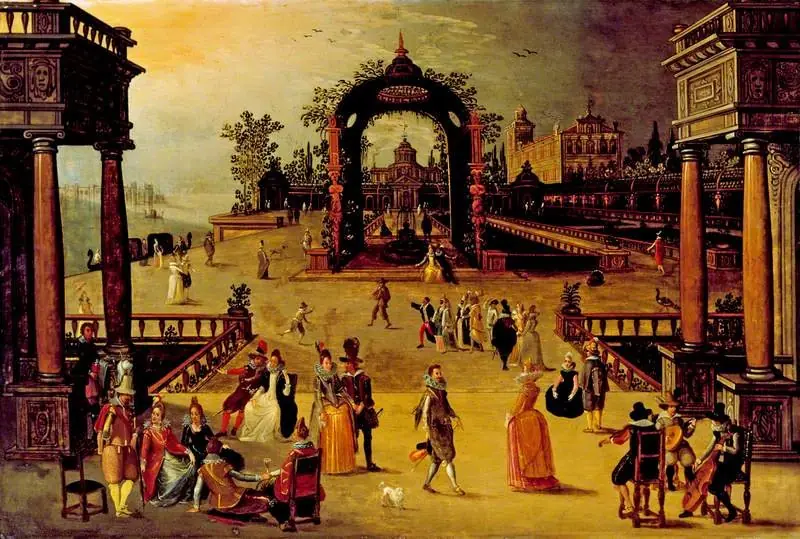
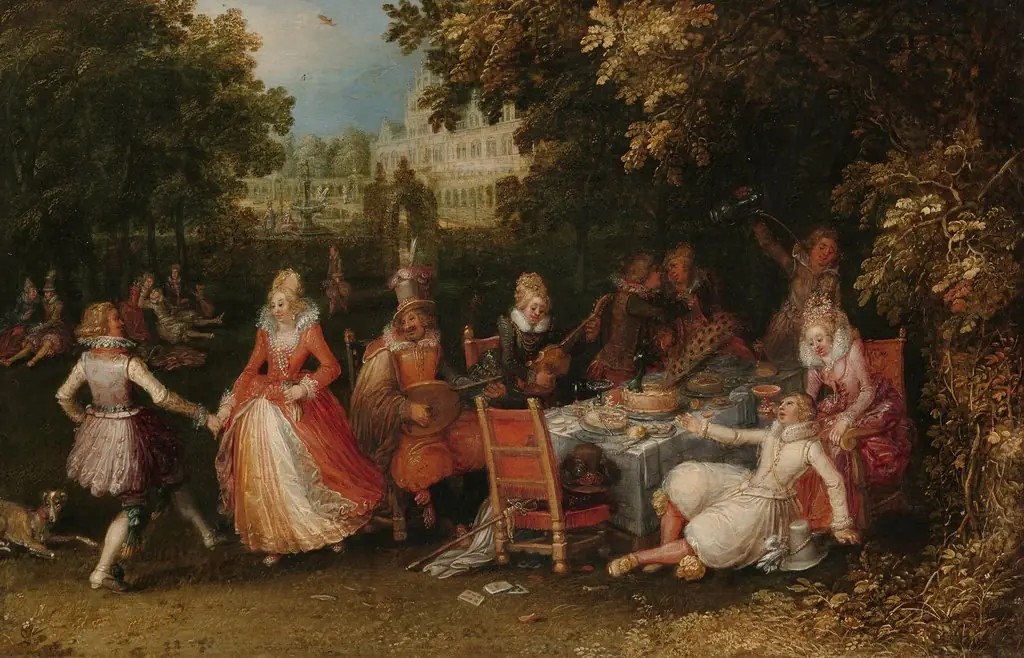 The fête champêtre
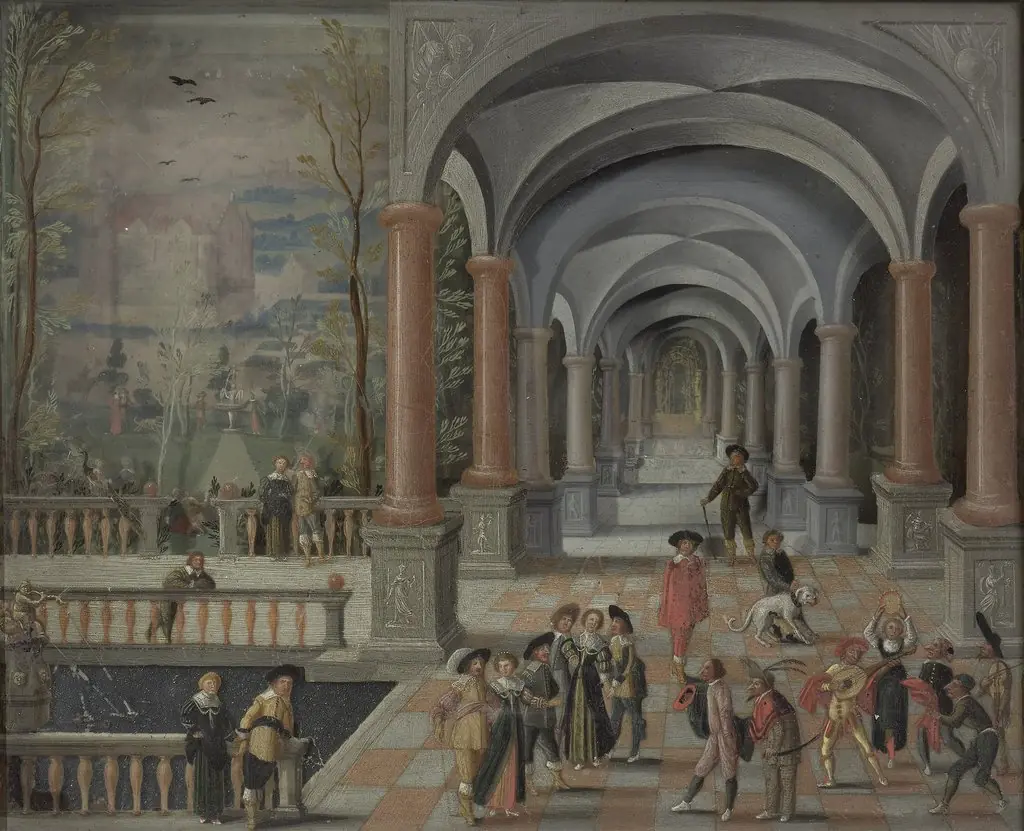 Festive Gathering and Figures from a Commedia dell'Arte in a Gallery
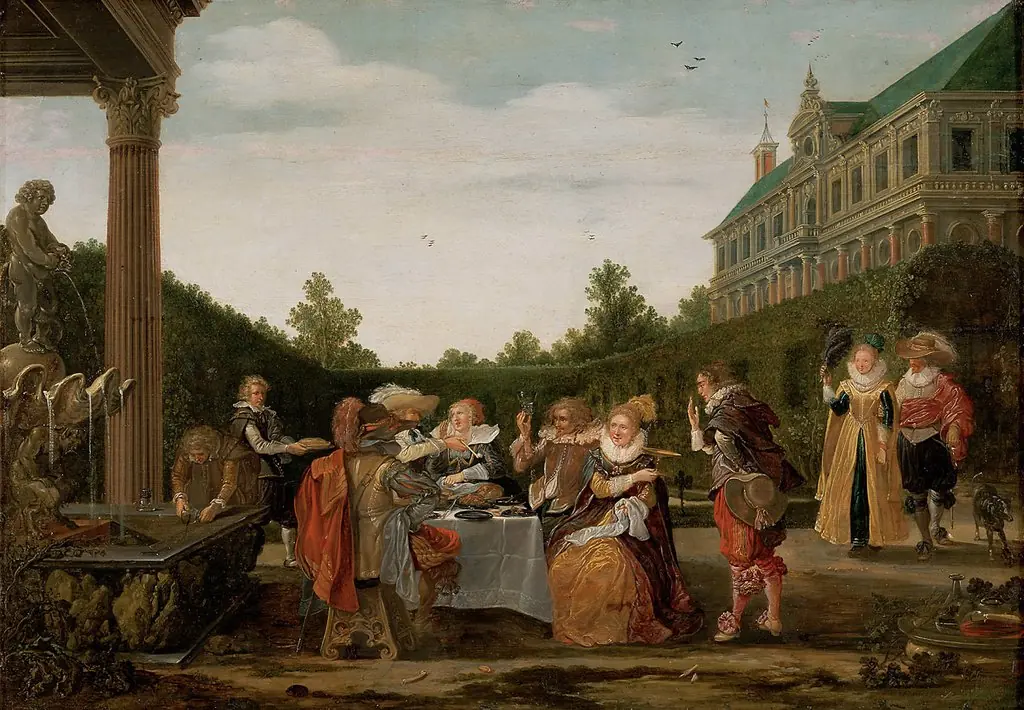 Banquet in a palatial garden, with an elegant company drinking and in conversation
 The Fête Champêtre
 Garden Festival
 Pleasure Garden
 The Feast of the Gods
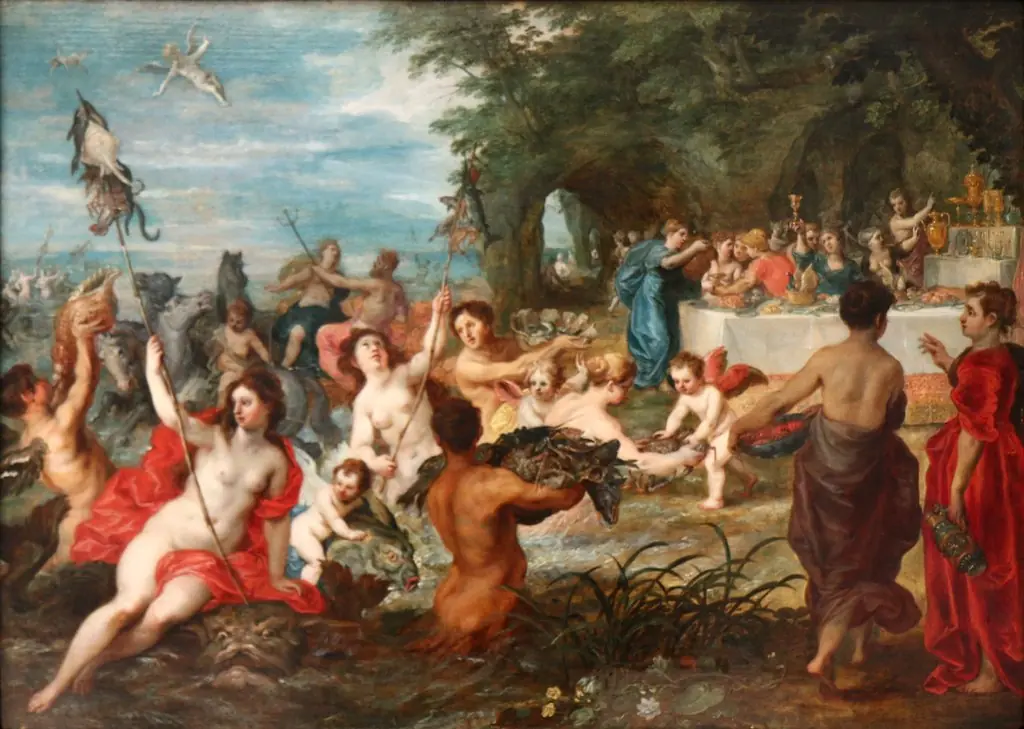 The wedding of Thetis and Peleus
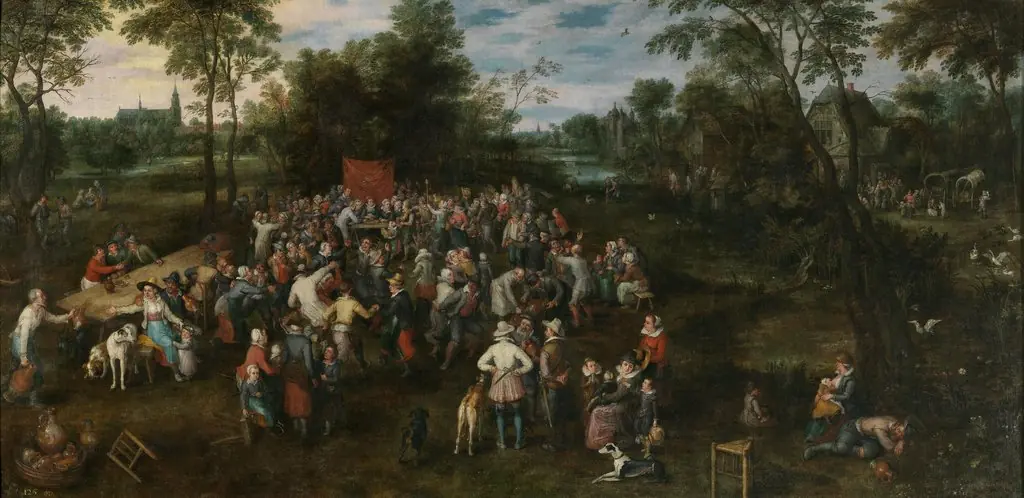 The Wedding Banquet
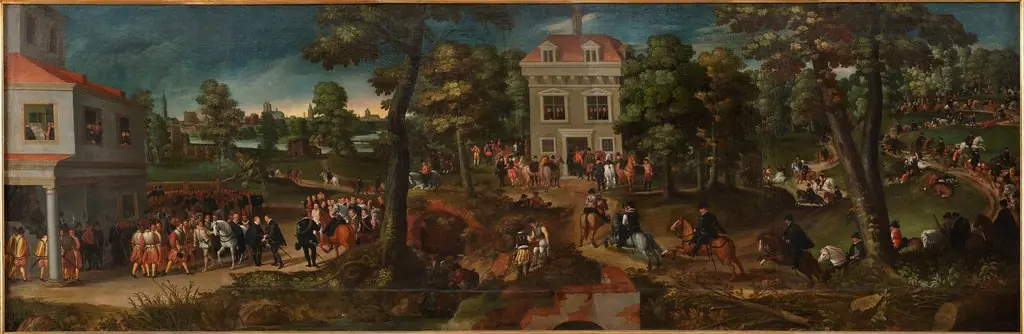 Postreise Erzherzog Ferdinands II. (1529-1595) nach Brüssel
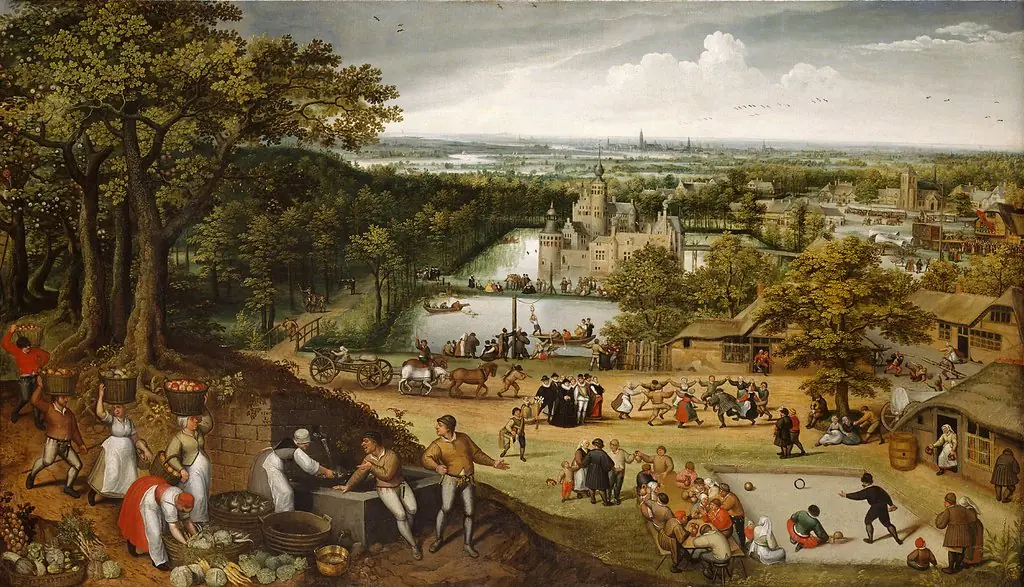 Herbstlandschaft (September)