Artwork
Egypt and Nubia, Volume I: Frontispiece
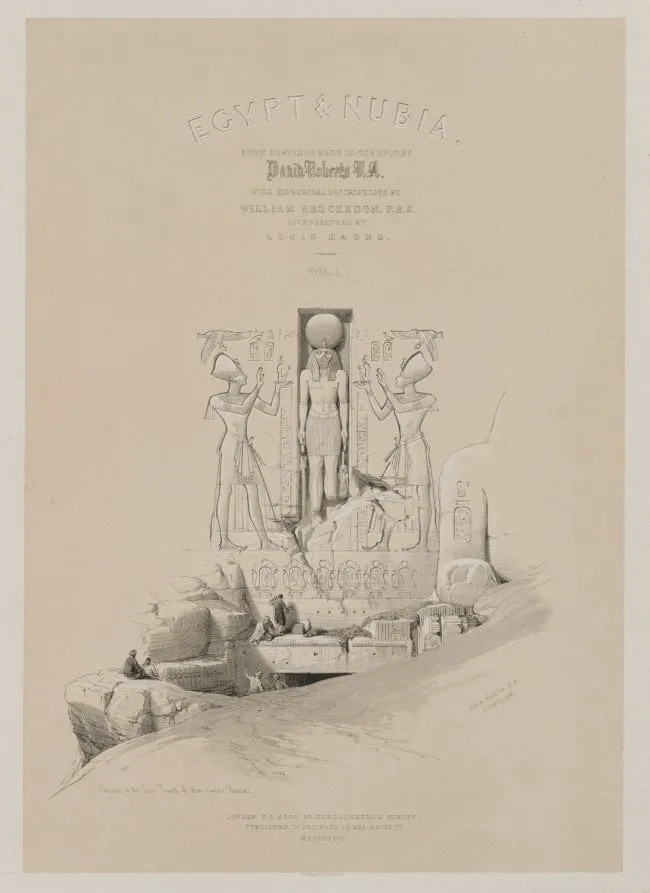
Egypt and Nubia, Volume I: Frontispiece is a print by the Romanticist artist Louis Haghe. It dates from 1846 and is held in the collection of the Cleveland Museum of Art.
About this work
Overview
Louis Haghe, a Belgian-born British lithographer, produced the frontispiece for the first volume of *Egypt and Nubia* in 1846.
Louis Haghe, a Belgian-born British lithographer, produced the frontispiece for the first volume of *Egypt and Nubia* in 1846. Trained in watercolor and later pivotal in advancing lithographic technique in England through his firm Day & Haghe, Haghe translated field sketches into a polished print. The image served as an introductory visual to a multi-volume survey of ancient sites, aligning with mid-19th-century scholarly and public interest in the Nile Valley.
Subject & Meaning
The scene depicts three robed figures before a temple doorway, their postures and headgear evoking Egyptian statuary. Two hold staffs, while the central figure wears a distinctive headdress, suggesting ritual or priestly roles. Behind them, carved hieroglyphs and a distant group at a cliff base imply a sacred landscape. The composition does not depict a specific known monument but synthesizes observed elements to convey an idealized vision of ancient Nubian and Egyptian religious space.
Technique & Style
Haghe employed lithography to achieve fine tonal gradations and precise line work, characteristic of his technical mastery. The image balances topographical detail with atmospheric depth, using subtle shading to model stone surfaces and suggest distance. The figures are rendered with stylized formality, reflecting both archaeological accuracy and the Romantic era’s tendency to elevate ancient subjects through dramatic, reverent composition.
History & Provenance
The frontispiece was based on sketches made by travelers who documented monuments along the Nile during the 1830s and 1840s. Haghe, working from these sources, adapted them for publication in a lavish illustrated volume commissioned by a British publisher. The print was part of a broader effort to compile and disseminate visual records of Egypt and Nubia for European audiences, preceding systematic archaeological surveys.
Context
Created during a period of heightened European interest in ancient Egypt following Napoleon’s campaign and the decipherment of the Rosetta Stone, the image reflects a Romantic impulse to reconstruct lost civilizations through imagination and observation. While grounded in field sketches, the scene idealizes the past, blending documentation with aesthetic conventions common in travel literature of the time.
Legacy
Haghe’s frontispiece helped establish lithography as a respected medium for scholarly illustration in Victorian Britain. Its synthesis of accuracy and artistry influenced later publications on archaeology and antiquities. Though not a direct record of a single site, it contributed to the visual lexicon through which 19th-century audiences understood ancient Nubia and Egypt.
Artist & collection
Artist
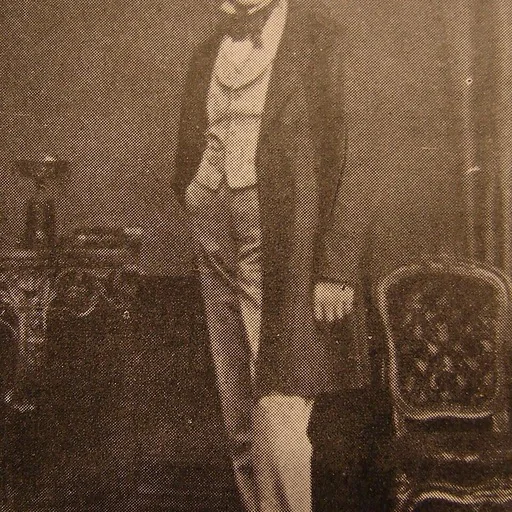
Louis Haghe (17 March 1806 – 9 March 1885) was a lithographer and watercolourist from the Netherlands and then the United Kingdom.

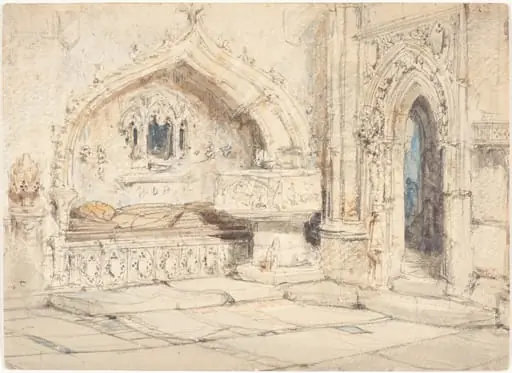 Interior of a Church with a Wall Tomb and Medieval Font
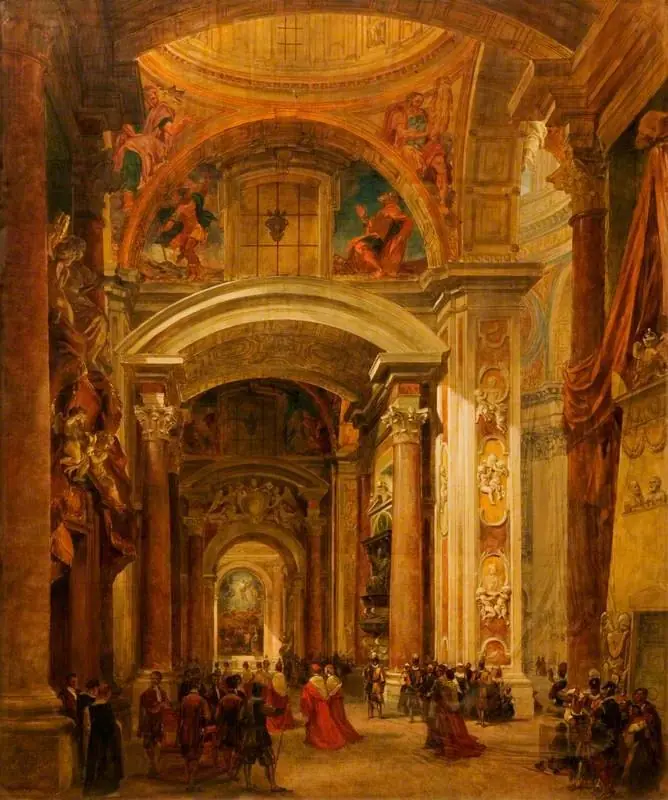 Interior of St Peter's, Rome
 The Corridor, Brewer's Hall, Antwerp
 Monument of the Cardinald D'Amboise in Rouen Cathedral
 The Quay at Suez
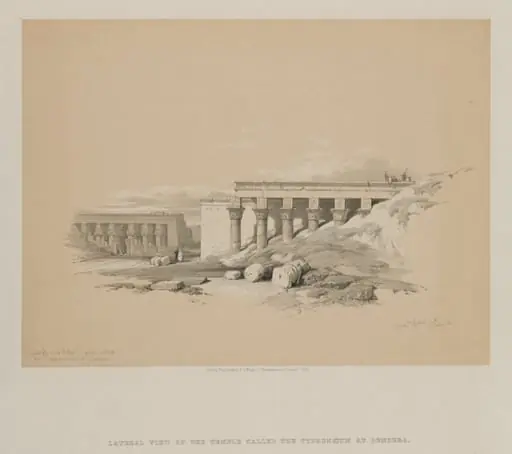 Egypt and Nubia, Volume II: Lateral View of the Temple called The Typhonoeum at Dendera
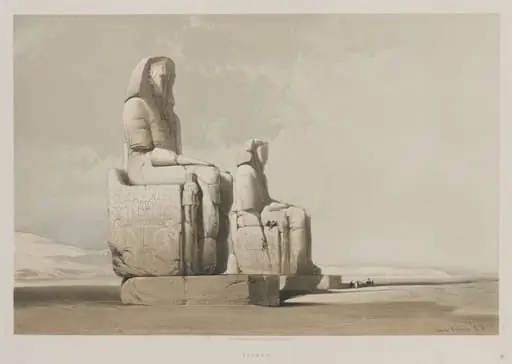 Egypt and Nubia, Volume I: Thebes
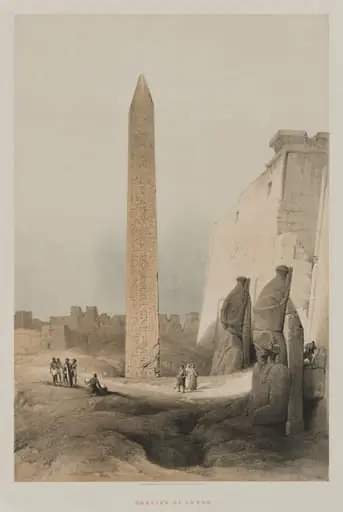 Egypt and Nubia, Volume I: Luxor
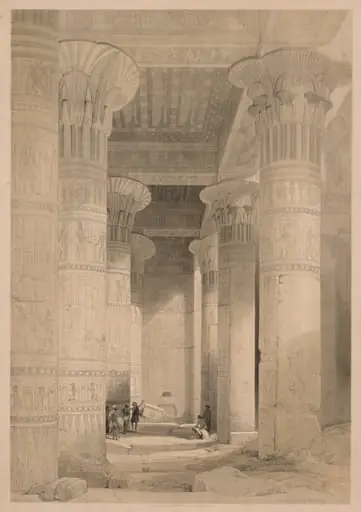 Egypt and Nubia: Volume I - Frontispiece, View under the Grand Portico, Philae
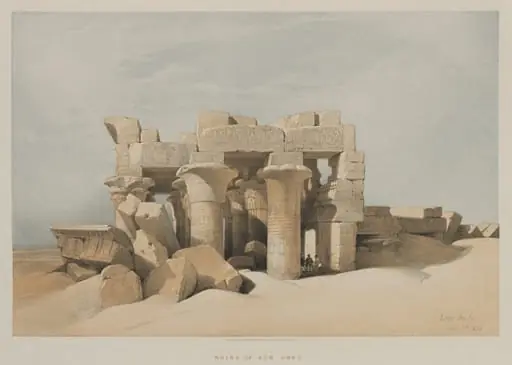 Egypt and Nubia, Volume I: Kom-Ombo
 Egypt and Nubia: Volume II - No. 7, Colossi at Wady Saboua
 Egypt and Nubia, Volume II: Edfou
 Egypt and Nubia, Volume I: Excavated Temple of Gyrshe, Nubia
 Egypt and Nubia: Volume I - No. 10, Edfou
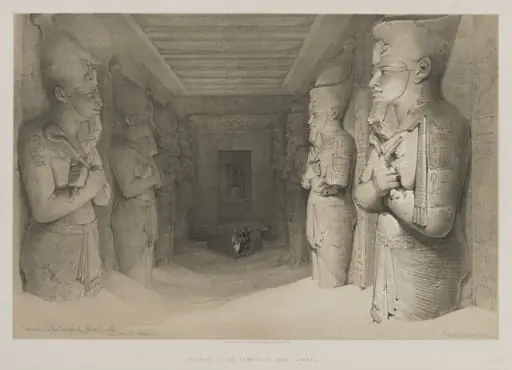 Egypt and Nubia, Volume I: Interior of the Temple of Aboo-Simbel
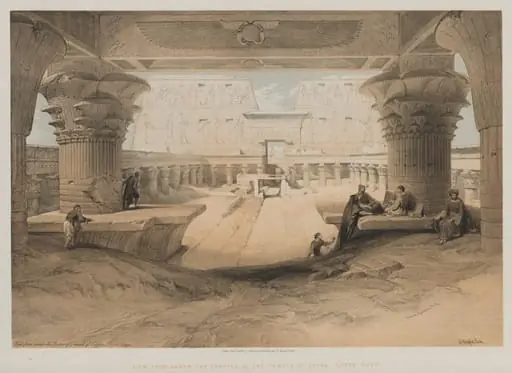 Egypt and Nubia, Volume I: View from Under the Portico of the Temple of Edfou, Upper Egypt