Artwork
Egypt and Nubia, Volume I: Interior of the Temple of Aboo-Simbel
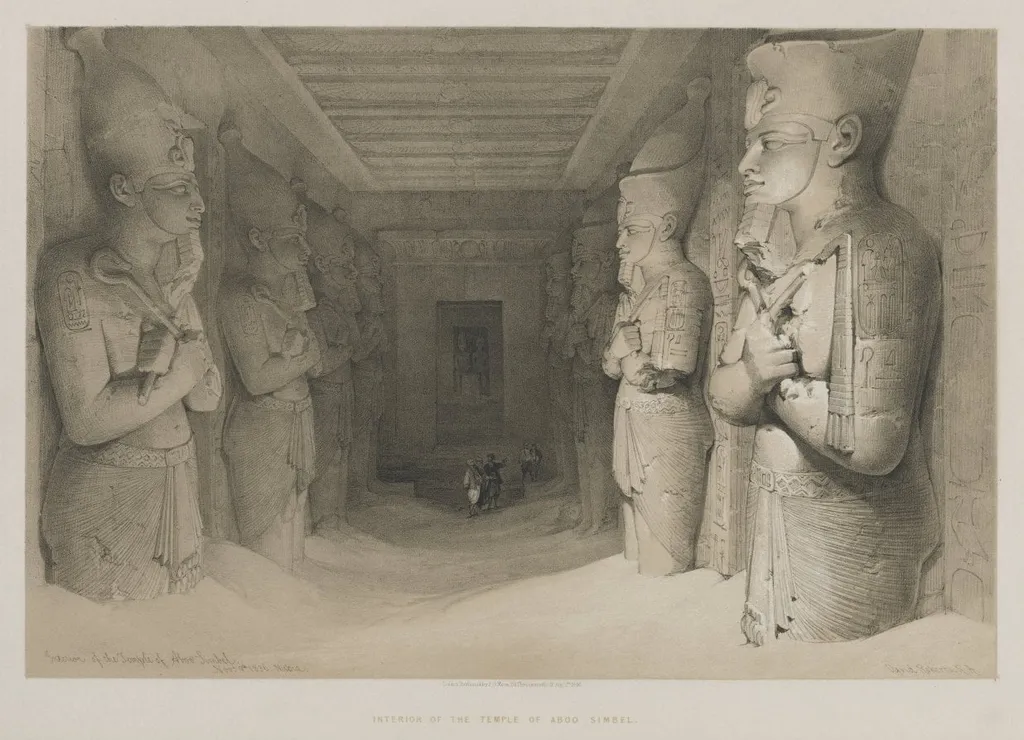
Egypt and Nubia, Volume I: Interior of the Temple of Aboo-Simbel is a print by the Romanticist artist Louis Haghe. It dates from 1846 and is held in the collection of the Cleveland Museum of Art.
About this work
Overview
This 1846 print, *Egypt and Nubia, Volume I: Interior of the Temple of Aboo-Simbel*, is a lithographic work by Louis Haghe, depicting the interior of a rock-cut temple at Abu Simbel, as part of a documentary series on Egyptian and Nubian monuments.
Subject & Meaning
The print shows four colossal stone statues of kings with headdresses in a dimly lit temple interior. Behind them, a doorway leads to a darker area with smaller figures. The statues' faces are rendered smooth and blank.
Technique & Style
Created from life observations, the work showcases Haghe's lithographic skills. However, the level of detail in the temple's carvings and symbols is subdued, with the primary focus on the monumental statues.
History & Provenance
Louis Haghe, a Belgian-born British artist, produced this work in 1846. Trained in watercolour, Haghe later co-founded the prominent lithography firm Day & Haghe in London.
Context
Part of a broader series, this print reflects 19th-century artistic interest in documenting ancient monuments, often influenced by Romantic-era fascination with history, travel, and exotic locales.
Legacy
While specific legacy details of this individual print are not provided, works like *Interior of the Temple of Aboo-Simbel* contributed to the popularization of ancient Egyptian and Nubian architecture in 19th-century Europe.
Artist & collection
Artist
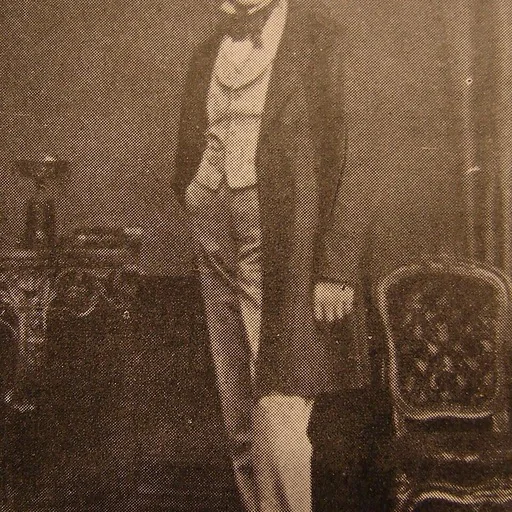
Louis Haghe (17 March 1806 – 9 March 1885) was a lithographer and watercolourist from the Netherlands and then the United Kingdom.

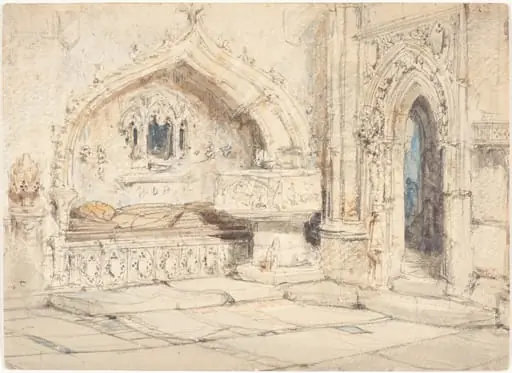 Interior of a Church with a Wall Tomb and Medieval Font
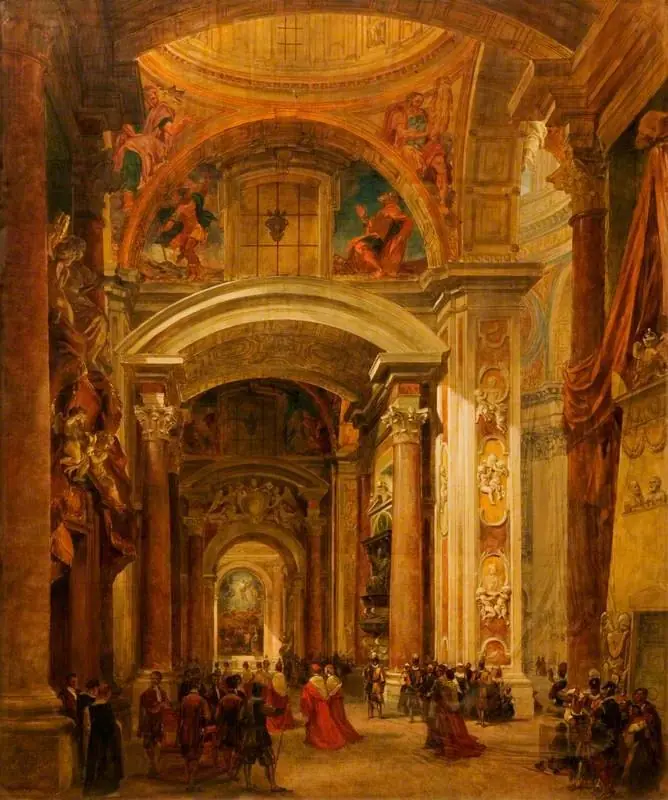 Interior of St Peter's, Rome
 The Corridor, Brewer's Hall, Antwerp
 Monument of the Cardinald D'Amboise in Rouen Cathedral
 The Quay at Suez
 Egypt and Nubia, Volume II: Lateral View of the Temple called The Typhonoeum at Dendera
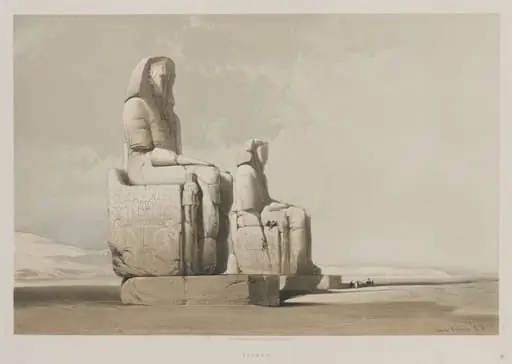 Egypt and Nubia, Volume I: Thebes
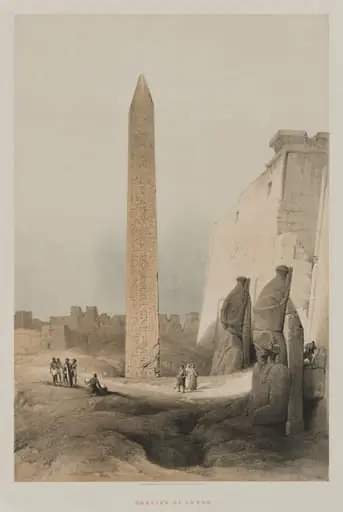 Egypt and Nubia, Volume I: Luxor
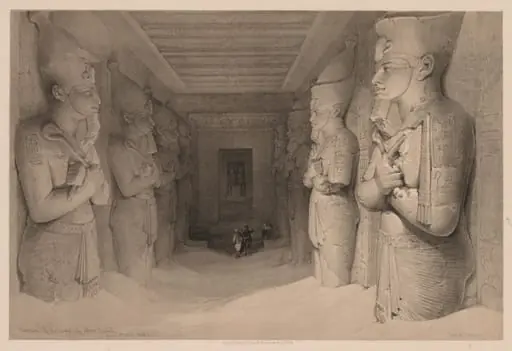 Egypt and Nubia: Volume I - No. 14, Interior of the Temple Aboo Simbel
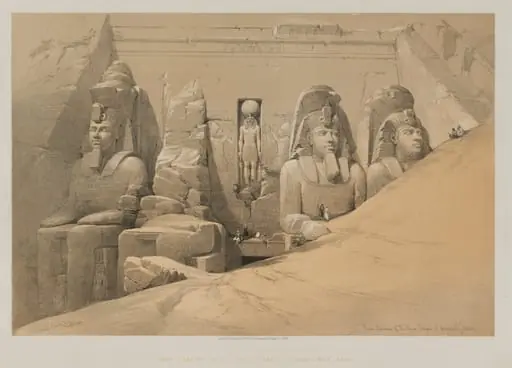 Egypt and Nubia, Volume II: Front Elevation of the Great Temple of Aboo Simbel, Nubia
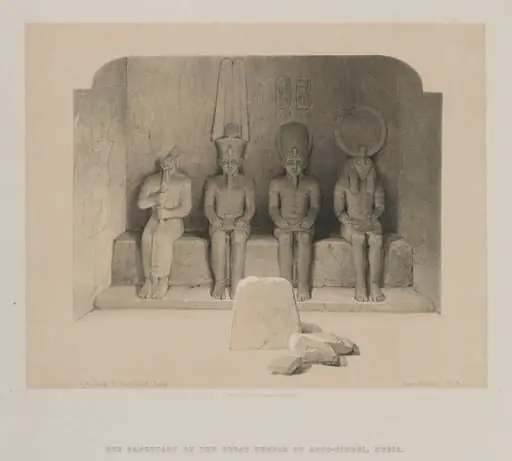 Egypt and Nubia, Volume I: Sanctuary of the Temple of Aboo-Simbel, Nubia
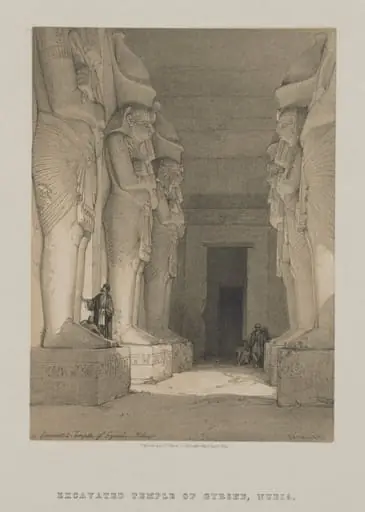 Egypt and Nubia, Volume I: Excavated Temple of Gyrshe, Nubia
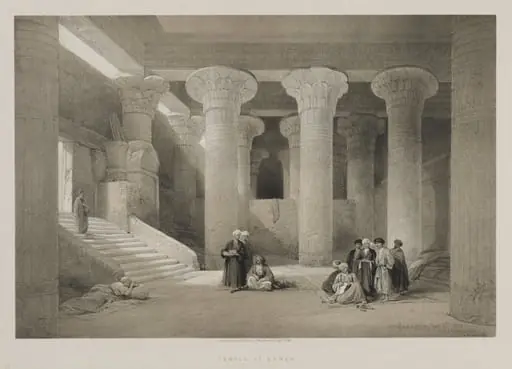 Egypt and Nubia, Volume I: Temple at Esneh
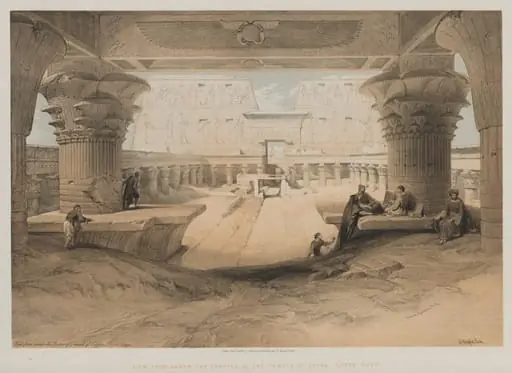 Egypt and Nubia, Volume I: View from Under the Portico of the Temple of Edfou, Upper Egypt
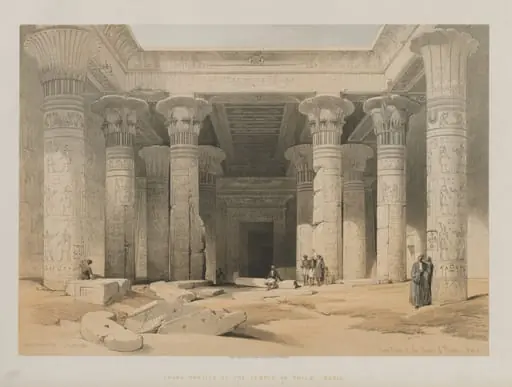 Egypt and Nubia, Volume I: Grand Portico of the Temple of Philae, Nubia
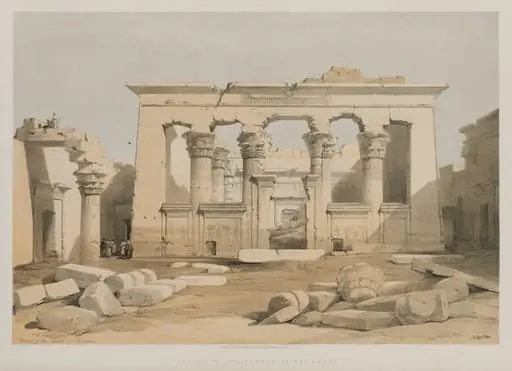 Egypt and Nubia, Volume I: Portico of the Temple of Kalabshe
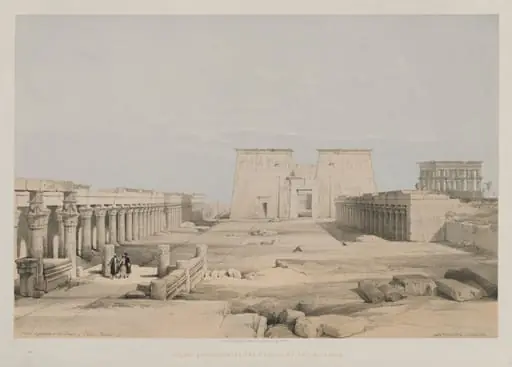 Egypt and Nubia, Volume I: Grand Approach to the Temple of Philae, Nubia
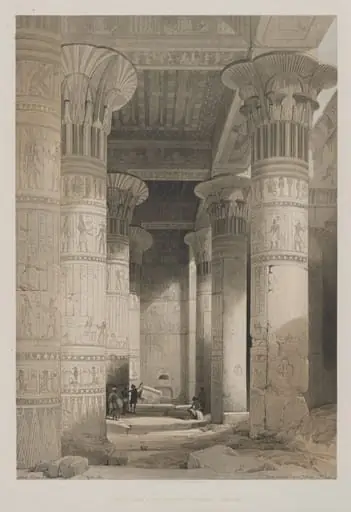 Egypt and Nubia, Volume I: View Under the Grand Portico of the Temple, Philae
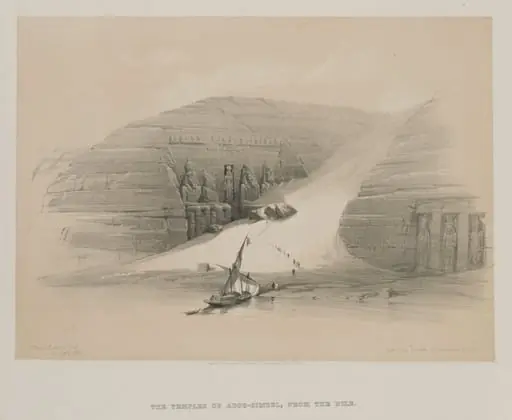 Egypt and Nubia, Volume II: Excavated Temples of Abo Simble, Nubia
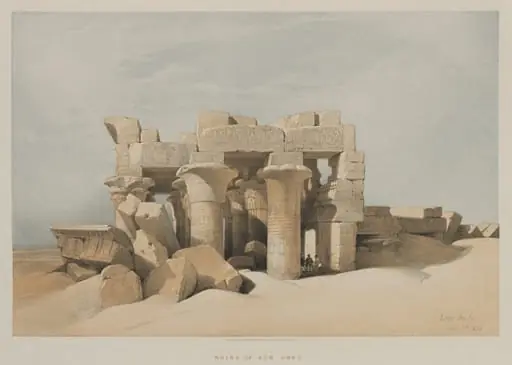 Egypt and Nubia, Volume I: Kom-Ombo