Artwork
Egypt and Nubia, Volume I: Libyan Chain of Mountains, from the Temple of Luxor
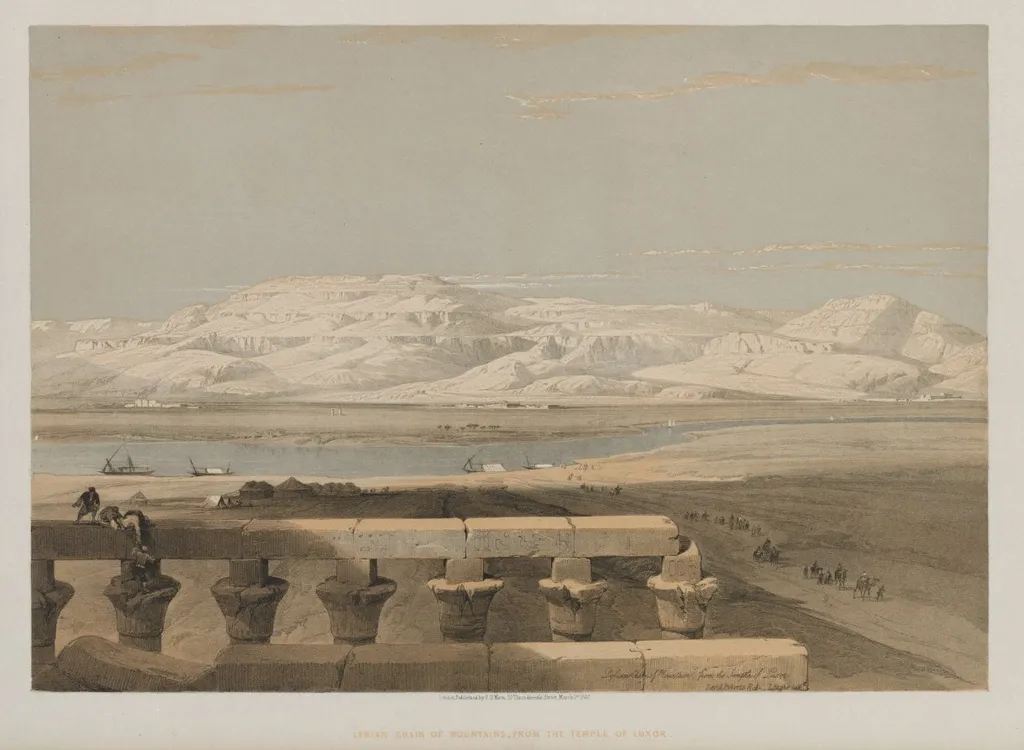
Egypt and Nubia, Volume I: Libyan Chain of Mountains, from the Temple of Luxor is a print by the Romanticist artist Louis Haghe. It dates from 1847 and is held in the collection of the Cleveland Museum of Art.
About this work
Overview
This 1847 print, 'Egypt and Nubia, Volume I: Libyan Chain of Mountains, from the Temple of Luxor,' is a landscape view created by Louis Haghe, a lithographer and watercolorist. It is part of a series documenting sites in Egypt and Nubia.
Subject & Meaning
The scene depicts the Libyan mountain range from the Temple of Luxor, showcasing a serene desert landscape with a winding river, ruined stone columns, and distant figures. The artist emphasizes the interplay between ancient ruins and the natural environment.
Technique & Style
Haghe's work is characterized by its use of lithography, a technique he mastered through his firm Day & Haghe. The print features layered, hazy mountains and a pale sky, evoking a sense of depth and tranquility.
Context
This work is associated with Romanticism, a movement where artists used landscapes to convey broader ideas and emotions. The focus on the natural world and ancient ruins reflects this artistic trend.
Artist & collection

Artist
Louis Haghe (17 March 1806 – 9 March 1885) was a lithographer and watercolourist from the Netherlands and then the United Kingdom.

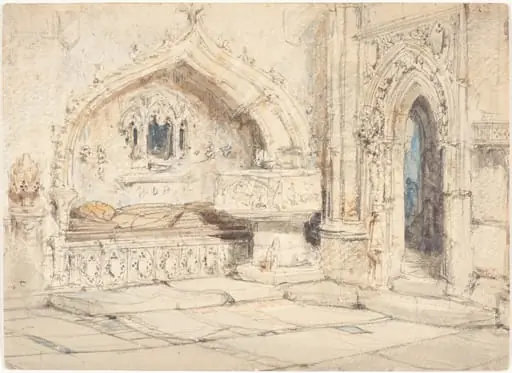 Interior of a Church with a Wall Tomb and Medieval Font
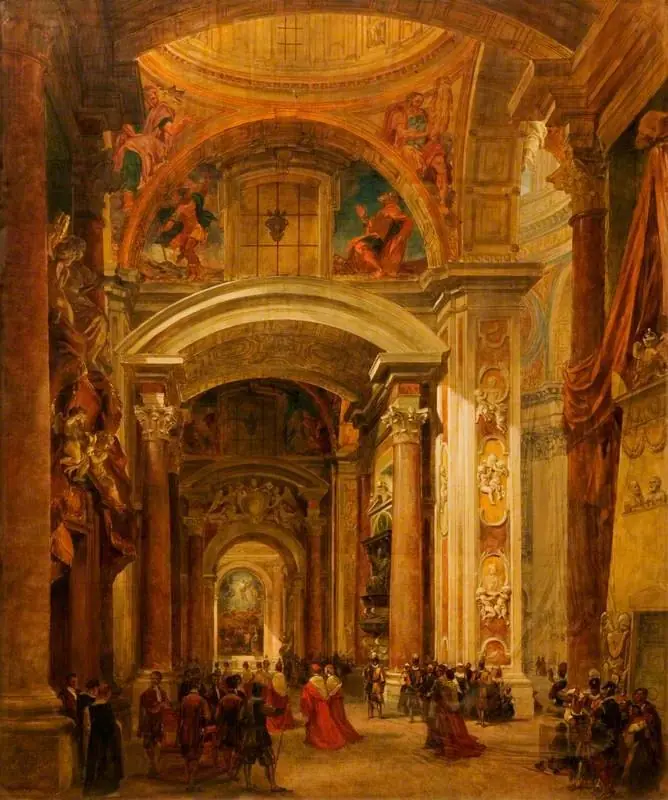 Interior of St Peter's, Rome
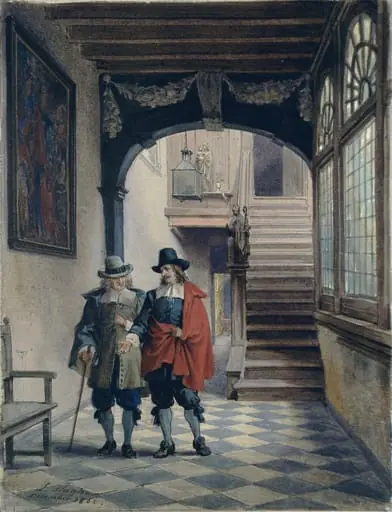 The Corridor, Brewer's Hall, Antwerp
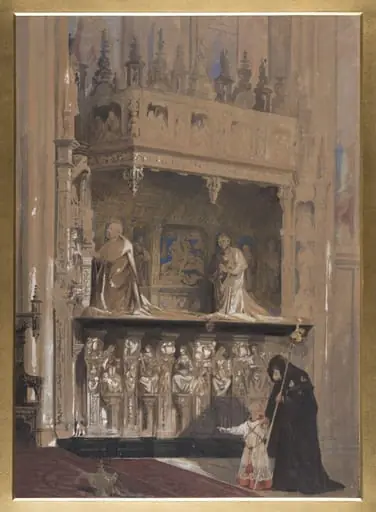 Monument of the Cardinald D'Amboise in Rouen Cathedral
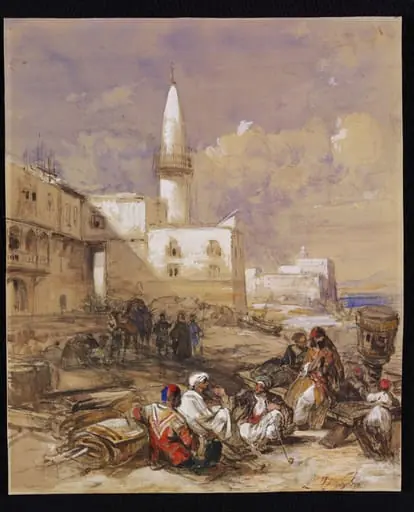 The Quay at Suez
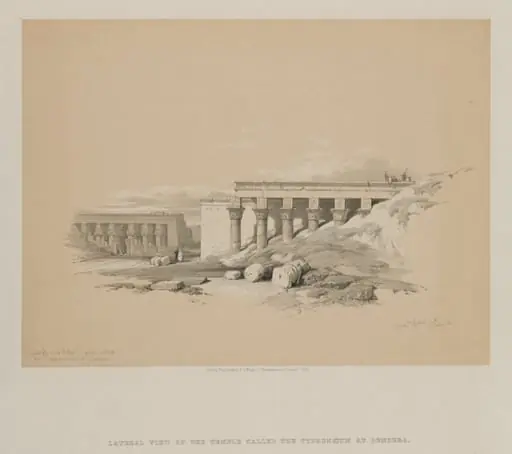 Egypt and Nubia, Volume II: Lateral View of the Temple called The Typhonoeum at Dendera
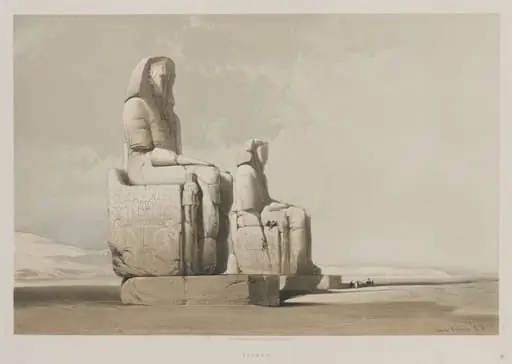 Egypt and Nubia, Volume I: Thebes
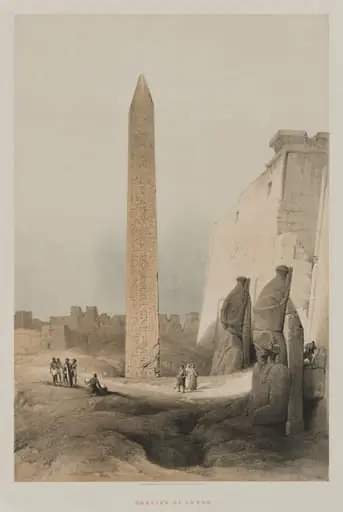 Egypt and Nubia, Volume I: Luxor
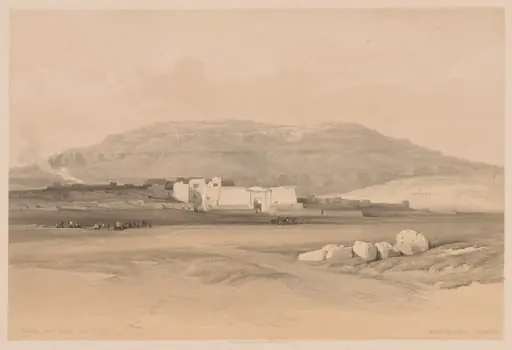 Egypt and Nubia: Volume II - No. 20, Medinet Abou, Thebes
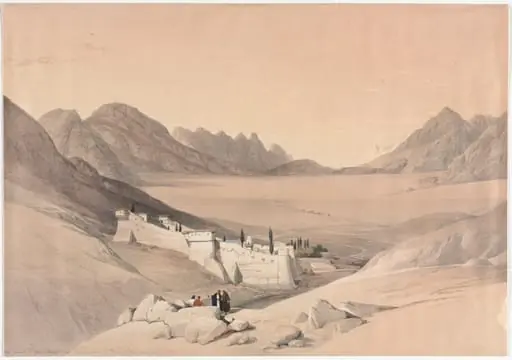 The Convent of St. Catherine, Mount Sinai, Looking towards the Plain of the Encampment
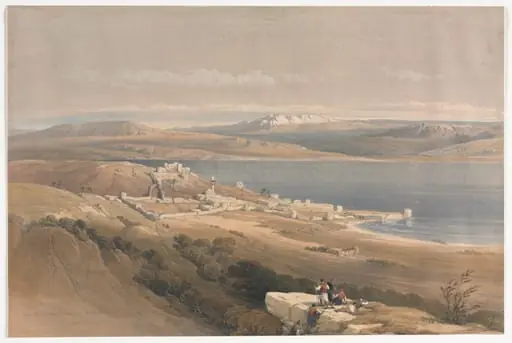 City of Tiberias on the Sea of Galilee, looking towards Hebron
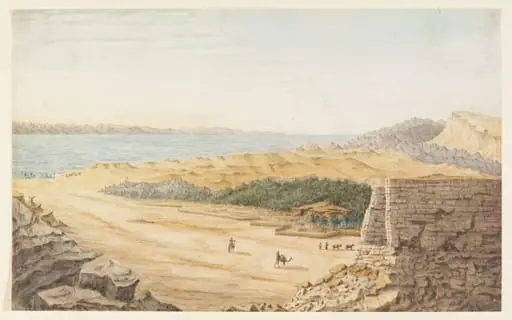 Ancient Ruins in the land of Edom above the bed of a valley and Arab Date gardens
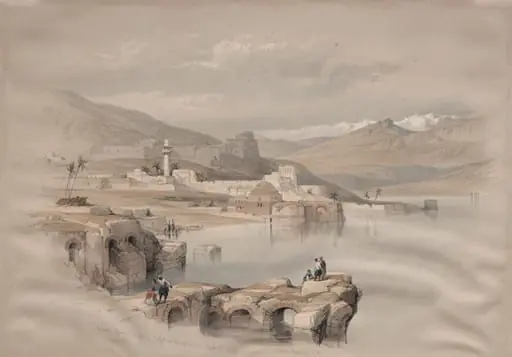 Tiberias, from the Walls, Safet in the Distance
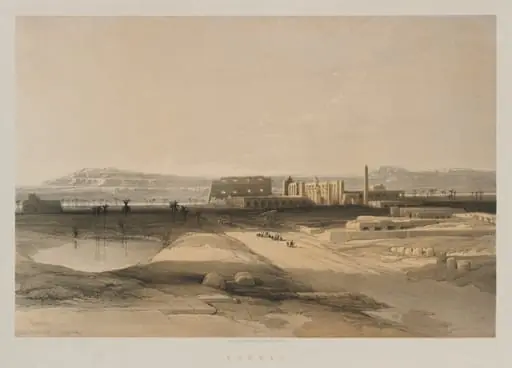 Egypt and Nubia, Volume II: Karnak
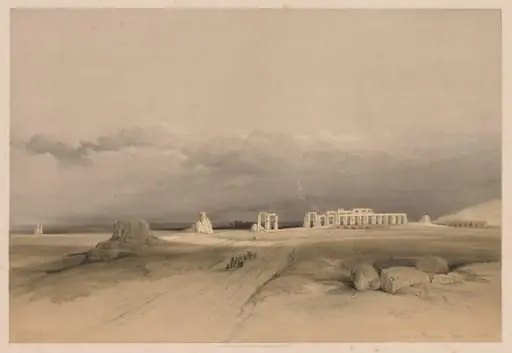 Egypt and Nubia: Volume II - No. 8, Ruins of the Memnonium, Thebes
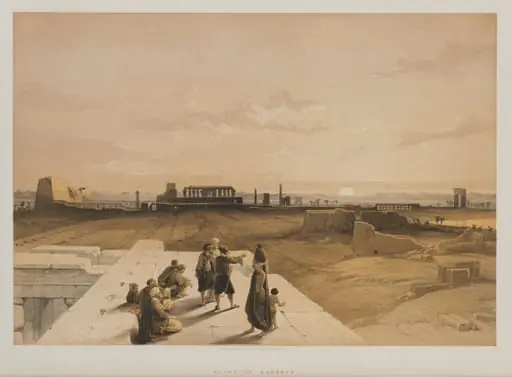 Egypt and Nubia, Volume I: Ruins of Karnac