Artwork
Egypt and Nubia: Volume I - No. 3, Pyramids of Gizeh
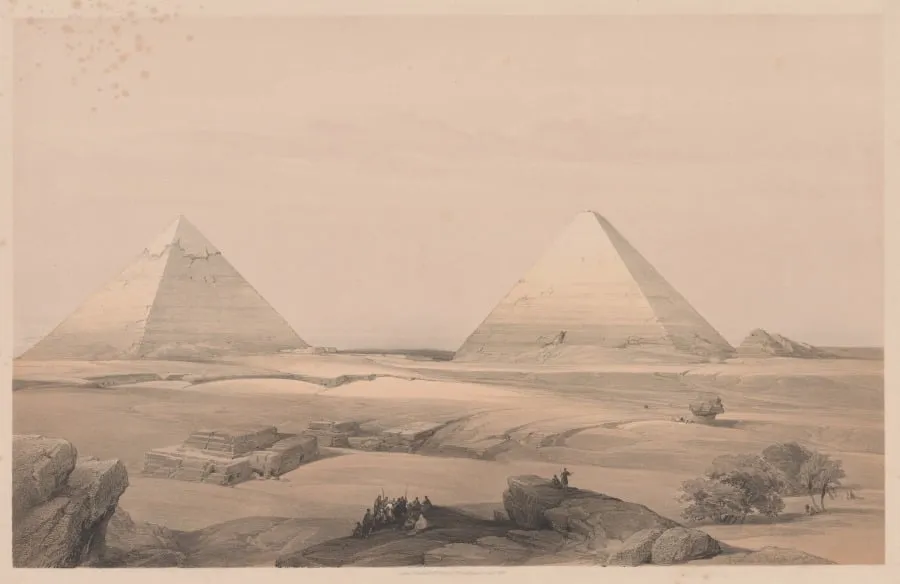
Egypt and Nubia: Volume I - No. 3, Pyramids of Gizeh is a print by the Romanticist artist Louis Haghe. It dates from 1838 and is held in the collection of the Cleveland Museum of Art.
About this work
Overview
Produced through lithographic technique, it reflects the early Victorian interest in archaeological documentation.
Created in 1838 by Louis Haghe, a Belgian-born British lithographer, this print is part of the first volume of a documented series on Egyptian and Nubian monuments. Produced through lithographic technique, it reflects the early Victorian interest in archaeological documentation. Haghe, co-founder of the influential Day & Haghe firm, specialized in translating topographical observations into finely rendered prints for European audiences seeking visual records of distant lands.
Subject & Meaning
The print presents the three principal pyramids of Giza aligned across the desert landscape, with the largest centrally positioned and the smaller ones flanking it. Scattered figures and modest structures ground the scene in human scale, while the absence of overt narrative emphasizes the enduring presence of the monuments. The composition invites contemplation rather than drama, aligning with a scholarly impulse to record ancient architecture as enduring, silent witnesses to time.
Technique & Style
Haghe employed soft, muted tones and delicate lithographic lines to convey atmospheric distance. The pale sky merges subtly with the sandy ground, reducing contrast and enhancing a sense of stillness. Delicate rendering of sparse vegetation and rock formations adds texture without distraction. The technique avoids bold shadows or vivid color, favoring a restrained palette that evokes the quiet vastness of the desert and the time-worn quality of the structures.
History & Provenance
The print was issued as part of a multi-volume publication commissioned to systematically document archaeological sites along the Nile. Produced by Day & Haghe, a leading London lithographic studio, it benefited from advances in color lithography that allowed for tonal nuance previously difficult to achieve. The series was distributed to libraries, institutions, and private collectors across Europe, contributing to the growing body of visual Egyptology in the 1830s.
Context
In the 1830s, European fascination with ancient Egypt intensified following Napoleon’s campaign and the decipherment of the Rosetta Stone. Travel to the region remained arduous, making printed records vital for scholars and the public. Haghe’s work emerged within this context, offering accurate, aesthetically tempered views that balanced scientific intent with Romantic sensibilities, avoiding exoticism in favor of measured observation.
Legacy
Haghe’s prints helped standardize visual representations of Egyptian monuments for Western audiences. His restrained style influenced later archaeological illustration, prioritizing clarity and tonal harmony over dramatic effect. While overshadowed by later photographic documentation, his lithographs remain valued for their precision and the quiet dignity with which they convey ancient architecture in its natural setting.
Artist & collection
Artist
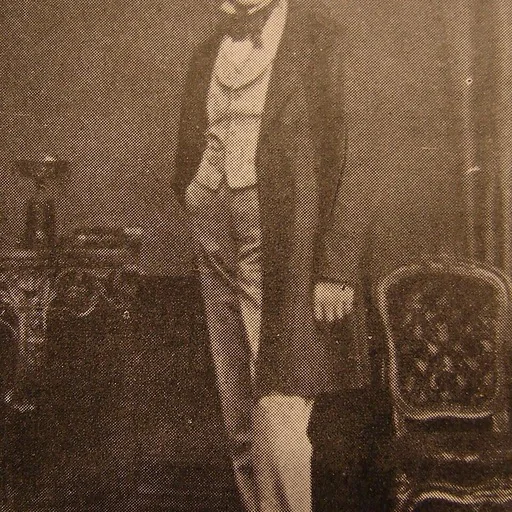
Louis Haghe (17 March 1806 – 9 March 1885) was a lithographer and watercolourist from the Netherlands and then the United Kingdom.

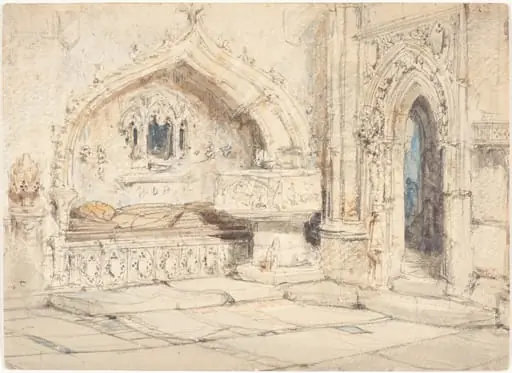 Interior of a Church with a Wall Tomb and Medieval Font
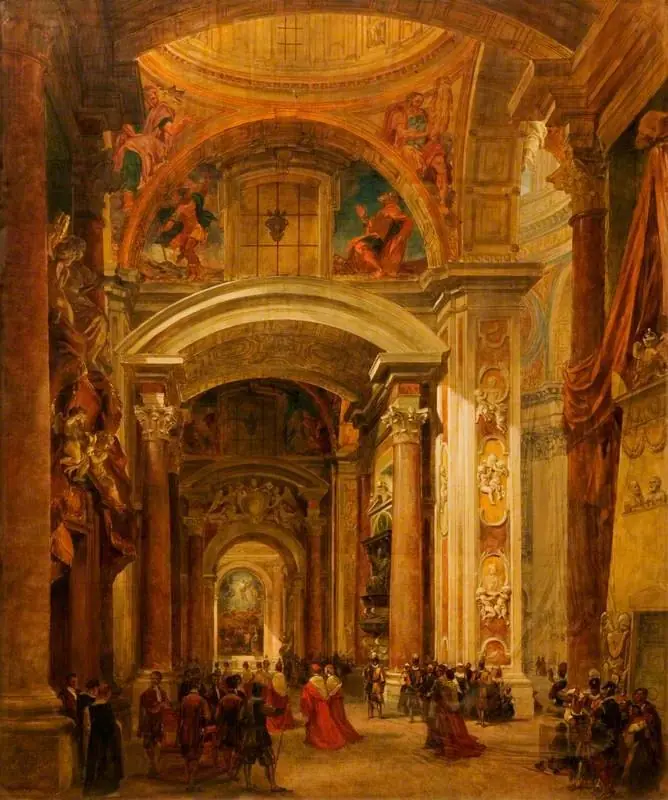 Interior of St Peter's, Rome
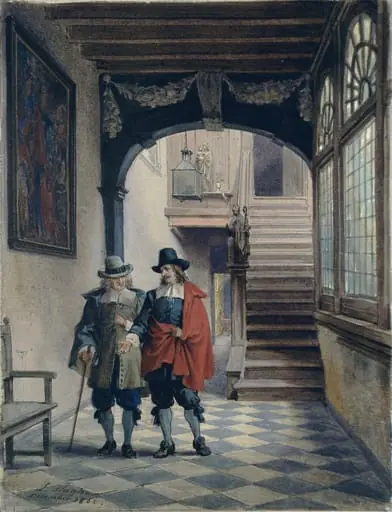 The Corridor, Brewer's Hall, Antwerp
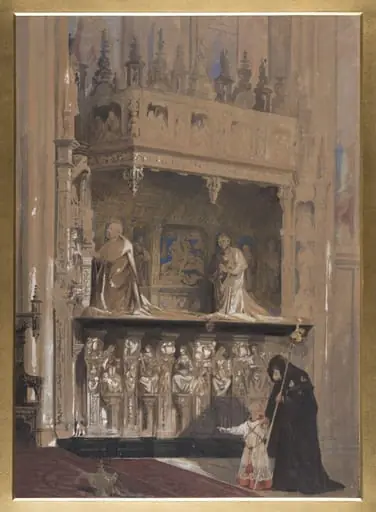 Monument of the Cardinald D'Amboise in Rouen Cathedral
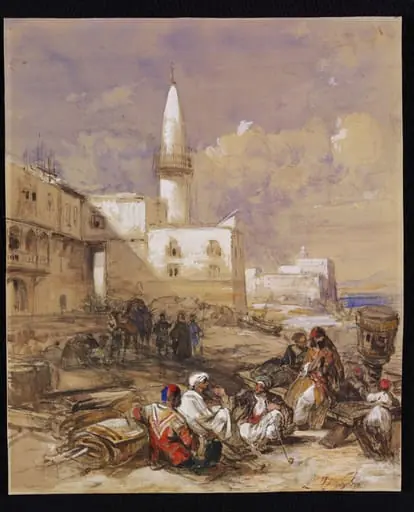 The Quay at Suez
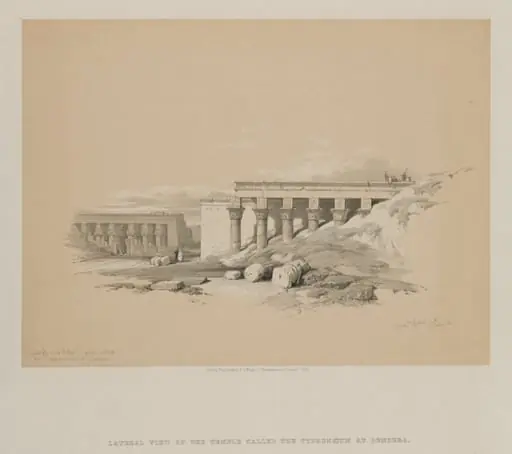 Egypt and Nubia, Volume II: Lateral View of the Temple called The Typhonoeum at Dendera
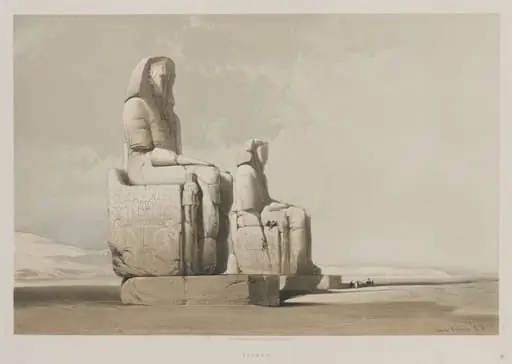 Egypt and Nubia, Volume I: Thebes
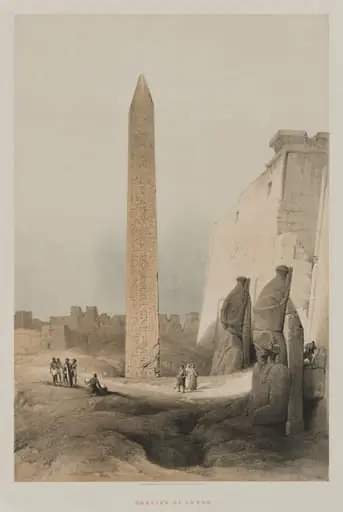 Egypt and Nubia, Volume I: Luxor
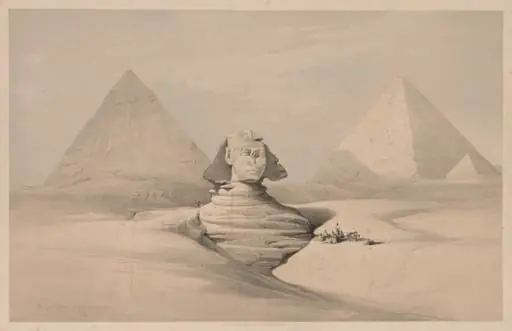 Egypt and Nubia: Volume I - No. 18, The Great Sphinx, Pyramids of Gizeh, Front View
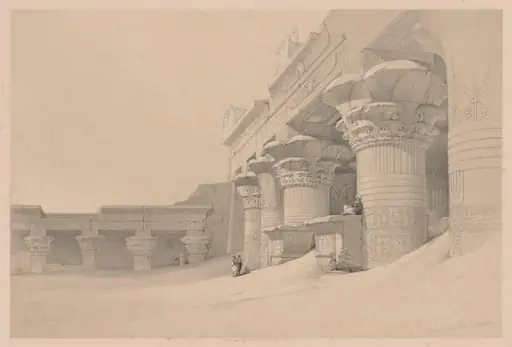 Egypt and Nubia: Volume I - No. 10, Edfou
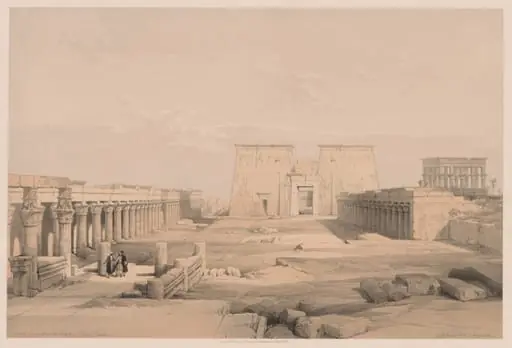 Egypt and Nubia: Volume I - No. 42, Grand Approach to the Temple of Philae, Nubia
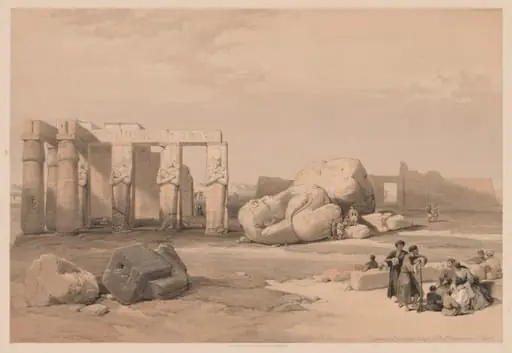 Egypt and Nubia: Volume II - No. 4, Fragments of the Great Colossi, at the Memnonium
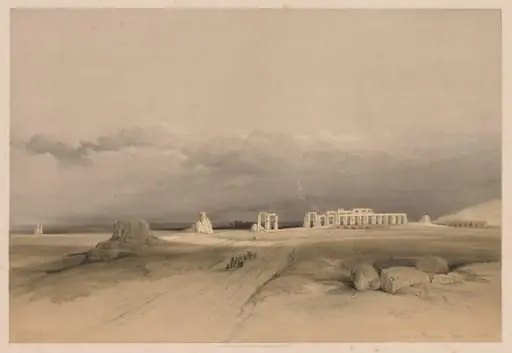 Egypt and Nubia: Volume II - No. 8, Ruins of the Memnonium, Thebes
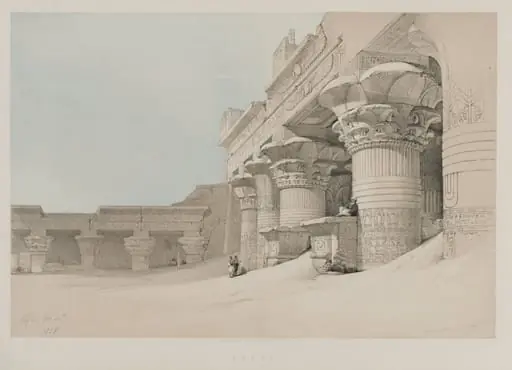 Egypt and Nubia, Volume II: Edfou
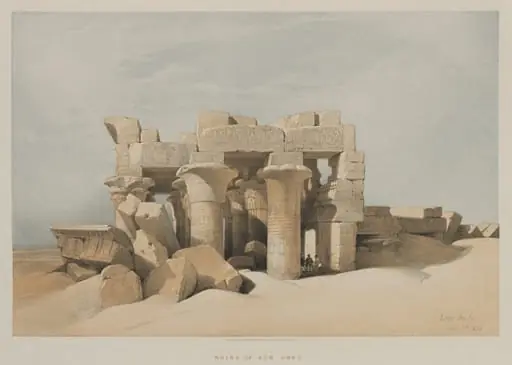 Egypt and Nubia, Volume I: Kom-Ombo
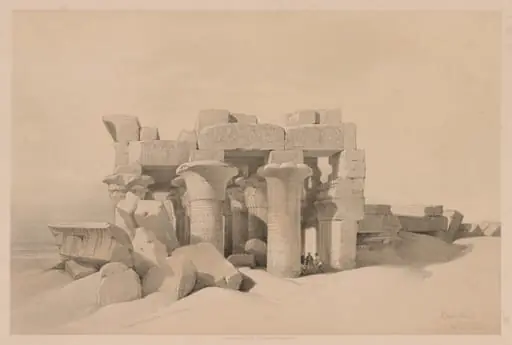 Egypt and Nubia: Volume II - No. 42, Ruins of Kom Ombo