Artwork
Egypt and Nubia: Volume I - No. 34, Temple of Edfou. Ancient Appolinopolis, Upper Egypt
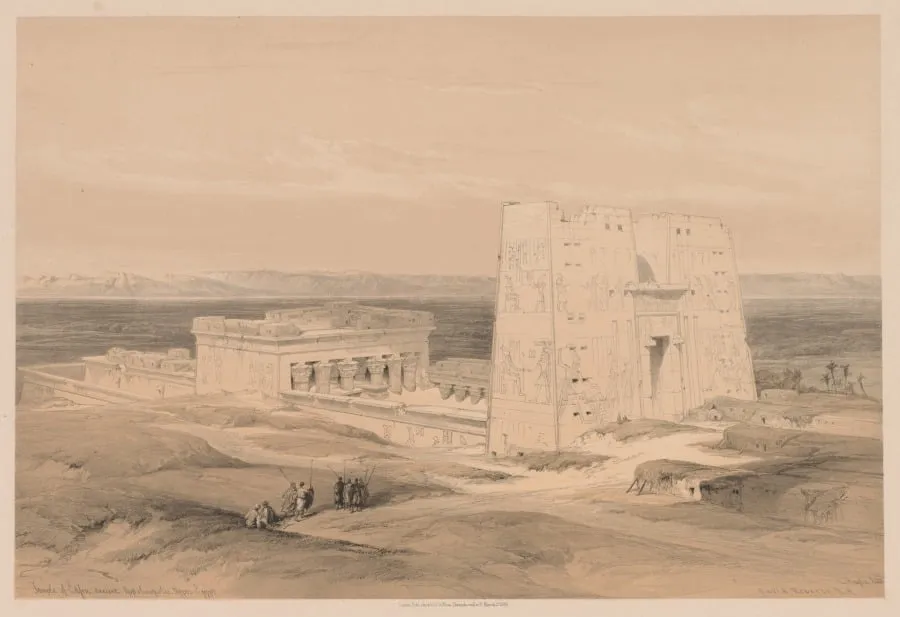
Egypt and Nubia: Volume I - No. 34, Temple of Edfou. Ancient Appolinopolis, Upper Egypt is a print by the Romanticist artist Louis Haghe. It dates from 1838 and is held in the collection of the Cleveland Museum of Art.
About this work
Overview
Louis Haghe’s 1838 lithograph, part of a series on Egyptian and Nubian sites, records the Temple of Edfu—also known historically as the ancient city of Apollinopolis—in Upper Egypt. The image presents the temple’s massive, flat‑roofed structure set against a flat, sandy horizon, with distant hills receding in the background.
Subject & Meaning
The composition foregrounds the temple’s elaborately carved walls, densely covered with hieroglyphic inscriptions, suggesting the building’s religious and ceremonial importance. Small human figures near a modest shelter provide a sense of scale, emphasizing the monument’s monumental size within its landscape.
Technique & Style
Executed as a lithographic print, Haghe employs subtle gradations of tone to model the stone surfaces, creating a restrained chiaroscuro effect that conveys depth without relying on vivid colour. The delicate shading highlights the texture of the reliefs and the contours of the surrounding terrain.
History & Provenance
Born in Tournai in 1806, Haghe trained in watercolor before turning to lithography, co‑founding the London firm Day & Haghe around 1830. This work reflects his early involvement in documenting antiquities during a period of heightened European interest in Egyptology.
Context
The image belongs to a broader 19th‑century effort to catalogue Egyptian architecture, produced for audiences eager to visualize the ancient world following Napoleon’s campaigns and the subsequent surge in archaeological exploration.
Artist & collection
Artist
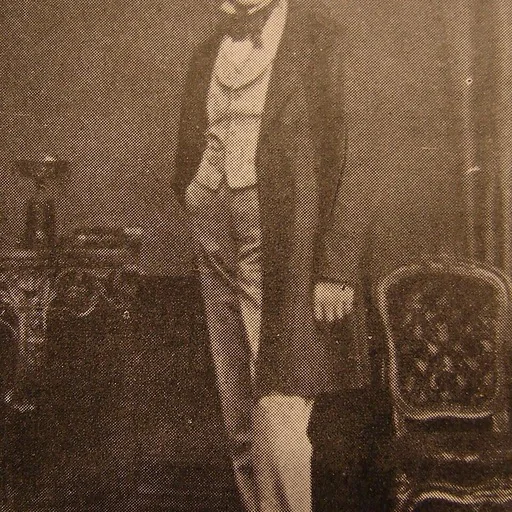
Louis Haghe (17 March 1806 – 9 March 1885) was a lithographer and watercolourist from the Netherlands and then the United Kingdom.

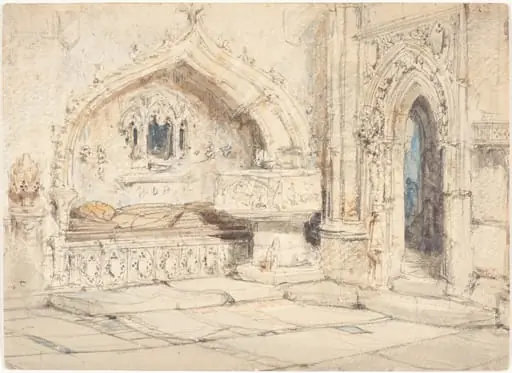 Interior of a Church with a Wall Tomb and Medieval Font
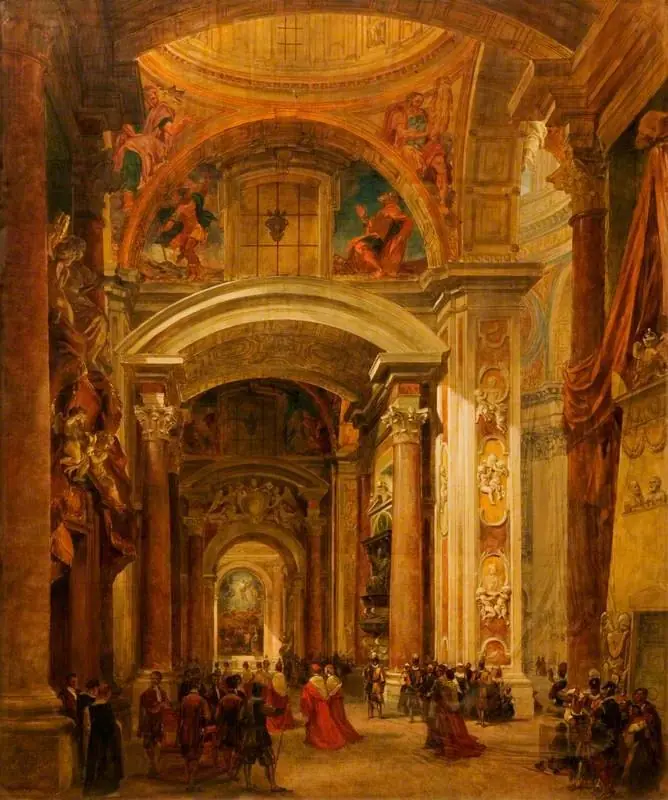 Interior of St Peter's, Rome
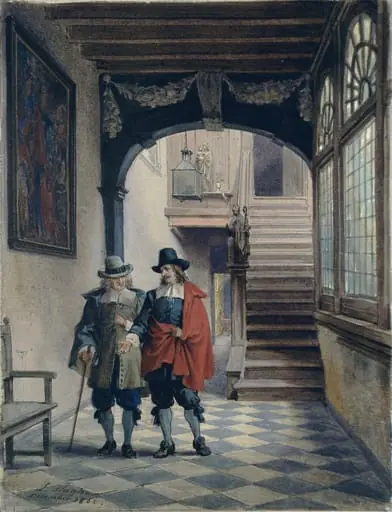 The Corridor, Brewer's Hall, Antwerp
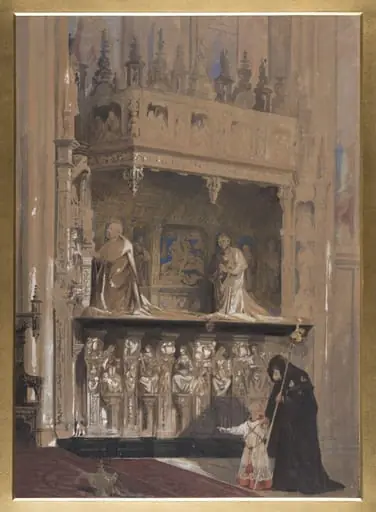 Monument of the Cardinald D'Amboise in Rouen Cathedral
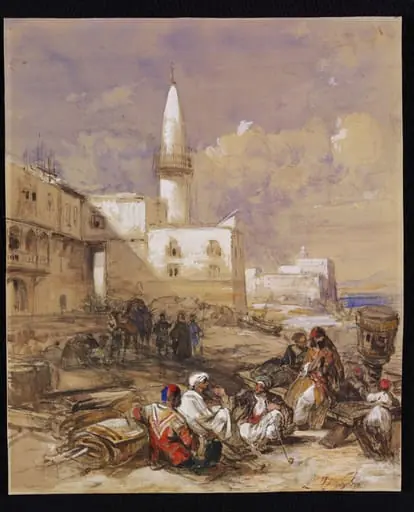 The Quay at Suez
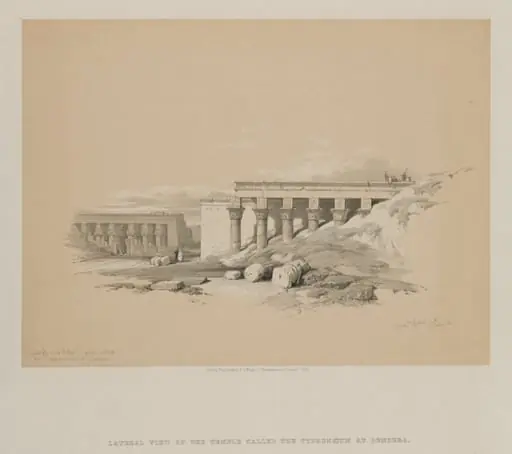 Egypt and Nubia, Volume II: Lateral View of the Temple called The Typhonoeum at Dendera
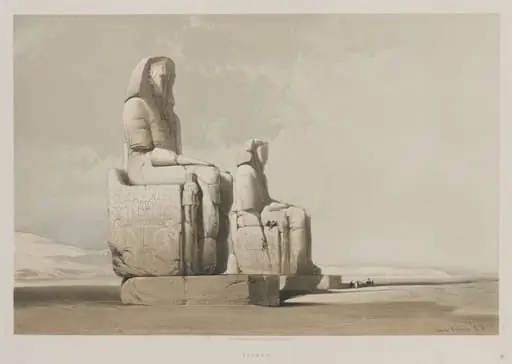 Egypt and Nubia, Volume I: Thebes
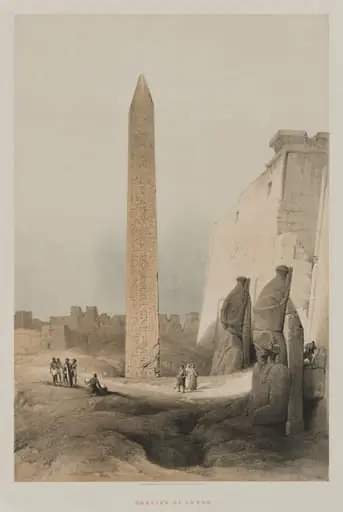 Egypt and Nubia, Volume I: Luxor
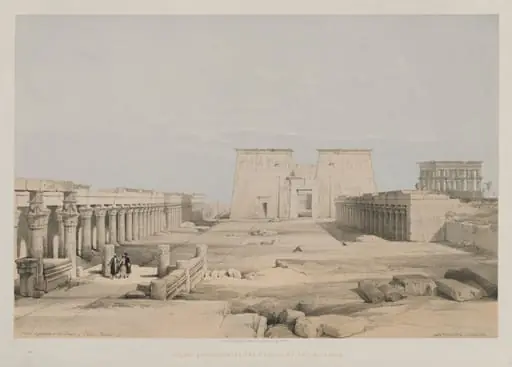 Egypt and Nubia, Volume I: Grand Approach to the Temple of Philae, Nubia
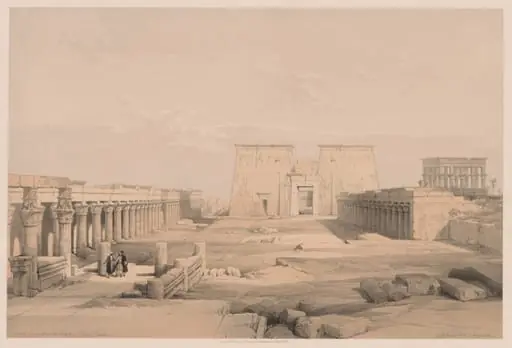 Egypt and Nubia: Volume I - No. 42, Grand Approach to the Temple of Philae, Nubia
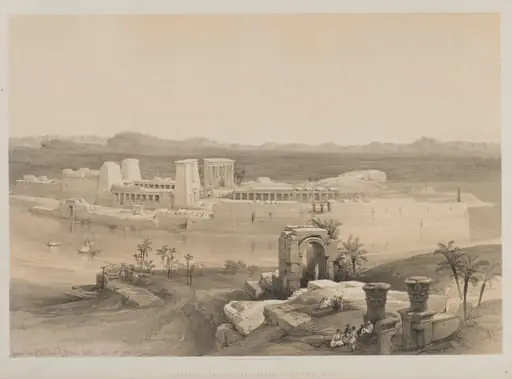 Egypt and Nubia, Volume I: General View of the Island of Philae, Nubia
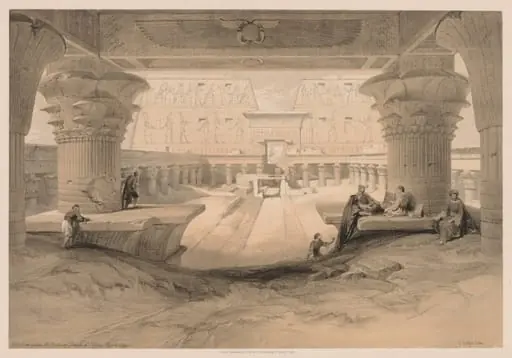 Egypt and Nubia: Volume I - No. 32, View from under the Portico of the Temple of Edfou, Upper Egypt
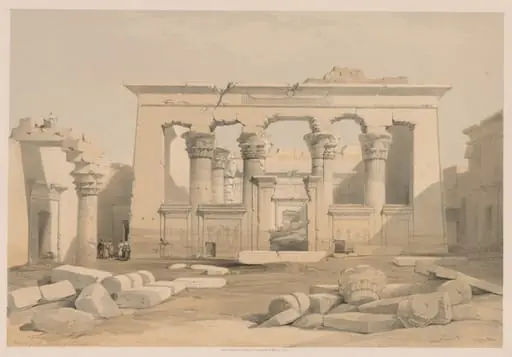 Egypt and Nubia: Volume I - No. 28, Portico of the Temple of Kalabshi
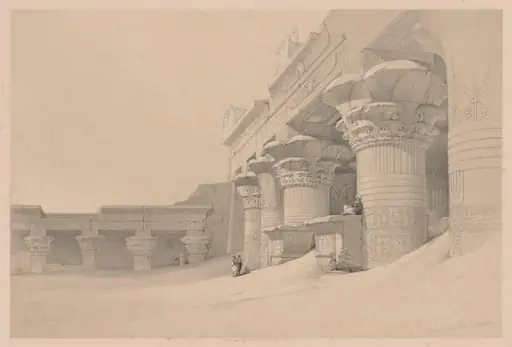 Egypt and Nubia: Volume I - No. 10, Edfou
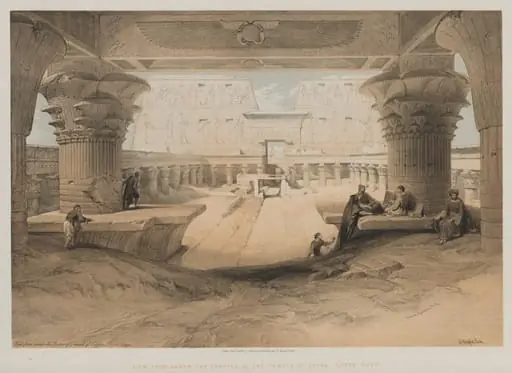 Egypt and Nubia, Volume I: View from Under the Portico of the Temple of Edfou, Upper Egypt
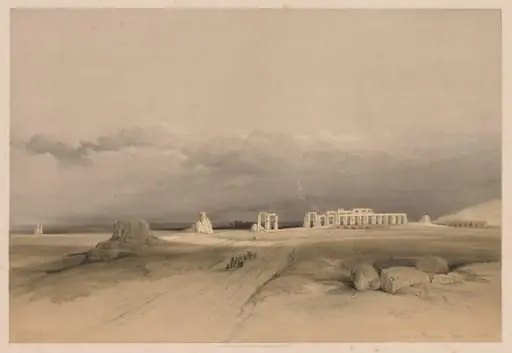 Egypt and Nubia: Volume II - No. 8, Ruins of the Memnonium, Thebes
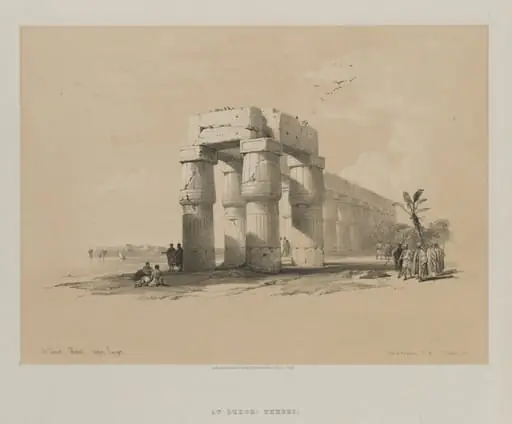 Egypt and Nubia, Volume I: At Luxor, Thebes, Upper Egypt
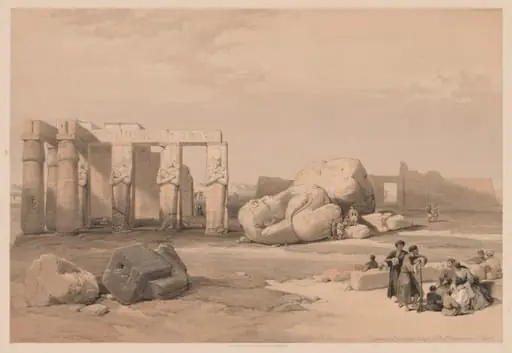 Egypt and Nubia: Volume II - No. 4, Fragments of the Great Colossi, at the Memnonium
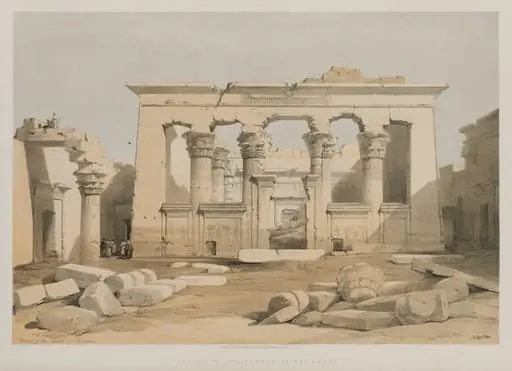 Egypt and Nubia, Volume I: Portico of the Temple of Kalabshe