Artwork
Egypt and Nubia: Volume I - No. 32, View from under the Portico of the Temple of Edfou, Upper Egypt
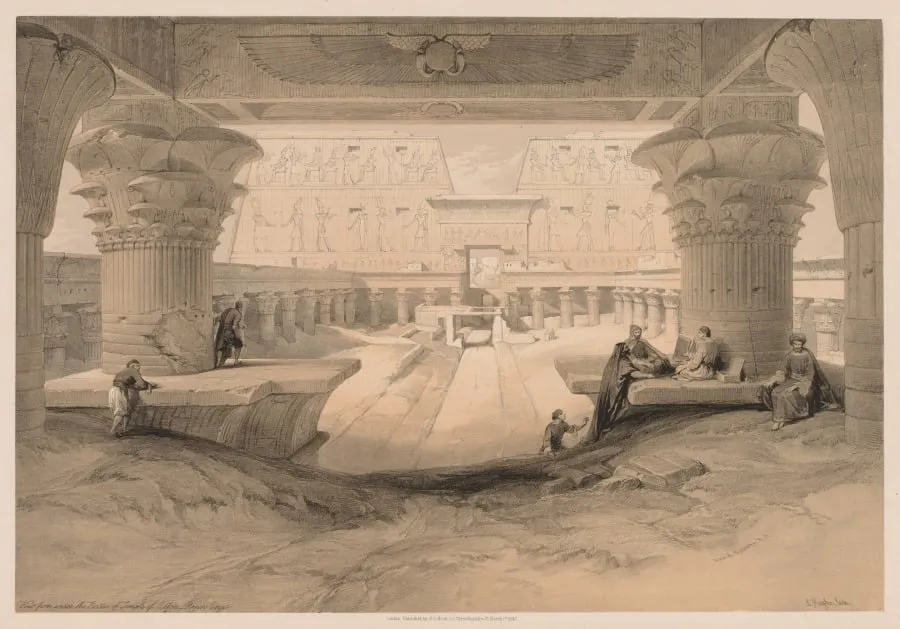
Egypt and Nubia: Volume I - No. 32, View from under the Portico of the Temple of Edfou, Upper Egypt is a print by the Romanticist artist Louis Haghe. It dates from 1838 and is held in the collection of the Cleveland Museum of Art.
About this work
This was made in 1838, when European travelers often sketched ancient sites to bring them back to life for audiences who couldn’t visit.
This drawing shows a grand temple entrance with tall columns and carved walls. Inside, a few people sit or stand casually—some reading, others resting. The floor is uneven, and a rolled-up mat lies near the center. The walls are packed with hieroglyphs and figures, but the scene feels quiet, like a moment frozen in time.
The artist used precise lines to capture the temple’s details, making it look almost three-dimensional. This was made in 1838, when European travelers often sketched ancient sites to bring them back to life for audiences who couldn’t visit.
If you like this, check out Romanticism to see how artists used imagination to explore distant places.
Overview
Created in 1838, this lithograph by Louis Haghe is part of a multi-volume series documenting Egyptian and Nubian monuments. As a British lithographer of Belgian descent, Haghe specialized in translating architectural subjects into printed form. The image captures a specific vantage point beneath the portico of the Temple of Edfou, emphasizing structural grandeur and atmospheric stillness. It was produced during a period of heightened European interest in ancient Egypt, driven by archaeological exploration and publishing ventures.
Subject & Meaning
The scene portrays the interior of the Temple of Edfou’s portico, where monumental columns rise around a quiet, human-scale moment: individuals rest or read on the uneven stone floor. A rolled mat suggests temporary occupation, grounding the sacred space in everyday presence. The dense hieroglyphic carvings on the walls frame the figures without dominating them, implying a coexistence of ancient ritual and contemporary observation. The composition invites contemplation rather than awe, reflecting a documentary intent.
Technique & Style
Haghe employed lithography to achieve fine detail and tonal nuance, capturing the texture of weathered stone and the depth of carved reliefs. His precise linework renders architectural elements with clarity, while subtle shading gives the scene a sense of volume and spatial recession. The absence of dramatic lighting or embellishment aligns with a topographical approach, prioritizing accuracy over romanticized effect. The print’s quiet mood is reinforced by restrained composition and minimal human activity.
History & Provenance
Haghe co-founded the London-based firm Day & Haghe in 1830, which became known for high-quality lithographic publications. This print was produced as plate 32 in Volume I of 'Egypt and Nubia,' a project commissioned to visually record monuments along the Nile. The series was intended for scholarly and public audiences in Europe, where access to ancient sites was limited. The work reflects the collaborative nature of 19th-century archaeological publishing, combining field sketches with studio lithographic refinement.
Context
In the 1830s, European interest in Egypt intensified following Napoleon’s campaign and the decipherment of hieroglyphs. Travelers, artists, and scholars documented sites like Edfou to satisfy intellectual curiosity and fuel publishing markets. Haghe’s work belongs to a broader tradition of topographical illustration, where precision served both scientific and cultural aims. Unlike Romantic-era dramatizations, this image favors observation over imagination, aligning with emerging archaeological standards of the time.
Legacy
Haghe’s lithographs contributed to the visual archive of Egypt’s temples, influencing later archaeological publications and public perception of ancient sites. While not widely exhibited today, his prints remain valuable as historical records of temple conditions in the early 19th century. The work exemplifies the transition from artistic interpretation to systematic documentation, laying groundwork for modern Egyptological illustration. Its enduring relevance lies in its quiet fidelity to place and detail.
Artist & collection
Artist
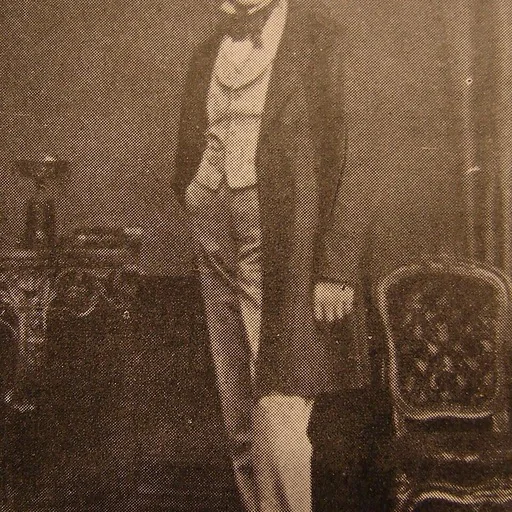
Louis Haghe (17 March 1806 – 9 March 1885) was a lithographer and watercolourist from the Netherlands and then the United Kingdom.

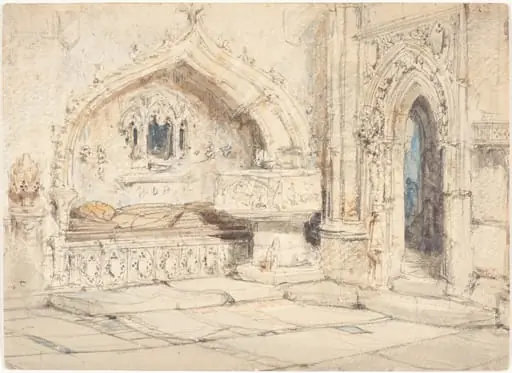 Interior of a Church with a Wall Tomb and Medieval Font
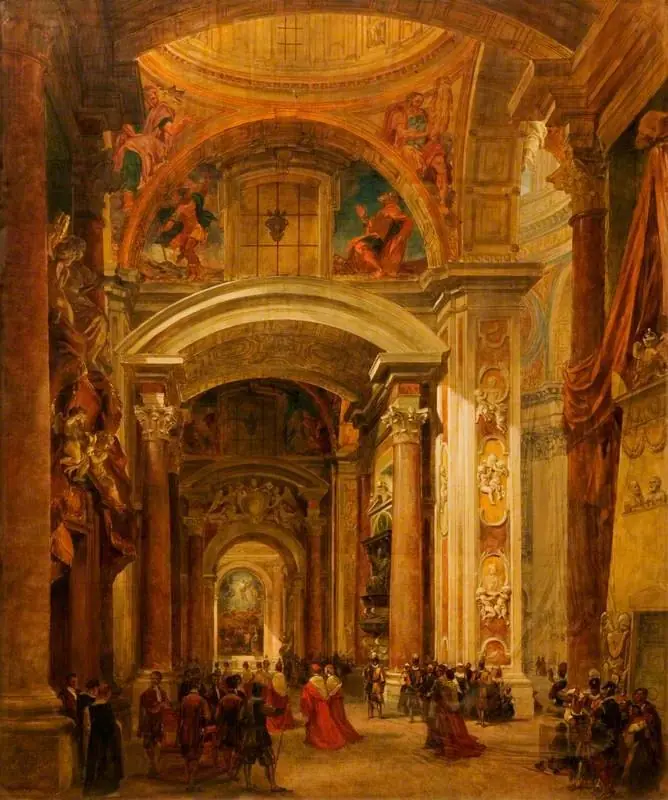 Interior of St Peter's, Rome
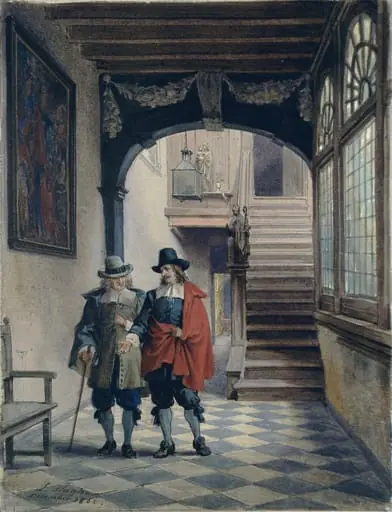 The Corridor, Brewer's Hall, Antwerp
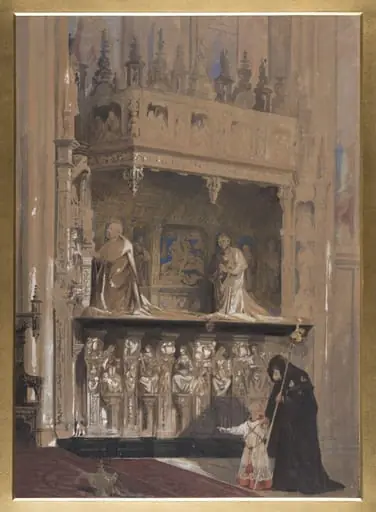 Monument of the Cardinald D'Amboise in Rouen Cathedral
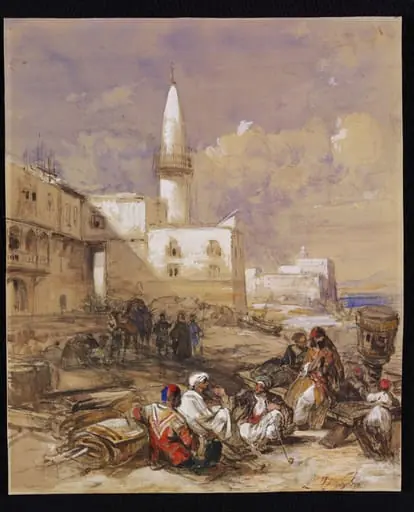 The Quay at Suez
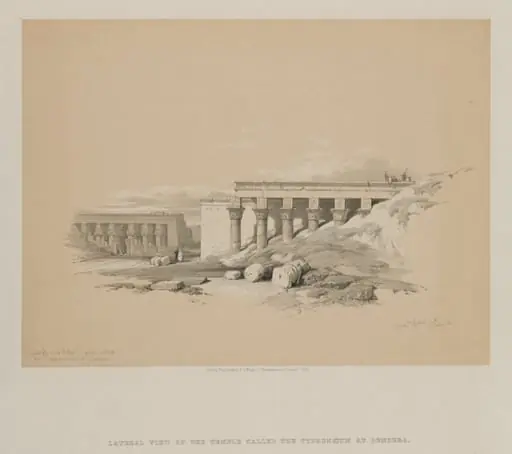 Egypt and Nubia, Volume II: Lateral View of the Temple called The Typhonoeum at Dendera
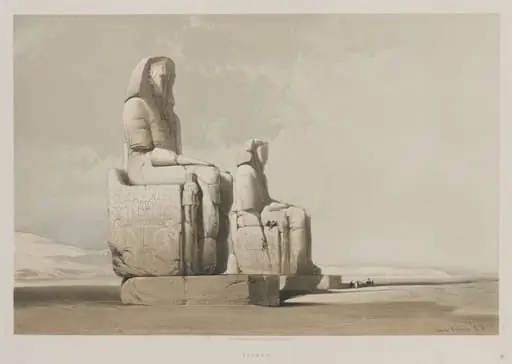 Egypt and Nubia, Volume I: Thebes
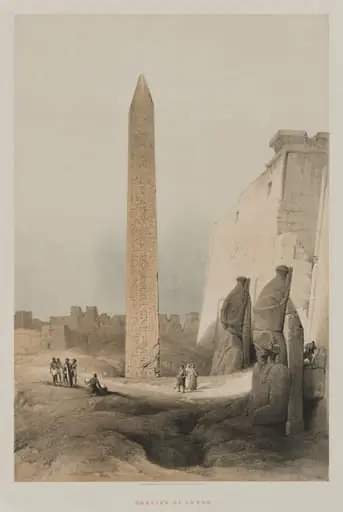 Egypt and Nubia, Volume I: Luxor
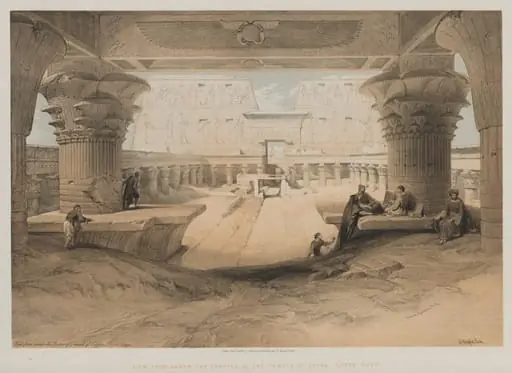 Egypt and Nubia, Volume I: View from Under the Portico of the Temple of Edfou, Upper Egypt
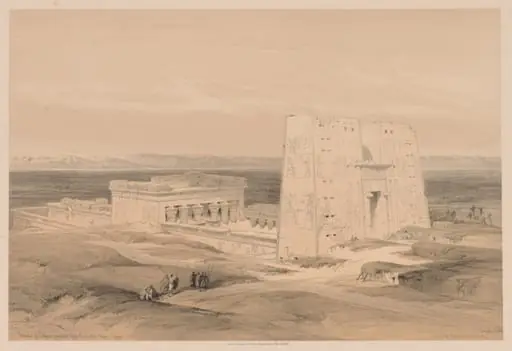 Egypt and Nubia: Volume I - No. 34, Temple of Edfou. Ancient Appolinopolis, Upper Egypt
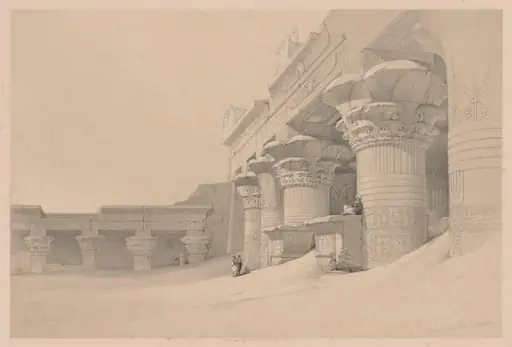 Egypt and Nubia: Volume I - No. 10, Edfou
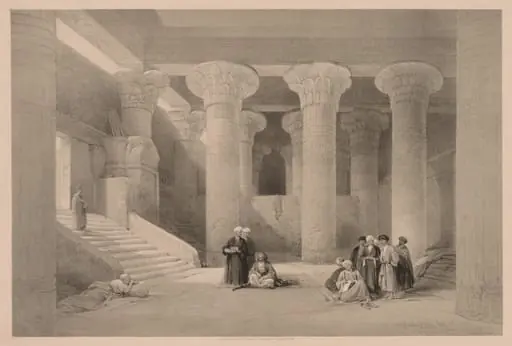 Egypt and Nubia: Volume I - No. 24, Temple at Esneh
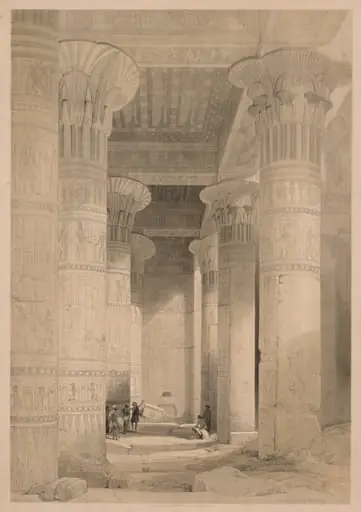 Egypt and Nubia: Volume I - Frontispiece, View under the Grand Portico, Philae
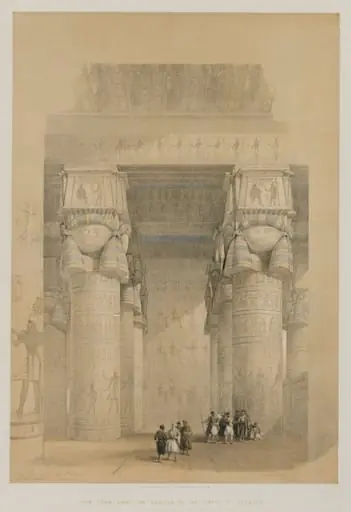 Egypt and Nubia, Volume II: View from Under the Portico of the Temple of Dendera
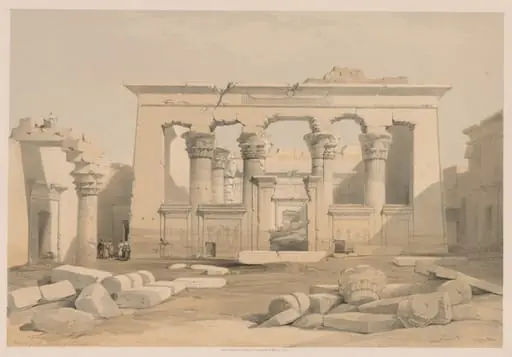 Egypt and Nubia: Volume I - No. 28, Portico of the Temple of Kalabshi
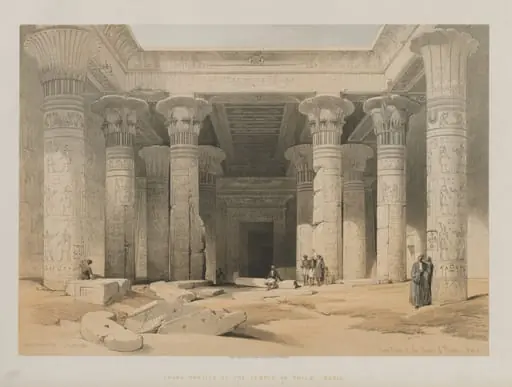 Egypt and Nubia, Volume I: Grand Portico of the Temple of Philae, Nubia
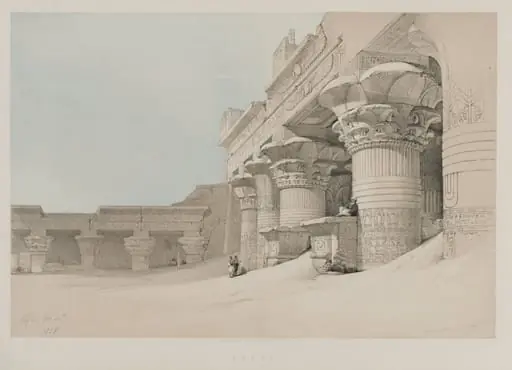 Egypt and Nubia, Volume II: Edfou
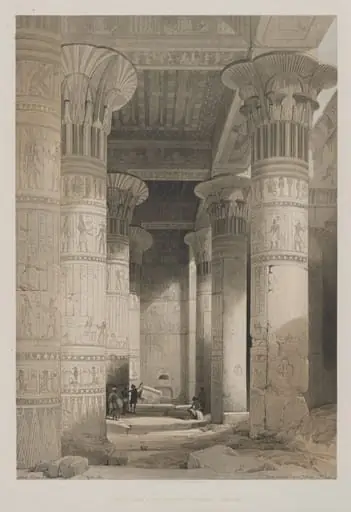 Egypt and Nubia, Volume I: View Under the Grand Portico of the Temple, Philae
 Egypt and Nubia, Volume I: Portico of the Temple of Kalabshe
 Egypt and Nubia, Volume I: Temple at Esneh