Artwork
Egypt and Nubia: Volume I - No. 38, Ruins of Karnak
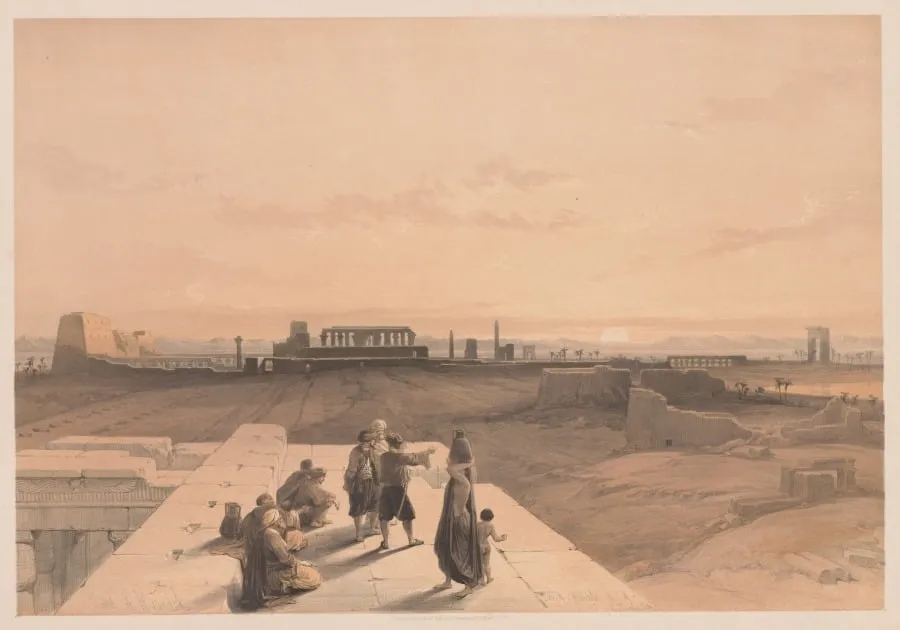
Egypt and Nubia: Volume I - No. 38, Ruins of Karnak is a print by the Romanticist artist Louis Haghe. It dates from 1838 and is held in the collection of the Cleveland Museum of Art. Created in 1838, this lithographic print portrays the weathered stone complex of Karnak in Egypt.
About this work
In the background, you can see big, worn-down temple walls and some tall, broken columns.
This painting shows a group of people standing near ancient stone ruins. The sky is pale and hazy, with a few clouds. In the background, you can see big, worn-down temple walls and some tall, broken columns. The people are dressed in long robes and hats, looking at the ruins or walking around.
The artist added tiny details like the folds in the robes and the texture of the stones. This was made in 1838, when artists often traveled to faraway places to draw ruins.
Look up Romanticism next to see how this style focused on grand, mysterious places.
Overview
Created in 1838, this lithographic print portrays the weathered stone complex of Karnak in Egypt. The composition centers on a small group of figures in flowing garments, positioned before the crumbling temple walls and fragmented columns that dominate the background. A muted sky with soft clouds adds a distant, atmospheric quality, while the ruins themselves are rendered with careful attention to texture and scale.
Subject & Meaning
The image captures a moment of contemplation as travelers examine the remnants of an ancient sacred site. The presence of the robed figures suggests an 19th‑century audience, inviting viewers to consider the passage of time and the enduring allure of monumental architecture now in decay. The work functions both as a visual record and as a romanticized glimpse into a distant past.
Technique & Style
Executed as a lithograph, the piece demonstrates the fine line work characteristic of early British lithography, with delicate hatching to convey stone surface and fabric folds. Subtle tonal gradations achieve a hazy atmospheric effect, while the precise rendering of architectural details reflects the artist’s training in watercolor and his meticulous approach to rendering foreign landscapes.
History & Provenance
The print was produced by Louis Haghe, a Belgian‑born artist who settled in London and co‑founded the influential Day & Haghe lithographic firm. It forms part of a larger series titled "Egypt and Nubia," intended to document notable sites across the region for a European audience. Original copies were circulated among collectors and institutions interested in antiquarian travel literature.
Context
Emerging during the height of Romantic fascination with exotic locales, the work aligns with contemporary trends that emphasized the sublime and the mysterious in ancient ruins. Its production coincided with a period of increased archaeological exploration in Egypt, and the image contributed to the growing European appetite for visual accounts of distant civilizations.
Artist & collection
Artist
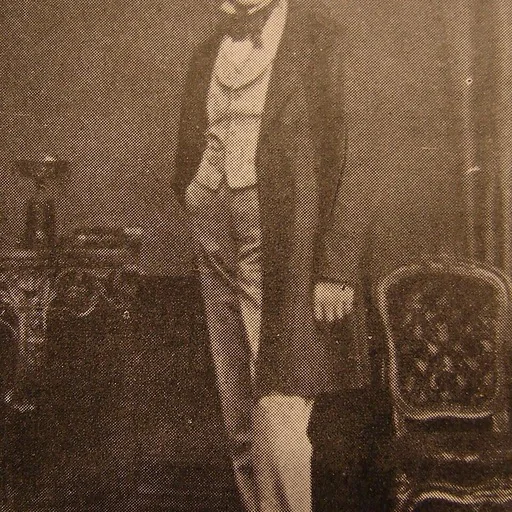
Louis Haghe (17 March 1806 – 9 March 1885) was a lithographer and watercolourist from the Netherlands and then the United Kingdom.

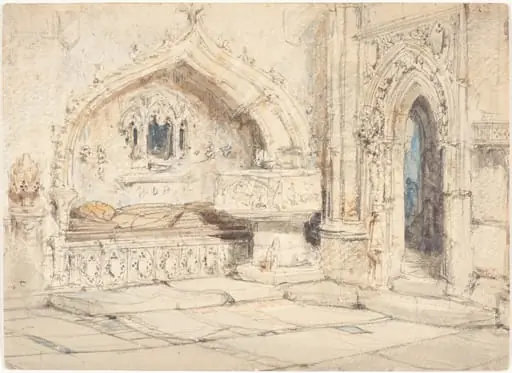 Interior of a Church with a Wall Tomb and Medieval Font
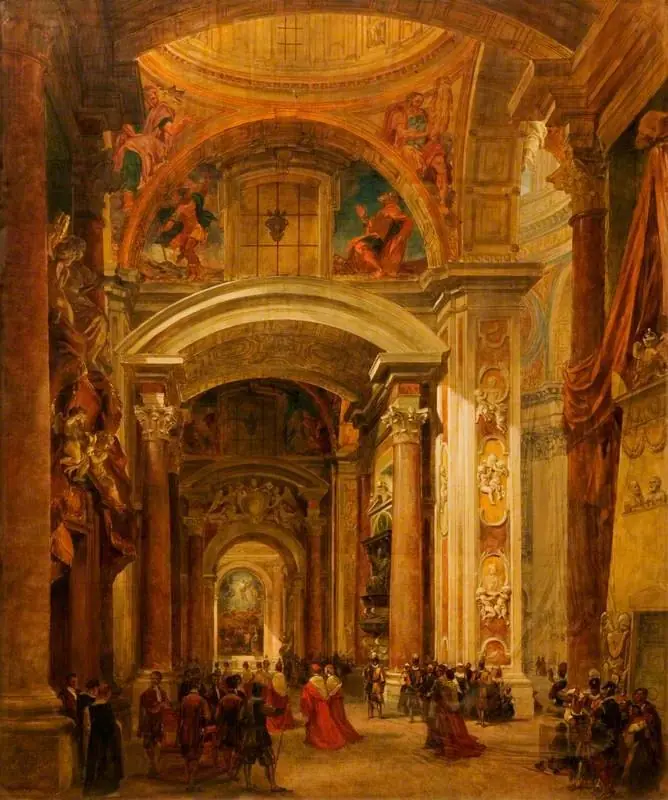 Interior of St Peter's, Rome
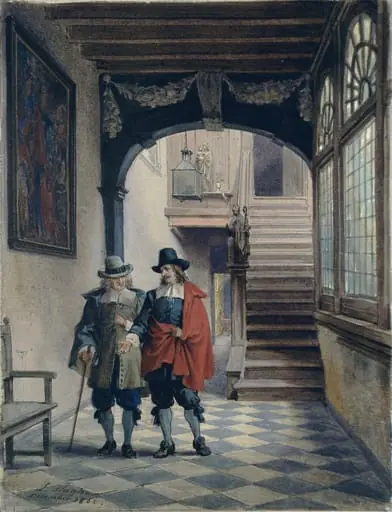 The Corridor, Brewer's Hall, Antwerp
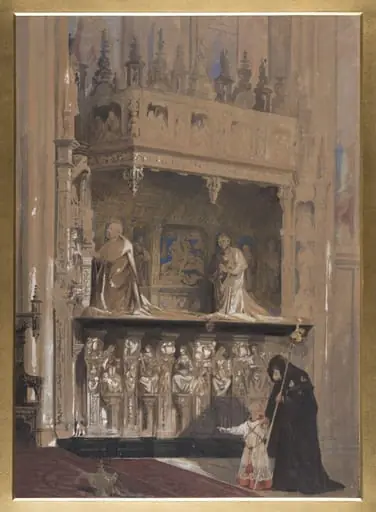 Monument of the Cardinald D'Amboise in Rouen Cathedral
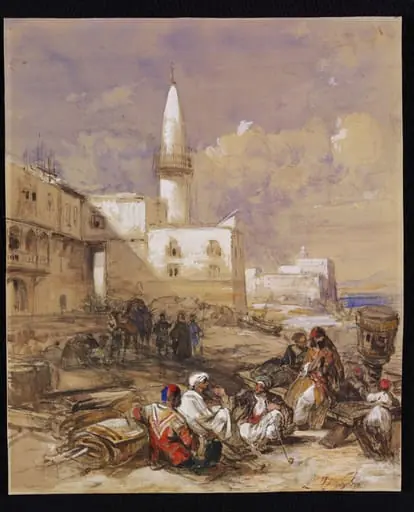 The Quay at Suez
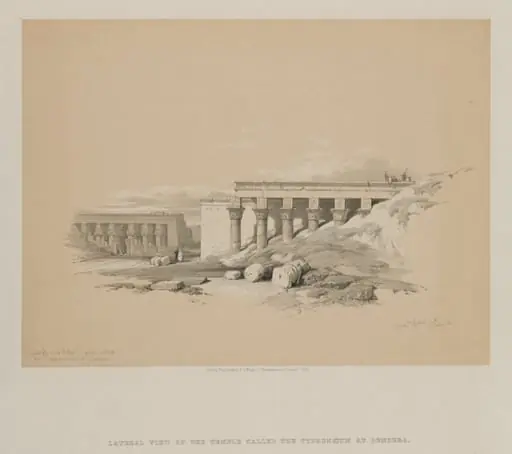 Egypt and Nubia, Volume II: Lateral View of the Temple called The Typhonoeum at Dendera
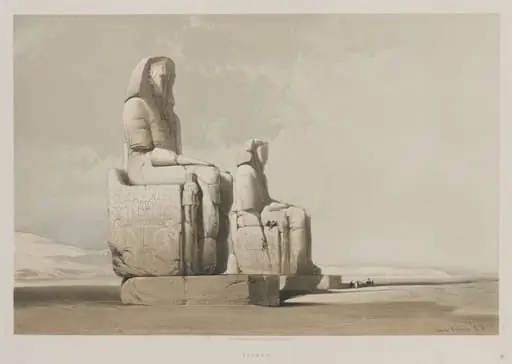 Egypt and Nubia, Volume I: Thebes
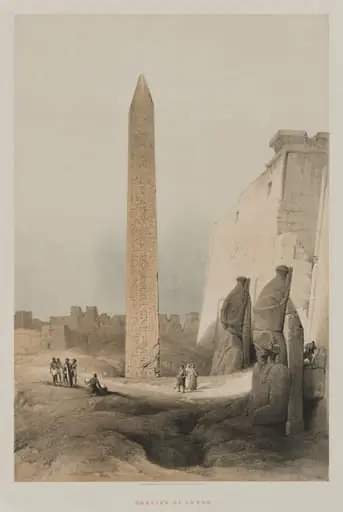 Egypt and Nubia, Volume I: Luxor
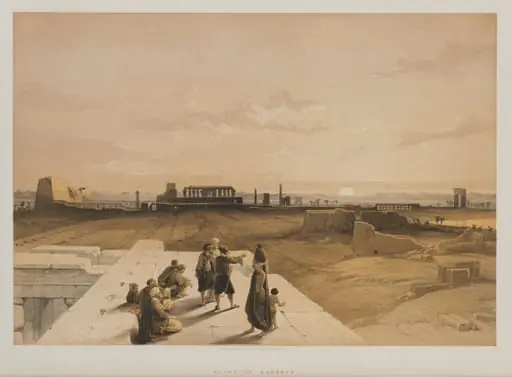 Egypt and Nubia, Volume I: Ruins of Karnac
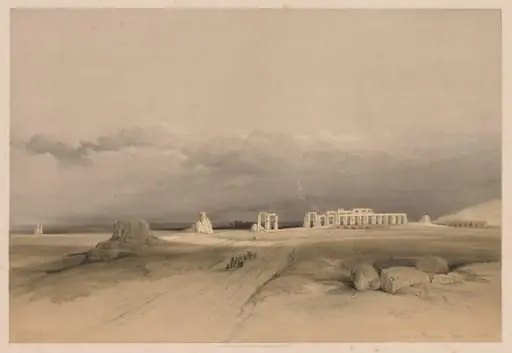 Egypt and Nubia: Volume II - No. 8, Ruins of the Memnonium, Thebes
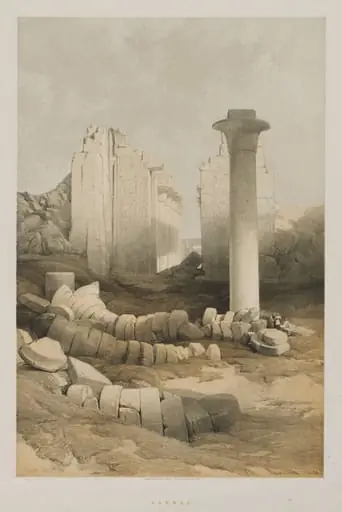 Egypt and Nubia, Volume II: Karnak
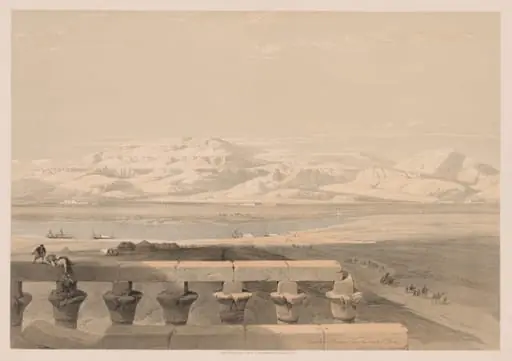 Egypt and Nubia: Volume I - No. 30, Lybian Chain of Mountains from the Temple of Luxor
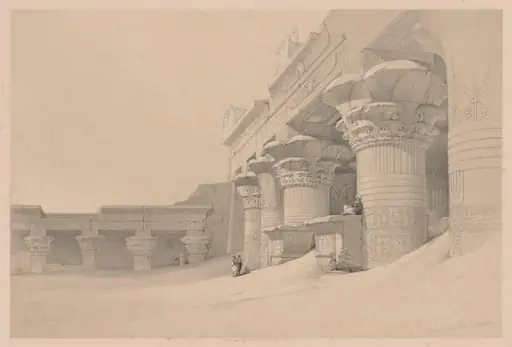 Egypt and Nubia: Volume I - No. 10, Edfou
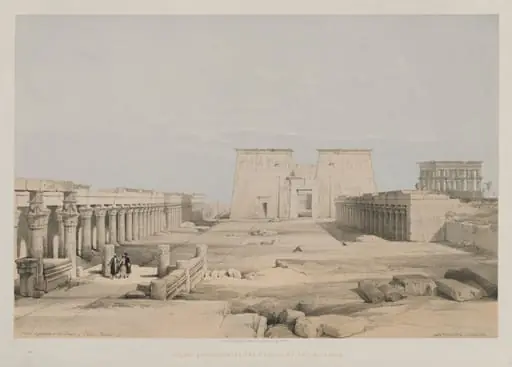 Egypt and Nubia, Volume I: Grand Approach to the Temple of Philae, Nubia
 Egypt and Nubia, Volume I: General View of the Island of Philae, Nubia
 Egypt and Nubia: Volume II - No. 42, Ruins of Kom Ombo