Artwork
Egypt and Nubia: Volume I - No. 4, Slave Boats on the Nile, View Looking Towards the Pyramids of Dashour and Saccara
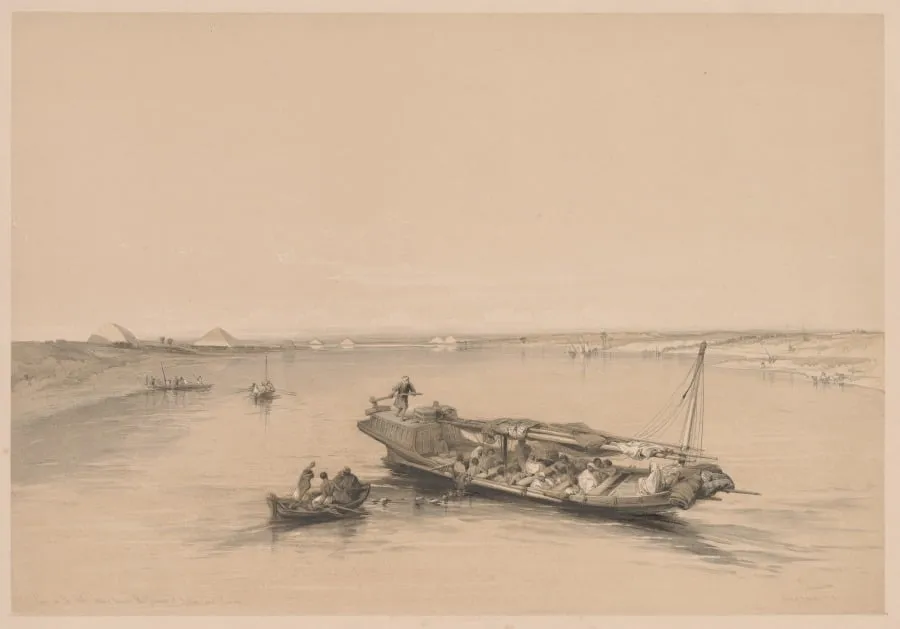
Egypt and Nubia: Volume I - No. 4, Slave Boats on the Nile, View Looking Towards the Pyramids of Dashour and Saccara is a print by the Romanticist artist Louis Haghe. It dates from 1838 and is held in the collection of the Cleveland Museum of Art.
About this work
Overview
Haghe, a Belgian-born artist based in London, specialized in lithography and watercolor, and co-founded the influential printing firm Day & Haghe.
Created in 1838 by Louis Haghe, this lithograph is the fourth plate in a multi-volume series documenting the landscapes of Egypt and Nubia. Haghe, a Belgian-born artist based in London, specialized in lithography and watercolor, and co-founded the influential printing firm Day & Haghe. The print captures a quiet moment along the Nile, framing ancient monuments within a contemporary scene of river transport, reflecting the period’s growing European engagement with Egypt’s material heritage.
Subject & Meaning
The image portrays laborers managing riverboats near the pyramids of Dashour and Saqqara, emphasizing human activity against the enduring presence of ancient architecture. Rather than romanticizing the past, the scene presents a functional, unidealized view of Nile travel, with enslaved workers as part of the landscape. This juxtaposition underscores the coexistence of antiquity and 19th-century social realities, offering a documentary perspective rather than a mythologized one.
Technique & Style
Haghe employed lithography to achieve fine tonal gradations and precise detail, characteristic of early Victorian printmaking. The composition uses linear perspective to draw the eye toward the pyramids, while the river and boats anchor the foreground in realism. Unlike the soft blending of sfumato, this work relies on clean lines and controlled shading, typical of lithographic reproduction, prioritizing clarity and topographical accuracy over atmospheric effect.
History & Provenance
The print was produced as part of a commercial series commissioned to satisfy European curiosity about Egypt following Napoleon’s campaign and the rise of Egyptology. Published by Day & Haghe in London, it circulated among collectors and institutions. Its survival in museum and library collections attests to its role as a visual record, valued for its fidelity to observed scenes rather than imaginative interpretation.
Context
In the 1830s, European travelers and scholars increasingly documented Egypt’s monuments as archaeological interest grew. This print emerged amid a wave of illustrated publications that sought to systematize knowledge of the region. While often framed as scholarly, such works also reflected colonial attitudes, portraying local labor as part of the scenery. Haghe’s image aligns with this trend, offering a precise yet detached view of a changing landscape.
Legacy
The plate remains a reference for historians studying 19th-century visual representations of Egypt. Its technical quality and observational detail make it a valuable artifact of early archaeological illustration. Though not widely known today, it contributed to the visual lexicon of Egyptology and influenced later documentary practices in art and anthropology.
Artist & collection
Artist
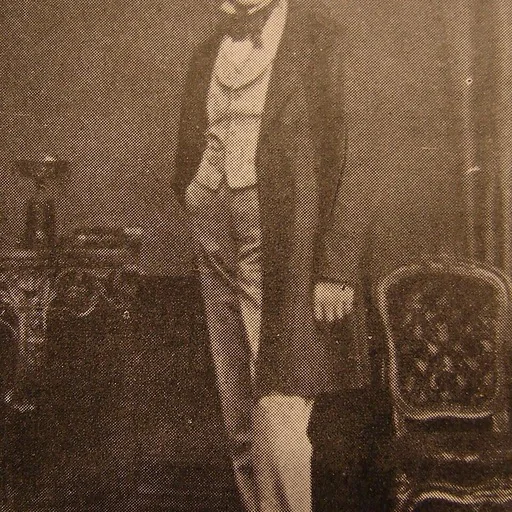
Louis Haghe (17 March 1806 – 9 March 1885) was a lithographer and watercolourist from the Netherlands and then the United Kingdom.

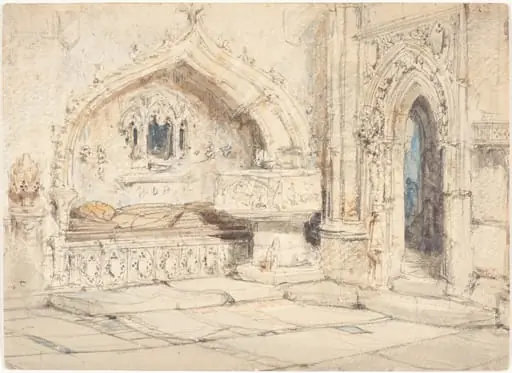 Interior of a Church with a Wall Tomb and Medieval Font
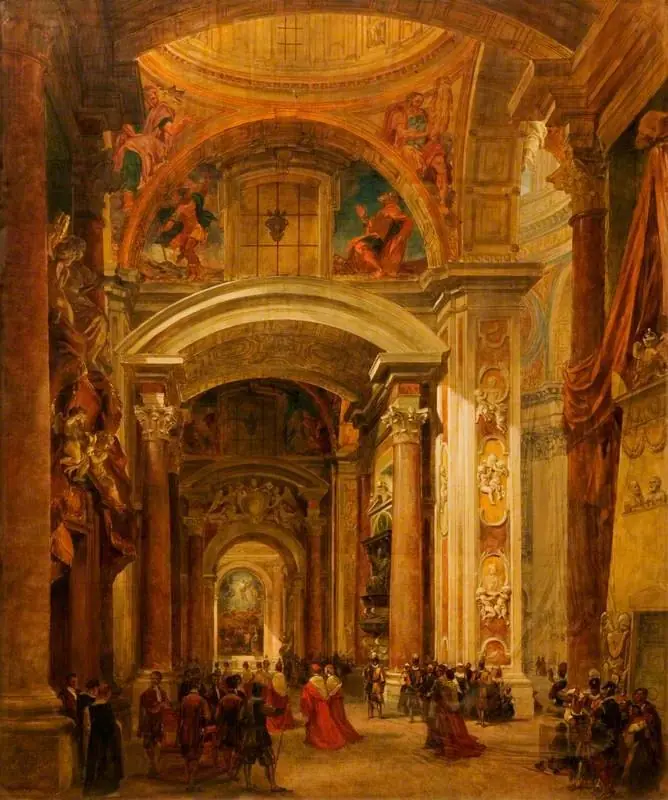 Interior of St Peter's, Rome
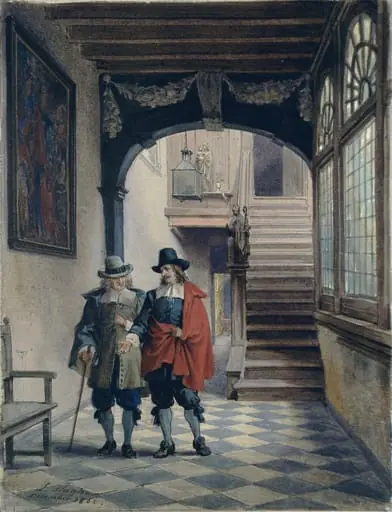 The Corridor, Brewer's Hall, Antwerp
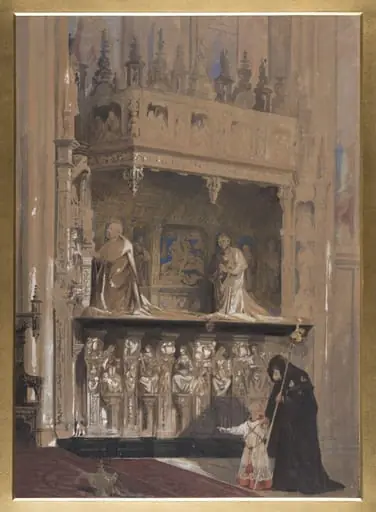 Monument of the Cardinald D'Amboise in Rouen Cathedral
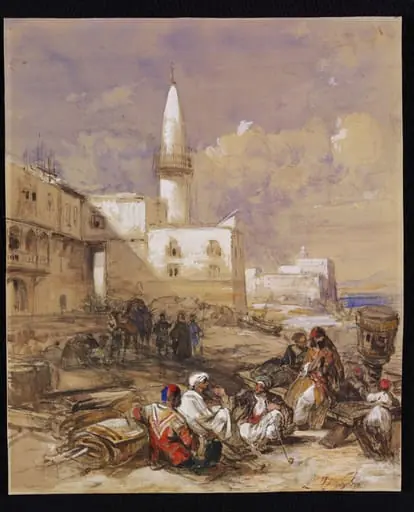 The Quay at Suez
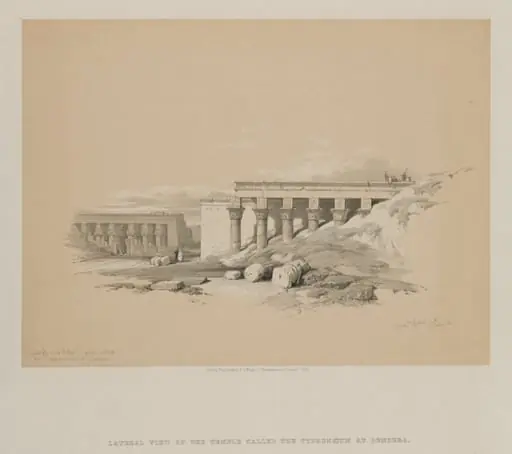 Egypt and Nubia, Volume II: Lateral View of the Temple called The Typhonoeum at Dendera
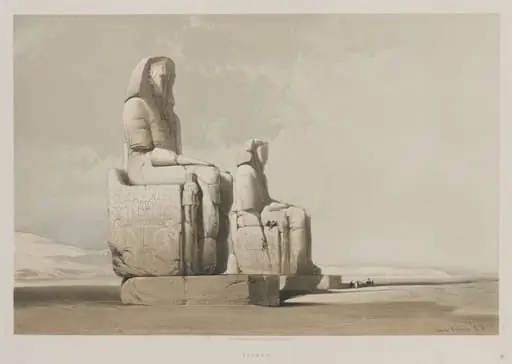 Egypt and Nubia, Volume I: Thebes
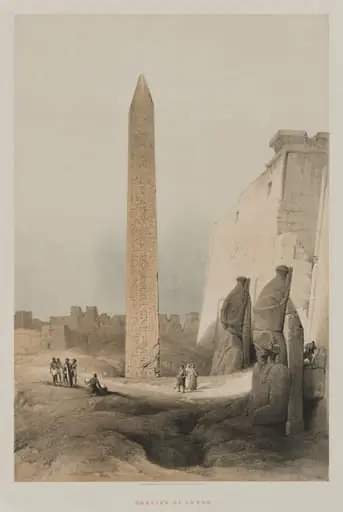 Egypt and Nubia, Volume I: Luxor
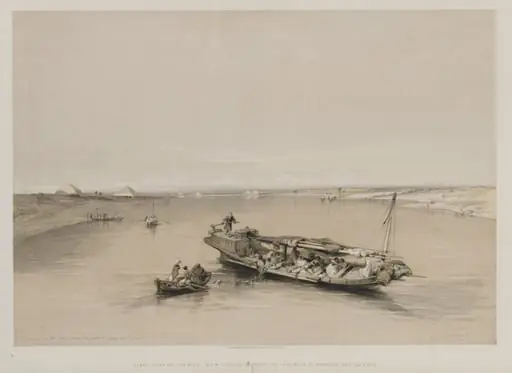 Egypt and Nubia, Volume I: View on the Nile Looking Towards the Pyramids of Dashour and Saccara
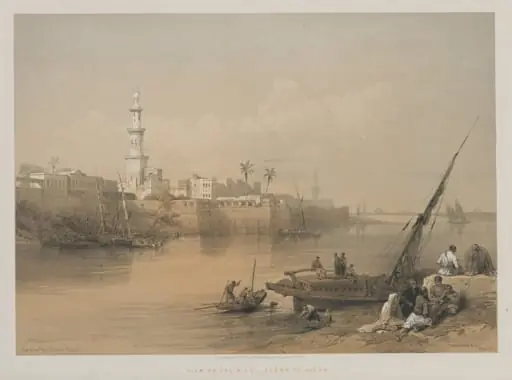 Egypt and Nubia, Volume III: View on the Nile, Ferry to Gizeh
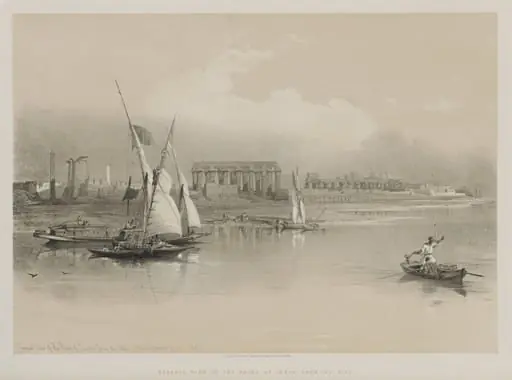 Egypt and Nubia, Volume I: General View of the Ruins of Luxor, From the Nile
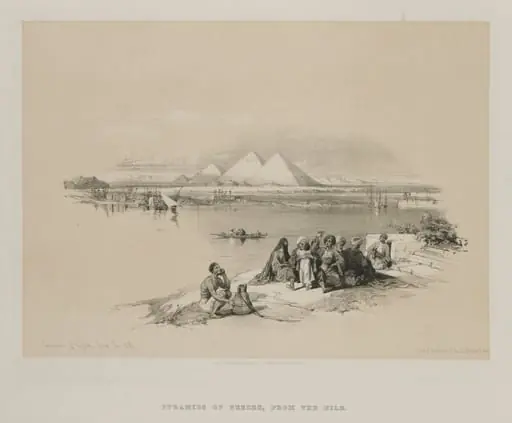 Egypt and Nubia, Volume I: Pyramids of Geezeh, from the Nile
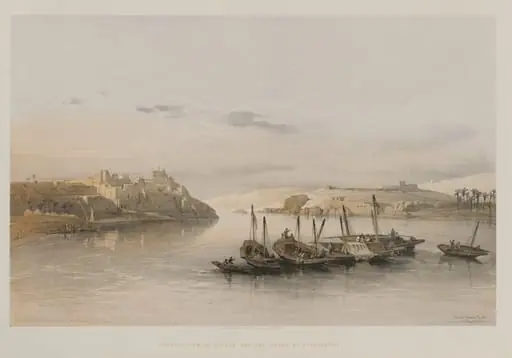 Egypt and Nubia, Volume II: General View of Esouan and the Island of Elephantine
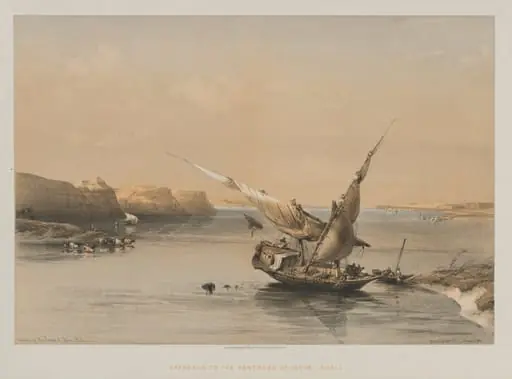 Egypt and Nubia, Volume II: Approach to the Fortress of Ibrim, Nubia
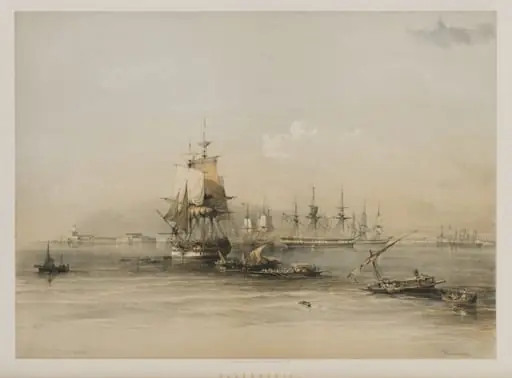 Egypt and Nubia, Volume III: Alexandria
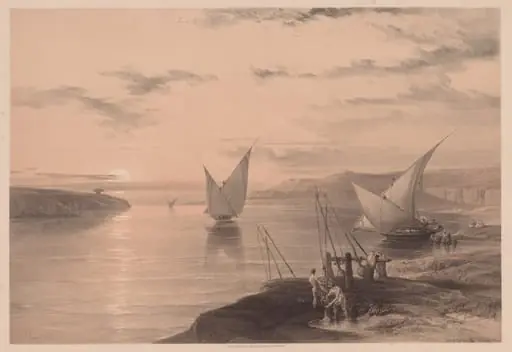 Egypt and Nubia: Volume I - No. 12, Hadjar Silsilis
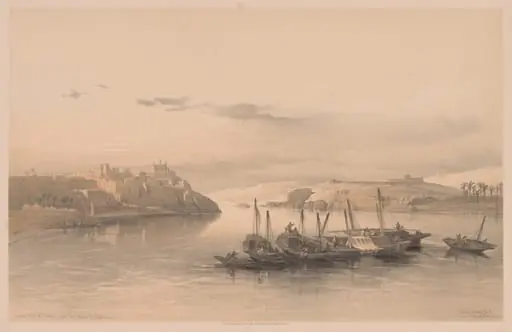 Egypt and Nubia: Volume II - No. 28, General View of Asouan and the Island of Elephantine