Artwork
Egypt and Nubia, Volume I: View on the Nile Looking Towards the Pyramids of Dashour and Saccara
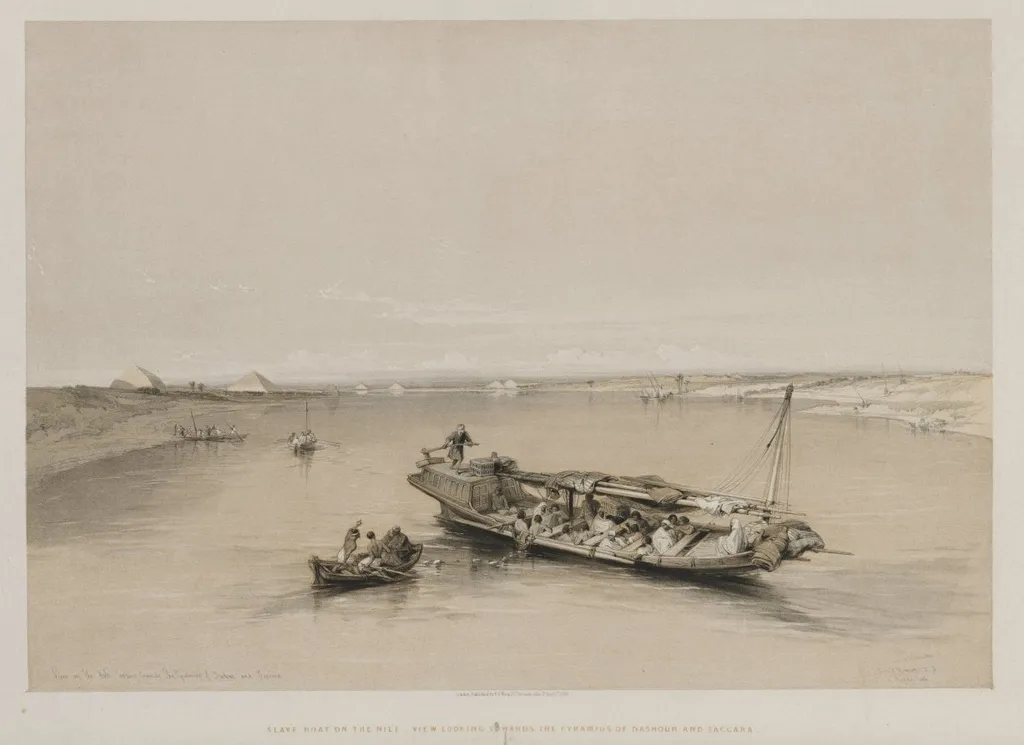
Egypt and Nubia, Volume I: View on the Nile Looking Towards the Pyramids of Dashour and Saccara is a print by the Romanticist artist Louis Haghe. It dates from 1846 and is held in the collection of the Cleveland Museum of Art.
About this work
Overview
Haghe, a Belgian-born artist based in London, specialized in lithography and watercolor, and co-founded the influential firm Day & Haghe.
Created in 1846 by Louis Haghe, this lithograph is part of a multi-volume series documenting the landscapes of Egypt and Nubia. Haghe, a Belgian-born artist based in London, specialized in lithography and watercolor, and co-founded the influential firm Day & Haghe. The print captures a stretch of the Nile River, emphasizing riverine activity rather than monumental architecture, reflecting a broader interest in everyday life during 19th-century travel documentation.
Subject & Meaning
The scene centers on the Nile’s daily rhythms: a large flatboat laden with passengers, a smaller rowboat nearby, and other vessels scattered across the water. The pyramids of Dahshur and Saqqara, referenced in the title, are absent from the composition. Instead, Haghe highlights human movement and transport, suggesting a focus on the lived experience of the river as a vital artery of commerce and travel, rather than its ancient monuments.
Technique & Style
Haghe employed lithography to achieve fine tonal gradations and precise detail, characteristic of his technical mastery. The composition uses a low horizon to emphasize the expanse of water and sky, with careful rendering of boats, figures, and the flat, undulating shoreline. The absence of dramatic lighting or idealized forms aligns with a documentary approach, prioritizing observation over romantic embellishment.
History & Provenance
The print was produced as part of a commercial publication series commissioned for European audiences interested in the Near East. Haghe’s work benefited from the growing demand for illustrated travel accounts following Napoleon’s Egyptian campaign. Though the original series was widely distributed, individual prints like this one are now held in institutional collections, valued for their historical record rather than artistic novelty.
Context
In the mid-19th century, European interest in Egypt intensified due to archaeological discoveries and improved travel access. Artists and publishers sought to document the region’s geography and culture, often prioritizing scenes of local life over ruins. Haghe’s focus on river traffic reflects this trend, positioning the Nile not as a relic-lined corridor but as a functioning, inhabited space.
Legacy
Haghe’s lithographs contributed to the visual archive of Egypt during a period of increasing Western engagement. While later scholarship often emphasized monumental architecture, his work preserves a quieter, more quotidian perspective. These images remain valuable for understanding how 19th-century viewers encountered and interpreted the Egyptian landscape beyond its iconic symbols.
Artist & collection
Artist
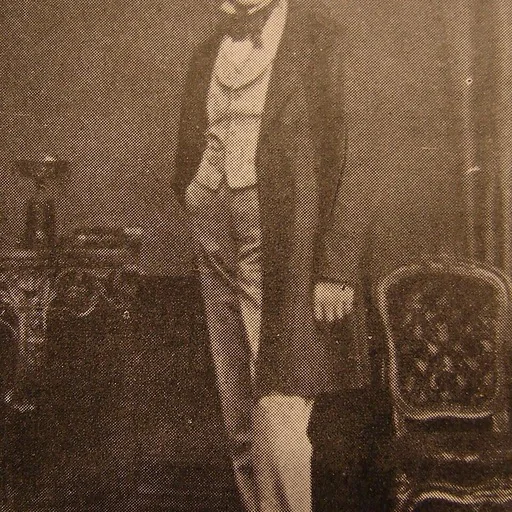
Louis Haghe (17 March 1806 – 9 March 1885) was a lithographer and watercolourist from the Netherlands and then the United Kingdom.

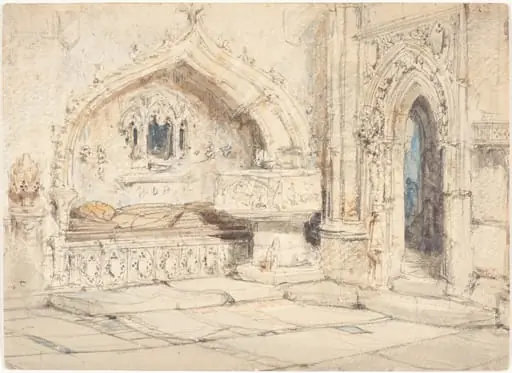 Interior of a Church with a Wall Tomb and Medieval Font
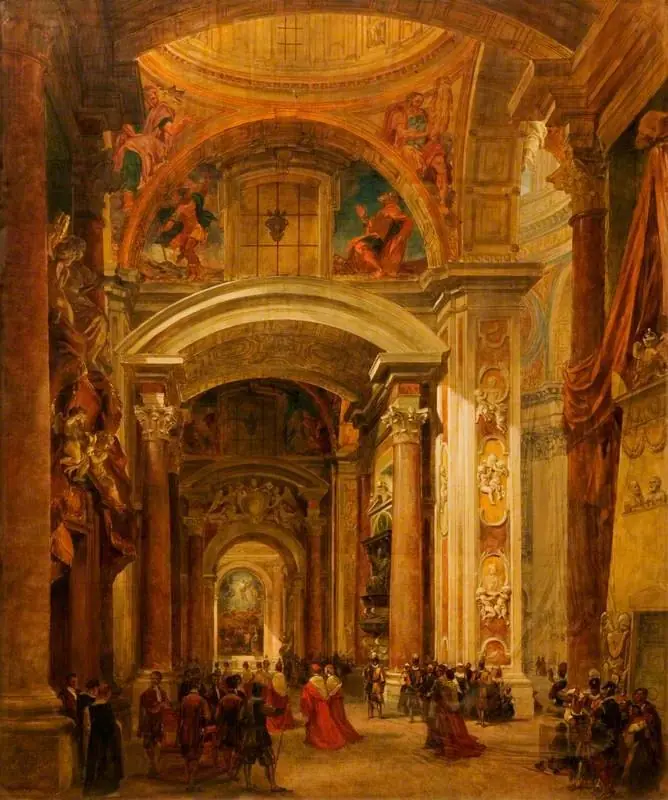 Interior of St Peter's, Rome
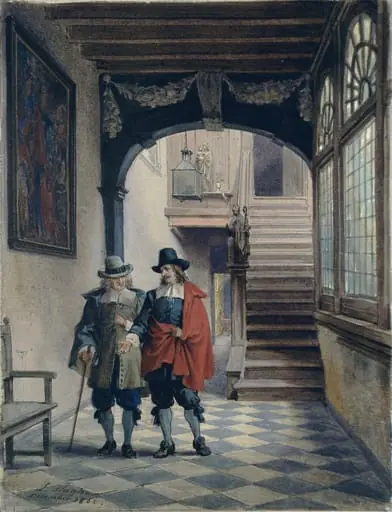 The Corridor, Brewer's Hall, Antwerp
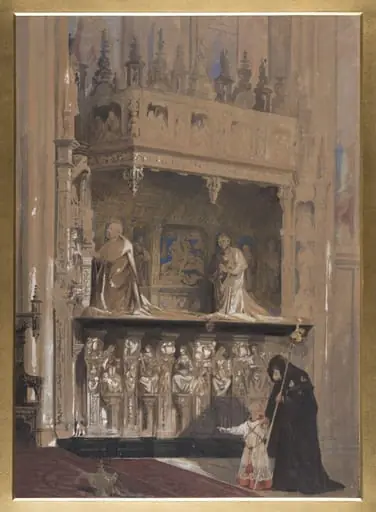 Monument of the Cardinald D'Amboise in Rouen Cathedral
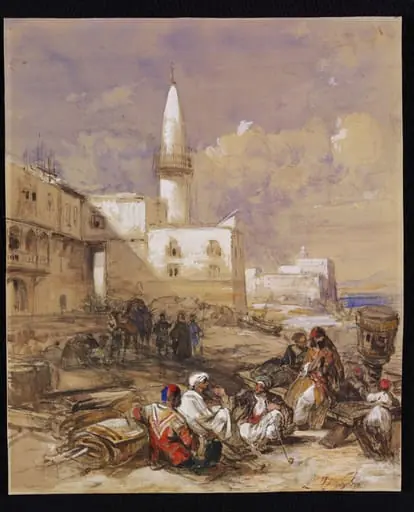 The Quay at Suez
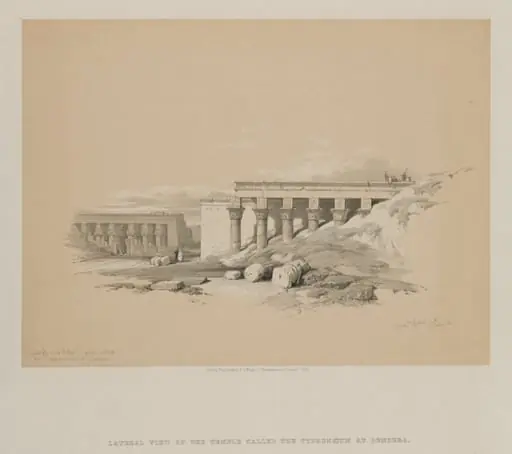 Egypt and Nubia, Volume II: Lateral View of the Temple called The Typhonoeum at Dendera
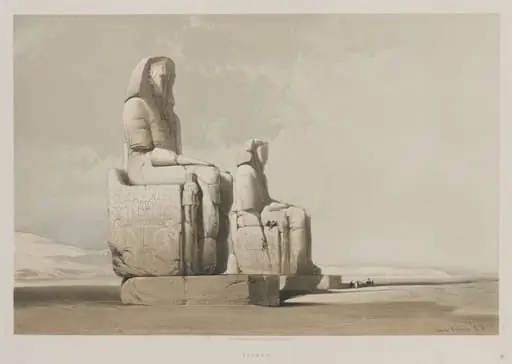 Egypt and Nubia, Volume I: Thebes
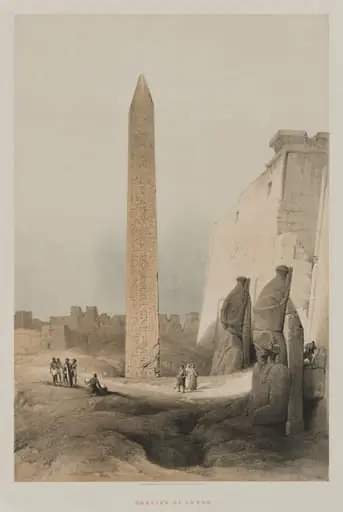 Egypt and Nubia, Volume I: Luxor
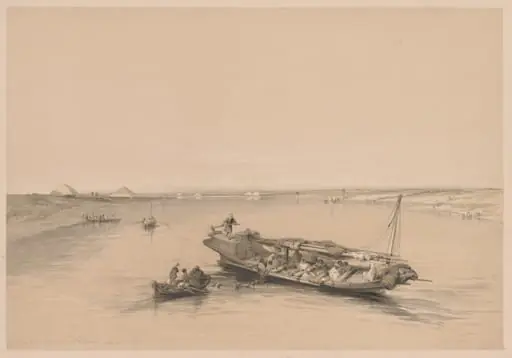 Egypt and Nubia: Volume I - No. 4, Slave Boats on the Nile, View Looking Towards the Pyramids of Dashour and Saccara
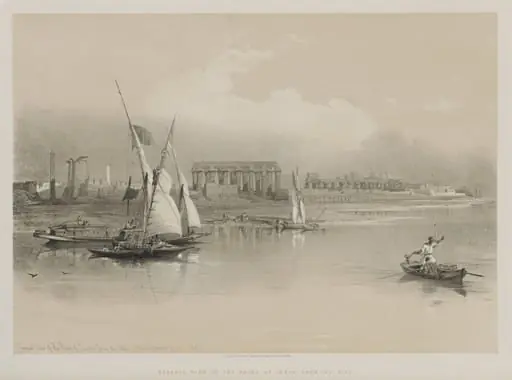 Egypt and Nubia, Volume I: General View of the Ruins of Luxor, From the Nile
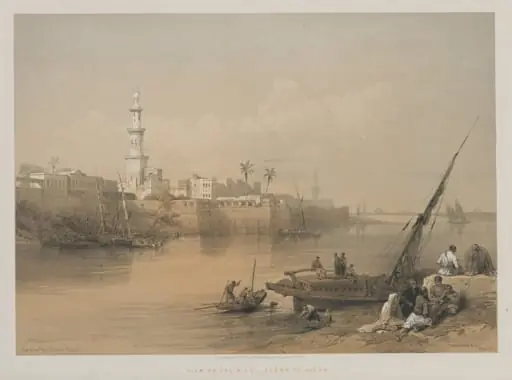 Egypt and Nubia, Volume III: View on the Nile, Ferry to Gizeh
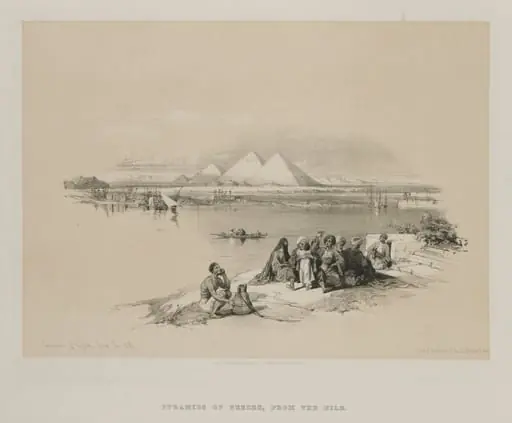 Egypt and Nubia, Volume I: Pyramids of Geezeh, from the Nile
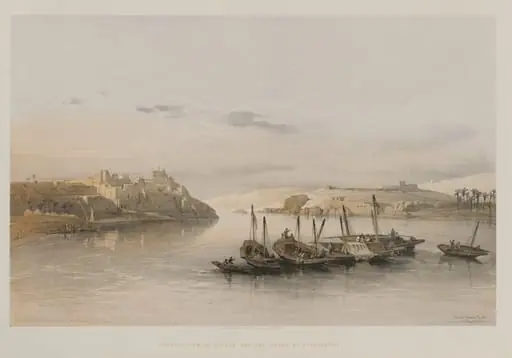 Egypt and Nubia, Volume II: General View of Esouan and the Island of Elephantine
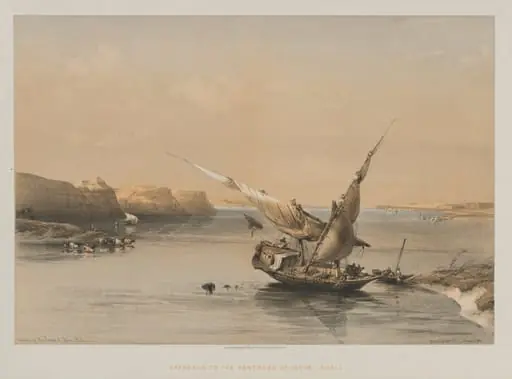 Egypt and Nubia, Volume II: Approach to the Fortress of Ibrim, Nubia
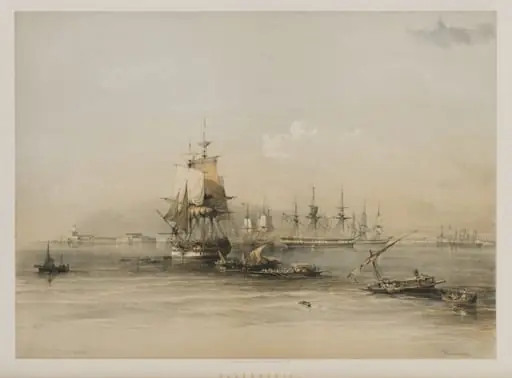 Egypt and Nubia, Volume III: Alexandria
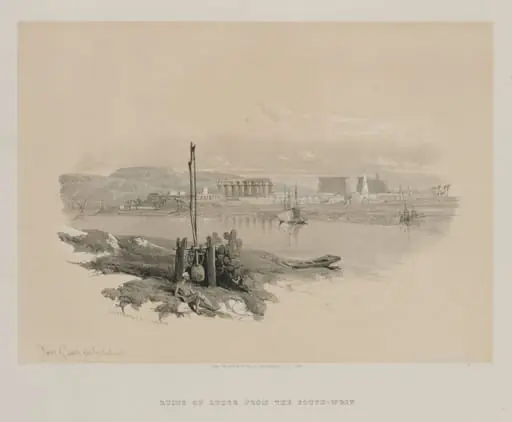 Egypt and Nubia, Volume I: Ruins of Luxor from the South-West
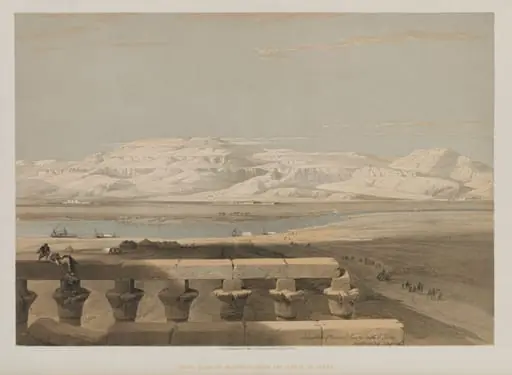 Egypt and Nubia, Volume I: Libyan Chain of Mountains, from the Temple of Luxor