Artwork
Egypt and Nubia, Volume I: Obelisk at Alexandria, Commonly called Cleopatra's Needle
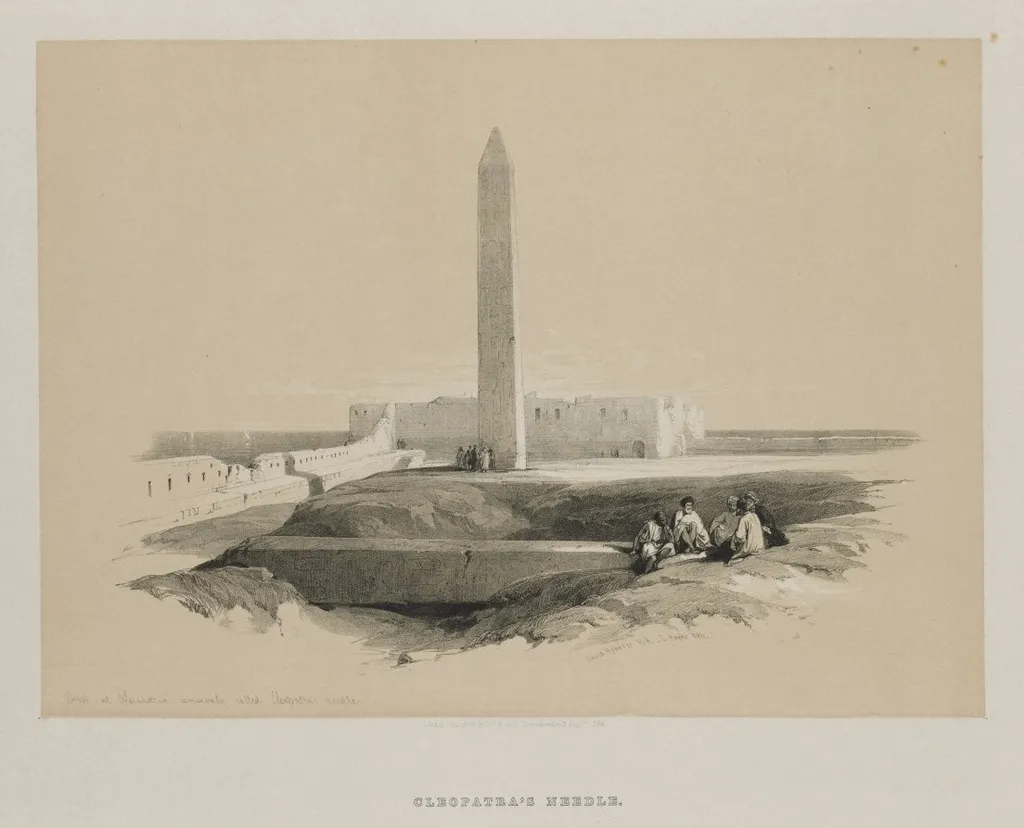
Egypt and Nubia, Volume I: Obelisk at Alexandria, Commonly called Cleopatra's Needle is a print by the Romanticist artist Louis Haghe. It dates from 1846 and is held in the collection of the Cleveland Museum of Art.
About this work
Overview
As a British lithographer of Belgian descent, Haghe specialized in topographical prints, using the medium to capture architectural subjects with precision.
Created in 1846 by Louis Haghe, this lithograph is part of a larger illustrated series documenting ancient monuments in Egypt and Nubia. As a British lithographer of Belgian descent, Haghe specialized in topographical prints, using the medium to capture architectural subjects with precision. This image, one of the earliest systematic visual records of the obelisk in Alexandria, reflects the 19th-century European interest in documenting Egypt’s antiquities through careful, restrained draftsmanship.
Subject & Meaning
The print centers on the obelisk known as Cleopatra’s Needle, a 2,000-year-old granite pillar originally erected in Heliopolis and later moved to Alexandria. Surrounding figures—small, scattered, and unremarkable—suggest daily life unfolding near the monument rather than ceremonial reverence. The absence of grandeur or narrative drama shifts focus to the obelisk’s endurance amid quiet, unidealized surroundings, emphasizing time’s passage over mythic association.
Technique & Style
Haghe employed soft, delicate lithographic lines to render the obelisk and its environment in muted grays and browns, avoiding bold contrasts or color. The composition prioritizes tonal gradation and subtle texture, capturing the uneven ground, sparse vegetation, and weathered stonework with quiet realism. This restrained aesthetic aligns with topographical traditions, valuing accuracy and atmospheric tone over dramatic embellishment.
History & Provenance
The print was produced as the first volume of a multi-part series commissioned to record Egypt’s monuments for a European audience. Haghe, working with his firm Day & Haghe, relied on sketches made during travels in the region. The work was published in London, part of a broader wave of illustrated travel literature following Napoleon’s Egyptian campaign. Its production coincided with growing scholarly interest in Egyptology and the movement of antiquities to Western collections.
Context
In the mid-19th century, European interest in Egypt was fueled by archaeological expeditions and the rise of Egyptology as a discipline. While many artists romanticized ancient sites, Haghe’s approach was more documentary, reflecting the influence of scientific observation. His depiction of the obelisk among ordinary scenes contrasts with idealized portrayals common in academic art, offering a grounded view of antiquity in its contemporary setting.
Legacy
Haghe’s lithograph contributed to the visual archive of Egyptian monuments before widespread photography. Though not widely exhibited today, it remains a significant example of early topographical printmaking, illustrating how 19th-century artists balanced aesthetic restraint with ethnographic intent. The work preserves a moment in the obelisk’s history before modern urban development altered its surroundings.
Artist & collection
Artist
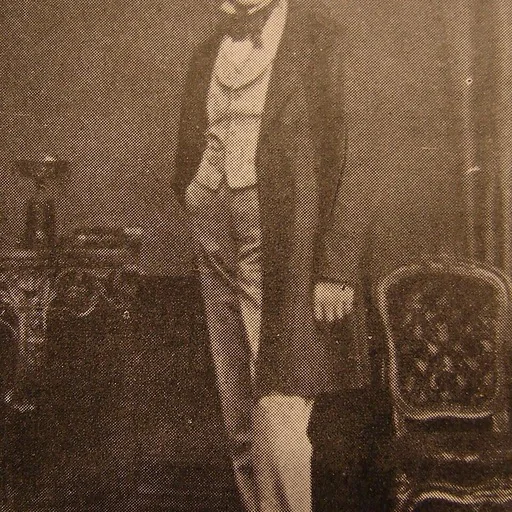
Louis Haghe (17 March 1806 – 9 March 1885) was a lithographer and watercolourist from the Netherlands and then the United Kingdom.

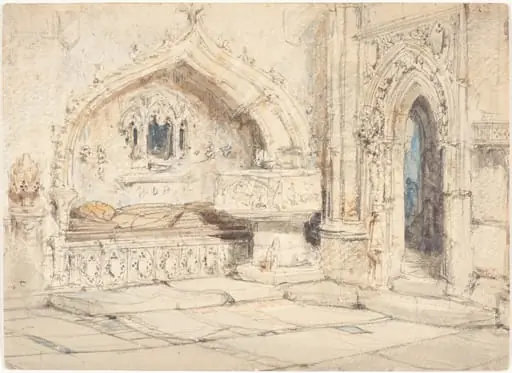 Interior of a Church with a Wall Tomb and Medieval Font
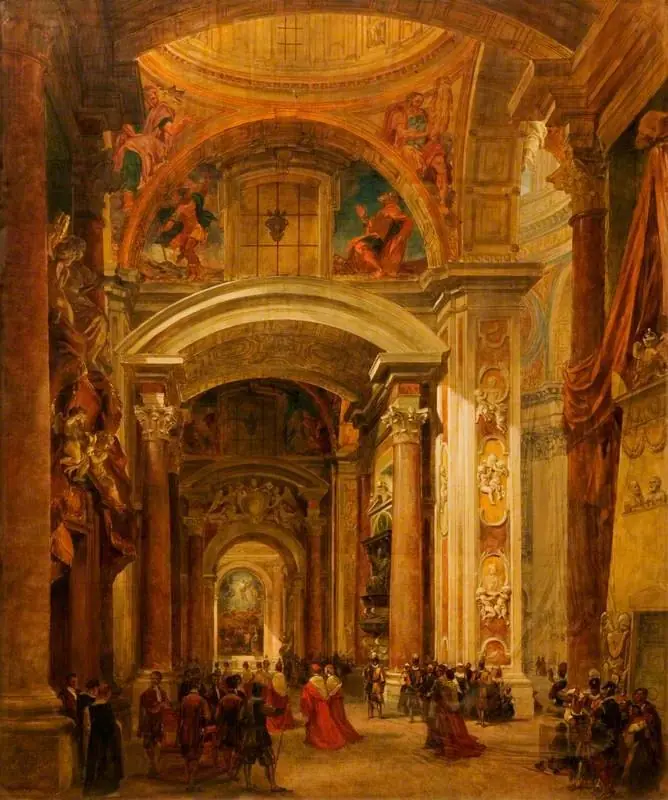 Interior of St Peter's, Rome
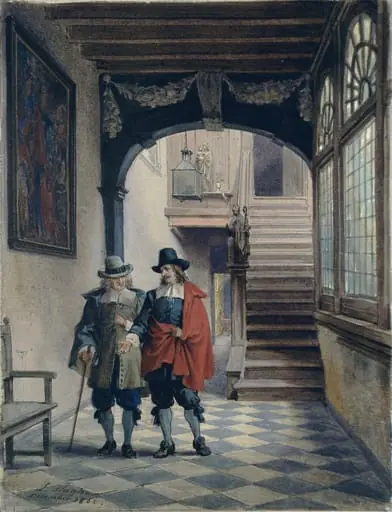 The Corridor, Brewer's Hall, Antwerp
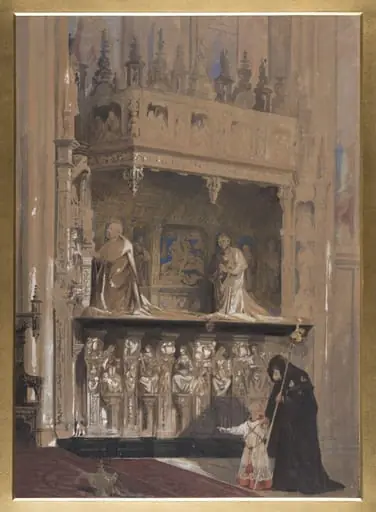 Monument of the Cardinald D'Amboise in Rouen Cathedral
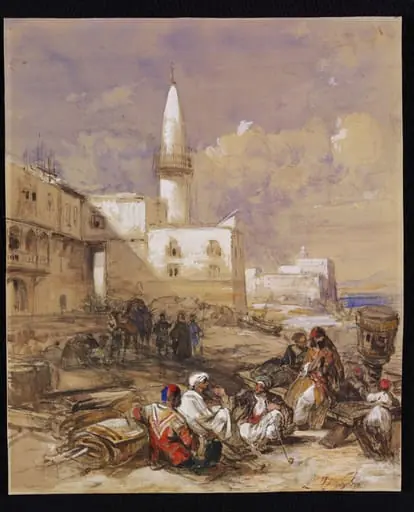 The Quay at Suez
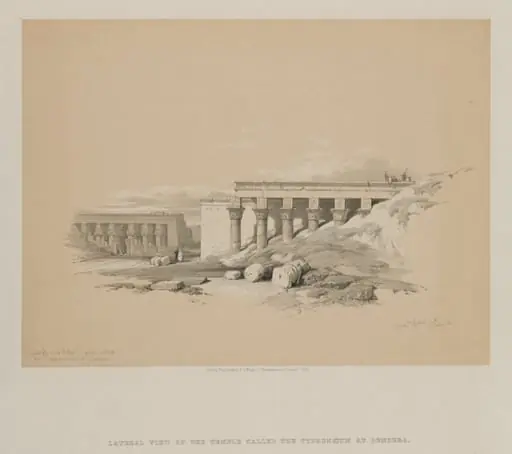 Egypt and Nubia, Volume II: Lateral View of the Temple called The Typhonoeum at Dendera
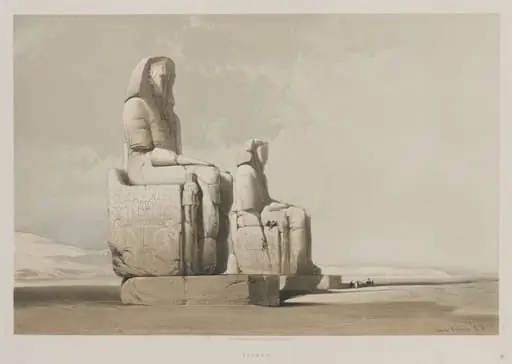 Egypt and Nubia, Volume I: Thebes
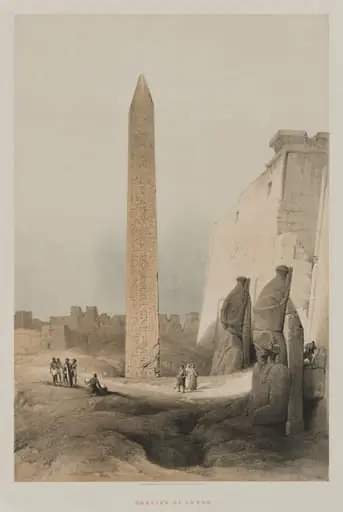 Egypt and Nubia, Volume I: Luxor
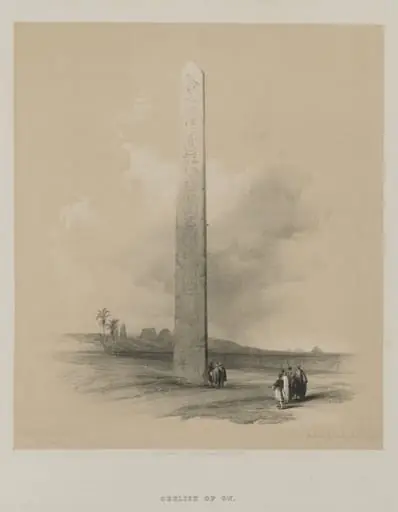 Egypt and Nubia, Volume II: Obelisk of Heliopolis
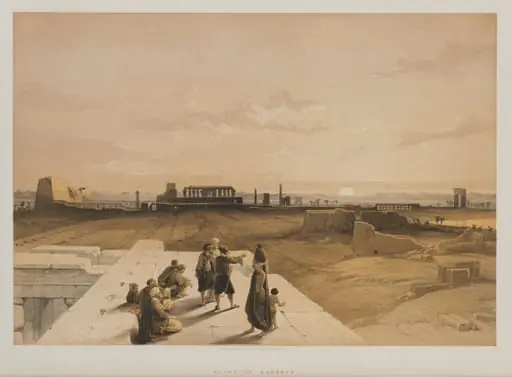 Egypt and Nubia, Volume I: Ruins of Karnac
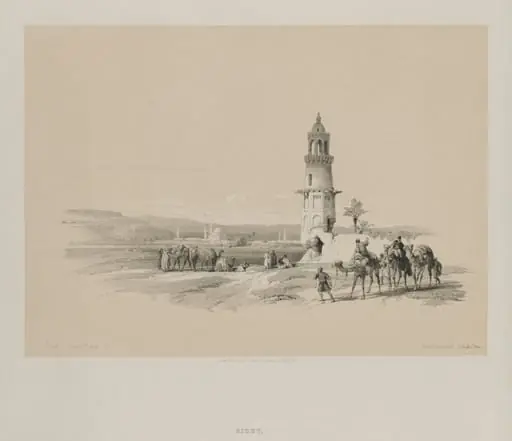 Egypt and Nubia, Volume I: Siout - Upper Egypt
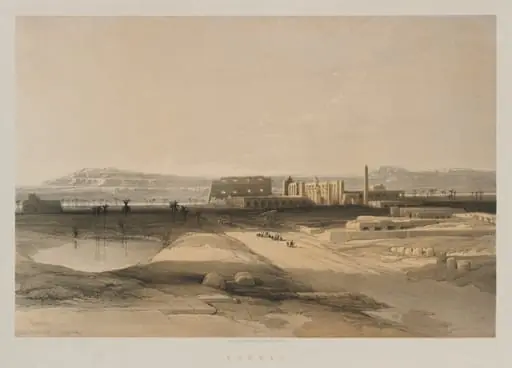 Egypt and Nubia, Volume II: Karnak
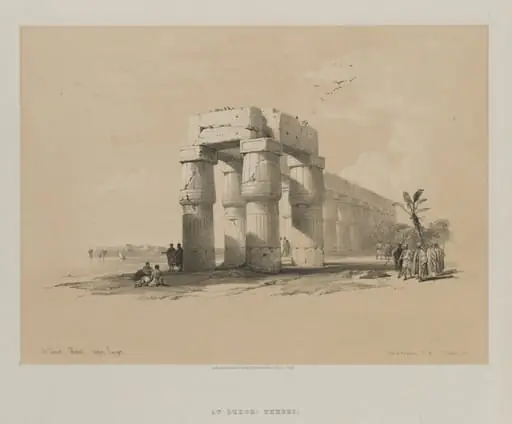 Egypt and Nubia, Volume I: At Luxor, Thebes, Upper Egypt
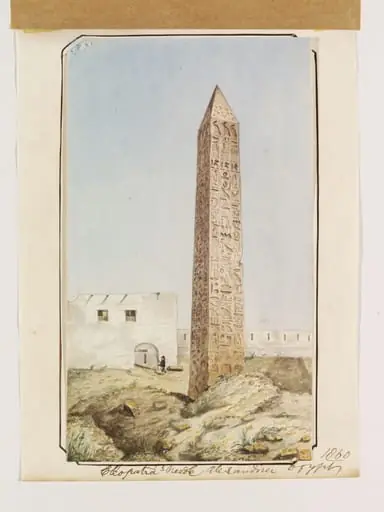 Cleopatra's Needle, Alexandria, Egypt
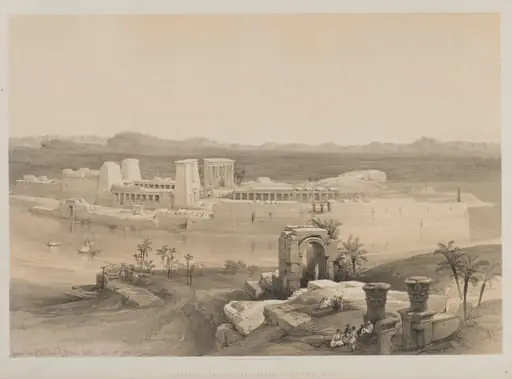 Egypt and Nubia, Volume I: General View of the Island of Philae, Nubia
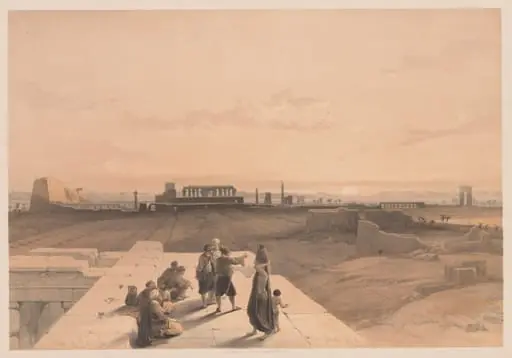 Egypt and Nubia: Volume I - No. 38, Ruins of Karnak
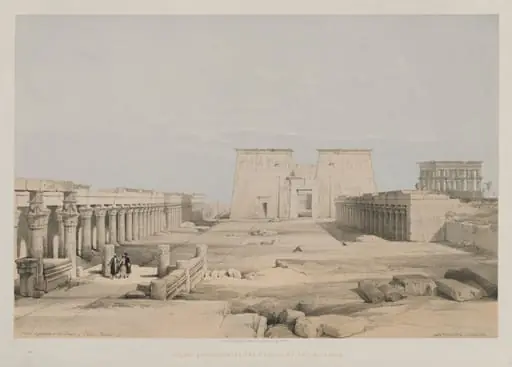 Egypt and Nubia, Volume I: Grand Approach to the Temple of Philae, Nubia