Artwork
Egypt and Nubia, Volume II: Obelisk of Heliopolis
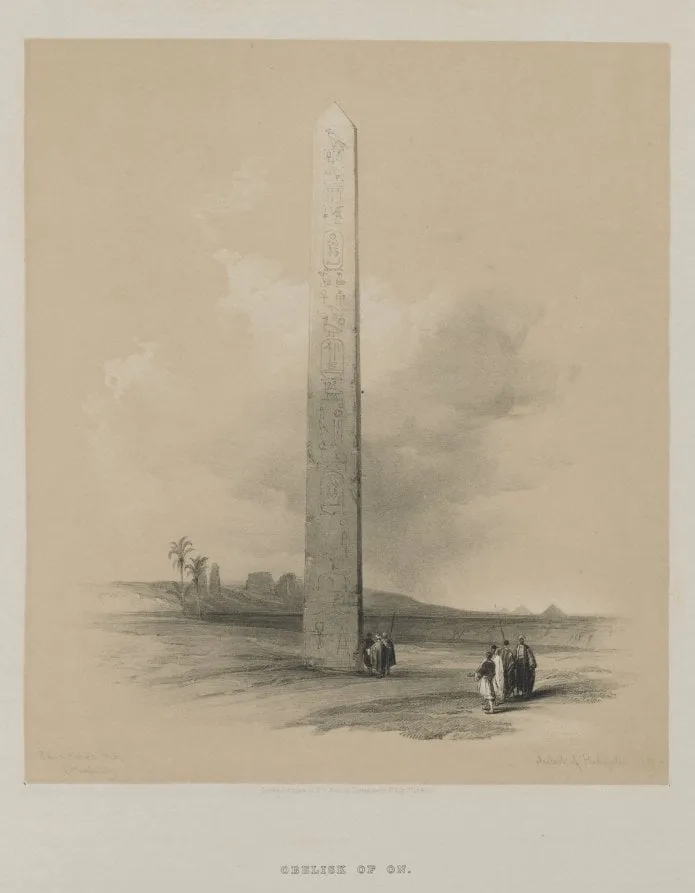
Egypt and Nubia, Volume II: Obelisk of Heliopolis is a print by the Romanticist artist Louis Haghe. It dates from 1848 and is held in the collection of the Cleveland Museum of Art.
About this work
Overview
Haghe, a Belgian-born artist based in London, specialized in lithography and watercolor, and co-founded the influential firm Day & Haghe.
Created in 1848 by Louis Haghe, this lithograph is part of the second volume of a documentary series on Egyptian and Nubian monuments. Haghe, a Belgian-born artist based in London, specialized in lithography and watercolor, and co-founded the influential firm Day & Haghe. The print captures a solitary obelisk in its desert setting, rendered with attention to atmospheric detail and cultural context, reflecting mid-19th-century European interest in ancient Near Eastern antiquities.
Subject & Meaning
The Obelisk of Heliopolis, one of the oldest surviving monuments of ancient Egypt, stands as a symbol of enduring civilization. Depicted in isolation amid arid terrain, its carved hieroglyphs suggest sacred inscriptions, while the small figures nearby imply human engagement with the past. The composition evokes contemplation rather than grandeur, emphasizing time’s passage and the quiet presence of ancient structures in a changing landscape.
Technique & Style
Haghe employed lithographic printing to achieve subtle tonal gradations, using warm golds for the obelisk’s surface and cool grey-blues for the sky to enhance spatial depth. The rendering of texture in the stone and the delicate suggestion of palm fronds and distant hills reflect his watercolor training. Figures in traditional attire are rendered with minimal detail, serving as scale markers rather than focal points, reinforcing the monument’s dominance.
History & Provenance
The print was produced as part of a multi-volume publication commissioned to record Egypt’s antiquities for European audiences. Haghe’s work was based on sketches made during travels in the region, likely by other artists or explorers. The series was distributed among scholarly and aristocratic circles, contributing to the growing field of Egyptology and the preservation of visual records before widespread photography.
Context
In the 1840s, European fascination with Egypt intensified following Napoleon’s campaign and the decipherment of hieroglyphs. This print emerged amid a wave of archaeological documentation, where art served as both record and interpretation. The Romantic sensibility evident in the lighting and mood aligns with broader artistic trends that favored emotional resonance over strict topographical accuracy.
Legacy
Haghe’s lithograph remains a significant example of 19th-century visual scholarship, bridging art and archaeology. While later photographic documentation supplanted such illustrations, his work preserved early interpretations of Egyptian monuments before modern restoration. It continues to inform historical understanding of how Western audiences perceived and represented ancient Egypt during a formative period of cultural discovery.
Artist & collection
Artist
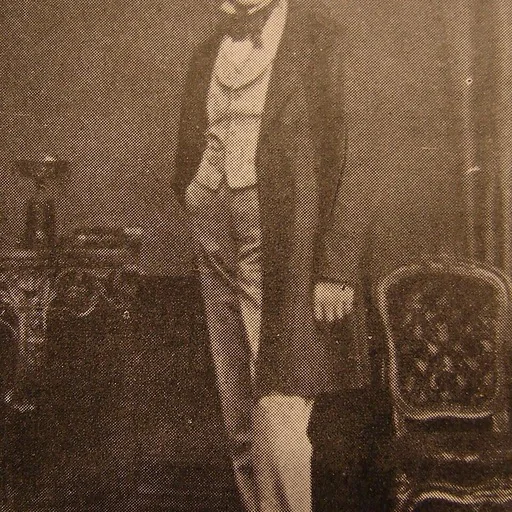
Louis Haghe (17 March 1806 – 9 March 1885) was a lithographer and watercolourist from the Netherlands and then the United Kingdom.

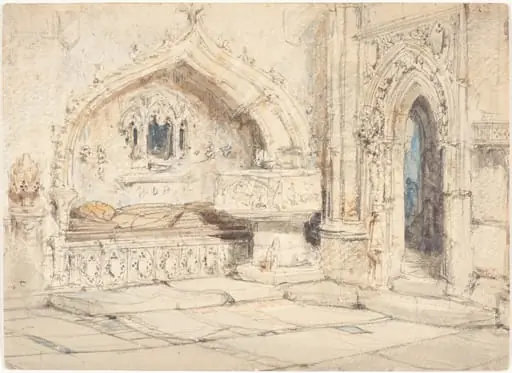 Interior of a Church with a Wall Tomb and Medieval Font
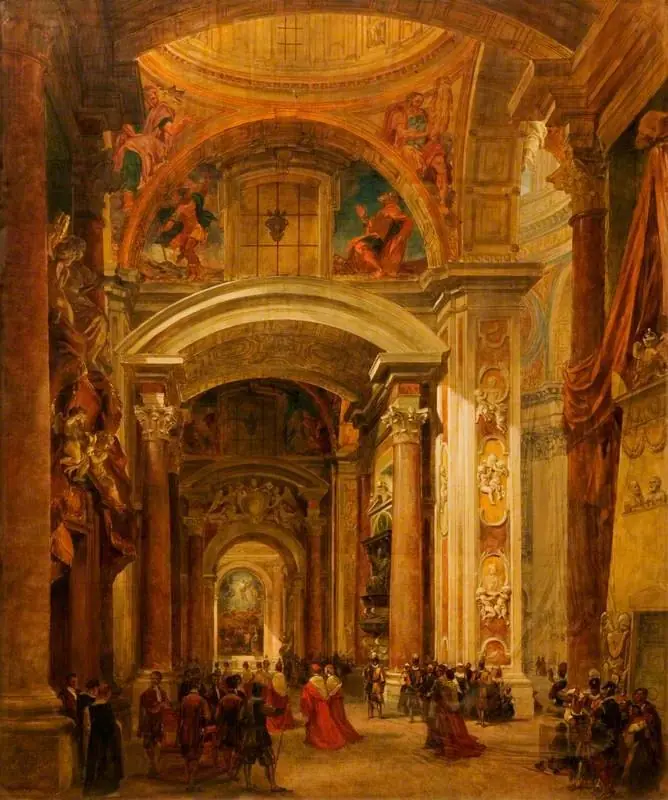 Interior of St Peter's, Rome
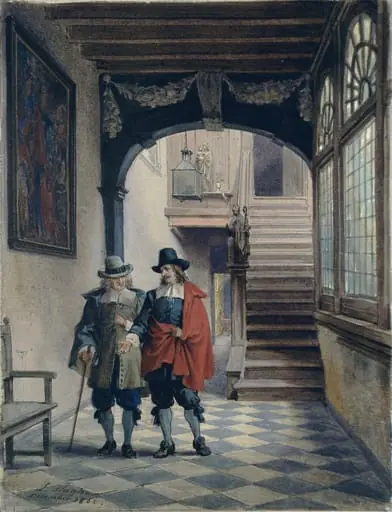 The Corridor, Brewer's Hall, Antwerp
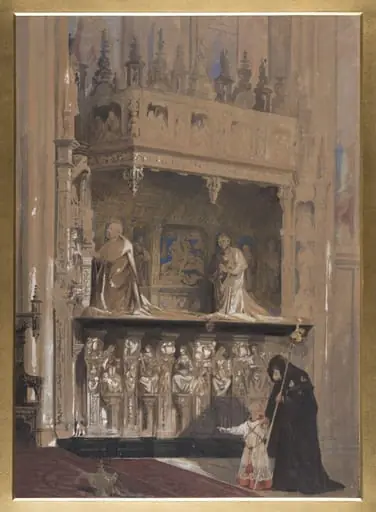 Monument of the Cardinald D'Amboise in Rouen Cathedral
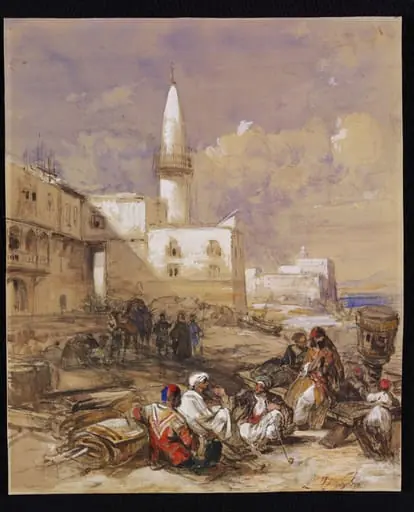 The Quay at Suez
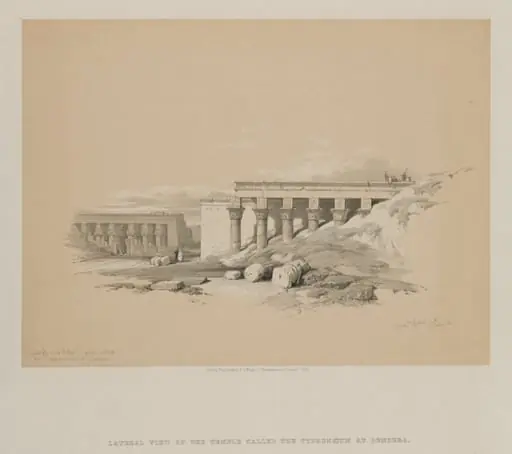 Egypt and Nubia, Volume II: Lateral View of the Temple called The Typhonoeum at Dendera
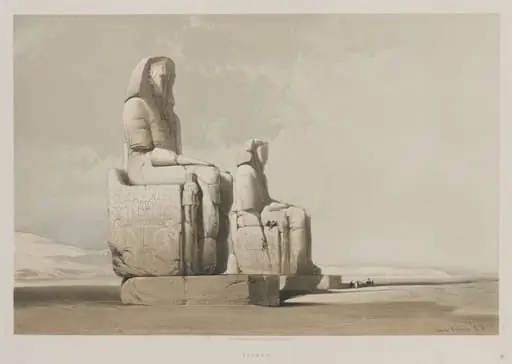 Egypt and Nubia, Volume I: Thebes
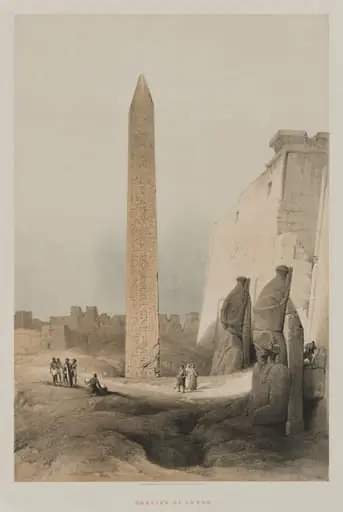 Egypt and Nubia, Volume I: Luxor
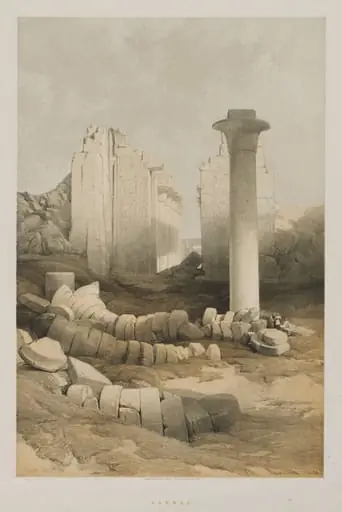 Egypt and Nubia, Volume II: Karnak
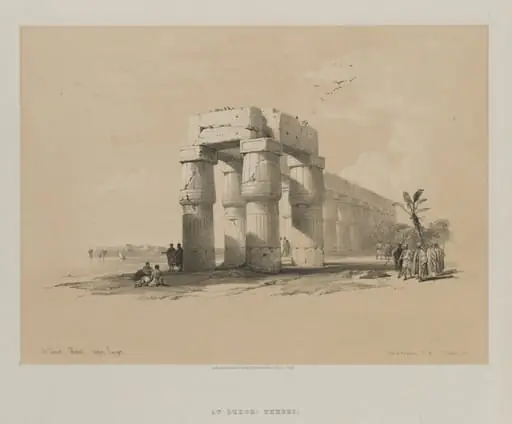 Egypt and Nubia, Volume I: At Luxor, Thebes, Upper Egypt
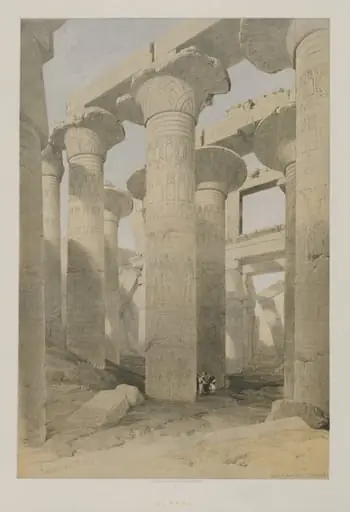 Egypt and Nubia, Volume II: Karnac
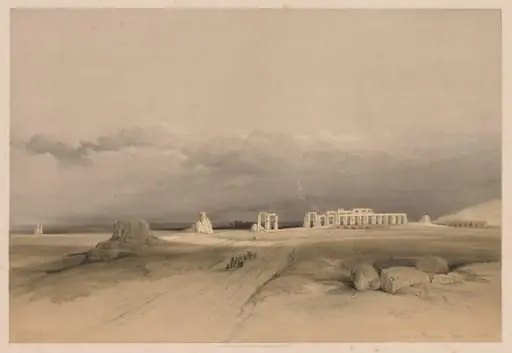 Egypt and Nubia: Volume II - No. 8, Ruins of the Memnonium, Thebes
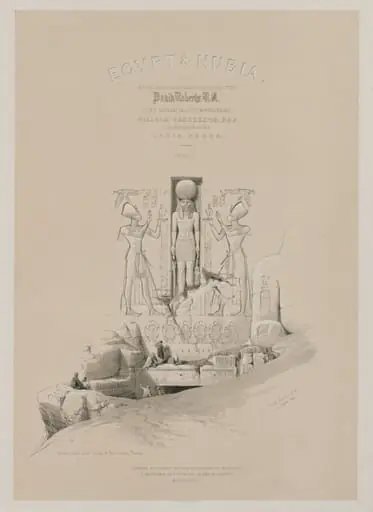 Egypt and Nubia, Volume I: Frontispiece
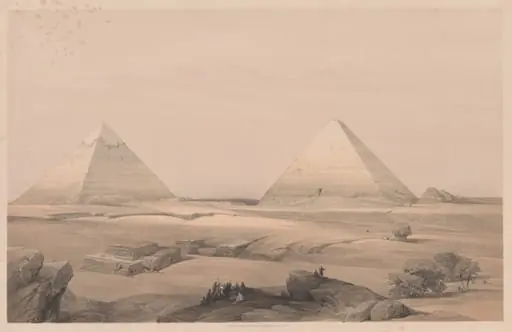 Egypt and Nubia: Volume I - No. 3, Pyramids of Gizeh
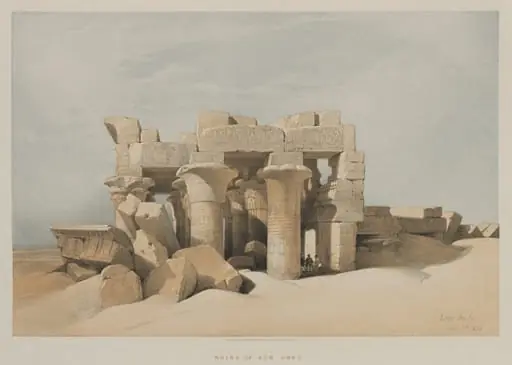 Egypt and Nubia, Volume I: Kom-Ombo