Artwork
Description of Egypt: Thebes. Memnonium, Vol. II, Pl. 37
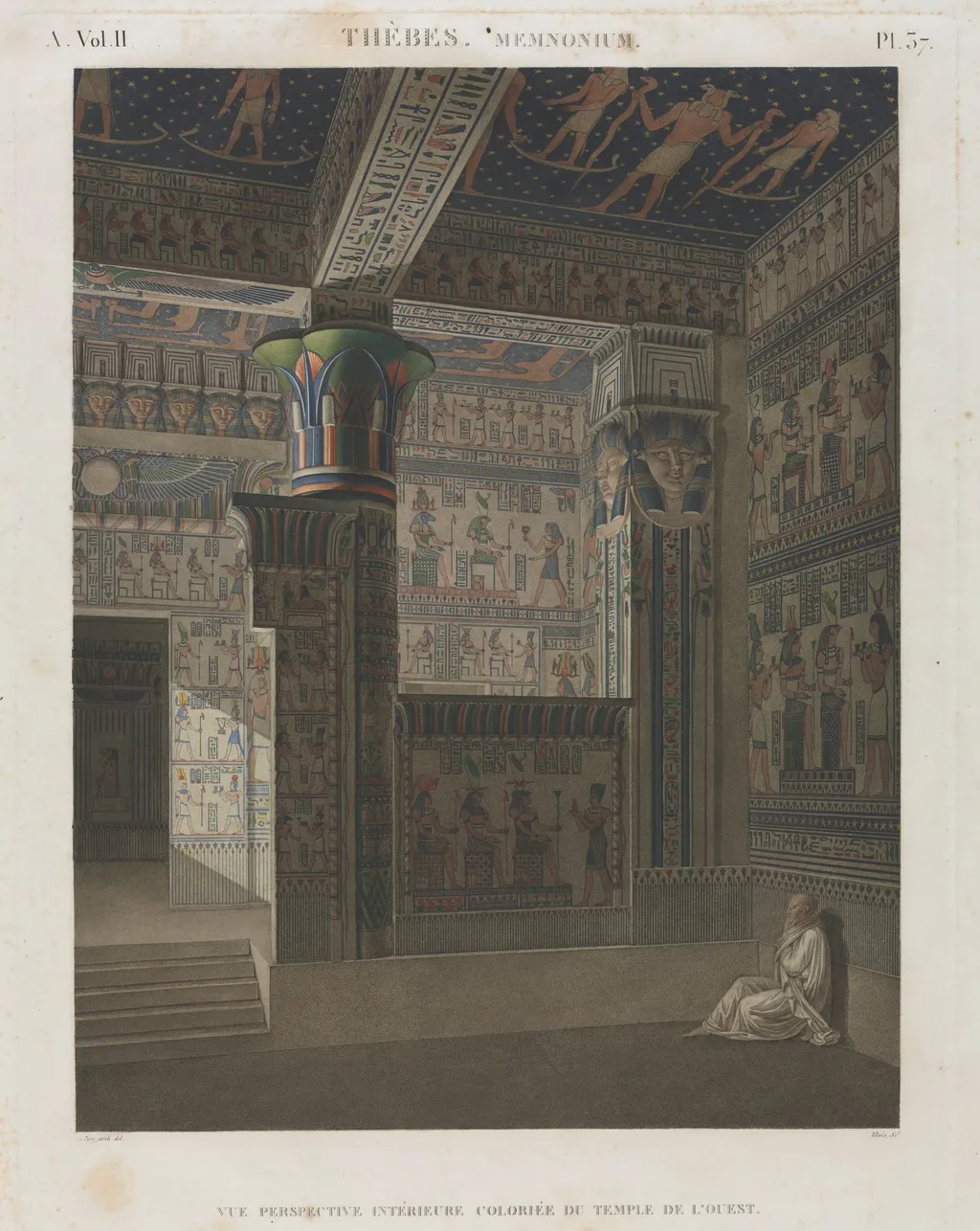
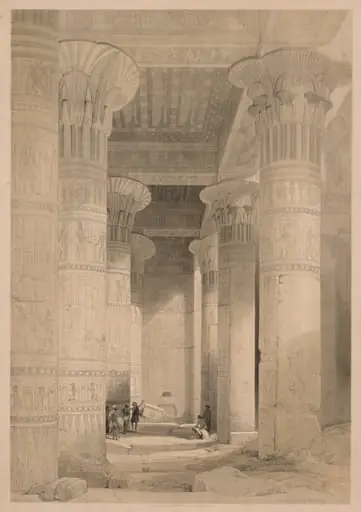
Description of Egypt: Thebes. Memnonium, Vol. II, Pl. 37 is a print by the Romanticist artist Louis-Jean Allais. It dates from 1821 and is held in the collection of the Cleveland Museum of Art. Louis‑Jean Allais’s 1821 print, titled Description of Egypt: Thebes.
About this work
Overview
Louis‑Jean Allais’s 1821 print, titled Description of Egypt: Thebes. Memnonium, Vol. II, Pl. 37, presents a vivid, imagined interior of an Egyptian temple. The work is part of the Cleveland Museum of Art’s collection and serves as a visual record of how early‑19th‑century artists reconstructed ancient spaces.
Subject & Meaning
The composition depicts a richly decorated sanctuary, its walls crowded with painted figures, deities, and hieroglyphic inscriptions. In the foreground a solitary figure in white robes sits, suggesting a priest or observer, while the ceiling is filled with star motifs and additional figures, evoking the celestial aspect of Egyptian ritual architecture.
Technique & Style
Allais employed bold, saturated hues—predominantly reds, blues, and golds—to emphasize ornamental details on columns and carvings. The print combines precise line work with flat areas of colour, reflecting the Romantic fascination with exotic antiquity and the desire to convey atmosphere over strict archaeological accuracy.
History & Provenance
Created in 1821, the print was produced during a period of heightened European interest in Egypt following Napoleon’s campaign. It later entered the Cleveland Museum of Art, where it remains a documented example of early Orientalist printmaking.
Context
The work belongs to the Romantic era’s broader engagement with ancient civilizations, where artists often imagined lost worlds through a blend of travel accounts, archaeological sketches, and personal imagination. Such visualizations shaped public perception of Egypt long before systematic excavation provided more precise data.
Artist & collection

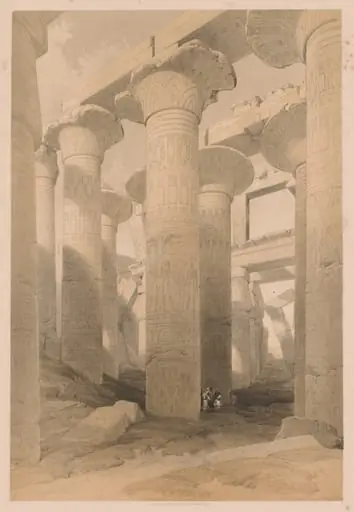 Egypt and Nubia: Volume II - No. 14, Karnak
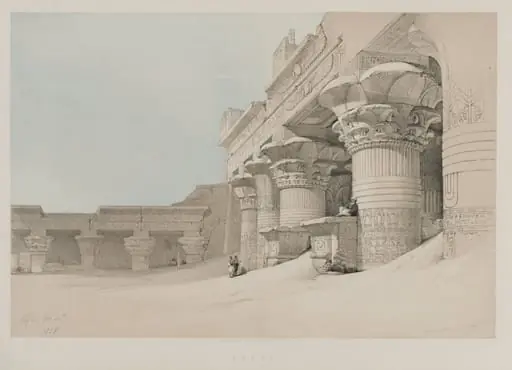 Egypt and Nubia, Volume II: Edfou
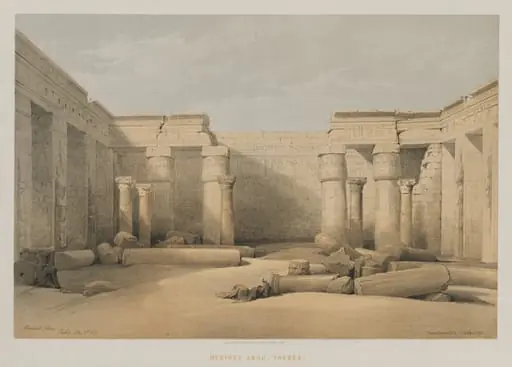 Egypt and Nubia, Volume II: Medinet Abou, Thebes
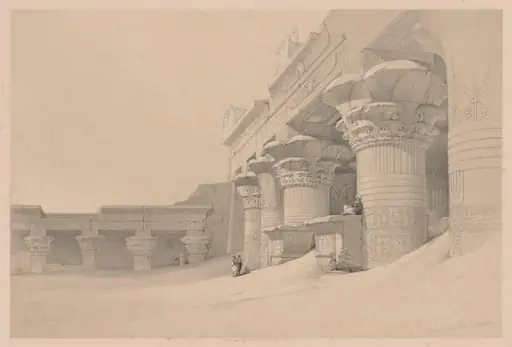 Egypt and Nubia: Volume I - No. 10, Edfou
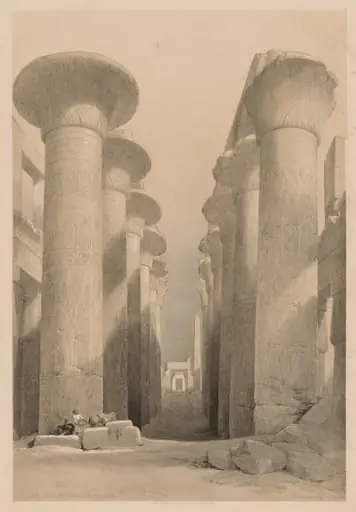 Egypt and Nubia: Volume I - No. 20, Great Hall at Karnak, Thebes
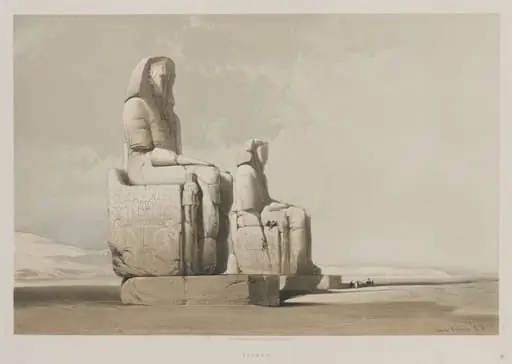 Egypt and Nubia, Volume I: Thebes
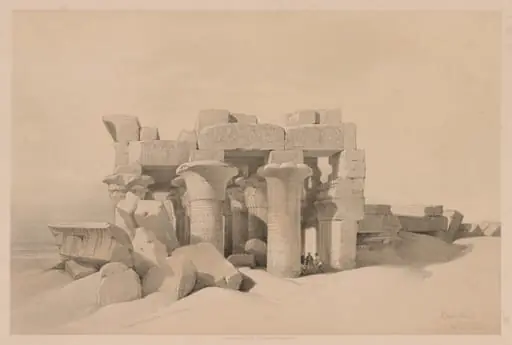 Egypt and Nubia: Volume II - No. 42, Ruins of Kom Ombo
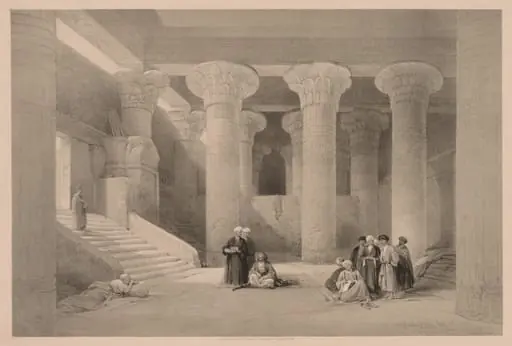 Egypt and Nubia: Volume I - No. 24, Temple at Esneh
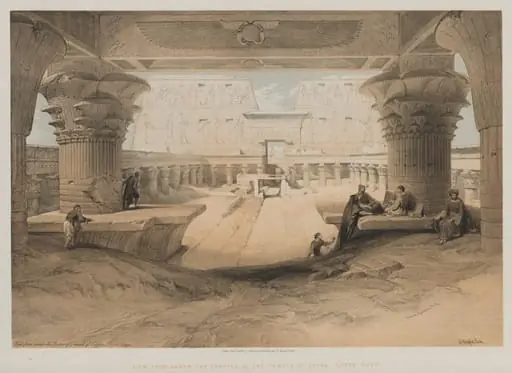 Egypt and Nubia, Volume I: View from Under the Portico of the Temple of Edfou, Upper Egypt
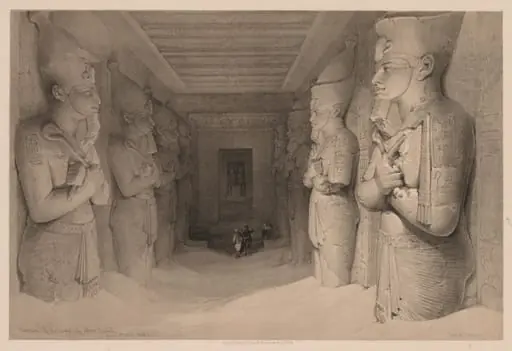 Egypt and Nubia: Volume I - No. 14, Interior of the Temple Aboo Simbel
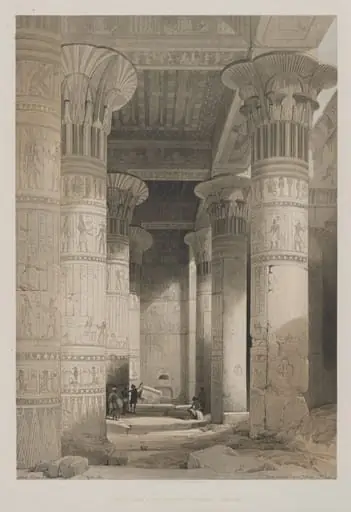 Egypt and Nubia, Volume I: View Under the Grand Portico of the Temple, Philae
 Egypt and Nubia: Volume I - Frontispiece, View under the Grand Portico, Philae