Artwork
Untitled
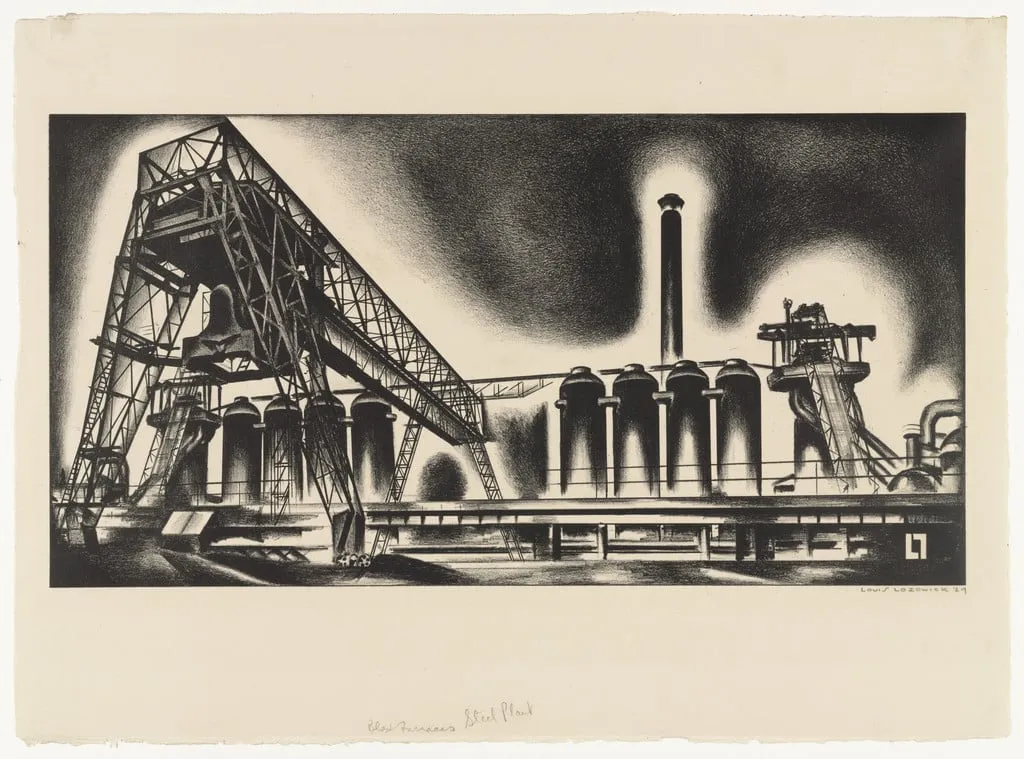
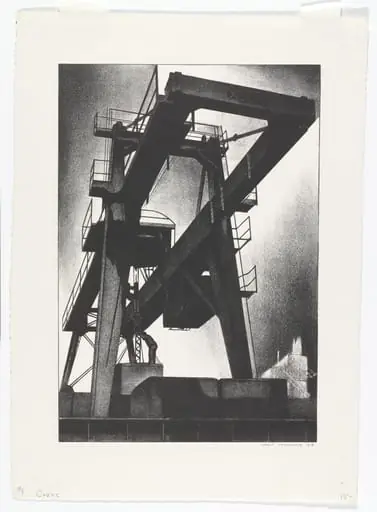
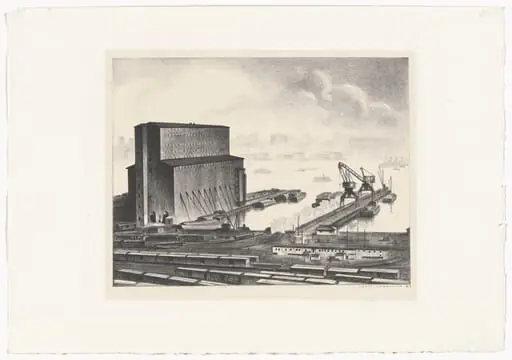
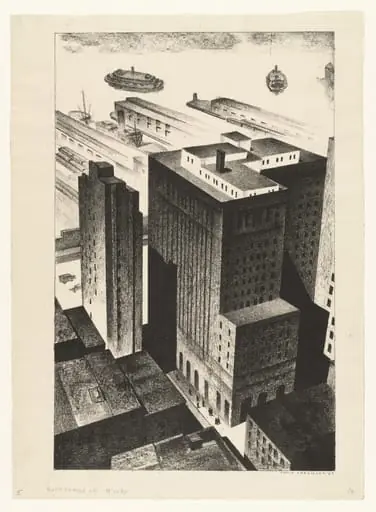
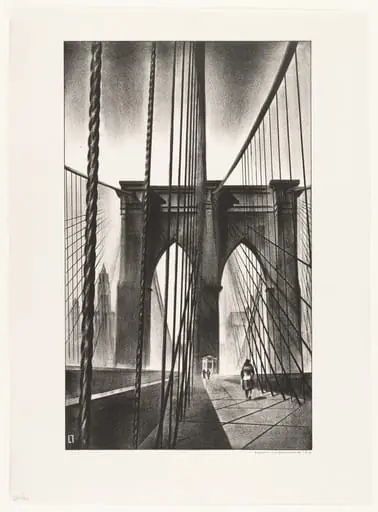
Untitled is an ink print by Louis Lozowick. It dates from 1929 and is held in the collection of the Museum of Modern Art.
About this work
Overview
It is part of the collection at The Museum of Modern Art, where it stands as a quiet yet forceful representation of early 20th-century industry.
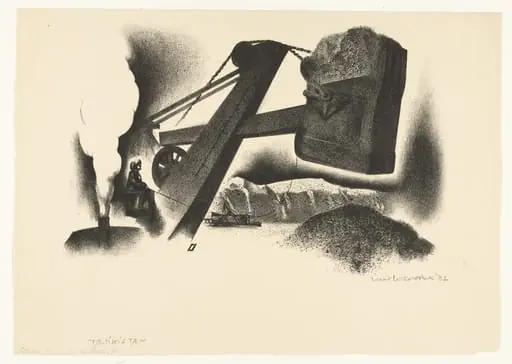
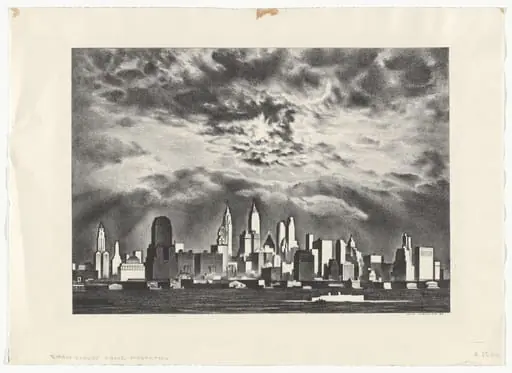
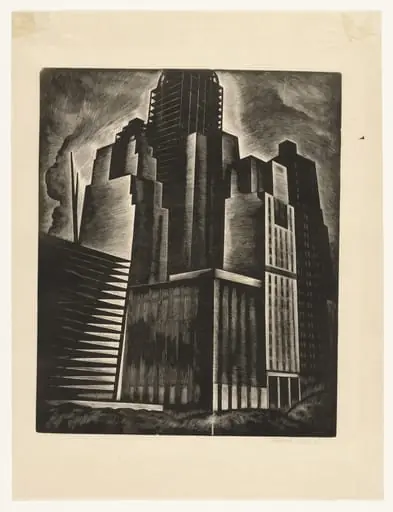
Louis Lozowick created this lithograph in 1929, capturing an industrial landscape with precise, graphic clarity. Executed on stone using crayon, the print reflects the artist’s engagement with modern urban environments. It is part of the collection at The Museum of Modern Art, where it stands as a quiet yet forceful representation of early 20th-century industry. The technique allowed for sharp contrasts and clean lines, aligning with Lozowick’s interest in mechanical forms.
Subject & Meaning
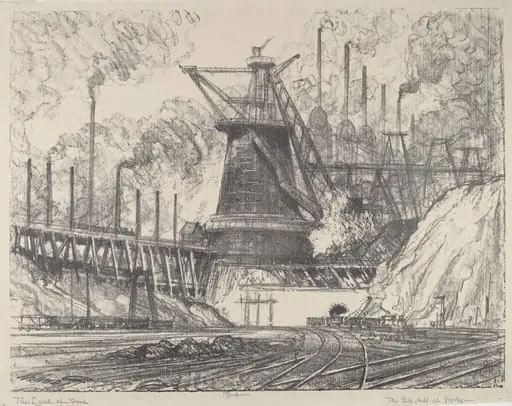
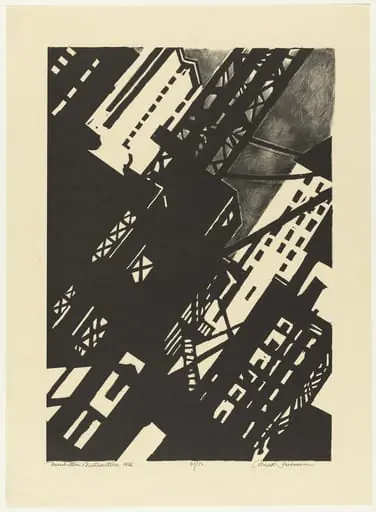
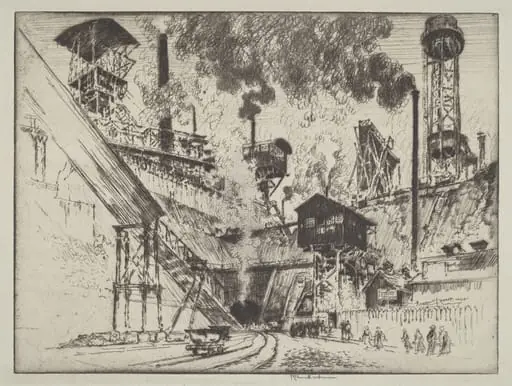
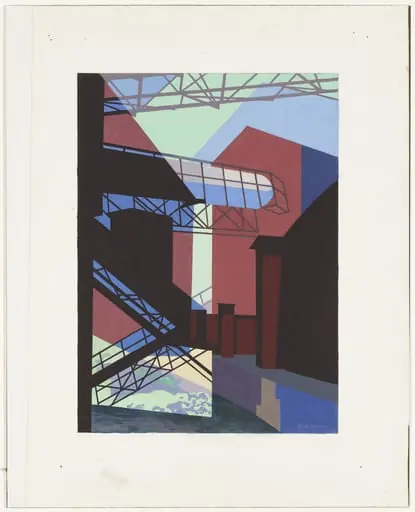
The image depicts towering blast furnaces under a dark sky, their chimneys rising in rigid, vertical lines. There is no human presence, yet the scale and structure suggest the weight of labor and industrial progress. The stillness of the scene conveys not decay, but the quiet endurance of machinery. Lozowick viewed these structures as monuments to human ingenuity, framing them not as oppressive, but as inevitable expressions of modern life.
Technique & Style
The work was made using lithography, a process in which the artist drew directly onto a limestone slab with greasy crayon. The resulting print retains the texture and immediacy of the original mark, while achieving a crisp, uniform tone. Strong black lines and deep shadows define the forms, eliminating detail in favor of bold geometry. This method suited Lozowick’s preference for clarity and structural precision over atmospheric nuance.
History & Provenance
Created in 1929, the lithograph emerged during a period of rapid industrial expansion in the United States. Lozowick, who had previously worked in a steel plant, brought firsthand knowledge to his depictions of industrial sites. The print entered The Museum of Modern Art’s collection in the decades following its creation, where it was recognized for its contribution to American modernist printmaking and its unique perspective on mechanized labor.
Context
In the late 1920s, American artists increasingly turned to urban and industrial subjects as symbols of national identity. Lozowick’s work aligned with this trend, though he avoided overt celebration or critique. His images occupied a middle ground: neither utopian nor dystopian, but observational. The lithograph reflects a broader cultural fascination with machinery’s role in reshaping daily life and the American landscape.
Legacy
Lozowick’s approach to lithography influenced later artists interested in the aesthetic potential of industrial forms. His ability to translate the rigidity of machinery into compelling graphic compositions helped establish printmaking as a legitimate medium for modernist expression. While not widely known today, his work remains a significant example of how American artists engaged with the visual language of industry during the early 20th century.
Artist & collection

Artist
Louis Lozowick (1892–1973) was a Ukrainian-born American painter and printmaker. He is recognized as an Art Deco and Precisionist artist, and mainly produced streamline, urban-inspired monochromatic lithographs in a…