Artwork
Woman and Child (Weib und Kind)
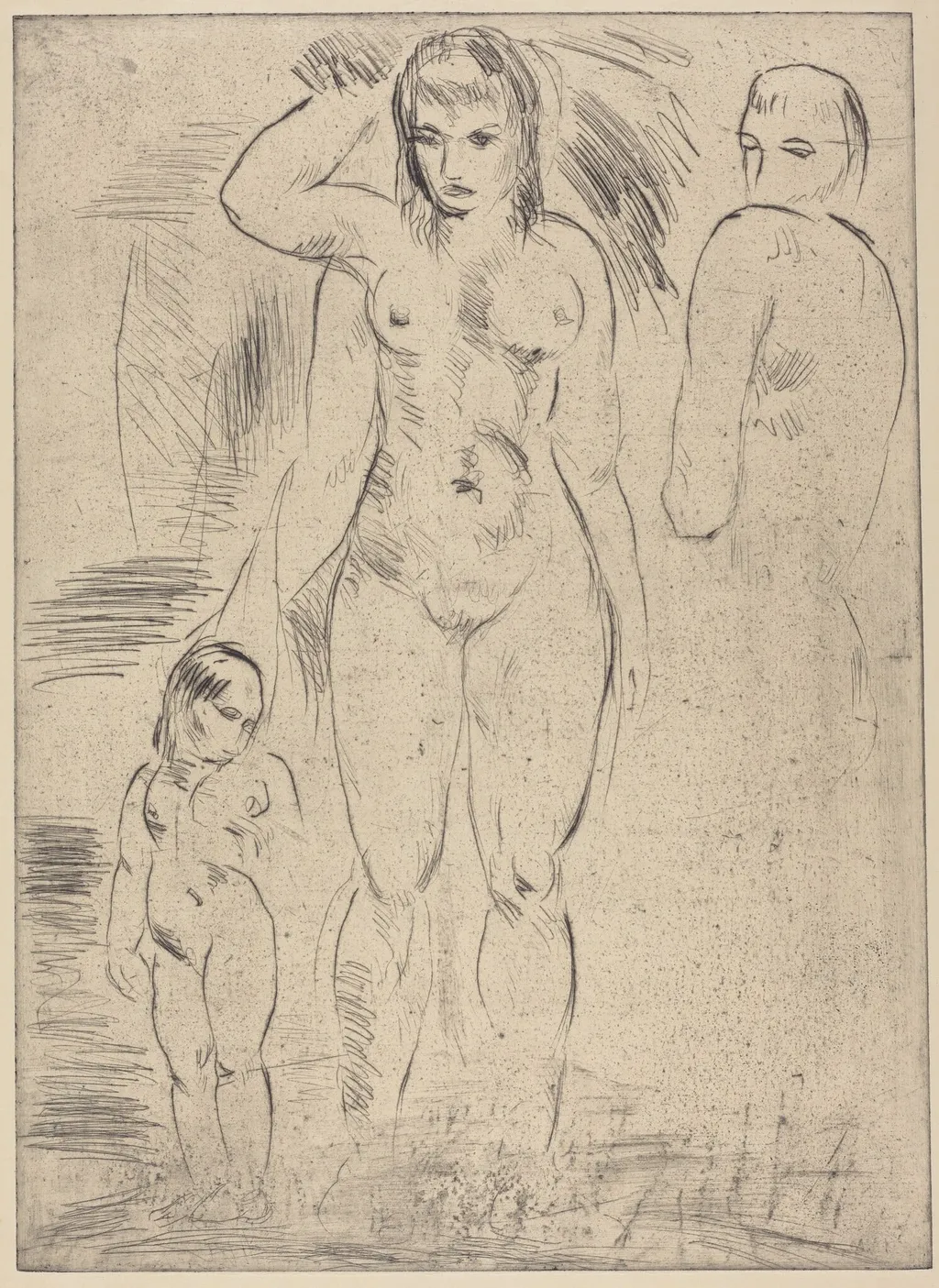
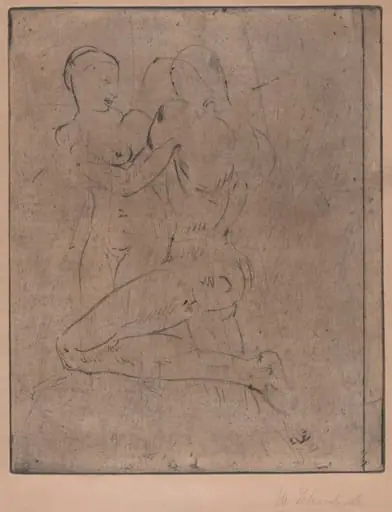
Woman and Child (Weib und Kind) is an ink print by Wilhelm Lehmbruck. It dates from 1914 and is held in the collection of the National Gallery of Art.
About this work
Overview
Woman and Child (Weib und Kind) is a 1914 drypoint print by Wilhelm Lehmbruck, a prominent German sculptor who navigated between realism and expressionism in his work.
Subject & Meaning
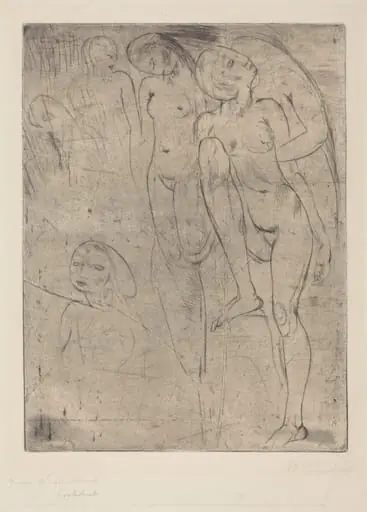
Contrary to the title's suggestion, the print actually depicts three naked figures: a central tall woman with one arm raised and flowing hair, a child clinging to her side, and a larger man standing to her right, looking away. The scene conveys a sense of intimate grouping.
Technique & Style
Executed in drypoint, the print features loose, scratchy lines that produce a rough, textured appearance. This technique, which involves etching lines into a metal plate with a sharp tool, results in a grainy, sketch-like quality distinct from smoother drawing methods.
History & Provenance
Created in 1914, the work reflects Lehmbruck's exploration of expressive figuration during a period of stylistic transition in his career.
Context
Emerging during a time of artistic experimentation in early 20th-century Germany, Woman and Child situates Lehmbruck's practice within the broader dialogue between realism and the emerging expressive tendencies of the era.
Legacy
As a print, Woman and Child contributes to Lehmbruck's lesser-known but significant graphic oeuvre, offering insight into his expressive explorations beyond sculpture.
Own this work as a print
Artist & collection
Artist
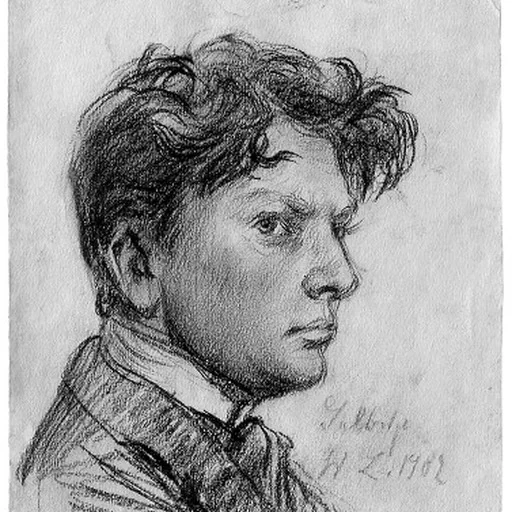
Wilhelm Lehmbruck (4 January 1881 – 25 March 1919) was a German sculptor. One of the most important of his generation, he was influenced by realism and expressionism.

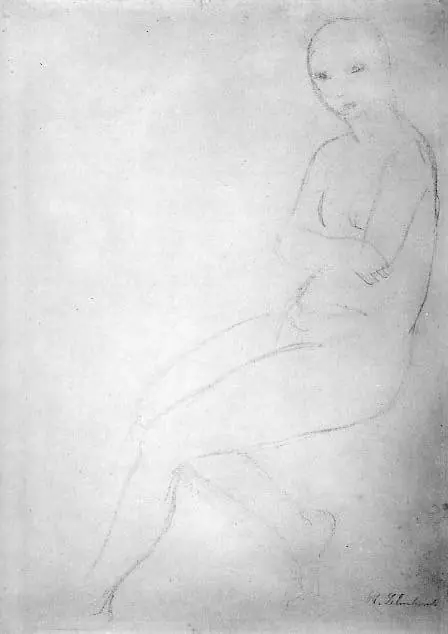
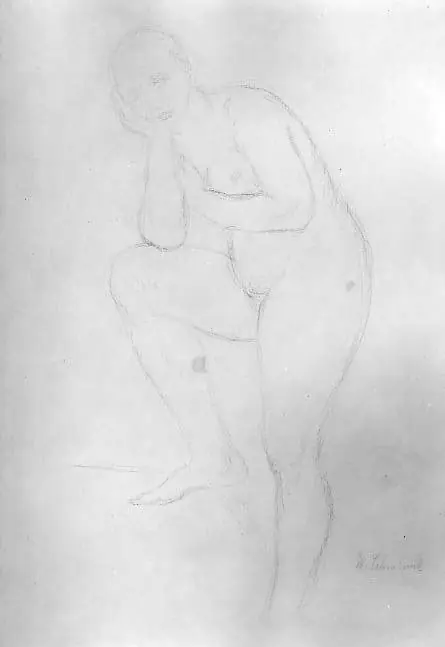
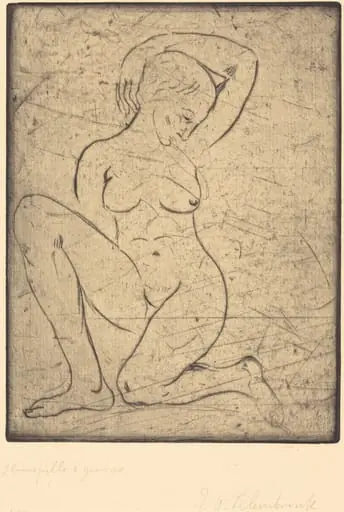
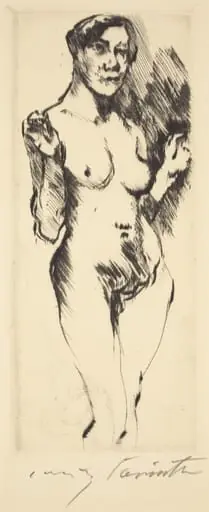 Stehende Weibliche akte (Standing Female Nude)
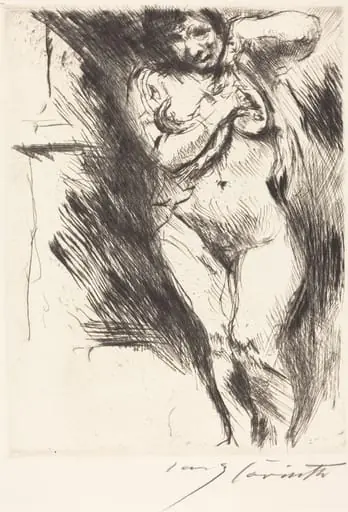 Akt mit hochgehobenem Hemd (Woman Undressing)
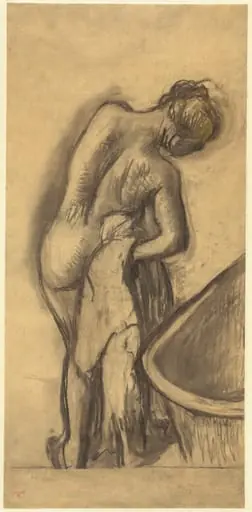 After the Bath: Woman Drying Herself
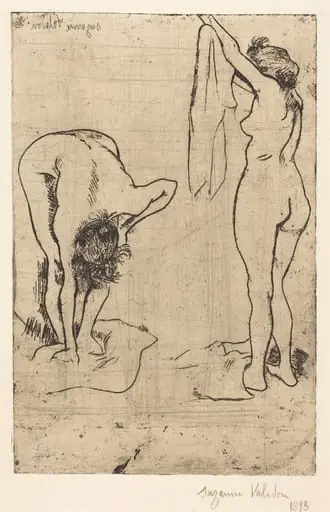 Femmes s'essuyant (Women Drying Themselves)
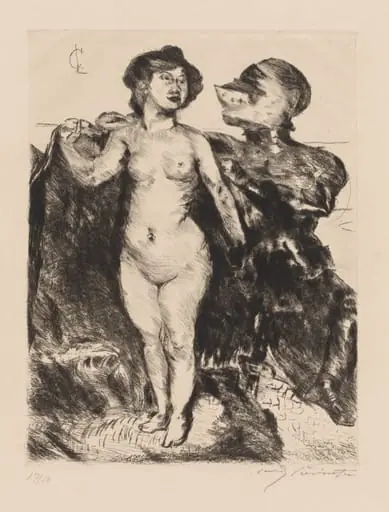 Perseus and Andromeda
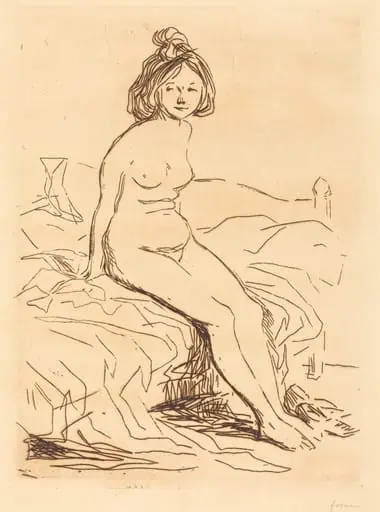 Femme nue, assise sur son lit, de face (Nude Woman, Seated on Her Bed, Front View)
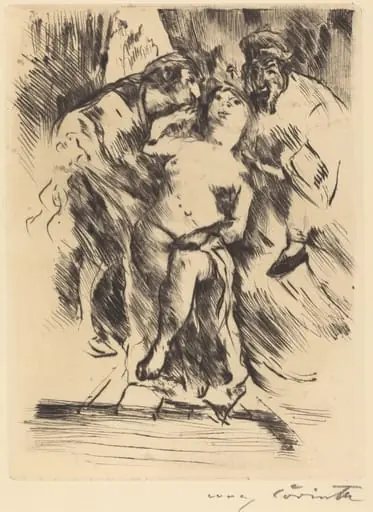 Susanna im Bade (Susanna in the Bath)
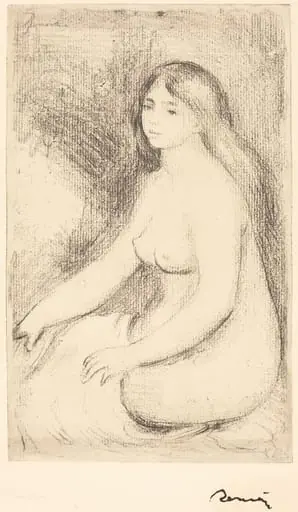 Seated Bather (Baigneuse assise)
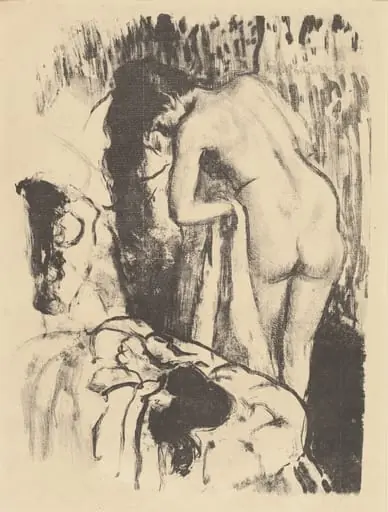 Nude Woman Standing, Drying Herself (Femme nue debout, a sa toilette)
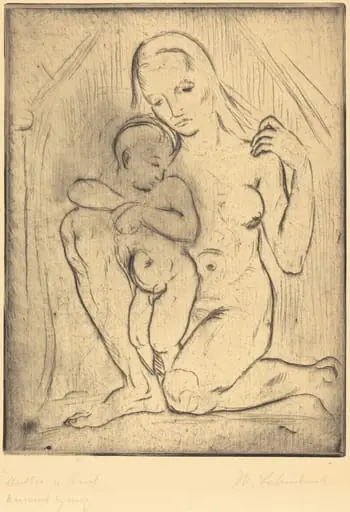 Mutter und Kind (Mother and Child)