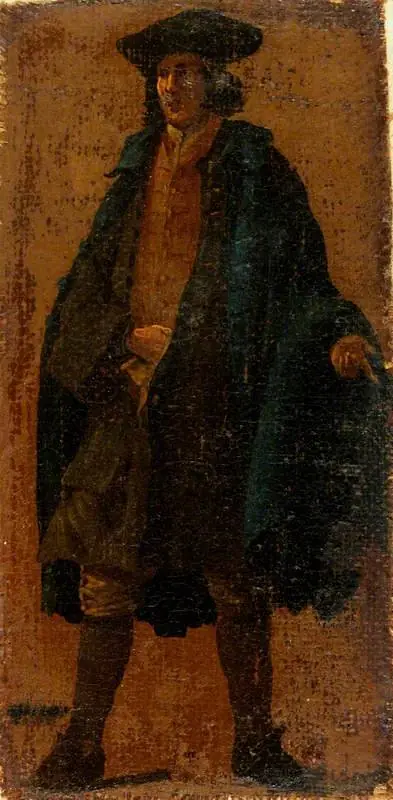
Artwork
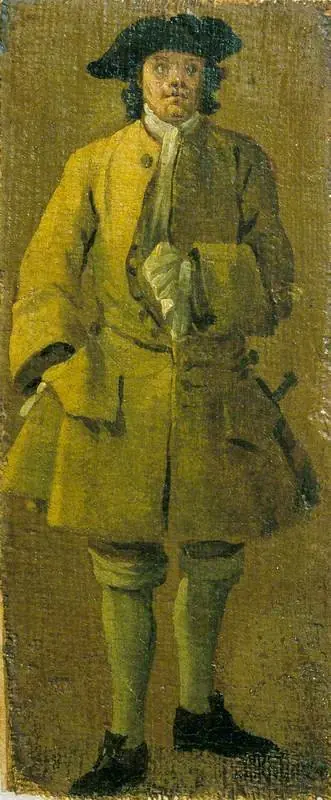
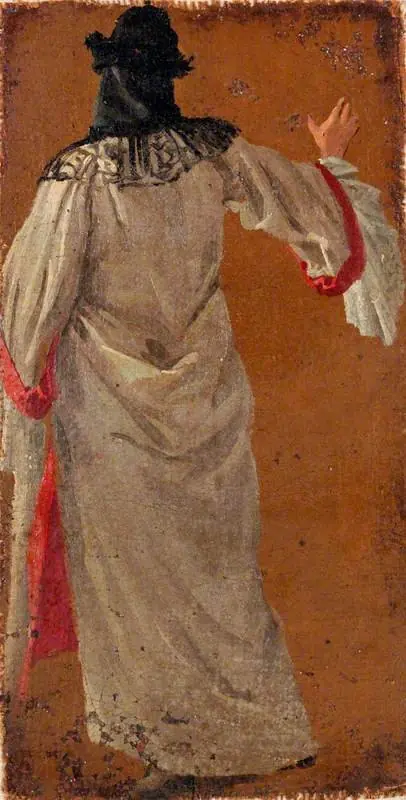
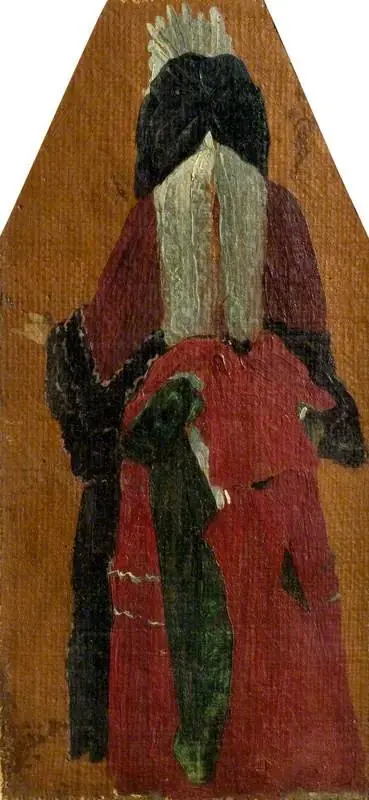
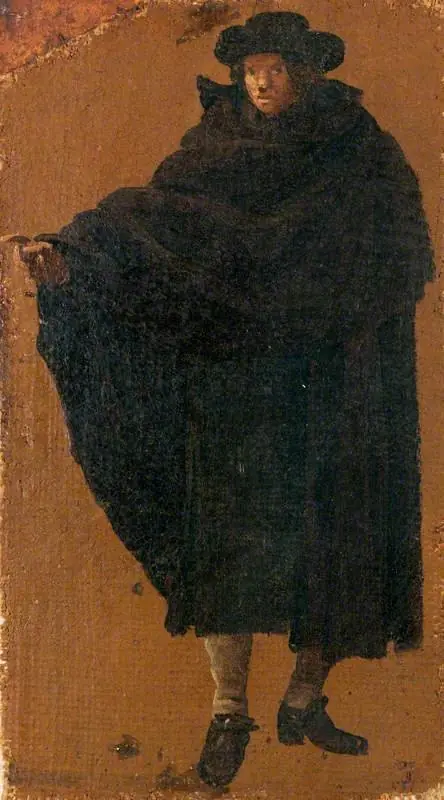
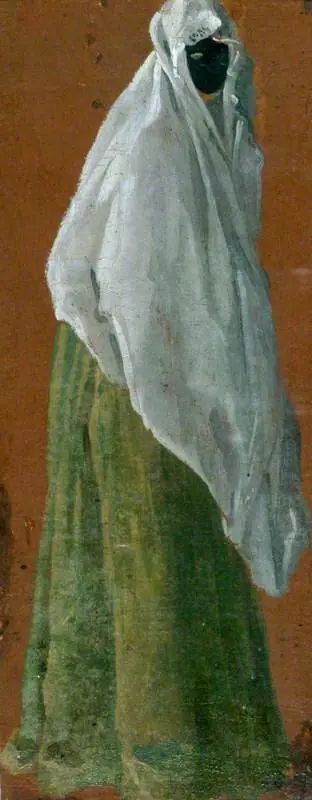
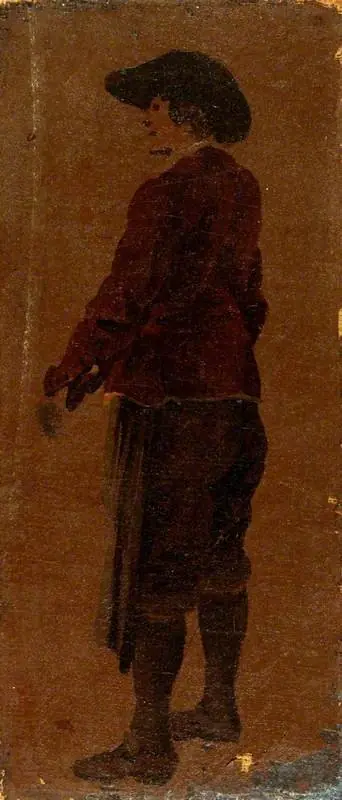
A Man Seen from Behind
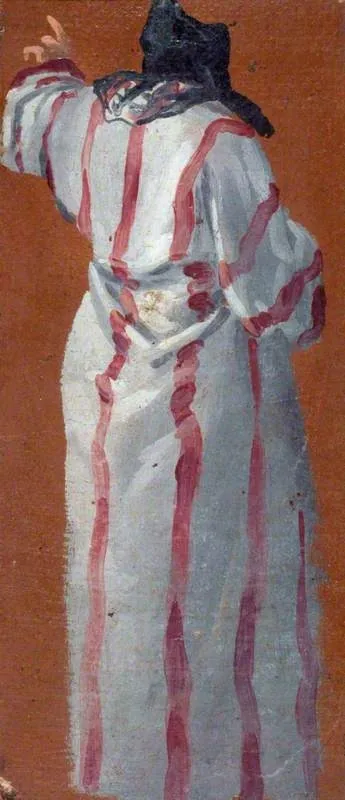
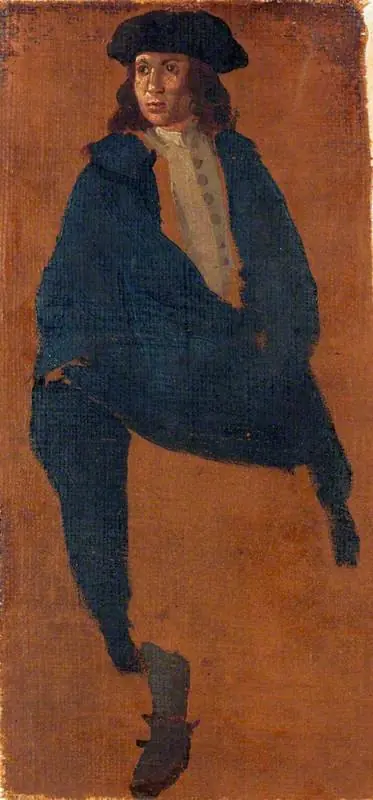
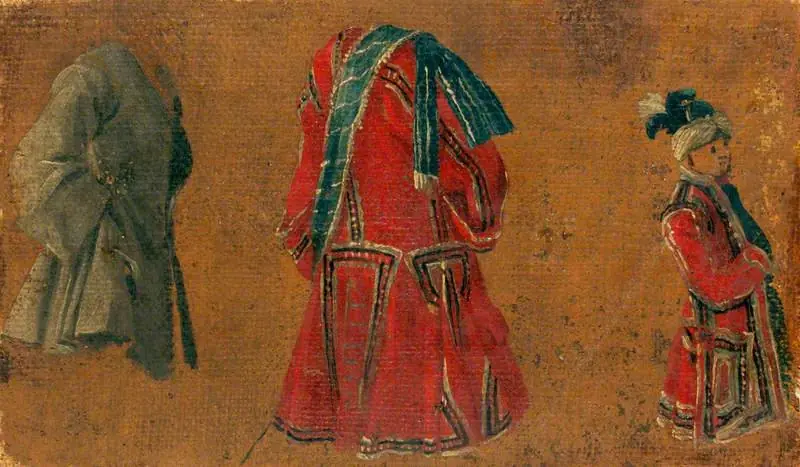
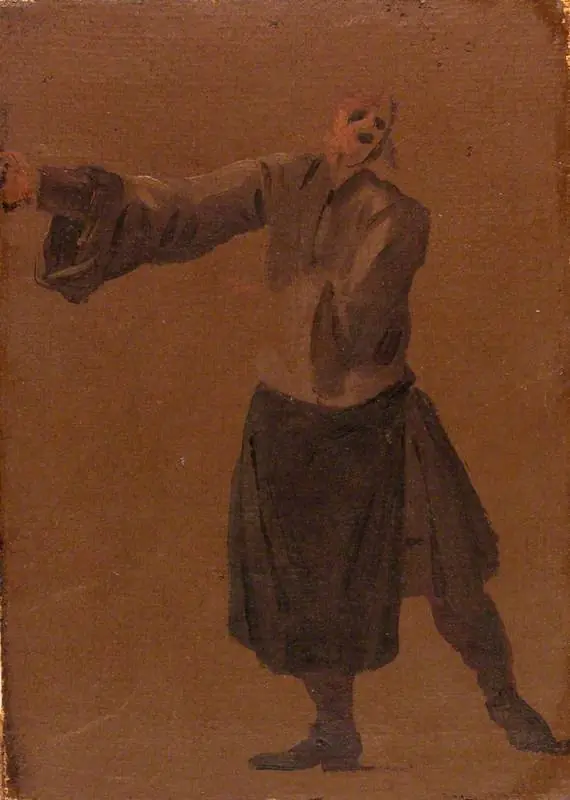
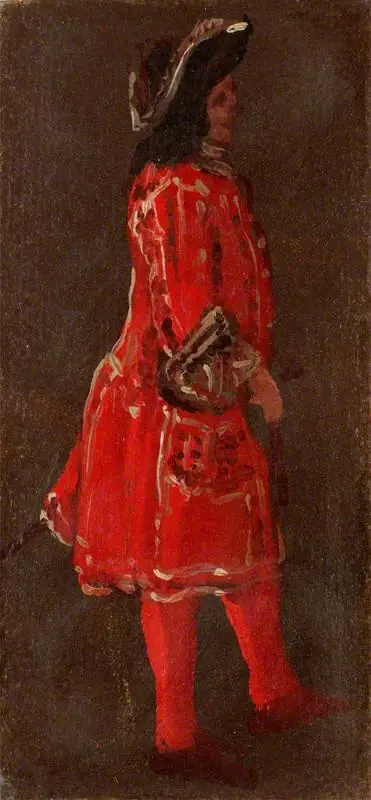
A Man Seen from Behind is an oil painting by the Flemish Baroque painting artist Luca Carlevarijs. It dates from 1705 and is held in the collection of the Victoria and Albert Museum.
About this work
Overview
A Man Seen from Behind is a 1705 oil painting by Luca Carlevarijs, an Italian artist known for his contributions to the Venetian cityscape genre. The work is part of the Victoria and Albert Museum's collection and aligns with the Flemish Baroque movement.
Subject & Meaning
The painting portrays a figure of potential importance or authority from behind, clad in a distinctive long white robe with red stripes, a black hat, and with his right arm raised. The subject's attire and posture imply a position of dignity or command.
Technique & Style
Executed in oil paint on a solid brown background, the work showcases Carlevarijs' mastery of detail and craftsmanship. Although not explicitly highlighted in this piece, the artist's broader oeuvre demonstrates skill in chiaroscuro, a characteristic of the Baroque period.
History & Provenance
Created in 1705, A Man Seen from Behind is attributed to Luca Carlevarijs, a pioneer of Venetian cityscapes who influenced later artists like Canaletto and Francesco Guardi. The painting is now held in the Victoria and Albert Museum.
Context
While this painting does not exemplify Carlevarijs' renowned cityscape genre, it reflects the Flemish Baroque influences present in 18th-century Venetian art. The subject's depiction from behind may suggest a narrative or symbolic element, though its specifics remain ambiguous.
Legacy
Through his body of work, Carlevarijs paved the way for subsequent Venetian artists. However, the specific legacy of A Man Seen from Behind within Carlevarijs' oeuvre or the broader art historical canon is not distinctly defined beyond its association with the artist's overall influence.
Artist & collection
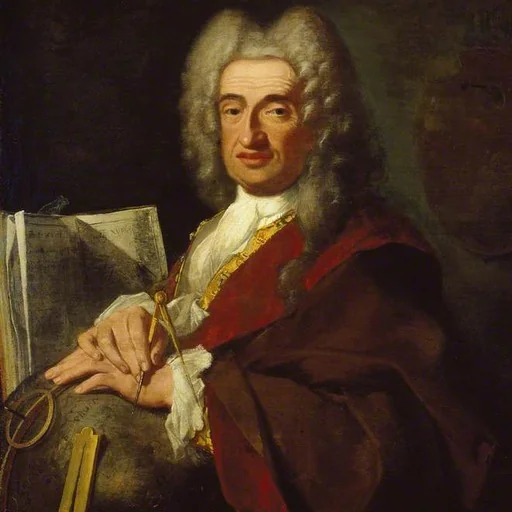
Artist
Luca Carlevarijs or Carlevaris (20 January 1663 – 12 February 1730) was an Italian painter and engraver working mainly in Venice.