Artwork
Christ on the Cross between the Virgin and Saint John
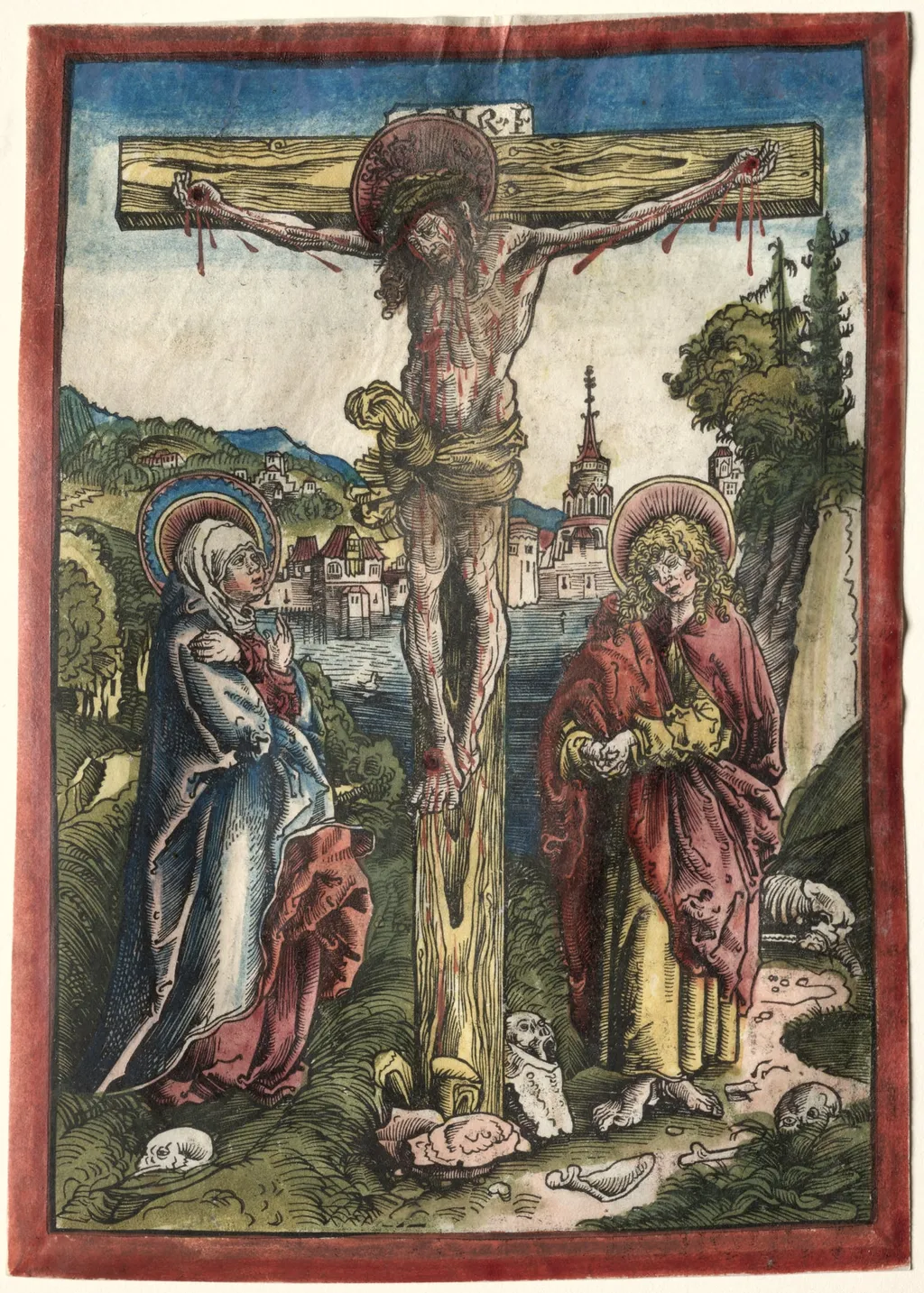
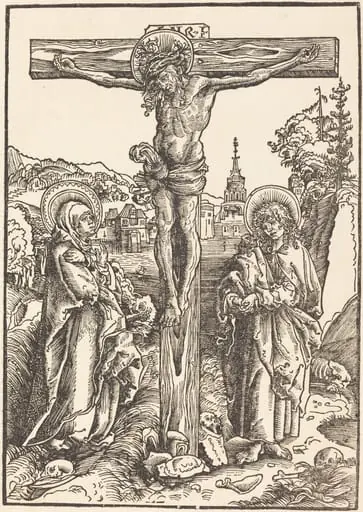
Christ on the Cross between the Virgin and Saint John is a print by the Renaissance artist Lucas Cranach the Elder. It dates from 1503 and is held in the collection of the Cleveland Museum of Art. This early 16th‑century print, dated 1503, depicts the crucifixion scene with Christ on the cross flanked by the Virgin Mary and Saint John.
About this work
Cranach worked during the rise of the Protestant Reformation, and his style mixes deep feeling with clear, sharp lines.
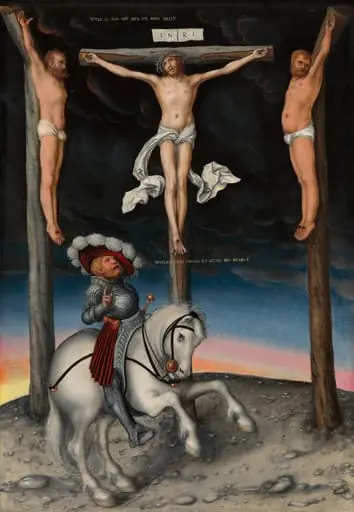
A man in a red robe stands on the left, looking up at Christ on a wooden cross. The Virgin Mary, in blue, stands on the right, hands clasped in sorrow. Behind them, a dark sky rolls over a quiet landscape.
This painting was made in 1503, a time when religious images were central to worship in Germany. Cranach worked during the rise of the Protestant Reformation, and his style mixes deep feeling with clear, sharp lines. The figures are tall and still, with gentle faces, typical of German art at the time.
Look next at germany, early 16th century.
Overview
This early 16th‑century print, dated 1503, depicts the crucifixion scene with Christ on the cross flanked by the Virgin Mary and Saint John. The composition is rendered in a stark, vertical arrangement, set against a darkened sky and a muted landscape that recedes into the background.
Subject & Meaning
The central figure of Christ is framed by the grieving Virgin, dressed in blue, and Saint John, in a red robe, whose upward gazes convey contemplation and sorrow. Their clasped hands and solemn expressions underscore the devotional purpose of the image, intended to evoke empathy and piety among viewers.
Technique & Style
Executed as a woodcut, the image employs the crisp, linear qualities characteristic of Lucas Cranán's workshop. Tall, elongated figures with serene facial features reflect the German aesthetic of the period, while the contrast between the deep shadows and the illuminated figures highlights the medium’s capacity for strong graphic impact.
History & Provenance
Woodcut printing began on textiles and vellum, but by the early 1400s paper had become widely available, allowing broader distribution of such devotional prints. This work, produced in the wake of the Reformation’s early stirrings, would have circulated among both Catholic and emerging Protestant audiences in Germany.
Context
Created during a time when religious imagery dominated worship practices in Germany, the print aligns with the transitional artistic climate of the early Reformation. Its clear lines and emotional restraint mirror the period’s shift toward more personal, scriptural engagement while retaining traditional iconography.
Artist & collection
Artist
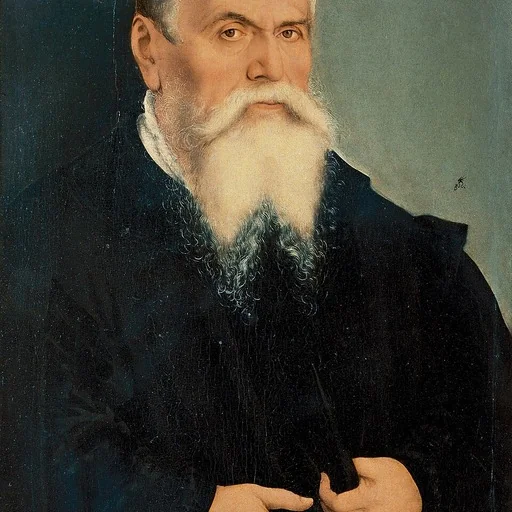
Lucas Cranach the Elder was a German Renaissance painter and printmaker in woodcut and engraving.

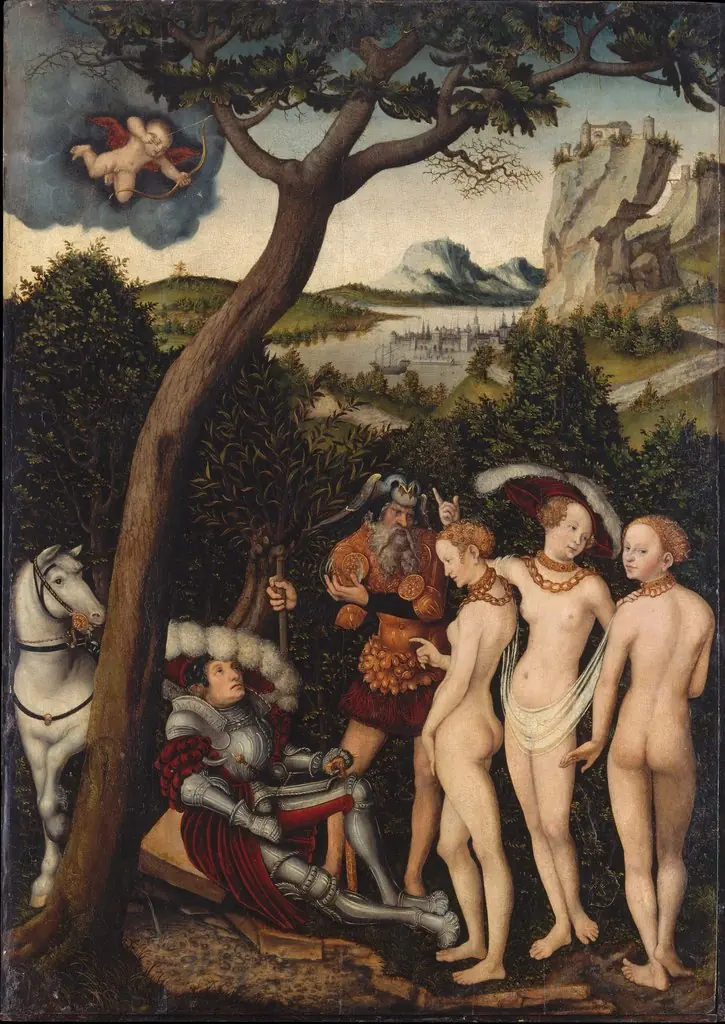
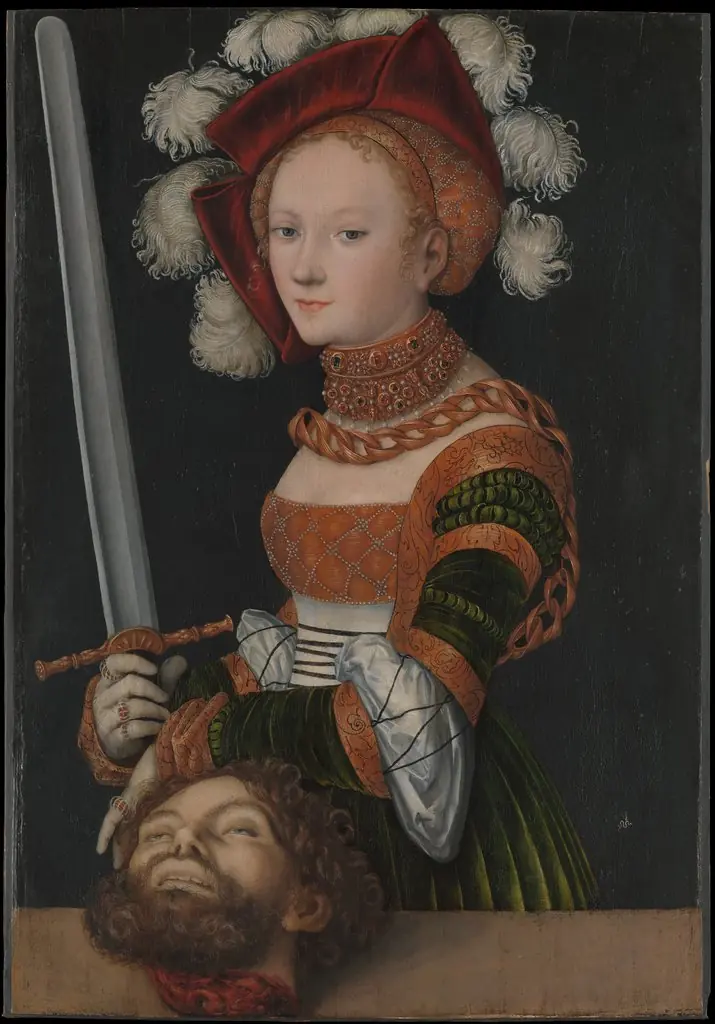
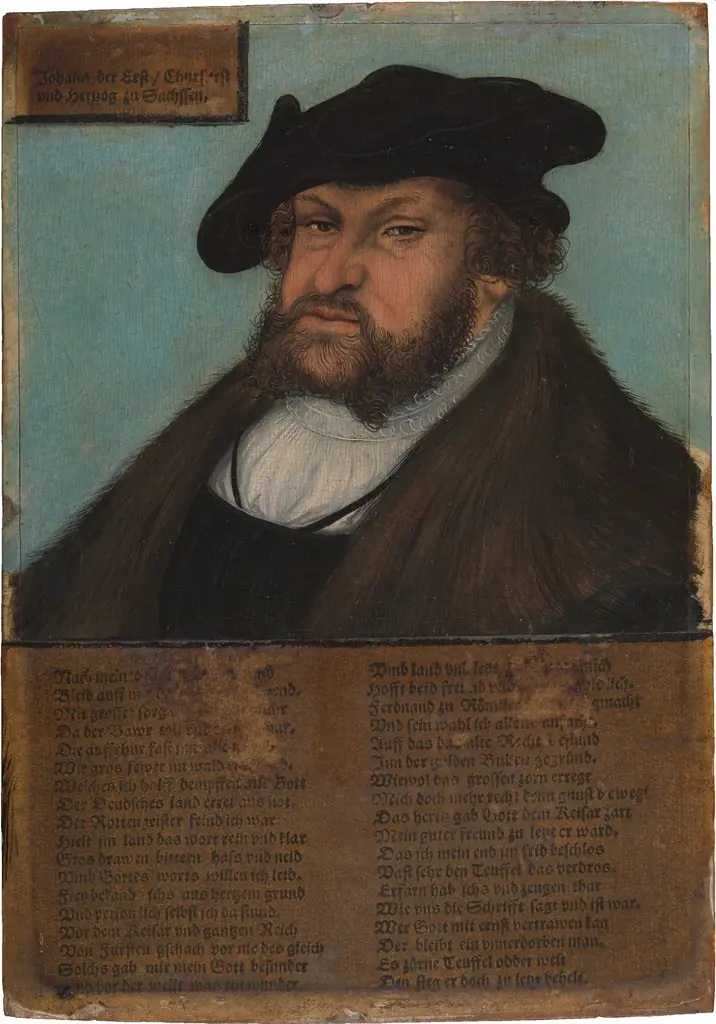
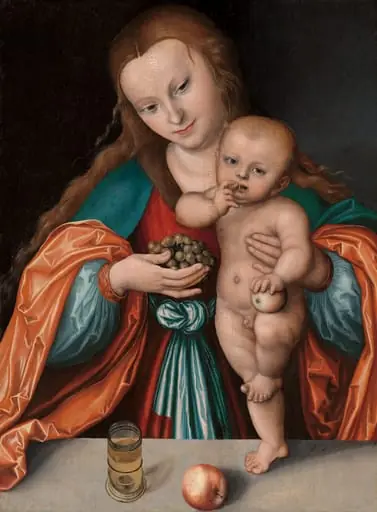
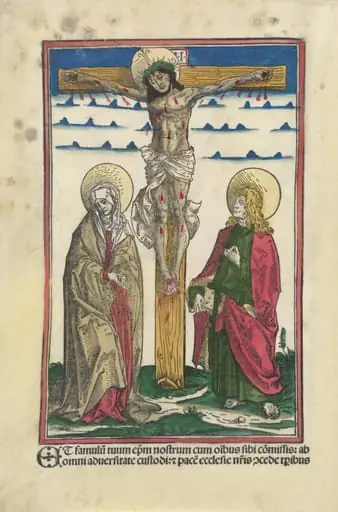 Christ on the Cross with the Virgin and Saint John
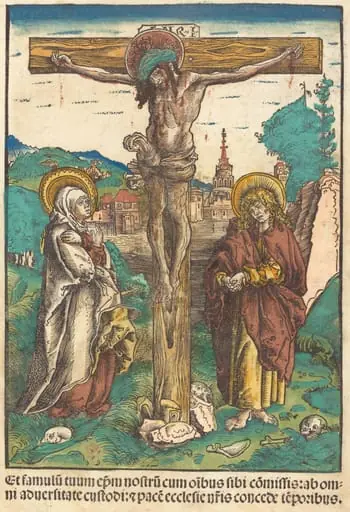 Christ on the Cross Between the Virgin and Saint John
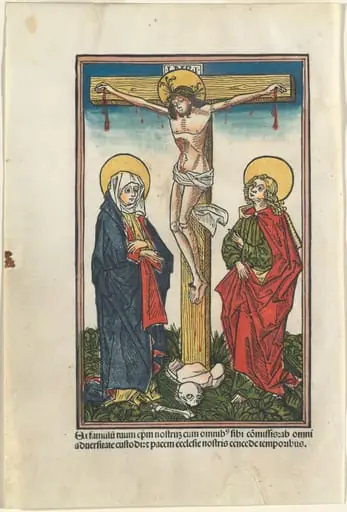 Christ on the Cross with the Virgin and Saint John
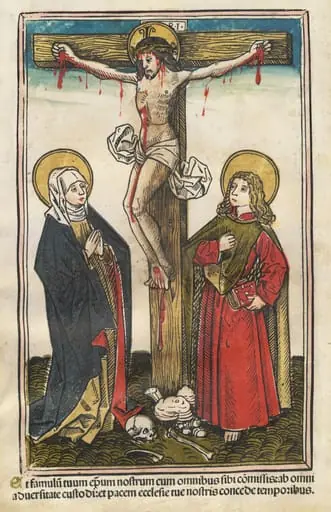 Christ on the Cross with the Virgin and Saint John
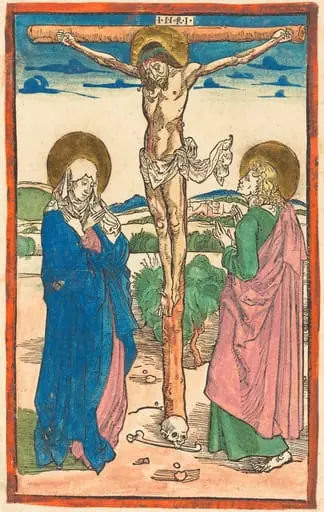 Christ on the Cross Between the Virgin and Saint John
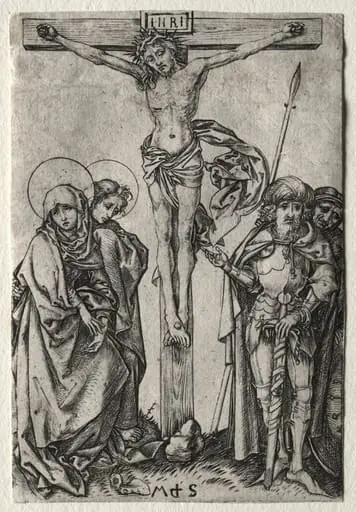 Christ on the Cross
 Christ on the Cross Between the Virgin and Saint John
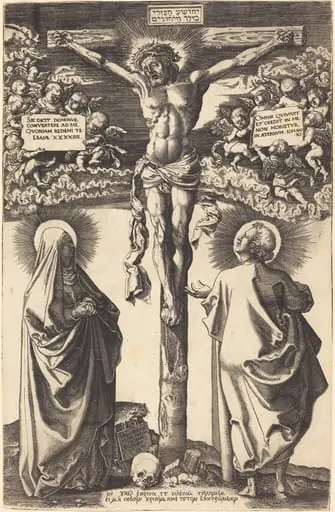 Christ on the Cross with the Virgin and Saint John