Artwork
Christ on the Cross Between the Virgin and Saint John
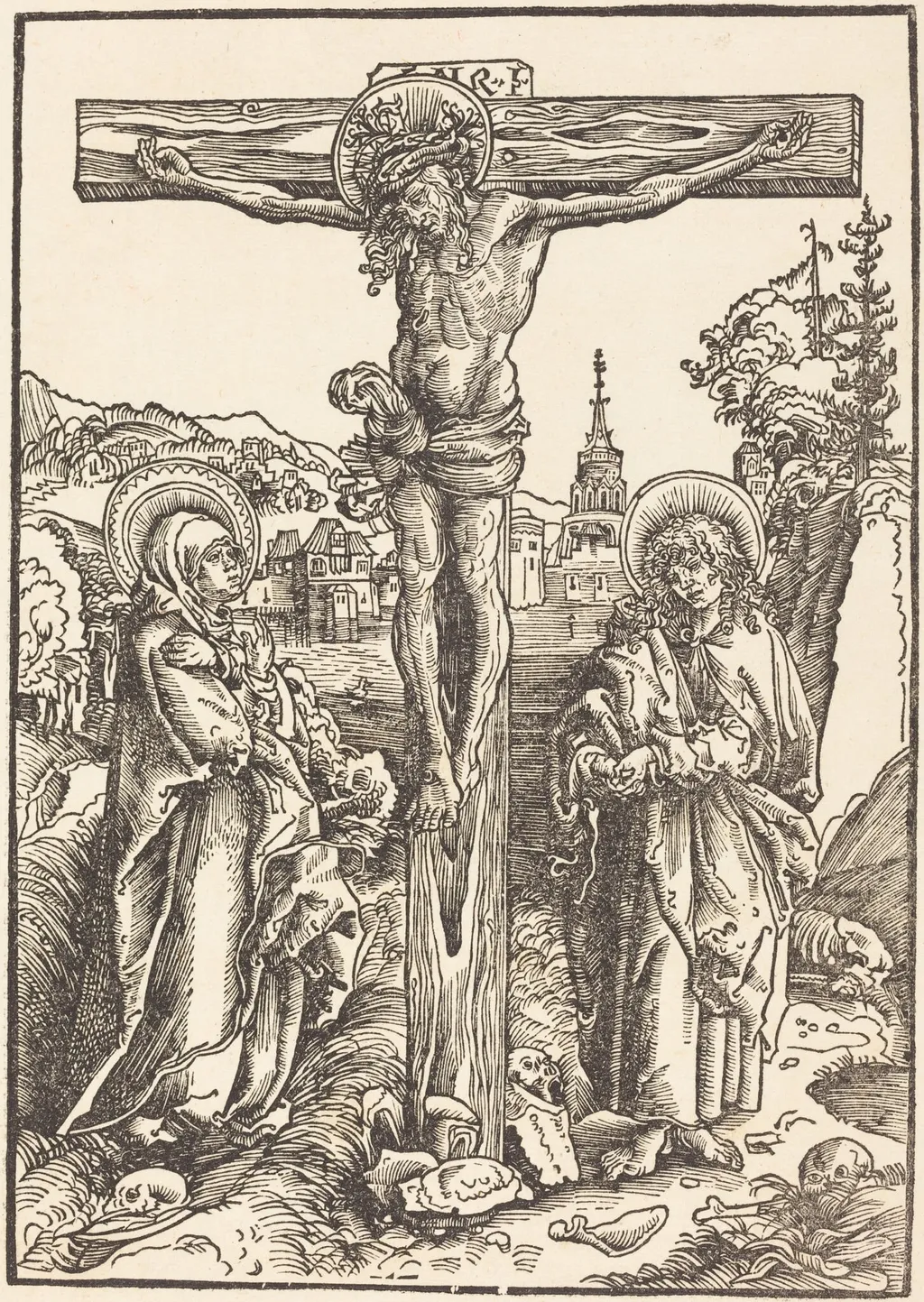
Christ on the Cross Between the Virgin and Saint John is an ink print by the Renaissance artist Lucas Cranach the Elder. It dates from 1502 and is held in the collection of the National Gallery of Art.
About this work
Overview
Created around 1502, this woodcut by Lucas Cranach the Elder presents a devotional scene of Christ crucified, flanked by the Virgin Mary and Saint John.
Created around 1502, this woodcut by Lucas Cranach the Elder presents a devotional scene of Christ crucified, flanked by the Virgin Mary and Saint John. Executed in black ink on paper, it belongs to the early phase of Cranach’s career, prior to his full alignment with Protestant reform. The image was produced using a single carved wooden block, enabling multiple impressions—a practical method for disseminating religious imagery in early 16th-century Germany.
Subject & Meaning
The composition centers on Christ’s crucifixion, with the Virgin and Saint John standing in silent grief on either side, their hands raised in lamentation. This arrangement follows traditional iconography of the Lamentation at the Cross, emphasizing mourning and spiritual witness. The inclusion of a distant town and church spire situates the event within a recognizable earthly context, reinforcing its historical and theological gravity without overt symbolism.
Technique & Style
Cranach employed the woodcut technique, carving fine lines into a wooden block to create a monochrome image. The print features sharp, controlled contours and intricate hatching to suggest texture in fabric, hair, and landscape. The absence of color and reliance on line alone reflects the medium’s functional role in mass reproduction. Details in the figures’ garments and the hillside foliage demonstrate Cranach’s precision and early mastery of the form.
History & Provenance
This print dates from Cranach’s time in Wittenberg, before his close association with Martin Luther and the Reformation. It was likely produced for private devotion or ecclesiastical use, circulating among religious communities in Saxony. No specific early ownership records are documented, but its survival in multiple institutional collections suggests it was widely copied and preserved within German religious circles.
Context
In the early 1500s, woodcuts were a primary means of distributing religious imagery across Europe, especially in regions with rising literacy and demand for personal devotion. Cranach’s work emerged amid a flourishing print culture, where artists adapted traditional Catholic subjects for new audiences. This piece reflects the transitional period before Lutheran theology reshaped visual piety, retaining medieval devotional forms while anticipating reformist simplicity.
Legacy
Though Cranach later became known for Protestant-themed prints, this early woodcut remains a testament to his skill in traditional religious imagery. It illustrates his technical fluency in printmaking and his ability to convey solemnity through line alone. The work influenced later German printmakers and stands as an example of how pre-Reformation devotional art transitioned into the visual language of the Reformation era.
Artist & collection
Artist
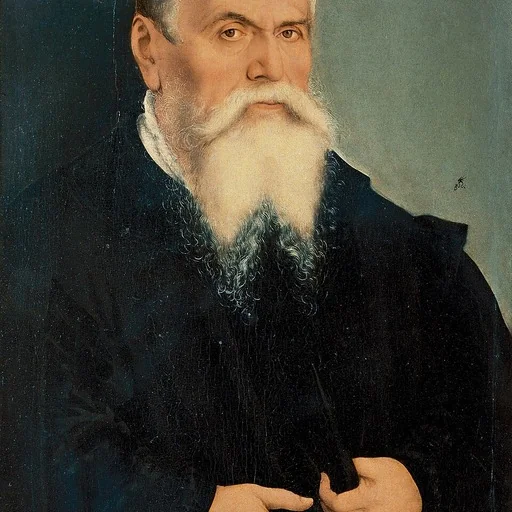
Lucas Cranach the Elder was a German Renaissance painter and printmaker in woodcut and engraving.

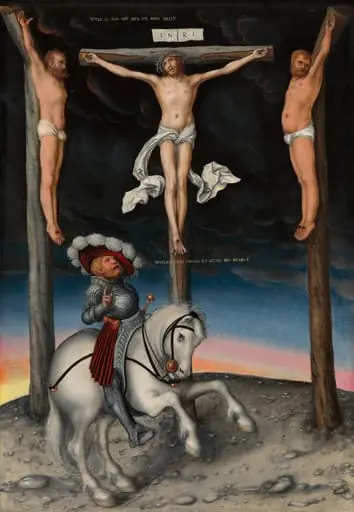
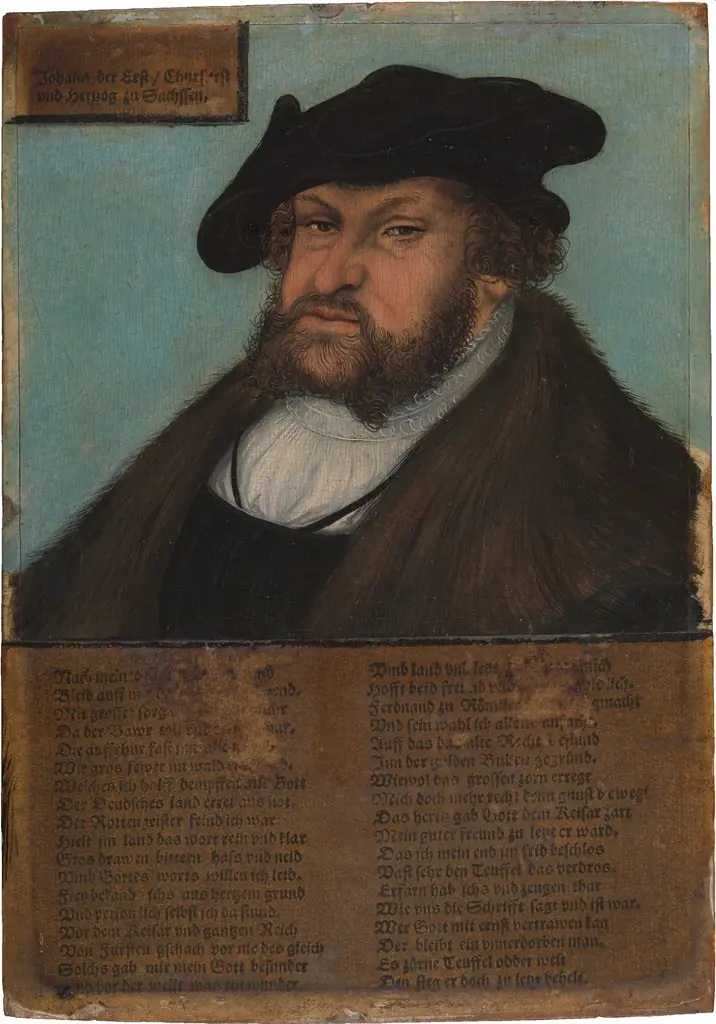
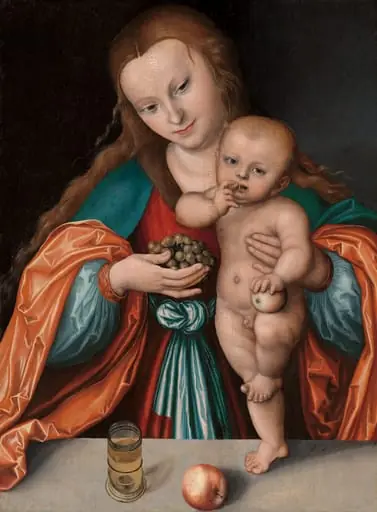
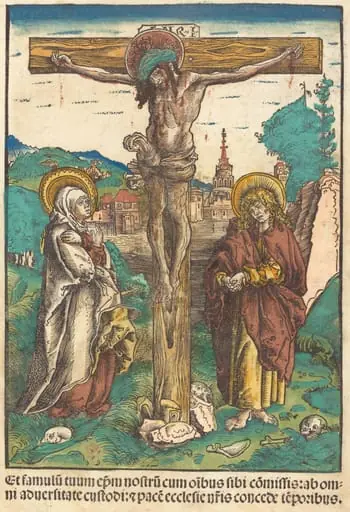 Christ on the Cross Between the Virgin and Saint John
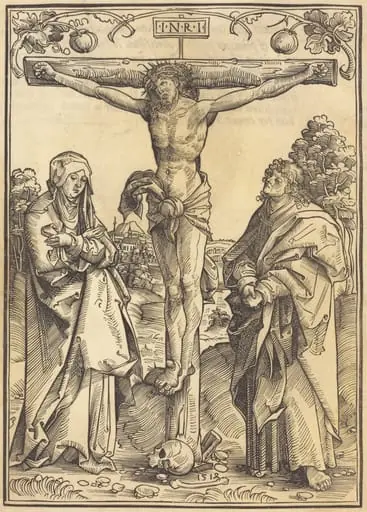 Christ on the Cross with the Virgin and Saint John the Evangelist
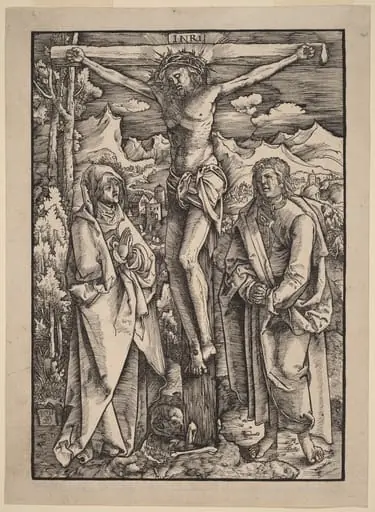 Christ on the Cross between the Virgin and Saint John
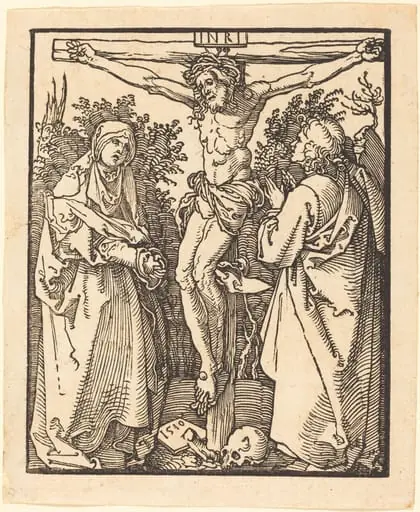 Christ on the Cross with Mary and Saint John
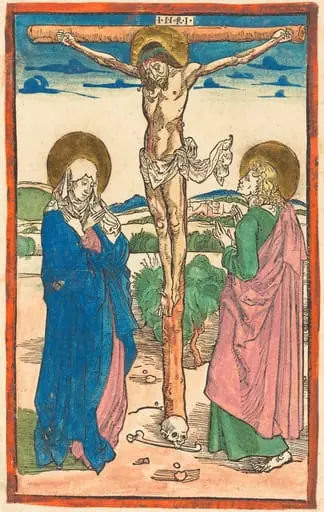 Christ on the Cross Between the Virgin and Saint John
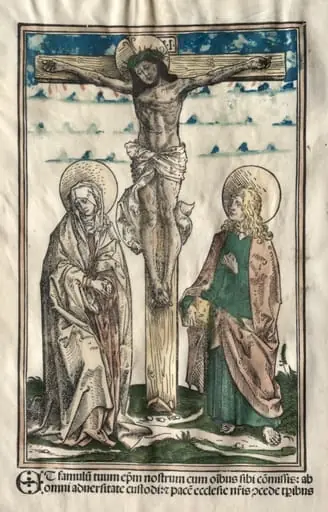 Christ on the Cross between Mary and John
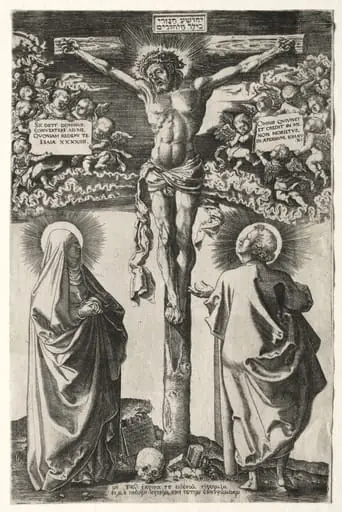 Christ on the cross between the virgin and St. John
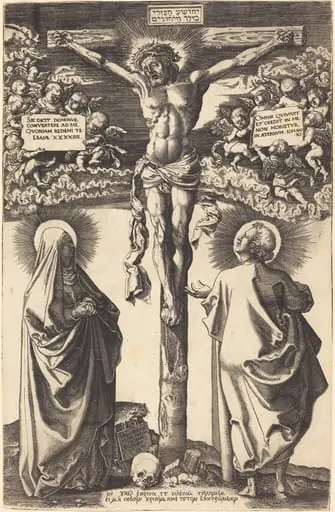 Christ on the Cross with the Virgin and Saint John