Artwork
Christ on the Cross with the Virgin and Saint John
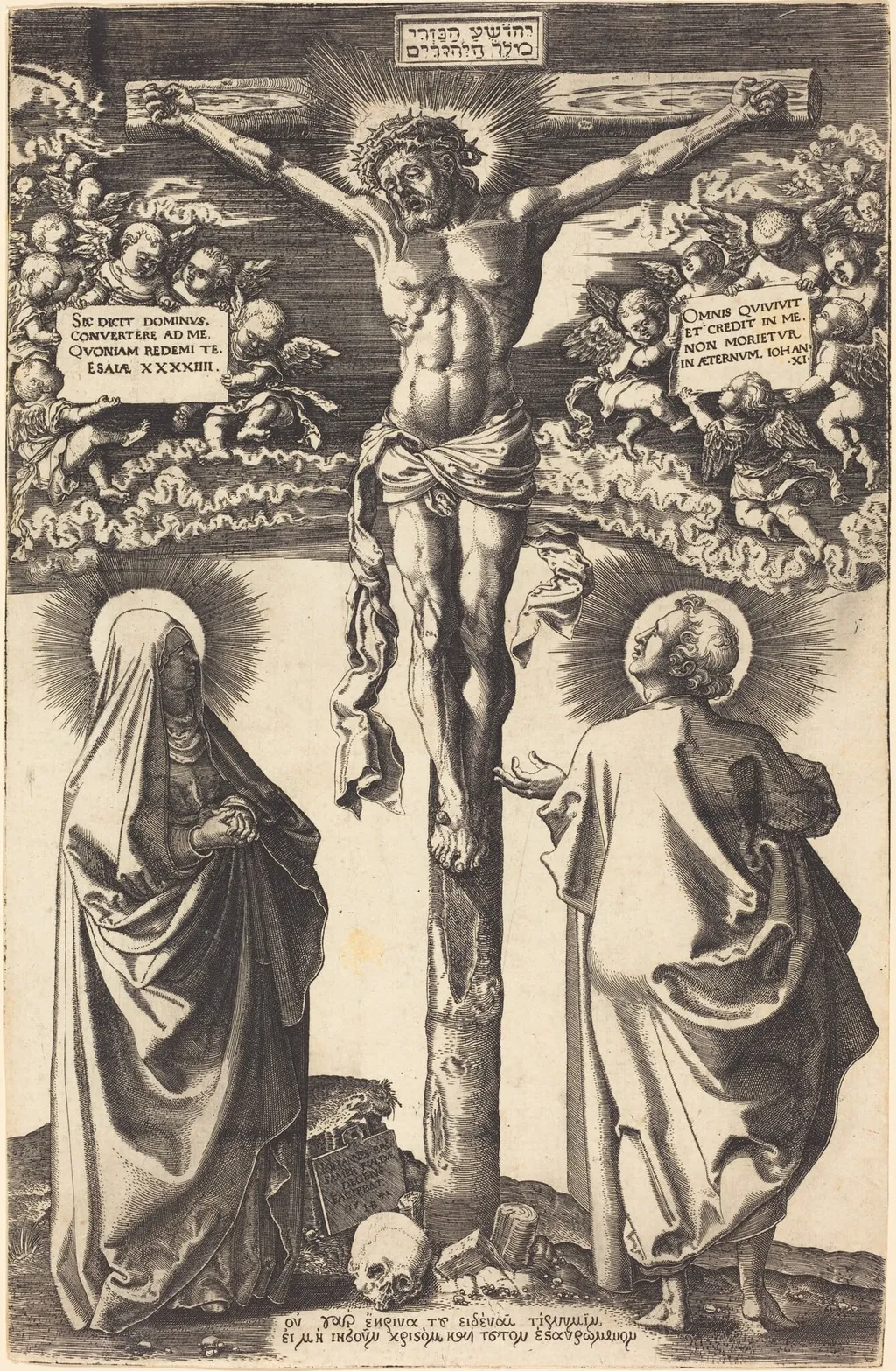
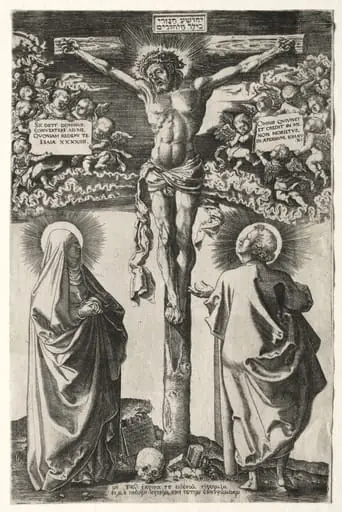
Christ on the Cross with the Virgin and Saint John is an ink print by the Renaissance artist Hans Brosamer. It dates from 1542 and is held in the collection of the National Gallery of Art.
About this work
Overview
Created in 1542, this engraving by Hans Brosamer depicts the crucifixion of Christ with the Virgin Mary and Saint John at the foot of the cross.
Created in 1542, this engraving by Hans Brosamer depicts the crucifixion of Christ with the Virgin Mary and Saint John at the foot of the cross. Executed in black ink on laid paper, it belongs to a body of work that includes over 600 woodcuts and 38 engravings. Brosamer, active in Fulda and Erfurt, produced religious imagery for both devotional use and book illustration, blending narrative clarity with technical precision characteristic of German Renaissance printmaking.
Subject & Meaning
The scene centers on Christ’s crucifixion, his body elongated and suspended on a vertical cross, crowned with thorns. To his left, the Virgin Mary, veiled and hands clasped in grief, and to his right, the youthful Saint John, reaching upward in anguish, frame the central figure. Floating angels above hold scrolls inscribed with Latin text, likely biblical passages, reinforcing the theological weight of the moment and inviting contemplative engagement from the viewer.
Technique & Style
Brosamer employed fine cross-hatching to model form and suggest depth in the figures and background. The clouds, drapery, and architectural elements are rendered with dense, intersecting lines that create tonal variation without shading. This meticulous line work, typical of engraving, allows for intricate detail and emotional restraint, emphasizing structure over drama. The absence of color focuses attention on composition and the expressive potential of line alone.
History & Provenance
The print was made during Brosamer’s later years in Erfurt, where he continued producing religious imagery amid the religious upheavals of the Reformation. While no specific early ownership records are documented, such prints were widely circulated among both Catholic and Protestant audiences. Their affordability and portability made them accessible for private devotion, contributing to their survival in multiple European collections.
Context
Produced during a period of religious transformation in Germany, the image reflects enduring Catholic iconography even as Protestant regions moved away from devotional imagery. Brosamer’s choice to depict the crucifixion with traditional figures suggests an audience still invested in Marian and Johannine devotion. The print’s detailed execution aligns with the broader tradition of Northern European printmaking, where technical mastery served spiritual expression.
Legacy
Brosamer’s engravings, though less celebrated than those of Dürer or Holbein, contributed to the dissemination of religious imagery in early 16th-century Germany. His use of line to convey emotion and spatial depth influenced regional printmakers. This work remains a representative example of how print technology enabled the spread of devotional themes, bridging artistic craft and personal piety in a time of religious change.
Artist & collection

Artist
Hans Brosamer was a German draughtsman, printmaker and painter of the Renaissance period. His life has left hardly any documentary trace, other than his prints, but he was active in Fulda from 1536 to 1545, and later worked in Erfurt.

 Christ on the Cross with the Virgin and Saint John the Evangelist
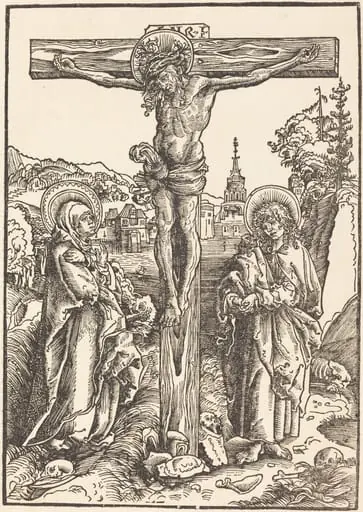 Christ on the Cross Between the Virgin and Saint John
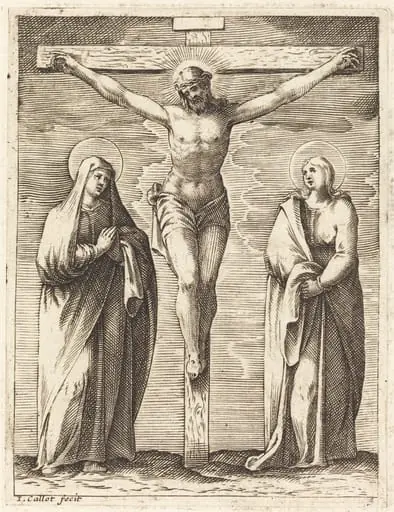 Virgin and Saint John at the Foot of the Cross
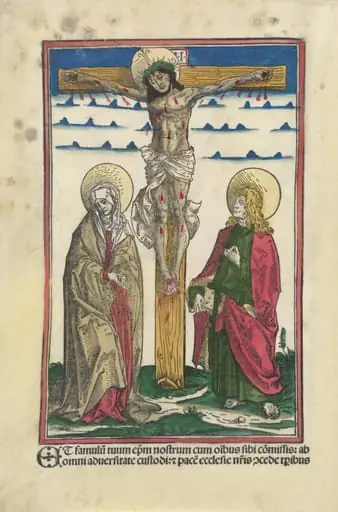 Christ on the Cross with the Virgin and Saint John
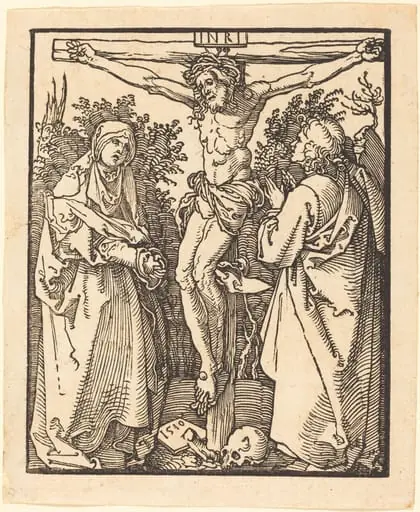 Christ on the Cross with Mary and Saint John
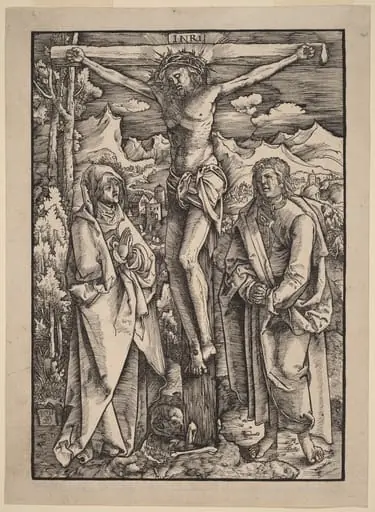 Christ on the Cross between the Virgin and Saint John
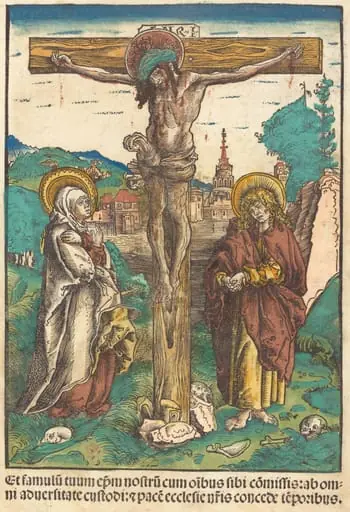 Christ on the Cross Between the Virgin and Saint John
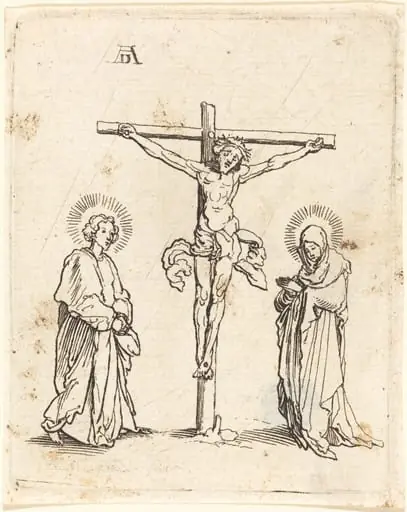 Christ on the Cross Between Saint John and Mary
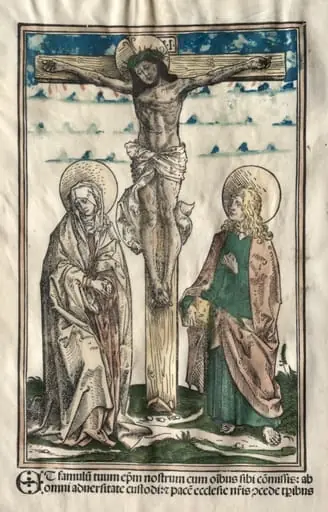 Christ on the Cross between Mary and John