Artwork
Christ on the Cross
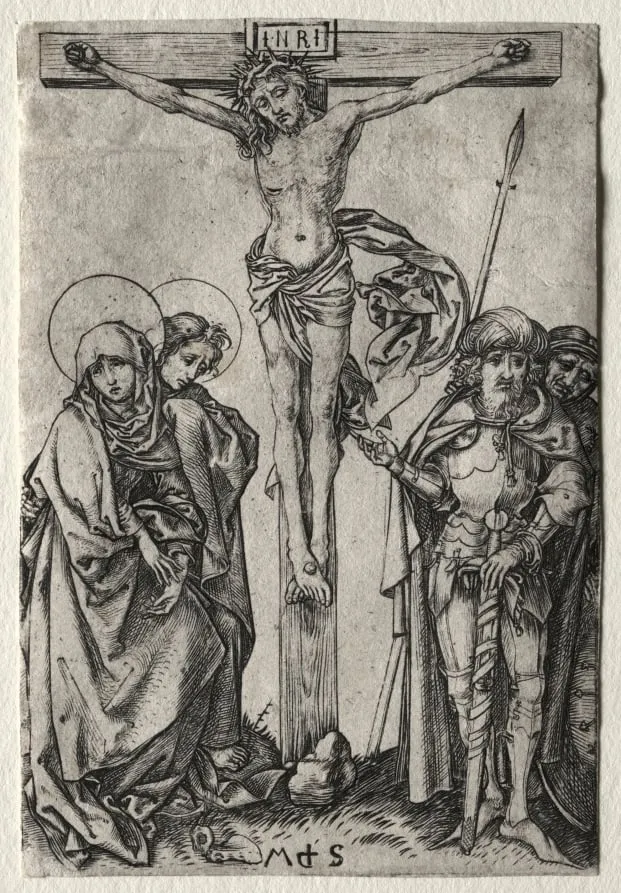
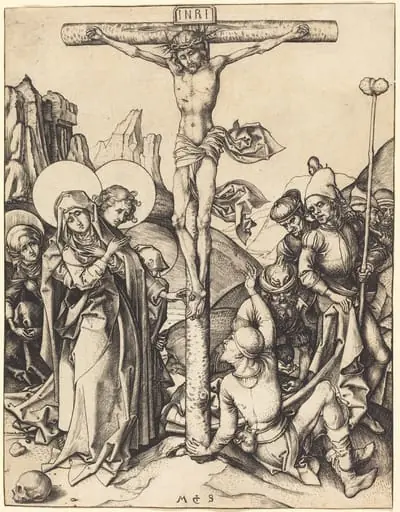
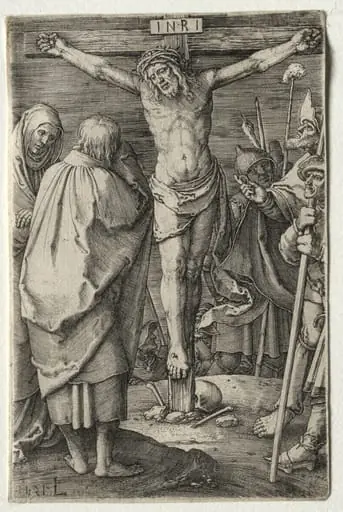
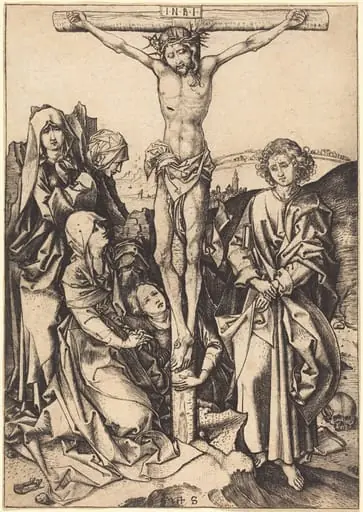
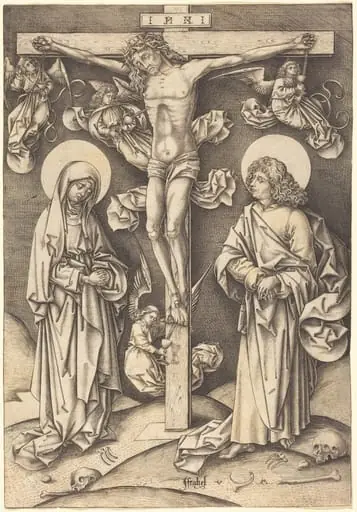
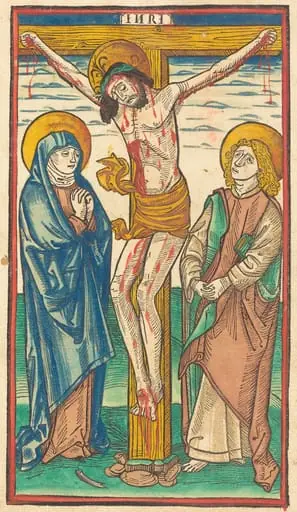
Christ on the Cross is a print by the Renaissance artist Martin Schongauer. It dates from 1480 and is held in the collection of the Cleveland Museum of Art.
About this work
Overview
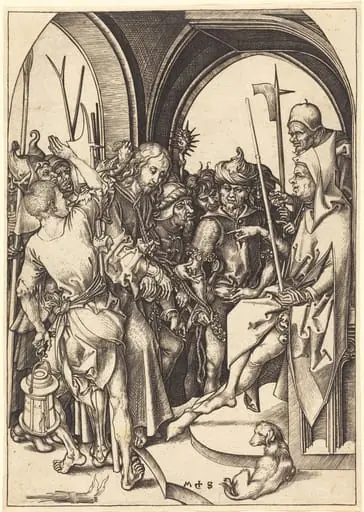
Executed in fine, precise lines cut into a metal plate, the image was designed for mass reproduction, making it accessible to a broader public.
Martin Schongauer created this engraving as part of a series of Crucifixion scenes influenced by Netherlandish devotional painting. Executed in fine, precise lines cut into a metal plate, the image was designed for mass reproduction, making it accessible to a broader public. Unlike costly painted altarpieces, such prints allowed individuals to own and contemplate sacred imagery privately, reflecting the growing demand for personal religious engagement in the late fifteenth century.
Subject & Meaning
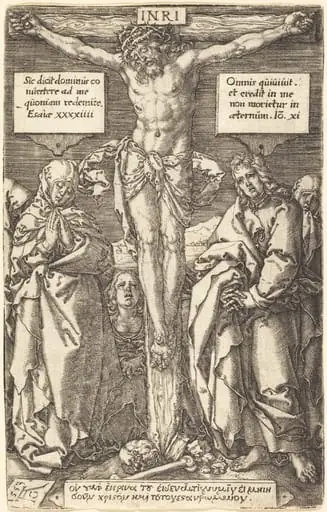
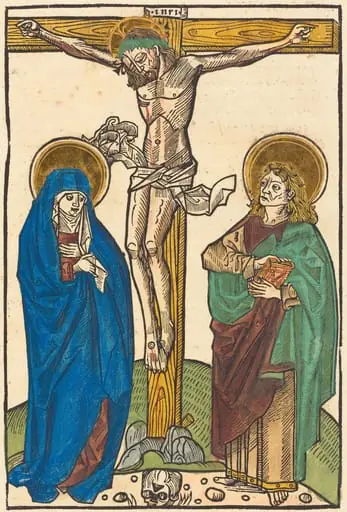
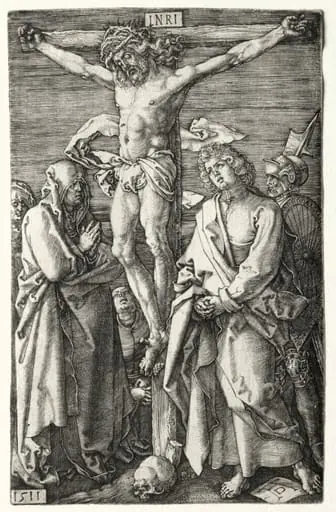
The composition centers on Christ’s emaciated body suspended on a vertical cross, emphasizing physical suffering as a path to redemption. To the left, Saint John supports the Virgin Mary, who collapses in grief. On the right, the Roman soldiers Longinus and the centurion gaze outward, gesturing toward Christ as if inviting the viewer to witness the moment. Their direct address transforms the scene from a historical event into an intimate call to reflection and spiritual recognition.
Technique & Style
Schongauer employed fine-line engraving to render intricate textures: the thorns of the crown, the folds of fabric, and the contours of flesh are defined with meticulous precision. The sharpness of the lines contrasts with the emotional weight of the scene, creating a tension between physical detail and spiritual gravity. This technique allowed for consistent reproduction, ensuring each impression retained the clarity of the original design, a hallmark of early printmaking.
History & Provenance
Produced in the 1470s or 1480s, this engraving emerged during the rapid expansion of print culture in Central Europe. Schongauer’s works circulated widely across Germany and beyond, often copied by other artists and printmakers. Its survival in multiple impressions suggests significant demand, likely among both clergy and lay devotees seeking accessible tools for meditation on Christ’s Passion.
Context
In the late Middle Ages, devotional practices increasingly emphasized personal engagement with Christ’s suffering. Prints like this filled a need for portable, affordable images that could be used in private prayer. The inclusion of witnesses—both mourners and soldiers—mirrored liturgical and textual traditions that framed the Crucifixion as a moment demanding witness and response, reinforcing its role as both theological statement and spiritual exercise.
Legacy
Schongauer’s engraving influenced generations of Northern artists, including Albrecht Dürer, who admired his technical control and emotional depth. The clarity and intensity of his line work set a standard for religious printmaking. While later Renaissance artists favored softer modeling, Schongauer’s sharp, linear style remained a reference point for those seeking to convey spiritual gravity through precise, reproducible imagery.
Artist & collection

Artist
Martin Schongauer, also known as Martin Schön or Hübsch Martin by his contemporaries, was an Alsatian engraver and painter.