Artwork
Adam and Eve in paradise
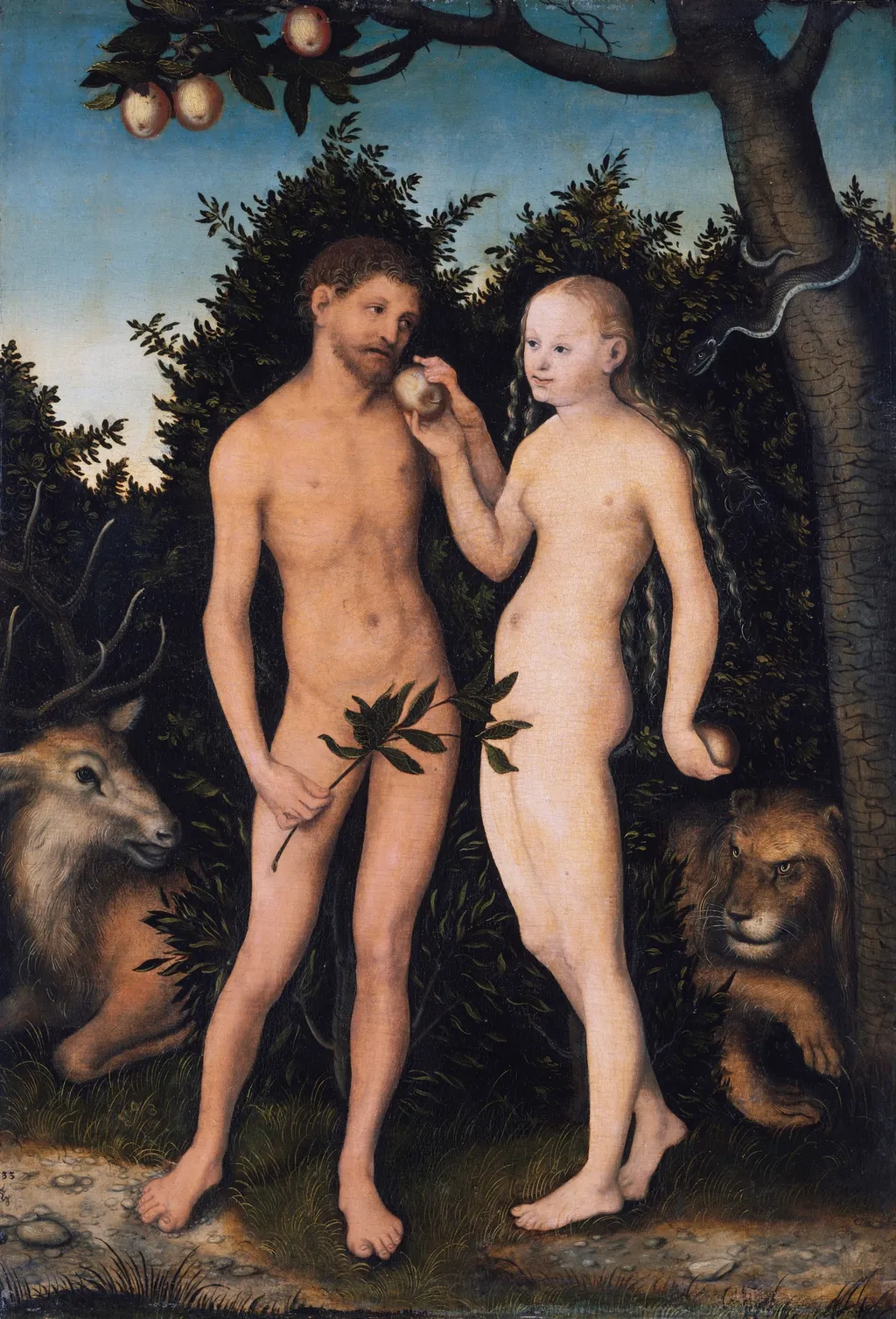
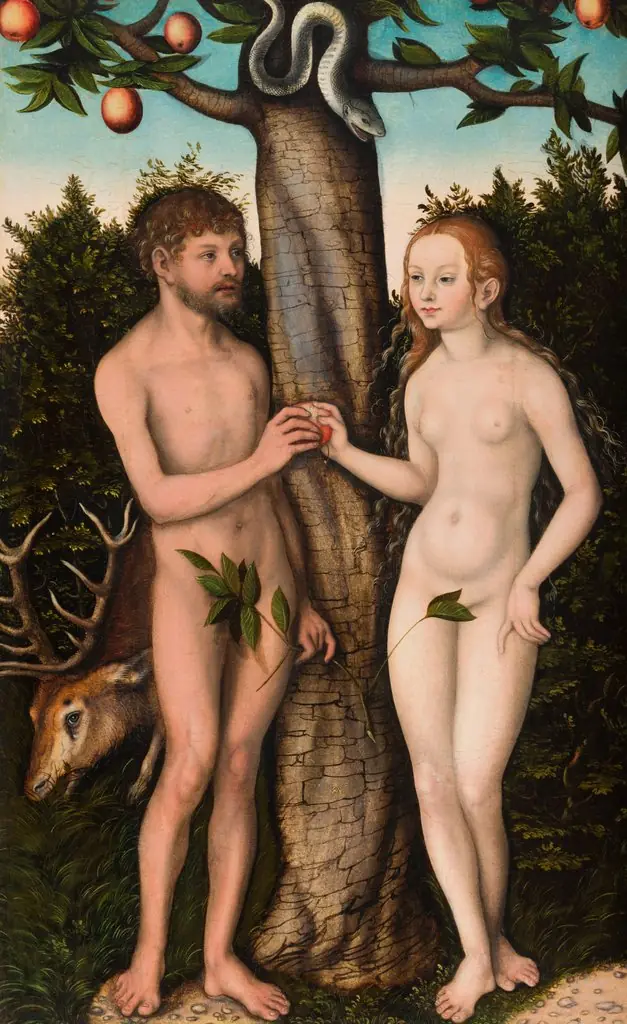
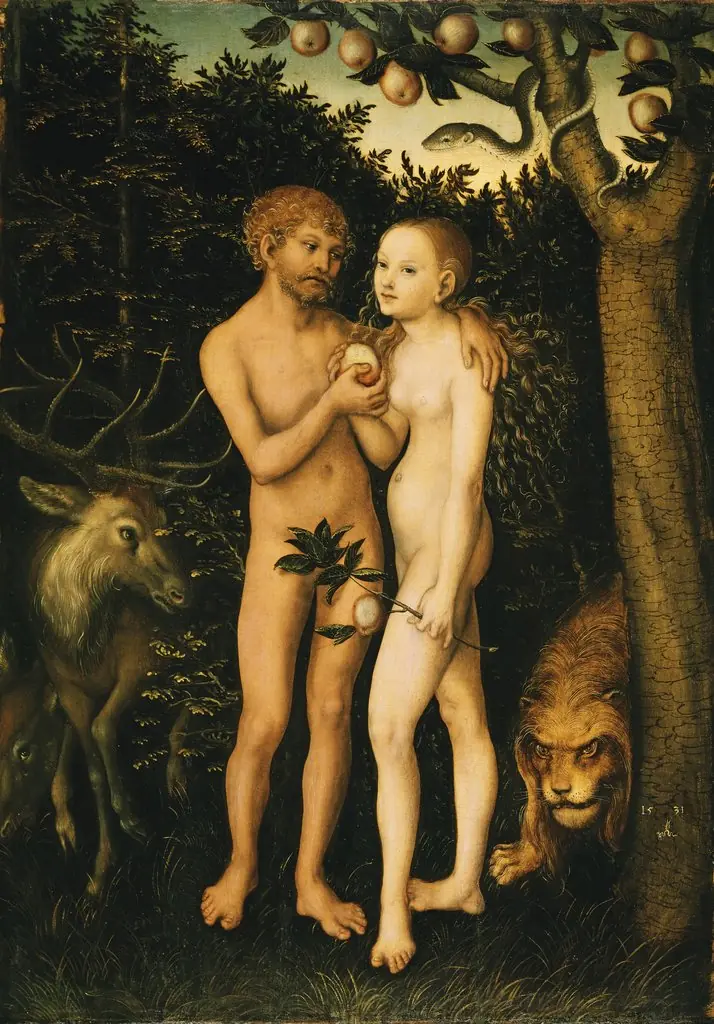
Adam and Eve in paradise is an oil painting by the Northern Renaissance artist Lucas Cranach the Elder. It dates from 1533 and is held in the collection of the Gemäldegalerie Berlin.
About this work
Overview
The composition centers on the two figures amid dense foliage and a calm sky, with symbolic animals and a serpent framing their moment of transgression.
Painted in 1533 by Lucas Cranach the Elder, this oil-on-panel work depicts the biblical figures Adam and Eve in the Garden of Eden. It resides in the Gemäldegalerie in Berlin. The composition centers on the two figures amid dense foliage and a calm sky, with symbolic animals and a serpent framing their moment of transgression. The scene reflects Cranach’s distinctive approach to religious narrative through intimate, naturalistic settings.
Subject & Meaning
The painting illustrates the moment after Adam and Eve have eaten the forbidden fruit, capturing their awareness of sin. Adam holds the apple and a branch, his gaze fixed on Eve, who similarly holds the fruit and a branch. The serpent, entwined around the Tree of Knowledge, signifies temptation. The deer and lion, peaceful yet positioned at opposite sides, may allude to the loss of innocence and the coming disruption of natural harmony.
Technique & Style
Cranach employs smooth, precise brushwork to render the figures and foliage with a stylized clarity. The figures’ elongated forms and idealized anatomy reflect his signature aesthetic, blending Northern Renaissance detail with a certain Mannerist elegance. The background is rendered in muted greens and blues, creating a tranquil atmosphere that contrasts with the gravity of the moment, emphasizing psychological tension over dramatic action.
History & Provenance
The painting was completed in 1533 during Cranach’s tenure as court painter to the Electors of Saxony. It entered the collection of the Gemäldegalerie Berlin in the 19th century, having likely passed through private collections in Germany. Its survival through centuries of religious and political upheaval underscores its enduring presence in German artistic heritage.
Context
Created during the Reformation, the painting reflects Protestant interest in biblical narratives stripped of Catholic ornamentation. Cranach, a close associate of Martin Luther, often depicted religious subjects with human immediacy. Here, the Garden of Eden is rendered not as a celestial realm but as a tangible, earthly space, aligning with reformist ideals of scriptural clarity and personal moral responsibility.
Legacy
This work exemplifies Cranach’s influence on Protestant visual culture, establishing a model for depicting biblical figures with psychological nuance and domestic realism. Later artists drew from his compositional clarity and symbolic economy. Though not widely copied, its quiet intensity informed a generation of Northern European religious painting that prioritized introspection over spectacle.
Own this work as a print
Artist & collection
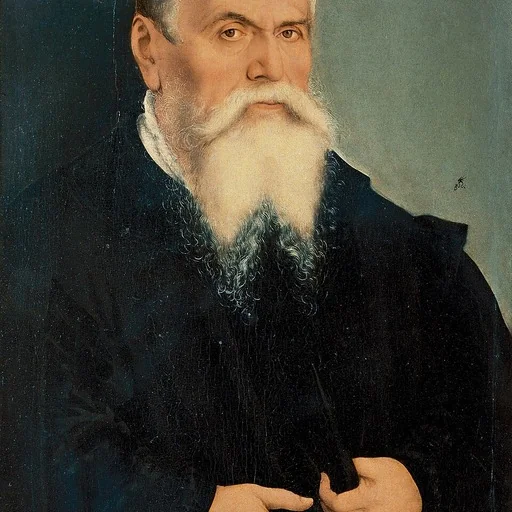
Artist
Lucas Cranach the Elder was a German Renaissance painter and printmaker in woodcut and engraving.